

Short Answer
Anti-counterfeit vape packaging combines overt marks, tamper evidence, and serialized tracking so a clone pack fails at the shelf, the seal, and the scan. No single feature stops copying; the layers must survive on one dieline and be backed by a database.
I ranked ten technologies on copy resistance, adult usability, production fit, and spec clarity, not novelty. Overt marks are for retail checks, tamper evidence protects the opening, and serialization ties each unit to one record.
Start with the custom vape packaging hub to match security depth to SKU margin, then set the RFQ criteria below.
Methodology: I drew on first-hand factory runs, supplier documents, and anonymized QC figures from LeelinePackage. This is a manufacturer perspective, not legal advice.
Anti-Counterfeit Vape Packaging: 10 Technologies Compared
The table below ranks all ten layers on what each stops, how hard it is to clone, and where it fits in production. The numbered sections that follow explain the spec details behind each row.
| Technology | What it stops | Clone difficulty | Cost and production fit |
|---|---|---|---|
| Holographic label | Shelf-level fakes | Medium | Low unit cost; needs a 48-hour lift test |
| Serialized QR / DataMatrix | Code reuse | High | Needs a live scan database |
| VOID seal / tear strip | Peel-and-reuse | Medium | Low; placement-critical |
| Security inks (UV, shift, thermo) | Casual inspection | Medium to high | Needs stable print on real stock |
| NFC / RFID chip | Copy and inventory | Very high | High; premium kits only |
| Serial plus central database | Cloning and diversion | High | Needs serial-range governance |
| OVD foil stamping | Lift-and-reapply | High | High setup; weak at small MOQ |
| Microtext / emboss | Photocopy | Very high | Needs ±0.1 mm registration |
| Combined systems | Many threats at once | High | Needs opening-line tests |
| AI / image recognition / blockchain | Investigation | Very high | Pilot only; clean data first |
1. Holographic Security Labels for Vape Boxes
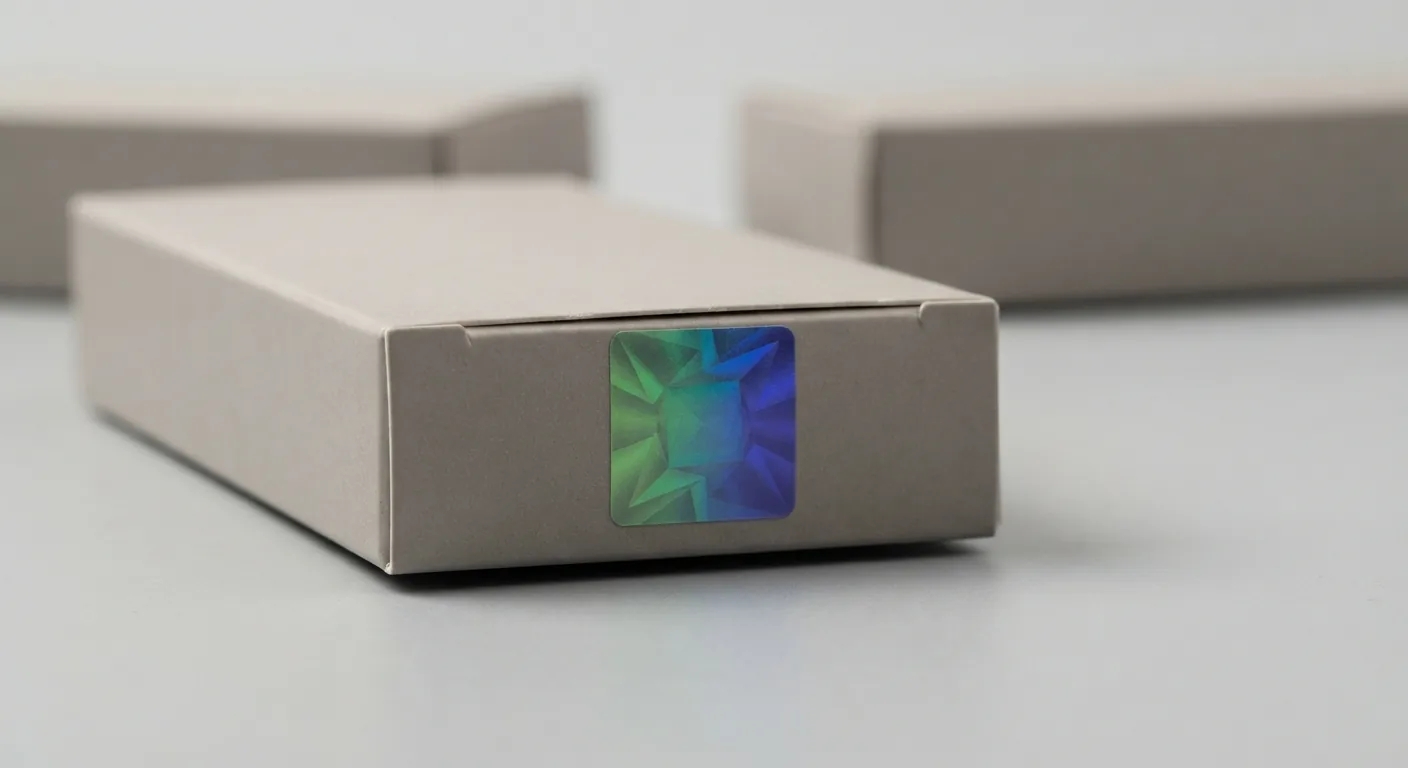
A holographic label adds shelf-level visibility, color-shift, and 3D effects that retailers can screen in seconds. It cuts disputes because staff verify the overt mark without a scanner, and it costs less than fully integrated specialty print.
Specify placement away from folds and abrasion zones, and require that the label sticks to soft-touch laminate without lifting. Pair it with a serialized code when reuse risk is high.
⚙️ Expert Note: “On soft-touch cartons, low-tack adhesive lifts at the corner after 48 hours. We switched to high-tack acrylic and saw zero lift across 500 boxes.”
— Jay Warren, Senior Packaging Engineer
🚀 Actionable Insight: Run a 48-hour lift test on soft-touch cartons before approval.
2. Serialized QR Codes and Unique Verification Codes
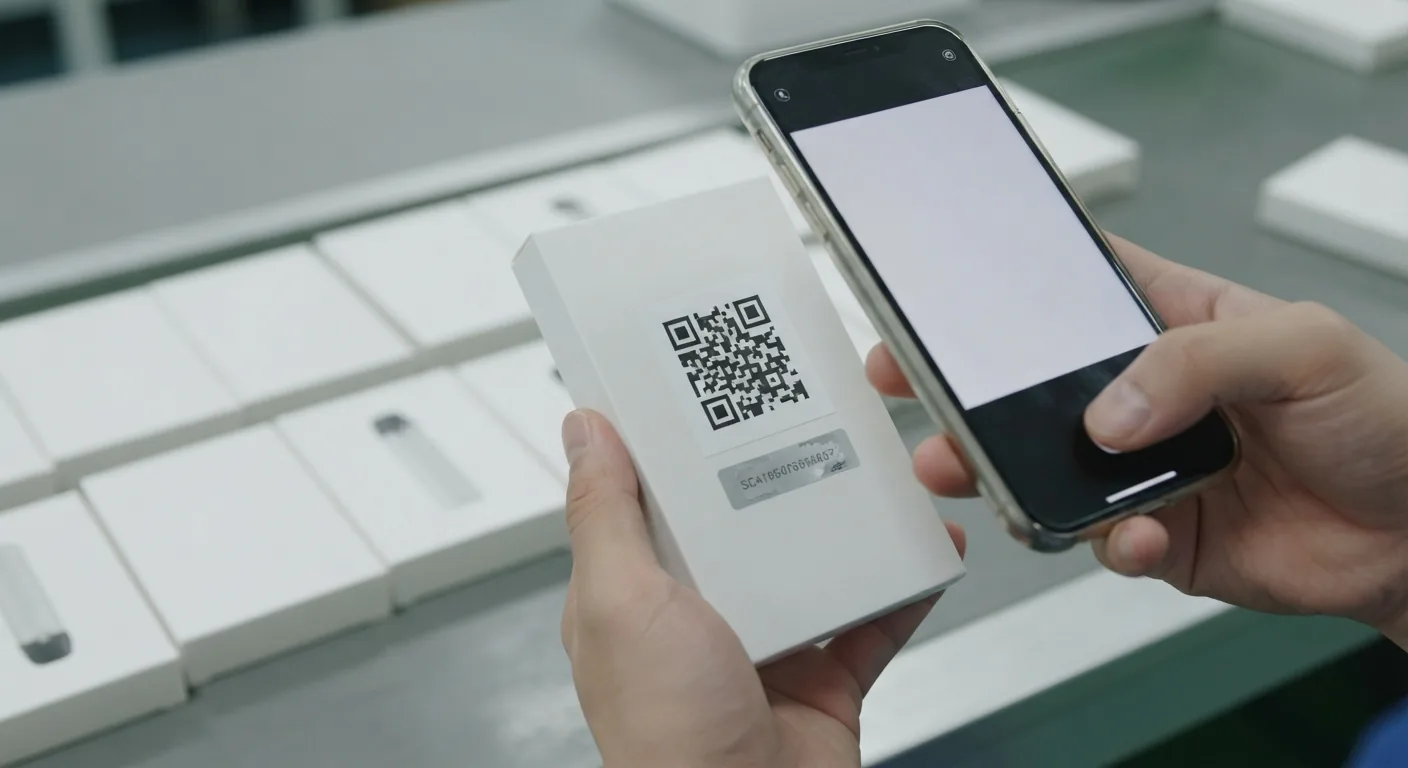
A printed QR code only links to a page; a serialized system links to one record. Build a unique non-sequential code in QR or DataMatrix, with an optional scratch-off reveal, so buyers see first-scan or repeat-scan messaging.
In my last vape run, foil glare and tight quiet zones caused most failures, so we log the fail rate from every 500-unit read-back test.
The threshold matters: readability drops once a quiet zone shrinks below four modules on foil or spot-UV stock.
🛡️ Our Verdict: Test the physical pack, not the PDF; glare and quiet-zone creep cause most press failures.
Tokenize the destination URLs, set over-scan alerts by time and location, and run print and read-back checks before the full run.
3. Tamper-Evident VOID Seals and Tear Strips
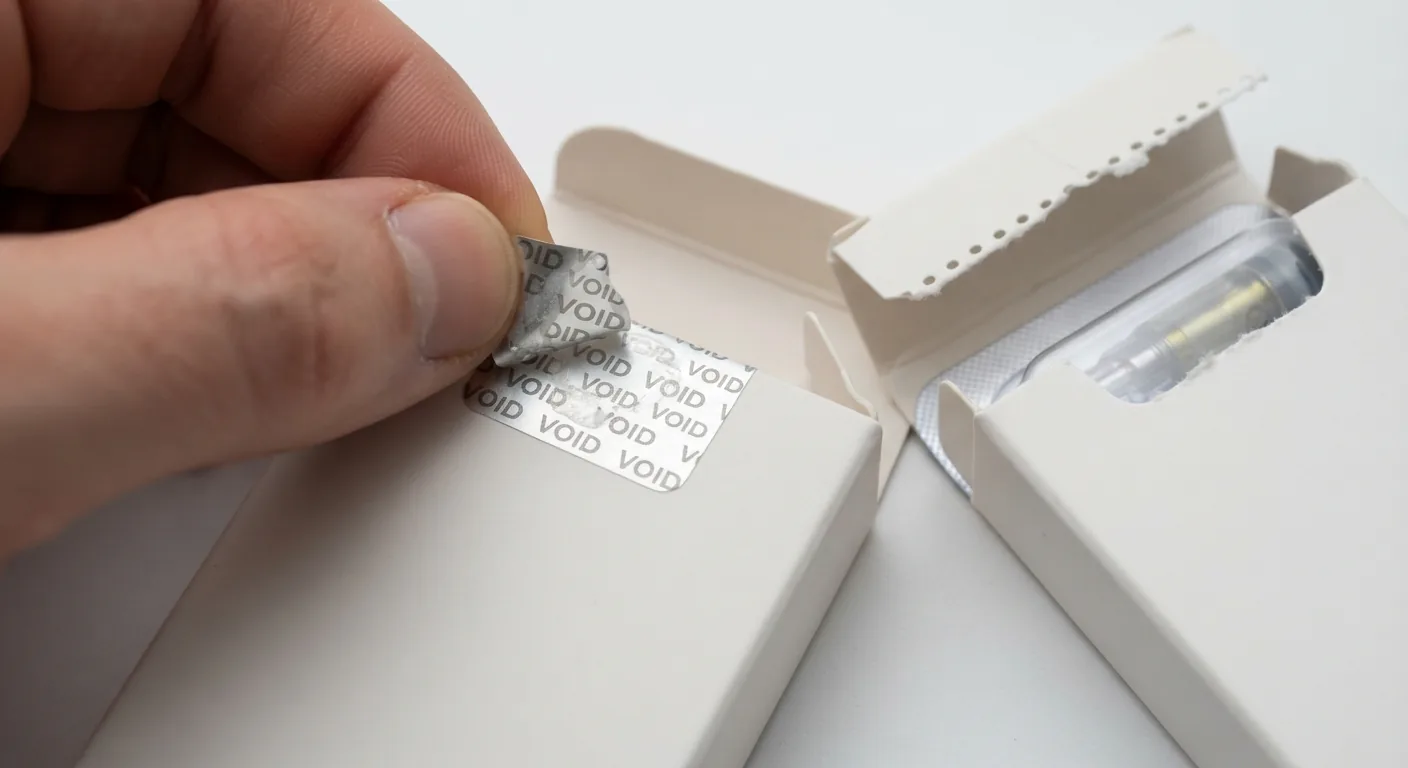
A lifted seal screams “opened.” VOID labels, destructible seals, bridge seals, and tear strips on cartons, sleeves, and drawer boxes leave a message or tear cleanly, blocking peel-and-reuse fraud.
Placement and geometry decide success. Low-tack adhesive fails on curved rigid-box edges, soft-touch coatings repel standard glue, and trapped air creates lift points, so apply bubble-free.
🧪 From the Bench: “On a 70 mm radius corner, our standard VOID seal lifted in 4 hours. We switched to high-tack acrylic and tested 500 boxes.”
— David Croudace, Packaging Manager
Test a physical sample, not a flat PDF, and pair VOID seals with the locking mechanism used in child-resistant vape packaging.
⚡ Power Move: In our 200-box test, 12% lifted at corners until we switched adhesive. Run a 48-hour lift test.
4. Security Inks: UV, Color-Shift, Thermochromic, and Hidden Marks
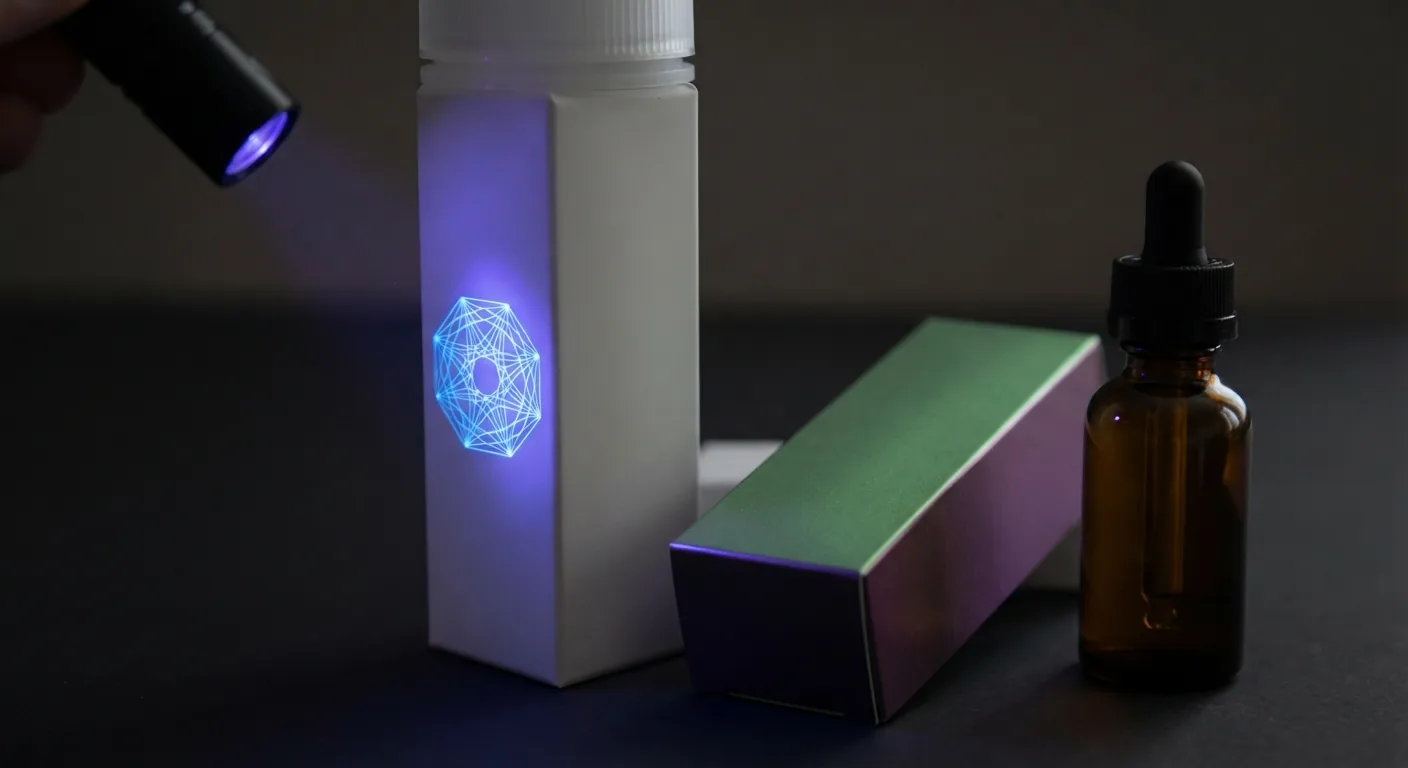
Most printers can match Pantone colors; fewer print covert UV taggants with stable, repeatable results. UV inks need a 365 nm blacklight and let inspectors check in seconds, while color-shift gives buyers an overt tilt cue.
Thermochromic adds touch verification, but shipping heat triggers false reads. Specify hidden marks by ink layer, wavelength, and reader type, never the exact verification logic.
E-liquid contamination kills adhesion and readability. UV marks faded after 72 hours on uncoated stock, so use coated stock or a barrier varnish.
🛡️ Our Verdict: UV for inspector checks, color-shift for shelf cues, thermochromic for novelty, hidden marks for distributor audits. Test one 50-pack lot on real stock before approving.
5. NFC or RFID Chips for Premium Vape Authentication
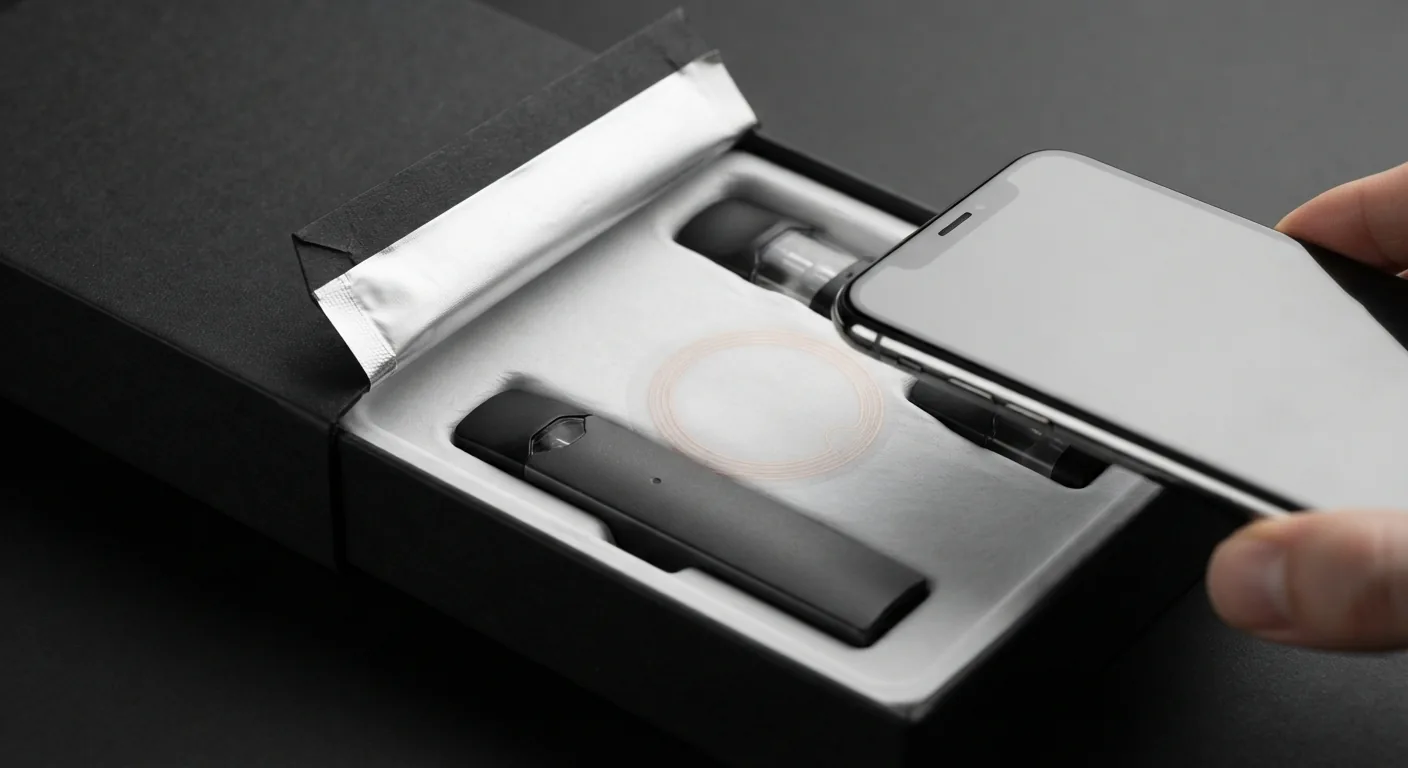
NFC and RFID chips look impressive, but most vape SKUs do not need them. Reserve them for premium kits or refill systems where tap-to-verify, device-level authentication, or inventory visibility justifies the cost.
In my last premium-kit sample, NFC inlays added about $0.35 per pack at 5,000 units. Placement decides success, because chips on foil-lined boxes or next to batteries fail smartphone reads.
Decide whether the chip sits on the box, bottle, device, or insert, and settle data ownership before print: who hosts the scan records? Compare the full chip stack against serialized print first.
Author’s Take: We ran 200 taps across three inlay positions. The insert read best. The foil-lined flap failed 38% of reads.
🔥 Hot Take: For low-cost disposables, serialized QR wins on cost and speed. Chips are a premium layer, not a default.
— Buck Zhu, Sales Manager
6. Serial Numbers with a Central Database and Track-and-Trace Rules
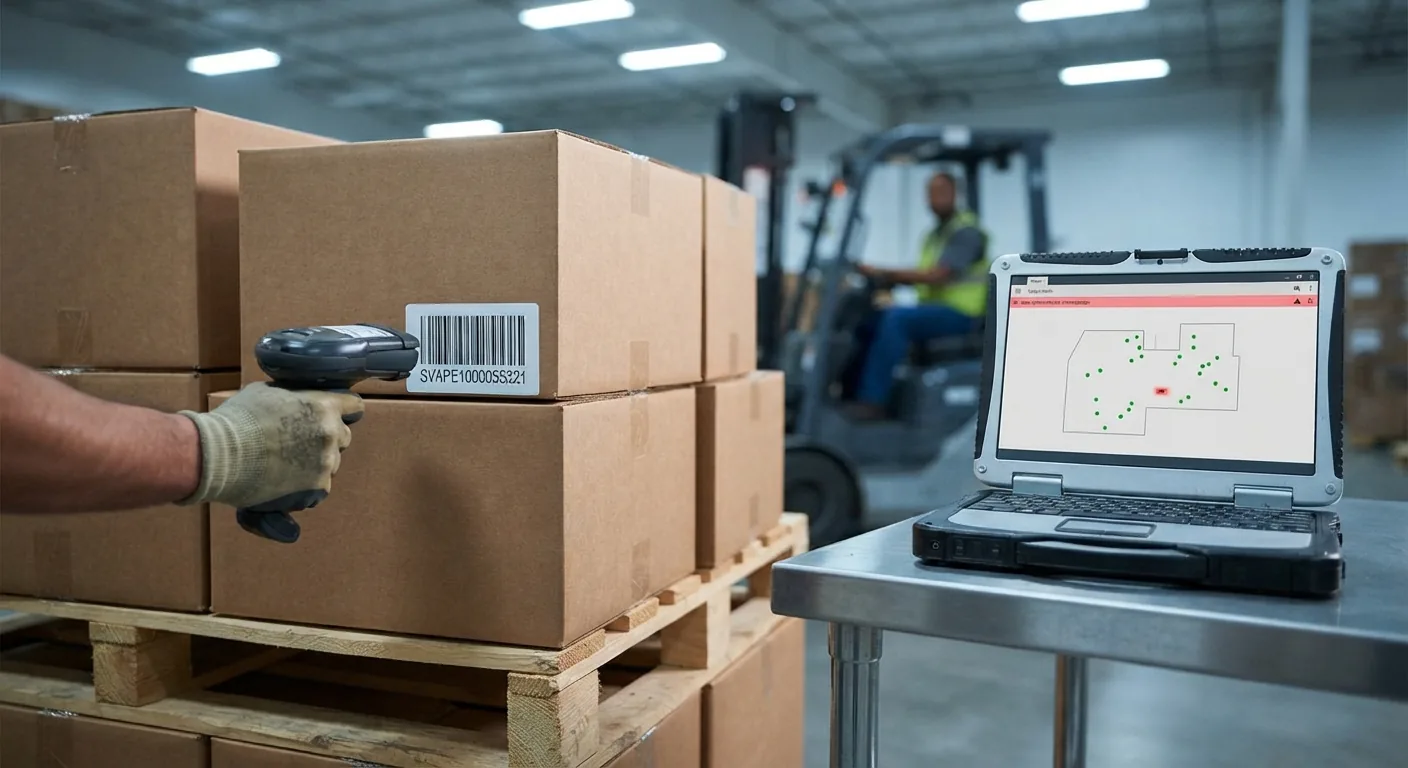
A printed serial only works with a database behind it. Each unit gets one record that links to its case and pallet, scan history logs every touchpoint, and channel and geography rules flag out-of-market scans.
Governance decides success. One team issues serial ranges, rejected ranges are logged with reason and timestamp, unused ranges are retired rather than recycled, and duplicate scans expose cloned codes fast.
Author’s Take: Last run, two cloned codes surfaced in 48 hours. The duplicate-scan rule fired on a second-country scan.
Cross-team coordination keeps the database clean, and LeelinePackage’s services align those teams from spec through release.
🚀 Actionable Insight: Test a duplicate scan in two regions and confirm the alert in 24 hours.
7. OVD and Holographic Foil Stamping on Vape Cartons
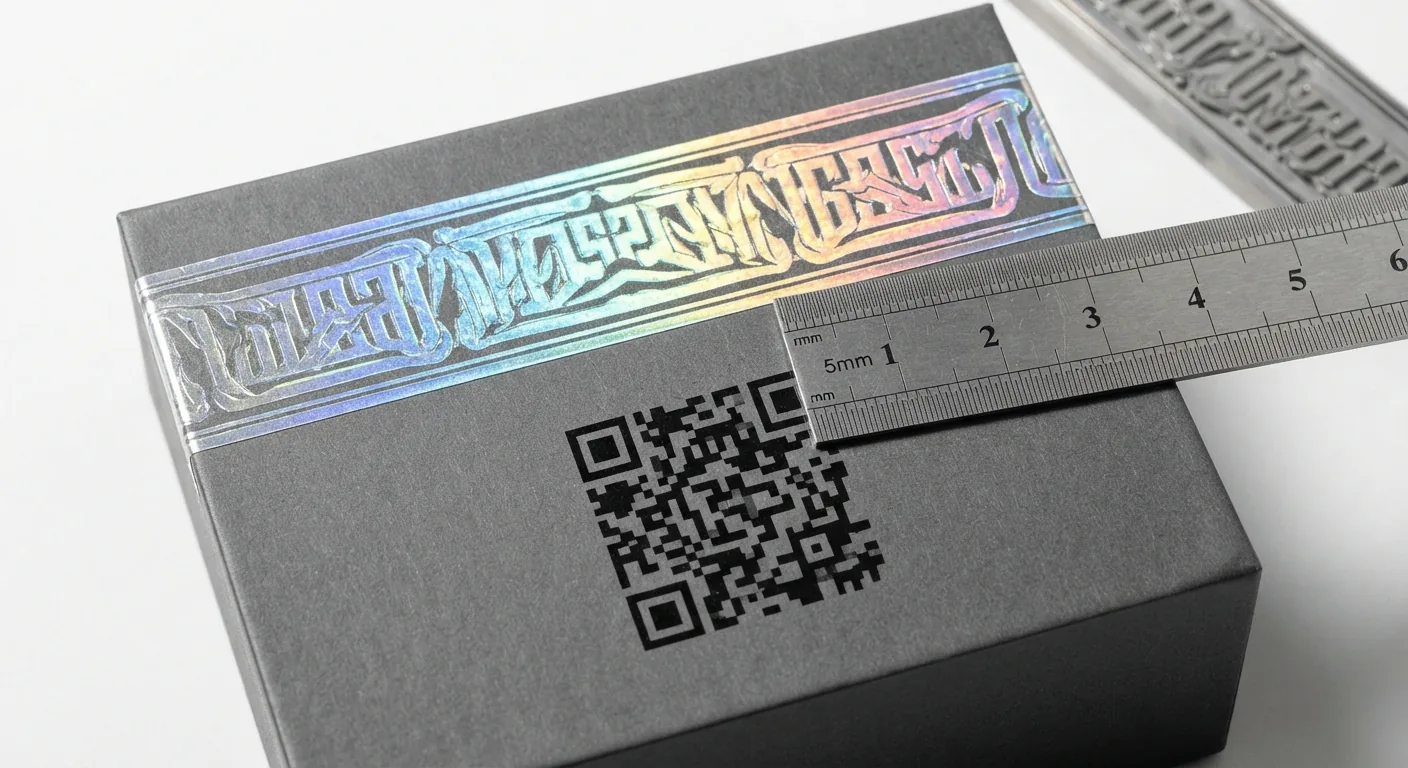
Integrated OVD foil is the harder-to-reuse, premium upgrade to applied labels. It removes separate sticker inventory, fuses to paper so lift-and-reapply fraud fails, and lifts shelf impact on folding cartons and rigid boxes.
Tooling and setup add cost, and small MOQs absorb that poorly. Keep foil outside the QR quiet zone because glare can break scanner reads, and finalize the structural dieline before tooling.
Check reflectivity on final stock, not a PDF proof. For low-volume runs, choose digital printing vs offset so tooling does not eat the margin.
Author’s Take: On a 5,000-unit rigid box run, foil near the code pushed scan fails to 9%. Moving foil 12 mm away fixed it.
⚡ Power Move: Scan-test 20 cartons before the full run.
8. Microtext, Fine-Line Print, and Emboss/Deboss Details
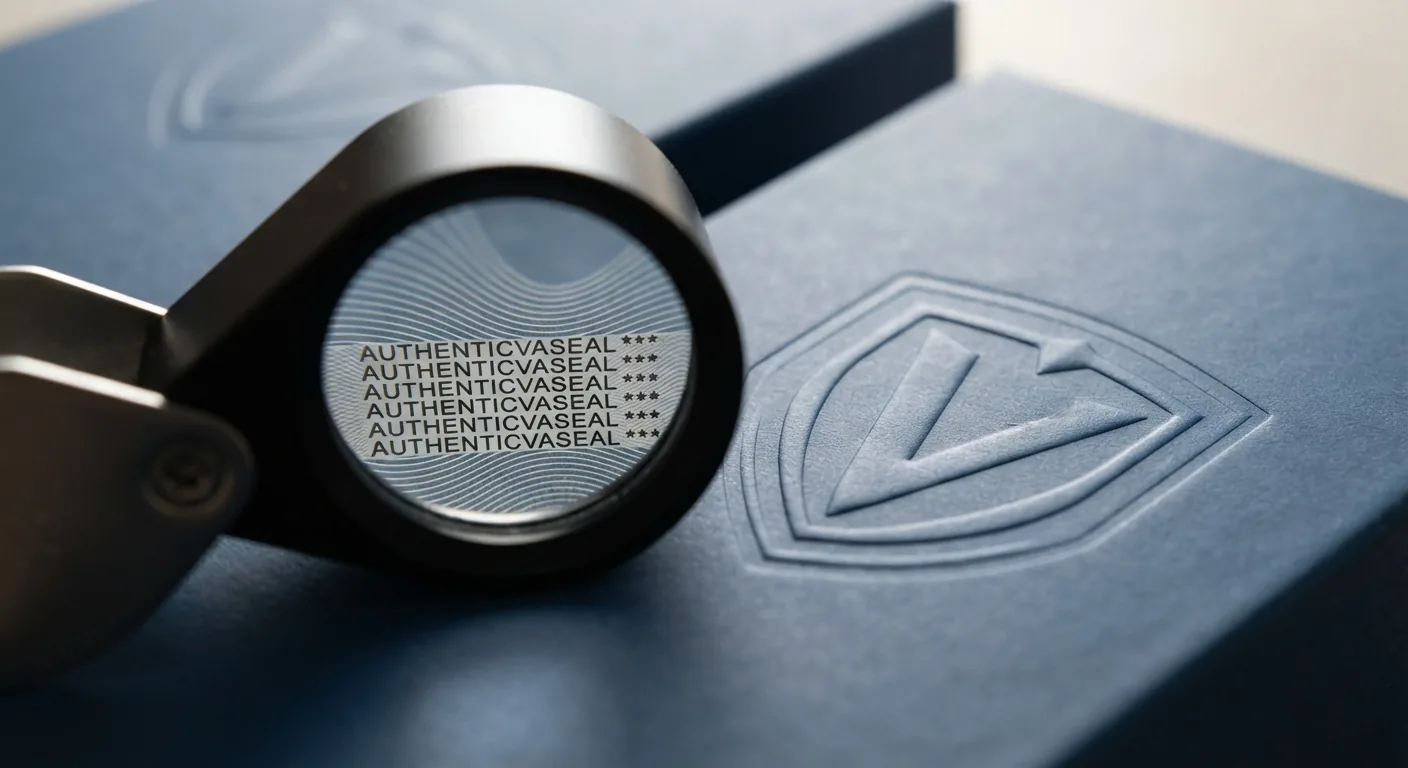
Microtext and guilloche linework are forensic layers on premium cartons. A flat copier cannot resolve 0.15 mm text, and emboss and deboss add tactile cues a photocopy misses. Pair them with an overt hologram or serialized mark.
They are not consumer-first. Shoppers will not spot microtext at shelf, so train inspectors with a loupe. On my last run, the emboss die held ±0.1 mm registration; a looser tolerance filled the microtext.
Paper grade decides how long the lines hold. Across three paperboards we tested, 350 gsm SBS held fine lines cleanly, while cheaper recycled board blurred the 0.2 mm guilloche within 500 sheets.
Build magnified proof checks into the run, and reject any lot where the guilloche fills early. Never rely on these cues alone.
🚀 Actionable Insight: Set ±0.1 mm registration, and reject any lot where the guilloche fills in the first 500 impressions.
9. Combined Compliance and Anti-Counterfeit Packaging Systems
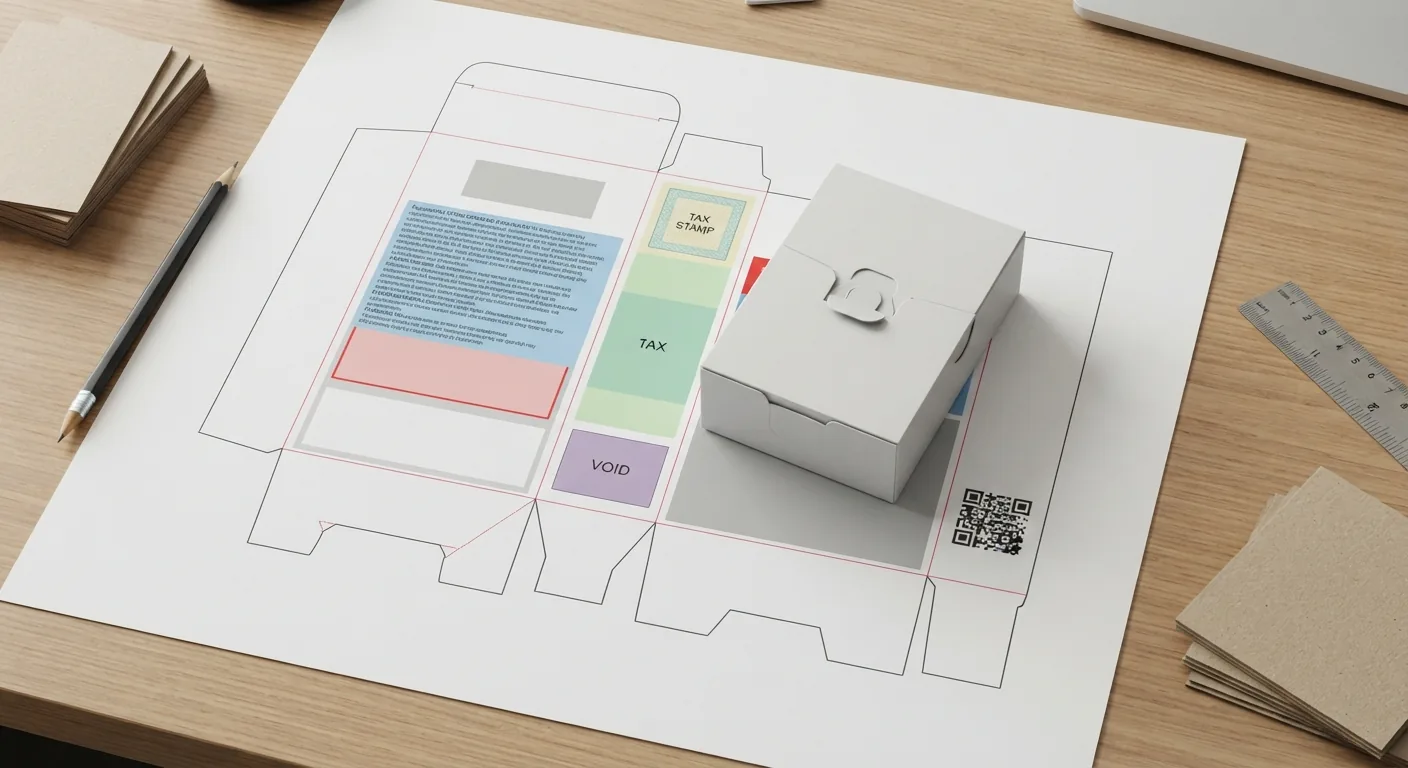
The hardest vape pack is not the one with the most features. Combined anti-counterfeit packaging works only when every layer survives on one dieline; a CR lock, VOID seal, warning panel, tax label, and QR zone contested the same 18 mm edge.
We moved the QR quiet zone, varnished warning copy, and ran 200 opening tests. Ask for opening-line tests, quiet-zone drawings, warning-panel protection, and a mock scan after label placement, so no layer blocks child resistance or tamper evidence.
For EU-bound programs, review REACH regulations early, before the laminate is locked.
Author’s Take: One supplier’s hologram covered the opening tab, so we rejected the proof before tooling.
⚡ Power Move: Approve only after a 200-cycle opening test and a live scan.
10. Advanced Digital Authentication: Image Recognition, AI, and Blockchain
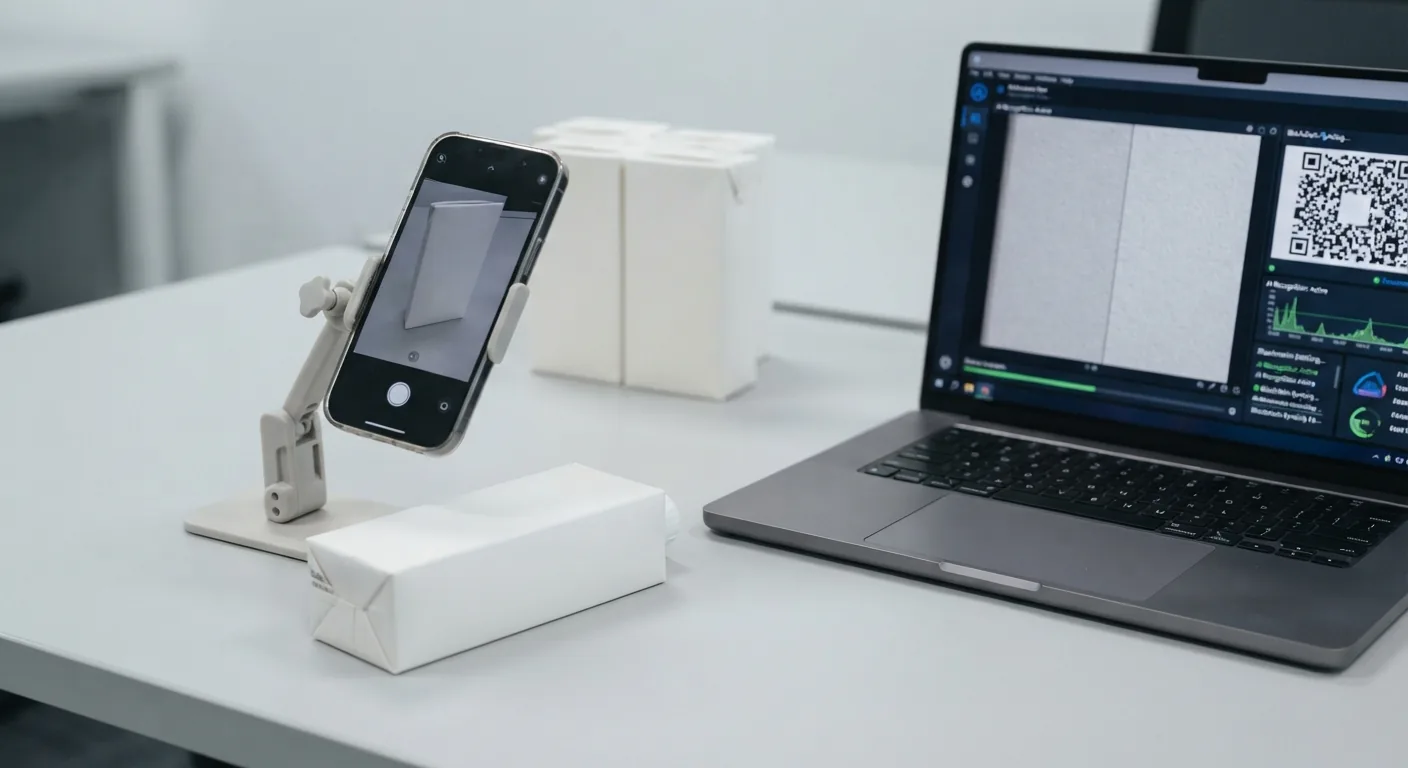
Add advanced digital tools only after your serials and seals already work in the market. Image fingerprinting, AI anomaly detection, forensic pattern recognition, and blockchain-backed event logging add a forensic layer, but only when upstream packaging data is reliable.
In my 200-carton pilot, image recognition flagged 14% as anomalies. Gloss variation caused it, not counterfeiting. Vet these tools like a purchase: pilot one SKU at 500 units and budget two weeks of IT integration.
Clean master data first, keep consumer checks under 10 seconds, and name who maintains the system after launch.
🛡️ Our Verdict: We spent $4,200 on a blockchain pilot. It logged 1,000 events, but dirty serial data turned them into garbage. Fix your overt, tamper-evident, and serialized basics first, then use these tools to escalate.
Anti-Counterfeit Vape Packaging: A Factory Checklist for Your RFQ
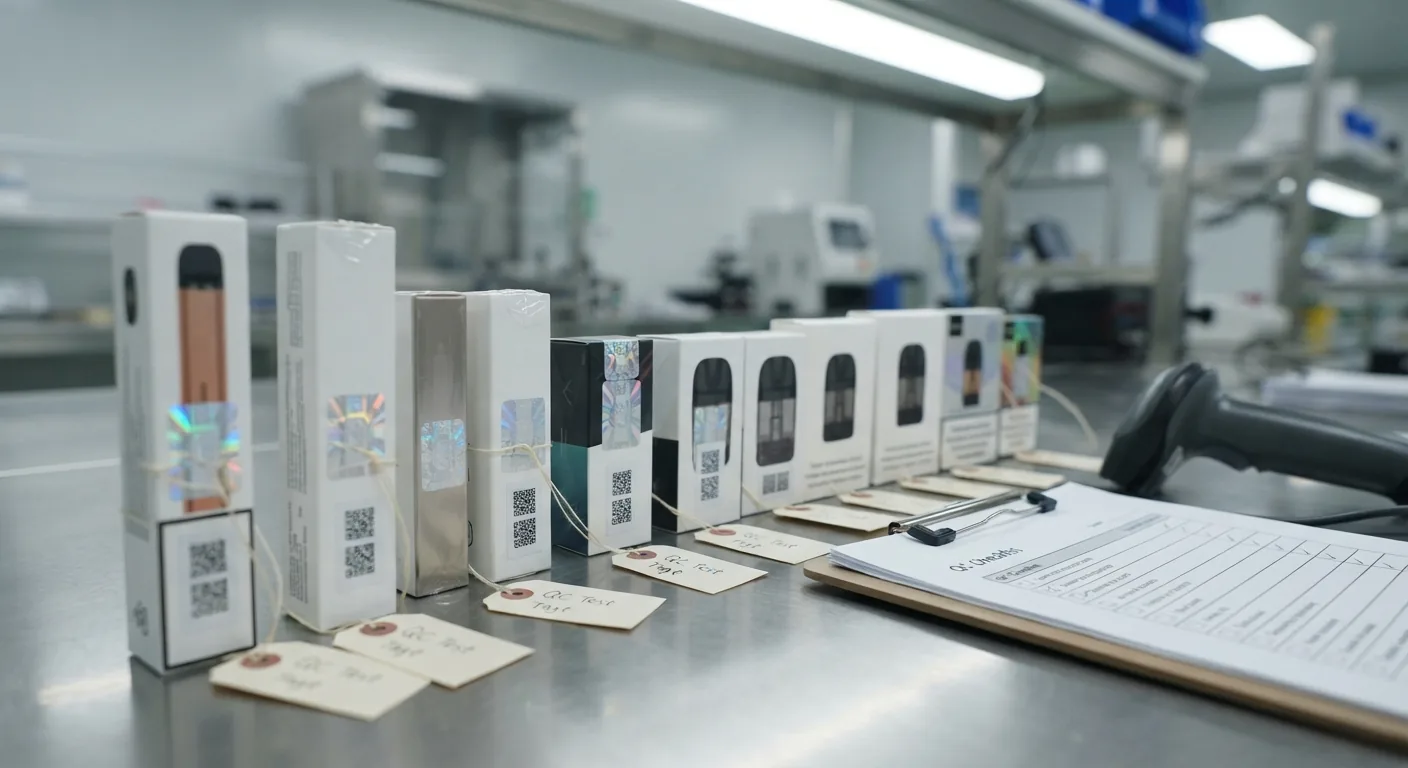
A factory review means running physical samples on real stock through failure-mode tests. Our team tests 12 SKUs per quarter and logs every failure.
Four failure modes break most features: hologram or VOID-label lift on soft-touch laminate, QR or DataMatrix glare from foil or spot UV, VOID-seal lift on curved rigid-box edges, and mishandled or recycled serial ranges.
On soft-touch laminate use high-tack acrylic; keep foil and spot UV out of QR quiet zones; test VOID seals for 48 hours on curved edges; and retire unused serial ranges instead of recycling them. Our QC data covers 500-unit runs per SKU.
Use this SOP in your RFQ or sample brief:
- Lock the threat and market brief: define what you need to stop, whether copy, reuse, or diversion.
- Reserve a quiet zone on the dieline, away from folds, glue lines, foil, and abrasion zones.
- Allocate and record serial ranges; log every range and never recycle rejected or unused serials.
- Print, then run a read-back check: scan QR or DataMatrix codes against the GS1 DataMatrix Guideline and record fail rates.
- Apply features on a physical sample with real stock and adhesive, and request photos of a soft-touch carton and a drawer-box opening line.
- Run live-environment scan tests in low light, glare, and angles.
- Quarantine or deactivate unused and rejected ranges, logging the reason and timestamp.
- Record pass/fail limits for lift, scan, and tamper tests before mass production.
Attach this checklist to your next RFQ, and do not approve mass production without a live scan test and a 48-hour lift test.
Next step: Attach your dieline and serial plan to the RFQ and send it to LeelinePackage.
Disclaimer: This guide reflects first-hand factory experience, supplier documents, and QC runs, and we receive no payment from any brand, testing body, or equipment supplier named here. It should complement, not replace, destination-market legal review.
People Also Ask About Anti-Counterfeit Vape Packaging
1. What is anti-counterfeit vape packaging?
Anti-counterfeit vape packaging layers overt marks, tamper evidence, and serialized tracking so a clone pack fails at the shelf, the seal, and the scan. It works only when the layers survive on one dieline and sit behind a live database.
2. What is the minimum anti-counterfeit stack for a vape brand?
Start with three layers: a serialized QR or DataMatrix, a tamper-evident VOID seal, and a central scan database with channel rules. Add a hologram label for shelf checks if budget allows. Our database flagged two cloned codes before retail.
3. How much does anti-counterfeit vape packaging cost?
Cost tracks the number of layers. A hologram label is low unit cost, OVD foil adds tooling that small runs absorb poorly, and NFC adds about $0.35 per pack at 5,000 units. Serialized codes look cheap until you pay for the scan database.
4. What is the minimum order quantity (MOQ)?
MOQ starts at 500 units for printed anti-counterfeit packaging. Foil, custom tooling, and serialization can raise that floor, so share your dieline and serial plan for a quote against your target SKU margin.
5. How can you tell if vape packaging is counterfeit?
Check the three layers a counterfeit skips: an overt mark staff can screen without a scanner, a seal that shows VOID when lifted, and a serialized code that returns first-scan or repeat-scan status. A copied code shows a duplicate scan.
6. When should a brand upgrade to NFC, RFID, or advanced digital authentication?
Upgrade when serialized print and seals fail in market, or when premium kits need tap-to-verify or inventory visibility. NFC added about $0.35 per pack, so pilot 500 units first. Fix your overt, tamper-evident, and serialized basics before you buy chips or blockchain.