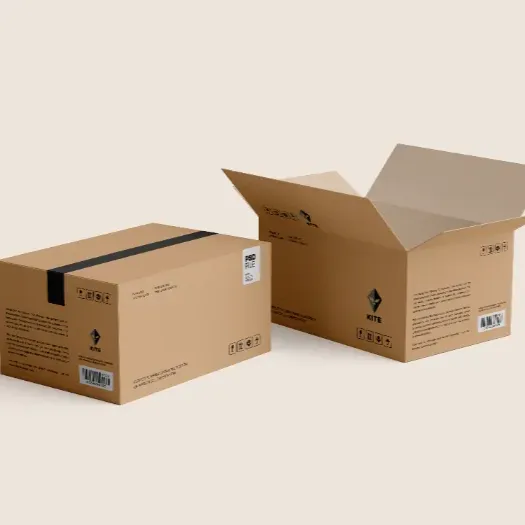
 SB-01
Regular Slotted Container
- ECT
- 32–48
- Wall
- Single or double wall
- Closure
- Tape or glue
The default: four flaps and one die, so a size change costs no new tooling, across the widest size range of the six.

Custom-contoured dielines eliminate empty space to slash dimensional freight by up to 25%. Combined with board grades optimized for stacking, designs are validated to keep transit damage low without over-packaging.

Every shipping box is bought for what happens between the packing bench and the customer's door. Six stages do almost all of the damage, and each one is a different kind of force.
movement
Taped and sealed. Whatever is still loose inside travels on the first impact.
vibration
Floor to floor in a truck. Side walls flex and a loose flap catches the next pallet.
shock
Chutes, conveyors, and a scanner gate that turns away a label it cannot read.
the drop
The heaviest fall of the trip, in the driest air the carton will ever see.
handling
Loaded last, unloaded first, and more times than any other leg.
time
Stored before it is opened. Compression, not impact, is what finishes this box.
ISTA 3A Sequence
1 corner + 3 edge + 6 face
Ten drops in a fixed order. The die is drawn against this sequence, and the run goes back through it before the print is locked.
Two Kinds of Force
impact, then load
Corners break while the parcel is moving; stacking and moisture finish the carton once it has stopped.
What the Route Sets
the corner post
The hardest impact in the sequence decides the corner, and everything else on the board is read off that.
Six constructions cover almost every parcel. Each is chosen by what is inside and how many times it will be handled, not by how it looks on a screen.
SB-01The default: four flaps and one die, so a size change costs no new tooling, across the widest size range of the six.
 SB-02
Double thickness at the top and bottom, because the outer flaps overlap a full width where a load presses hardest.
 SB-03
Folds into its own closure from a single piece, and the inner liner is printed too.
 SB-04
The lid slides over the base, so the height is set after packing rather than at the die.
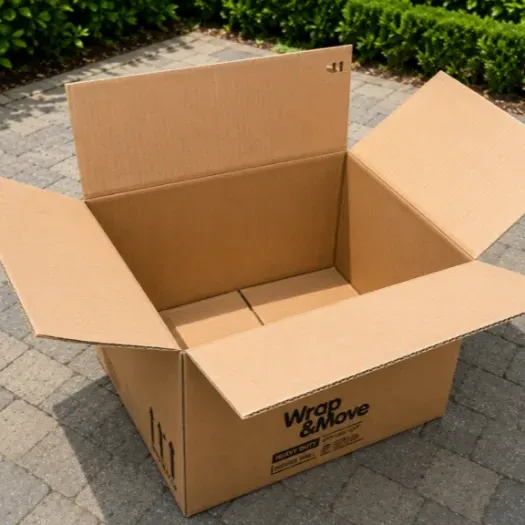 SB-05
Bonded from two flutes, so it carries a stack four high or a single unit over 50 lb.
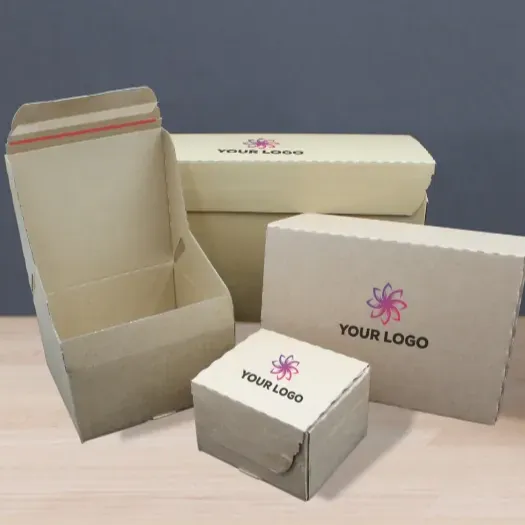 SB-06
Cut to the product footprint, with the reveal printed inside.
A courier prices a parcel by the volume it occupies, not by the mass on the scale. A carton bought a size too large is paid for again on every order that follows, so the arithmetic is worth doing once.
The re-cut is a change of die, not of box: same board, same print, drawn around the product as packed.
A shipping box is freighted twice and pays for both. The first journey is yours, and it is decided by whether the carton arrives formed or knocked down.
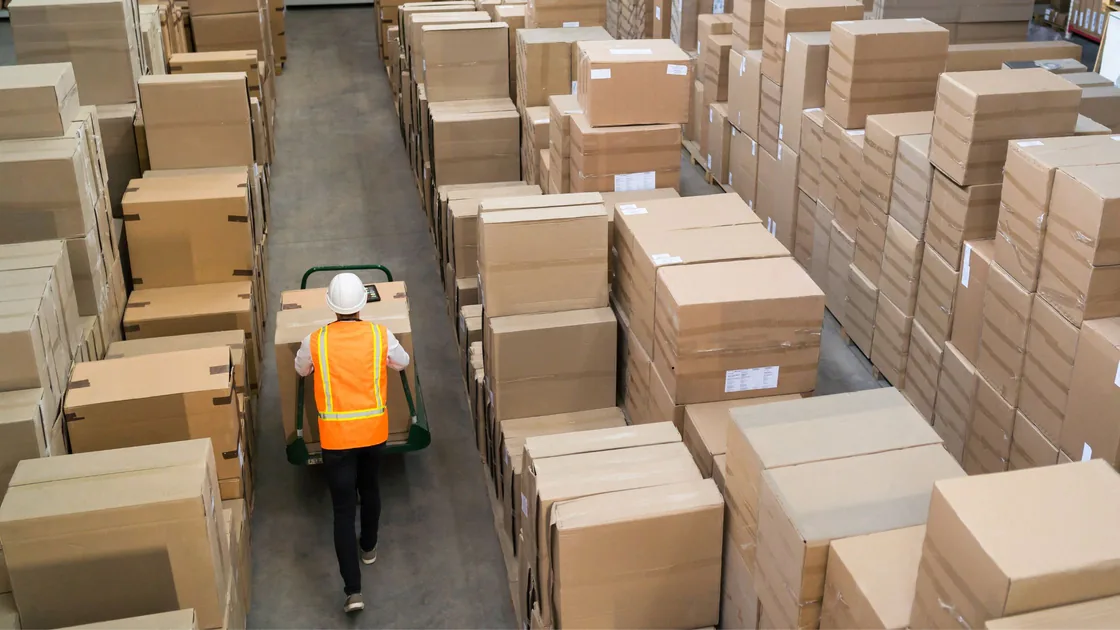
Knocked down and palletized, so freight is paid on board rather than on air. A formed carton on a pallet is mostly empty space; the same carton flat is almost all board.
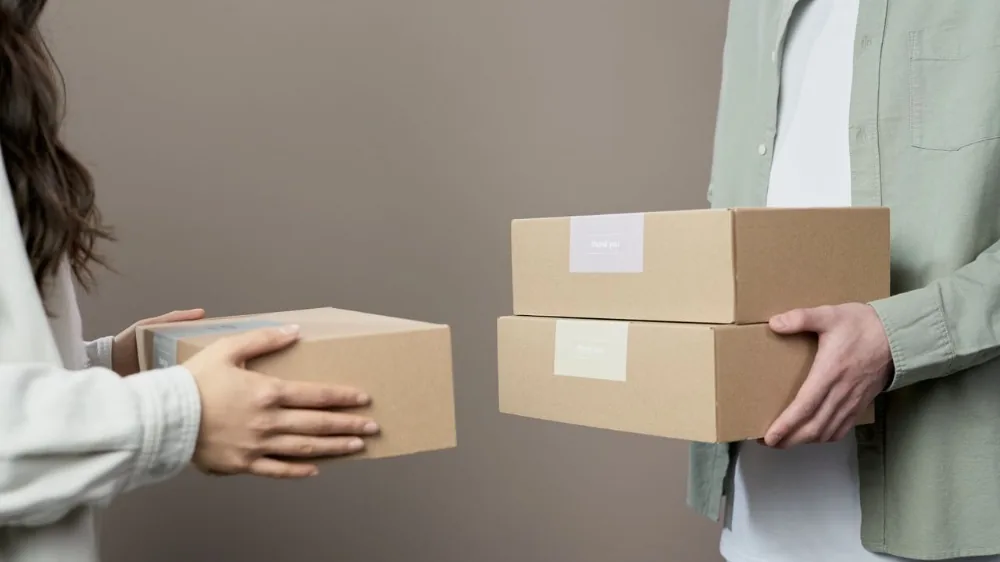
Filled and sealed, then billed on the room it takes up. This is the leg where a box cut to the product and a box bought off a stock list stop costing the same.
Pick the grade from the height you actually stack to. Each figure is the load one carton carries on top of it with the safety and humidity allowances already taken out, so it can be read straight against the weight in your own racking.
65 lb
32 ECT · single wall
Tested at 500 lb compression
The grade most parcels genuinely need — three high at 25 lb each, and no board paid for beyond that.
95 lb
44 ECT · single wall
Tested at 680 lb compression
Most warehouses build four high at 25 lb, and this grade covers that stack on a dry floor.
110 lb
48 ECT · double wall
Tested at 900 lb compression
Stops one heavy unit from bowing the walls, and still takes five high at 25 lb.
125 lb
51 ECT · double wall
Tested at 980 lb compression
Sea freight on a pallet, where the bottom carton carries everything above it — six high at 25 lb.
The same carton left four days at 85 % relative humidity gives up 45 % of its capacity, which is three high rather than four. Board is quoted wet here for that reason, and the allowance sits inside every figure above.
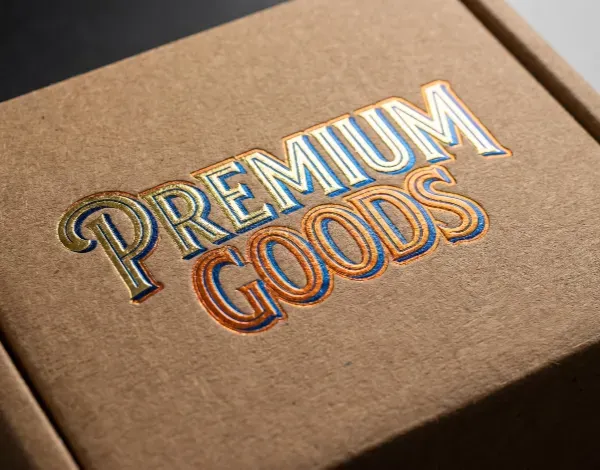
Print and assembly are the two steps that can quietly take half the stack strength out of a carton. Both are settled before a die is made, which is why the score line decides the artwork.
The most sustainable shipper arrives intact and gets reordered to the same specification. Each claim below is a figure a supplier can be held to, rather than a slogan.

Two orders where the carton was the whole problem, written up with the figures the plant recorded rather than the ones that read well.
Recycled corrugated · footwear
The brief was to move a footwear line to fully recycled corrugated without adding a second box around it. Early transit testing showed the recycled fibre giving way at the corners. The fix went into the flute geometry rather than into a thicker wall — re-cut and back through the drop sequence inside 48 hours.
Read the recycled corrugated case study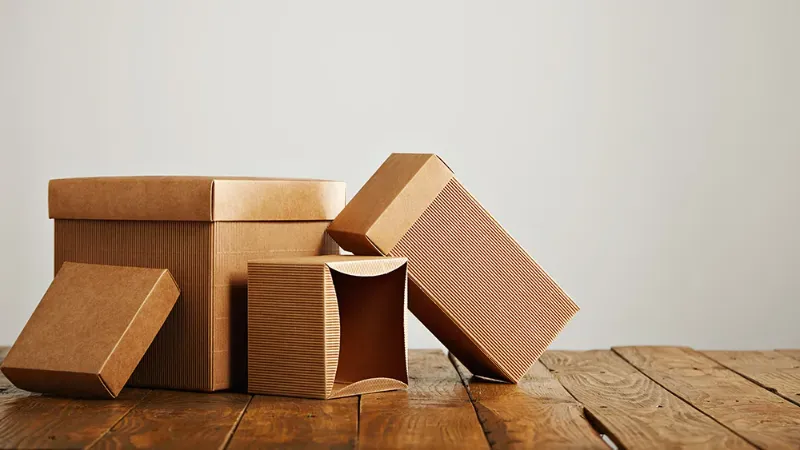
E-flute to B-flute · kitchenware
A crowdfunded kitchenware brand had a retail purchase order and a mailer that folded under a standard 50 lb drop test. The board moved to high-compression B-flute and the run was flat-packed. The barcode was re-laid on the new panel, and no pallet was turned away at the distribution centre.
Read the kitchenware launch case study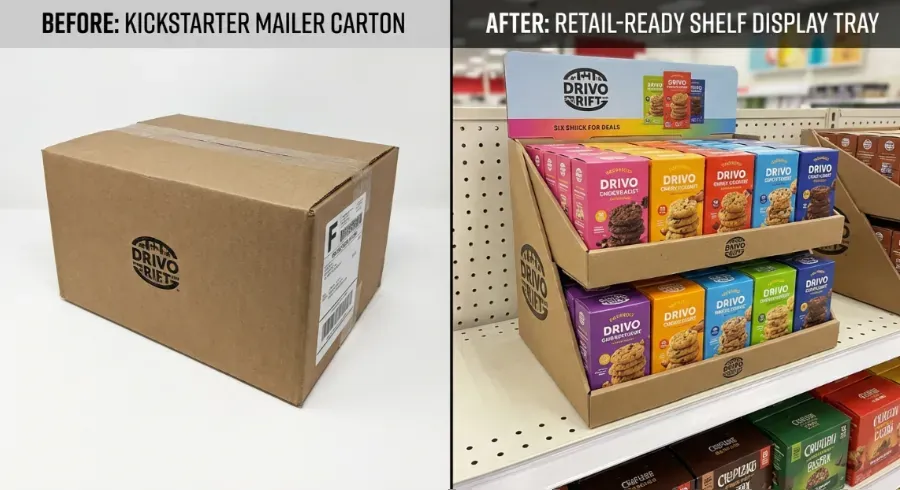
Glass is the hardest thing we ship. The custom inserts hold every bottle steady and the 44 ECT double-wall board takes the crushing, so a pallet arrives with nothing moving inside.
Reordering takes one email and a spec number. We get 12,000 cartons a quarter on the same board, and the pallet pattern they drew fits 14 more cartons on every truck.
Claims have stayed at nine all year, on the same grade of board that came in on the first order.
 David L.Supply Chain Manager, PureOrganics
We wanted the mailer to feel like a gift rather than a parcel. It comes in white with the print on the inside as well, the colours have matched what we signed off on every reorder, and customers post them without being asked.
Moving up to 9,000 at a time has never meant paying for new proofing, because the plates from our first 1,400 units are still in use.
It turns out the inside panel does more work than the outside. Customers photograph it more, and a month with 11 crushed corners counts as a bad month now.
 Sarah M.Founder, Bloom Cosmetics
Send the packed weight and the stack height in your warehouse and the grade is quoted off the capacity chart in the section above, not off a stock size. If the stack is taller than the table allows, the board moves up rather than the answer being softened.
Yes, and it is the allowance most quotes leave out. Board loses compression capacity in damp air, so a stack that is safe on a dry floor is not safe in a stockroom that holds moisture for days. Every figure in that chart is the wet one.
Send a flat sample or the existing dieline and the die is cut to it, holding the same ±1/16″ tolerance, and the new carton replaces the old without a change on the packing line. If the existing die has a weak corner we flag it before the run rather than after.
500 units per SKU. Between 500 and 1,999 units the rate drops 10–15 % off the standard rate, and above 2,000 units we quote per project. There is no die-cut charge and no setup fee added afterwards. The first quote is the whole number.
A white dummy comes back in 3–5 days and a digital mockup in 24 hours, which checks the fit before anything is printed. Once artwork is approved, standard production runs 8–10 business days and a rush run 5–7. Tracking follows the job from press to loading dock.
Vector files — .AI, .PDF, .EPS or .SVG. Where only a .PNG or .JPG exists, our artwork team re-draws it for print. Inside printing uses the same plate set, and putting the reveal on the inner liner adds a pass through the press rather than a second job.
Two numbers are enough to begin: the packed size of the product and what it weighs. We return a dieline, a board grade and a billed weight.