
012 ml
Compact Pen Slide Box
- Length
- 92–112 mm
- Mouthpiece
- Round tip
- Ships
- Formed
- Not for
- A long or an extended pen

The button face gets a 2 mm relief, so the switch does not fire in the box. A new pen length means a new die.
Capacity is the first decision a brand makes, and it sets the pen's length class. Each band on the rail below is its own die, and a pen that lands between two takes a fifth, drawn the day the pen arrives.
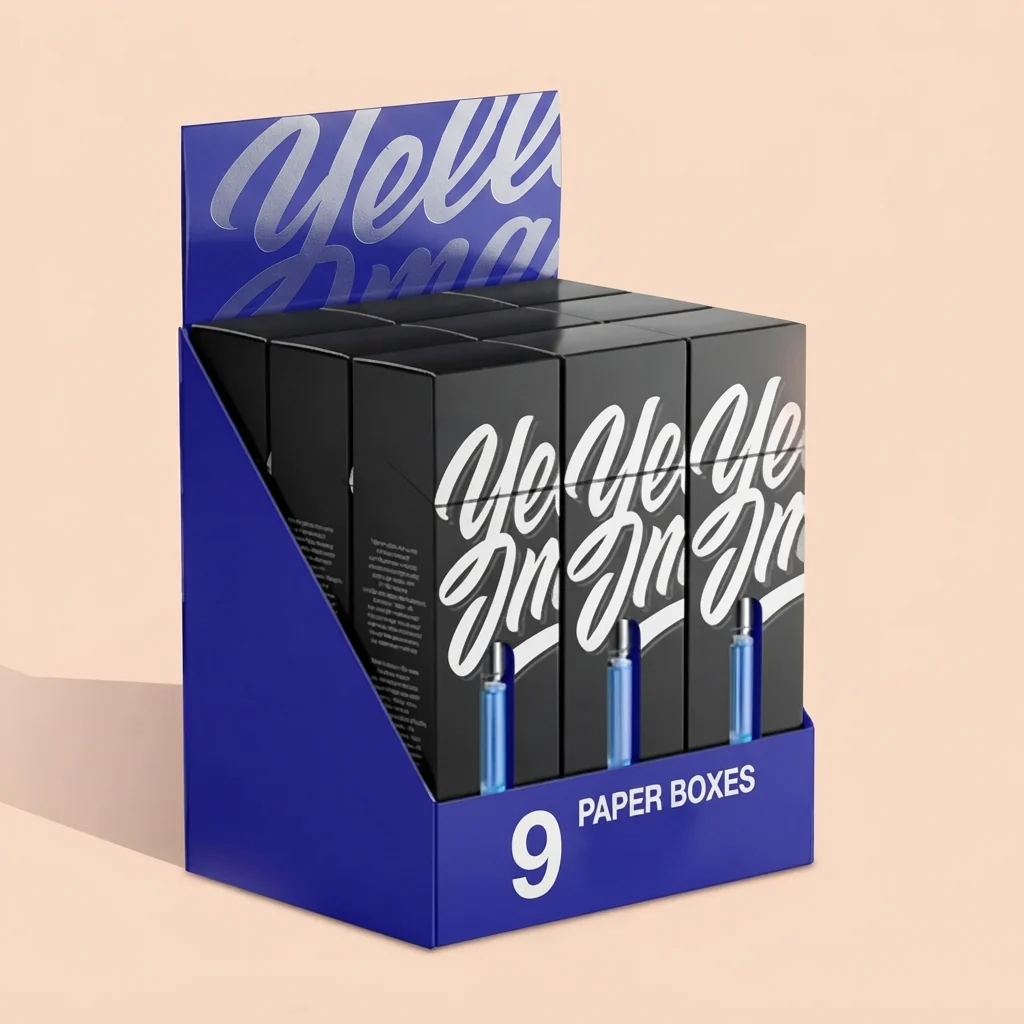
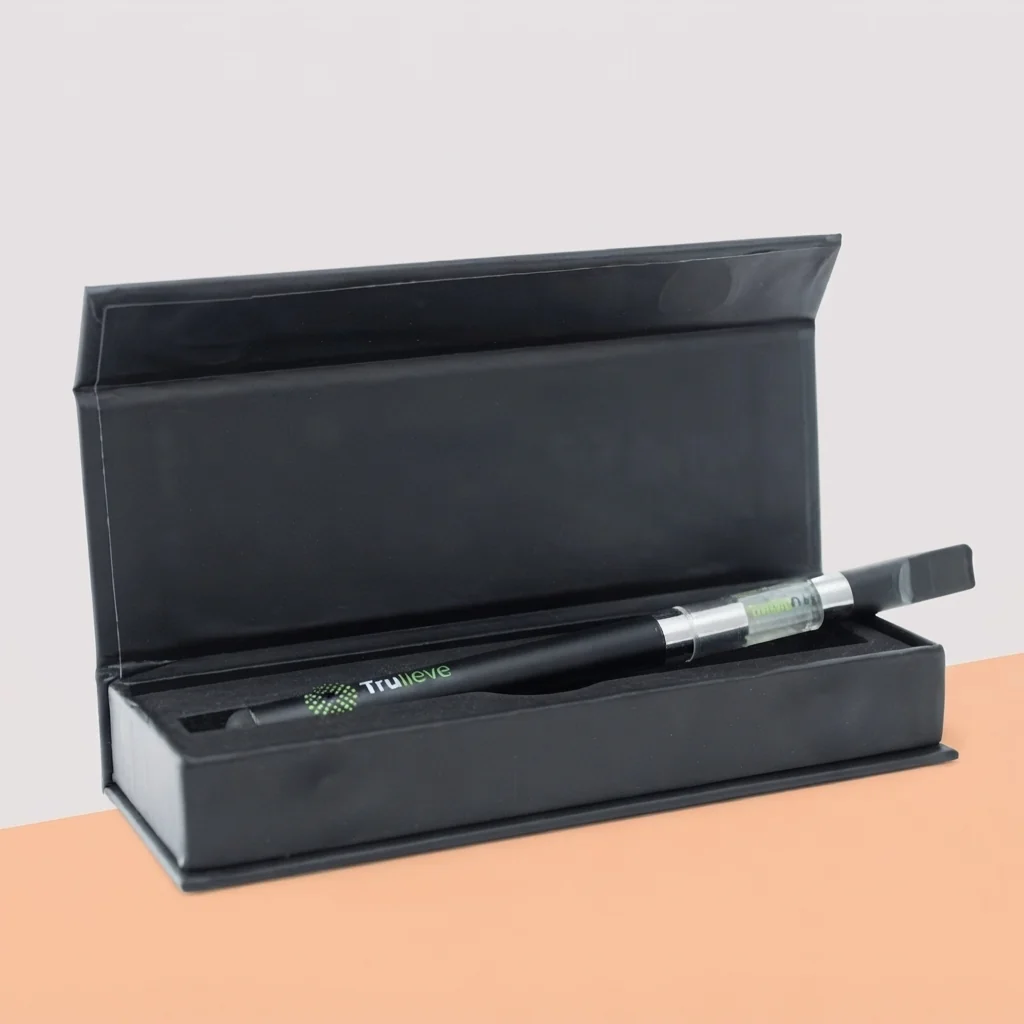
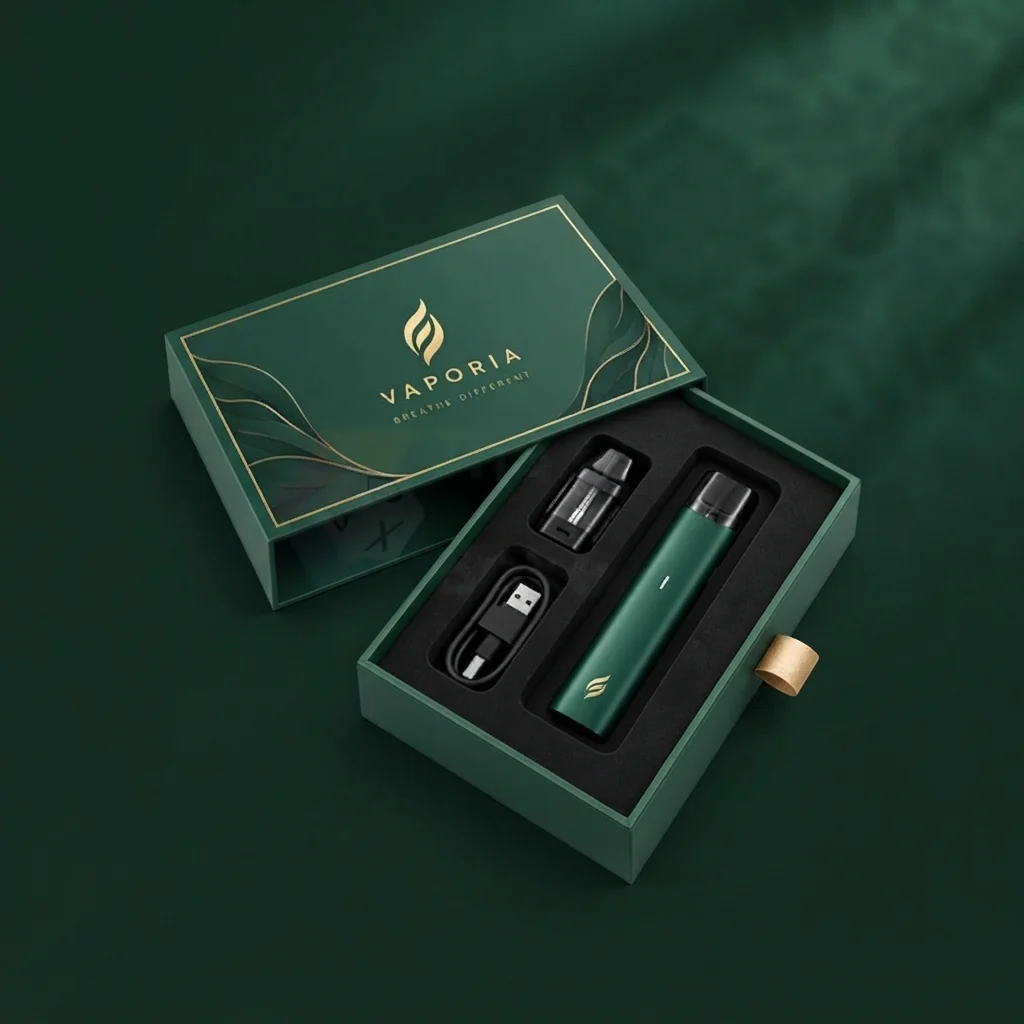
The capacities are the brand's to choose; the carton follows the pen. These are the usual landing zones for each fill, not a specification — a 10 ml pen from one brand runs two centimetres shorter than another's. Send in the pen, and the cavity is cut to it.
Five cartons cover a disposable order. They are compared on the four points a buyer asks about — how it locks, what holds the pen, where the window sits, and what it costs to ship.
01Slide box
02Tuck-end carton
03Lid and base
04Sleeve and tray
05Drawer
Lock
Push-and-slide
Tab tuck
Friction lid
Lock on the sleeve
Push-button
Cradle
A formed slot
A folded platform
A board collar
A tray of slots
A moulded tray
Window
Body only
Body only
None
None
Body only
Ships
Flat
Flat
Formed
Flat
Formed
A pen in the post, or its length and mouthpiece on a drawing, is enough to begin. The quote is then built on the carton that comes back.
A single pen, drawn side-on. Three of the four faults a disposable carton has come from a panel that touches a part it should not, and all three are decided in the dieline before any artwork is drawn.
The window is cut over the body and stops short of the mouthpiece. A mouthpiece handled through a hole is a hygiene claim the box cannot make.
The lid is relieved over the button. A snug panel presses it on the pallet, and a pen that fires in transit arrives warm, with a drained cell.
The charge port is left reachable or blanked behind a tear strip. Print over the port is re-inked every time the pen is topped up.
The same sealed pen ships two ways. They are two cartons, not a single box asked to do both jobs — and the outer is sized to the carton inside it, never to the pen.

A printed tuck-end or slide box, thin as the pen. The front face carries the flavour name and the strength, the window carries the pen, so the carton stands in a row of twenty without a display unit.
Ships formed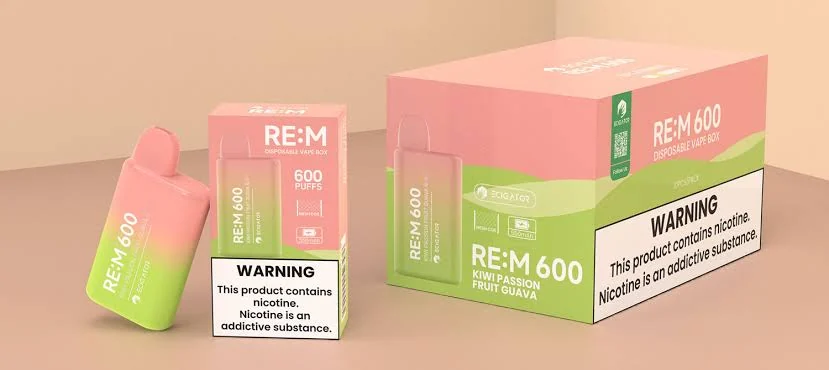
The retail carton, dropped inside an outer drawn around it rather than around the pen. The outer takes the sorting machinery, and the retail carton arrives uncreased.
Ships flatAll four are caught by a line in the dieline rather than by a stricter inspection, and they are worth naming before the first sample is cut.
The tip a buyer puts to their lips has been touched through an opening. It reads as a defect before the print does.
The pen slides, the seal takes the knock, and the carton is opened with a rattle that says the box was not drawn for it.
A tight panel with no relief sits on the button for a week in a warehouse and the pens arrive warm and half-drained.
The port sits behind the front panel, and the buyer tears the artwork to reach it on the first top-up.
The first run sent back 200 cartons cracked along the fold, so we sent photographs and the die was scored deeper on the next pass.
Adding a variant costs a new front panel and nothing else. 14 of them run on the same carton size today.
Our last reorder was 46,000 pens, drawn on the dieline we signed in the spring.
Freight is where our margin lives, and the cartons went out on 7 pallets.
Shelf space was the whole brief: the carton had to stand in a 55 mm channel and hold its place without a display unit.
Registration is what our team checks first, and the 2 spot inks have matched the chip we signed every time since.
Spring is our busiest stretch, and 9 cartons went out on one date with the whole order behind them.
We put a hard date on the autumn drop, and the order cleared the port 11 days ahead of it.
500 units. A mixed order of a slide box and a tuck-end carton counts against the same 500, so a first run can test two structures at once.
A white dummy lands in 3–5 days to check the fit and the stop line. A printed dummy follows in 7–10 days once the artwork is signed off, and that one fixes the color.
Four to six weeks from the signed printed dummy, covering printing, die-cutting and gluing. The window is quoted with the sample rather than after the order.
The structure is available, and a test report is arranged on request rather than claimed on this page. The closure is drawn to defeat a small hand, and the report travels with the sample.
The brand supplies the words, and the panel is drawn here to hold them at the size that market prints at. The proof is signed before the printed dummy is cut.
Yes. A tray for five is not a box cut wider. Every count moves the slot pitch, the fold and the sleeve depth, so each count is quoted as its own cut file.
The dieline stays on file, and the tenth run of a pen carton lands on the shelf identical to the sample that was signed — same window position, same stop line, same color.