Certified sulfur-free linings keep sterling silver and gold plating brilliant through long-term storage and ocean freight — slashing return rates and keeping inventory display-ready. Precision engineered with 99.8% Pantone color accuracy and flawless hot-stamping for uncompromised brand presentation.
Sulfur in the air, a lid that shuts too low, and a well cut to the wrong size — all three settle the outcome long before anybody opens the box.
01
The lid leaves a mark on the stone
The insert holds the piece below the line where lid meets base, and the sample is closed and reopened on the bench before the run starts.
The stone arrives exactly as it left the bench
02
Silver goes dark in the box
A sulfur-free layer is laid against the metal itself rather than over the adhesive behind it, and it is the layer we name on the spec sheet.
Stock that still reads as new after a season in the case
03
The piece scuffs itself on the way
Board is harder than metal, and a loose well is what lets the piece travel. Sized around the piece and the clasp, there is nothing for it to move against.
A piece that comes out of the box unmarked, however far it travelled
Custom Jewelry Packaging Types
Every build takes its own insert, board and wrap. Change the type and all three change with it.
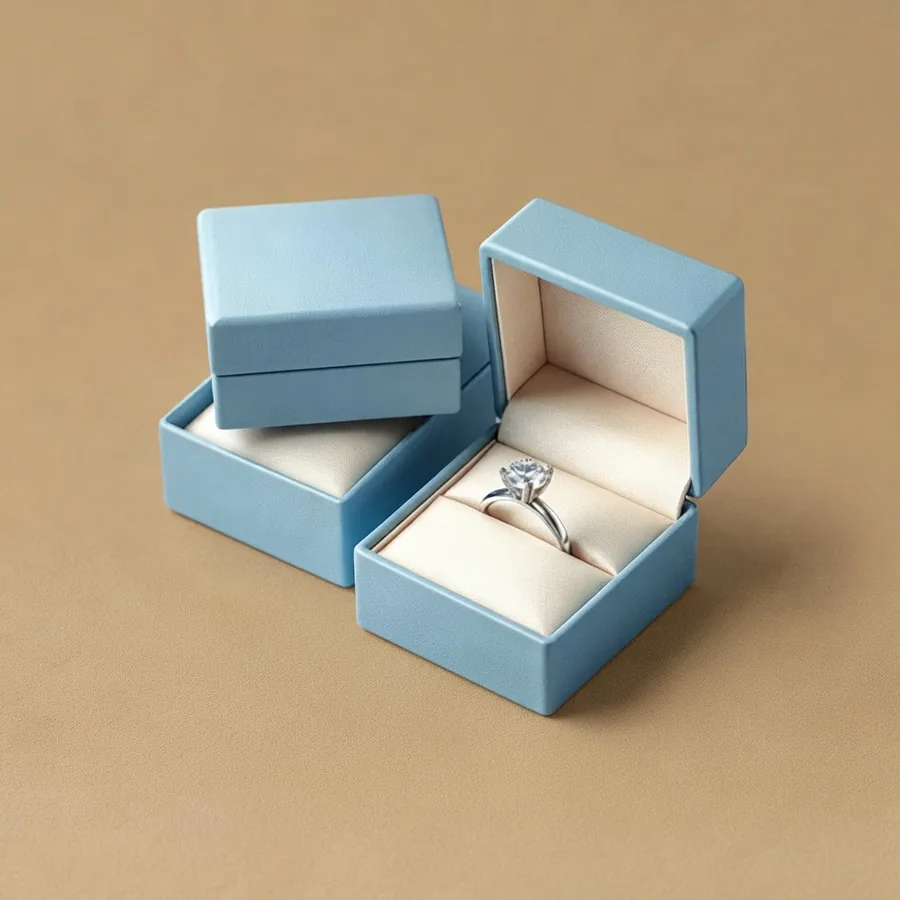
JT-01
Custom Ring Boxes
One or two wells
A well cut to the band itself — the stone finishes clear of the board underneath.
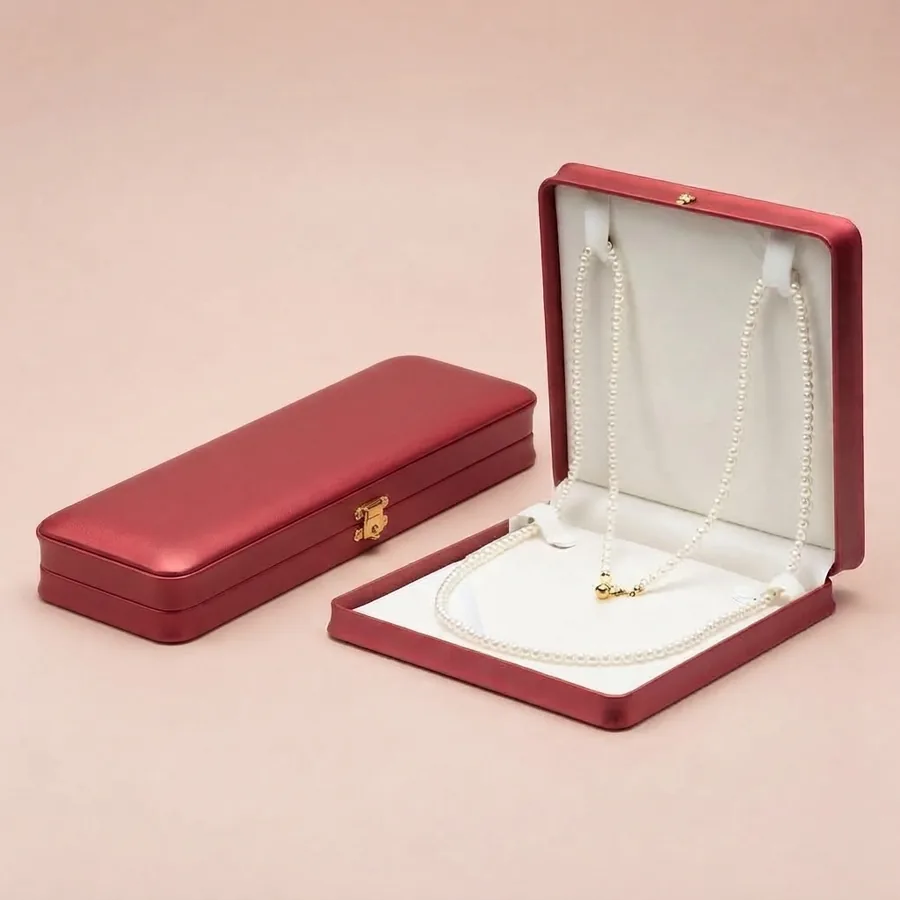
JT-02
Custom Necklace Boxes
Card or tray
A card carries the chain along a single curve; it arrives ready to hang rather than knotted.
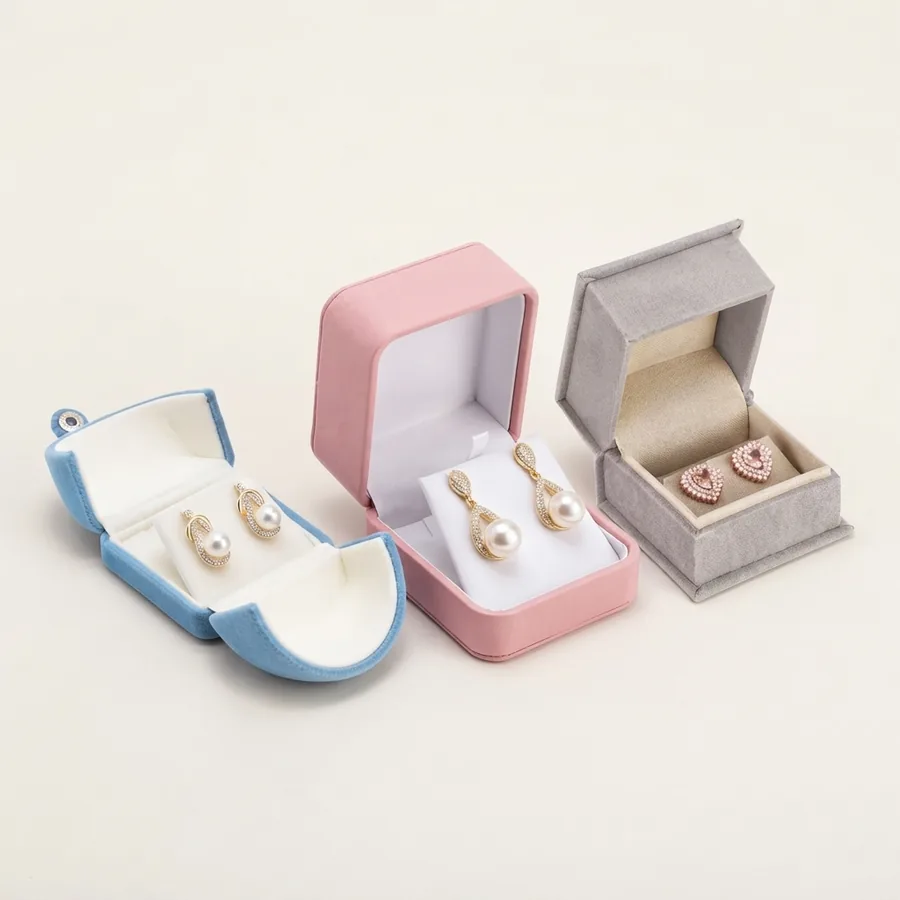
JT-03
Custom Earring Boxes
Paired wells
Two wells rather than a shared cavity, because a pair must not meet on the way.
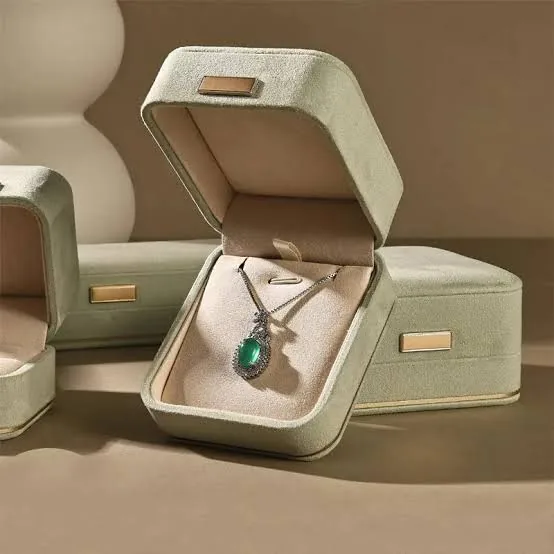
JT-04
Custom Pendant Boxes
Deep slot
Depth holds a swinging drop still and keeps the bail from riding on the chain.
JT-05
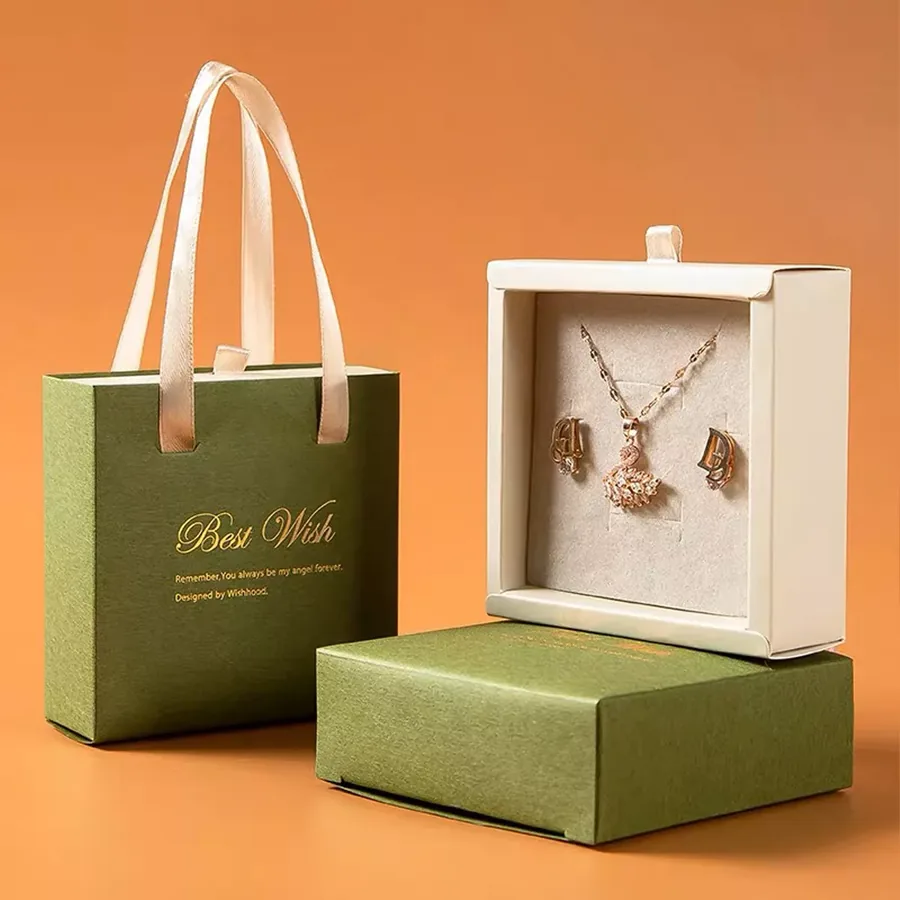
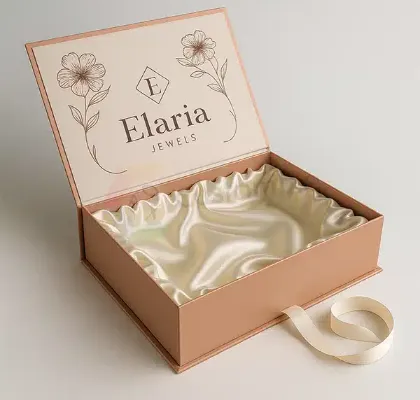
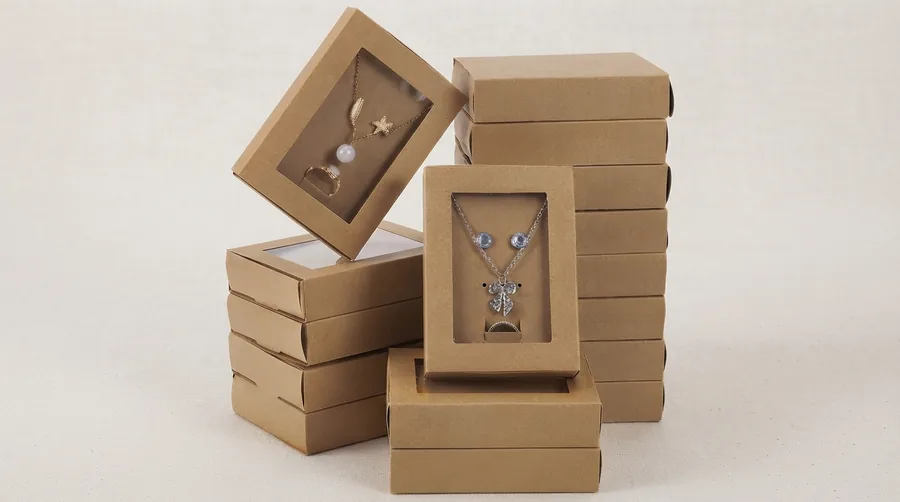
Custom Jewelry Gift Boxes
Ribbon or magnet
The opening gets photographed. The lid line belongs in the design brief.
JT-06
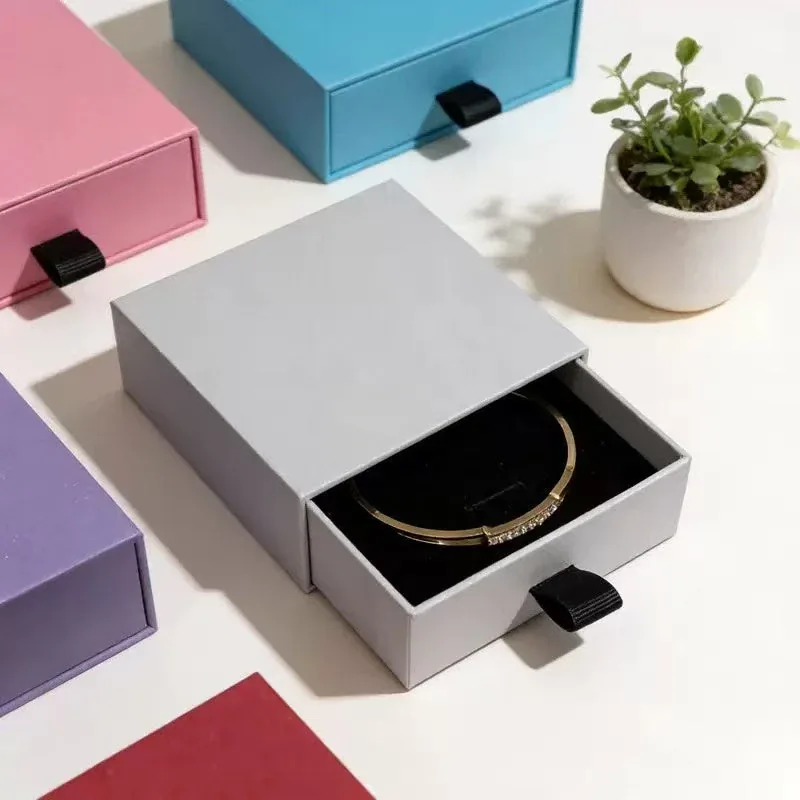
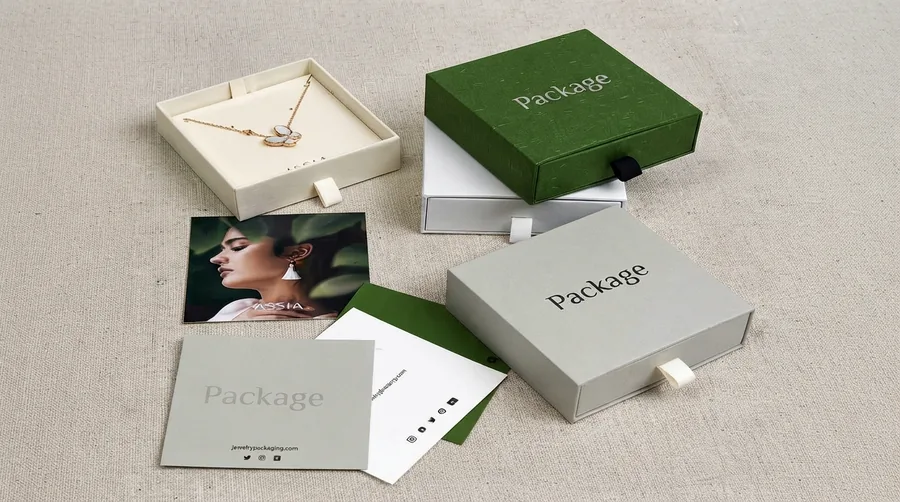
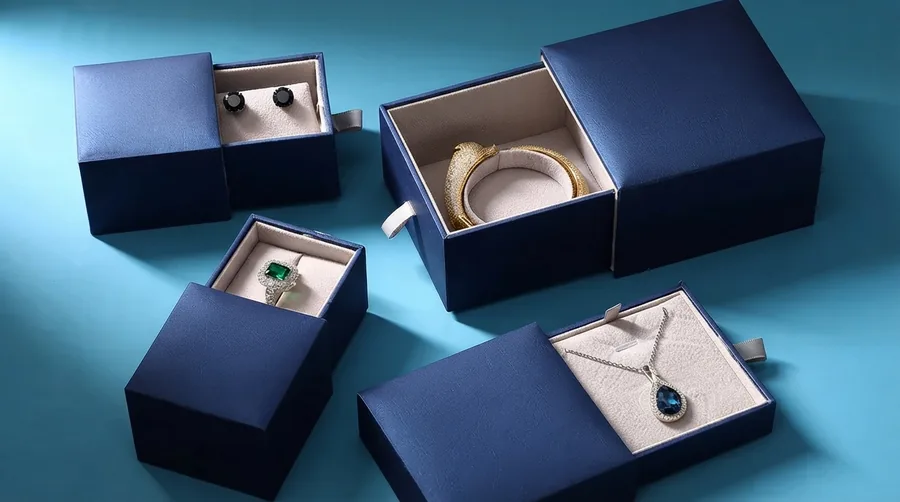
Custom Jewelry Drawer Boxes
Sliding tray
The tray travels toward the customer; the piece is seen before it is touched.
JT-07
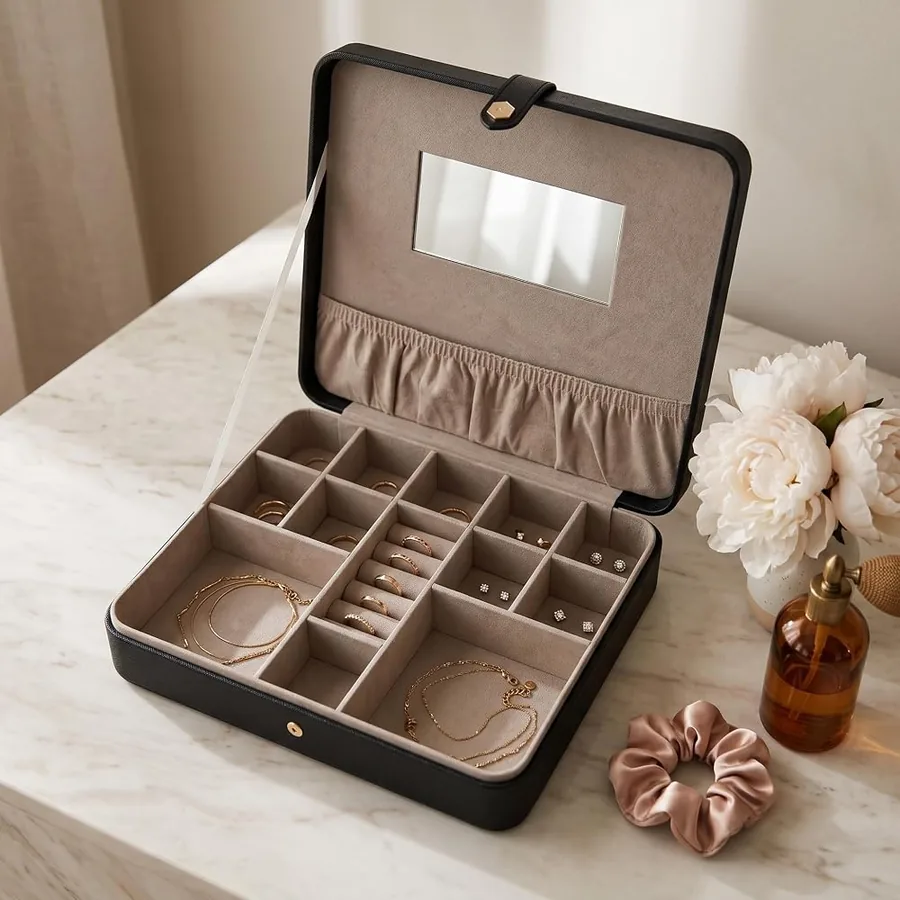
Custom Jewelry Travel Cases
Cut compartments
One case carries a mixed range, with a compartment per piece.
JT-08
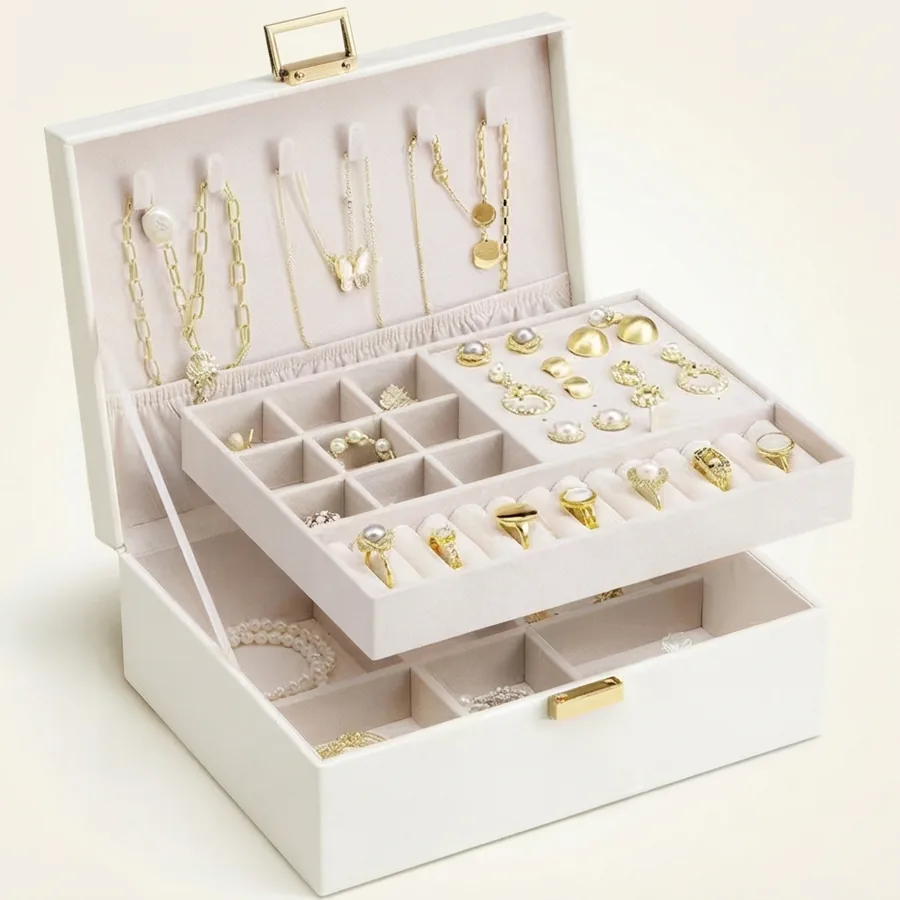
Custom Jewelry Set Boxes
Two levels
Two levels: the necklace rides above, and the certificate travels flat underneath.
JT-09
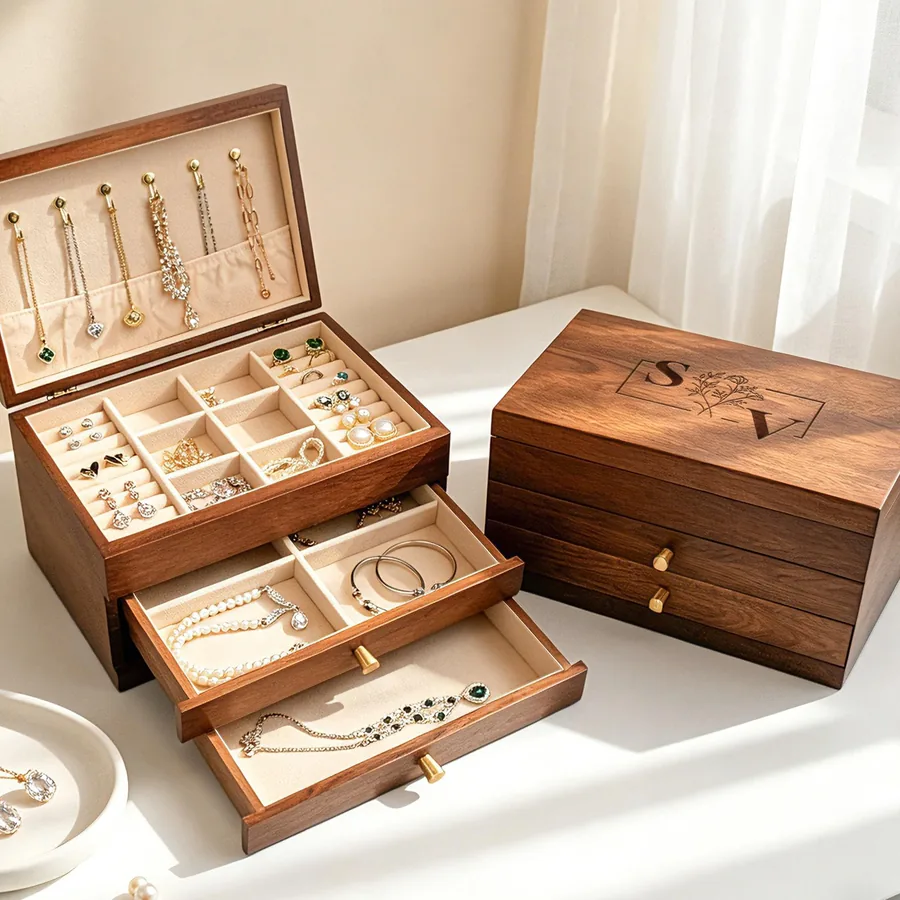
High-End Wooden Jewelry Chests
Lid and base
The build a customer keeps, refills and leaves out on display.
An insert is cut from the piece, not from a category. Send one sample or its three measurements, and the cavity is drawn to that and nothing else.
01
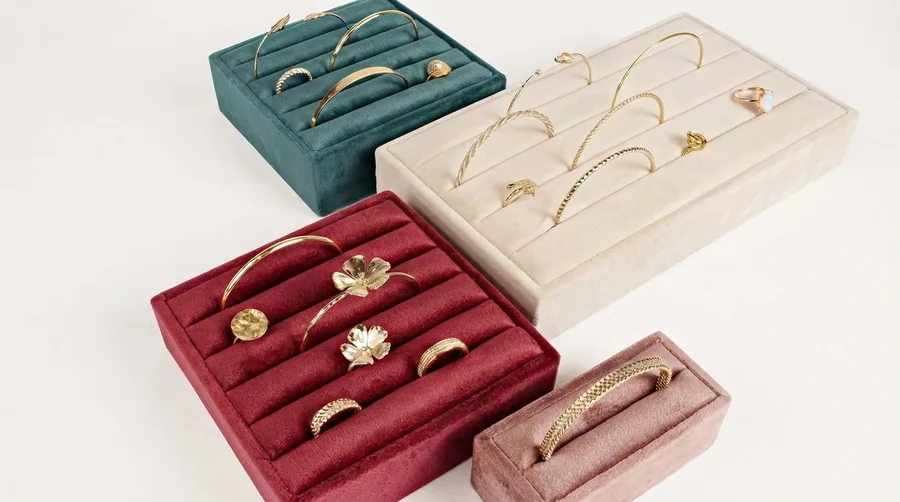
Ring slot
Wells measured from the band rather than from a nominal ring size, and cut so the stone hangs free of the floor beneath it.
Nothing comes to rest on the stone.
02
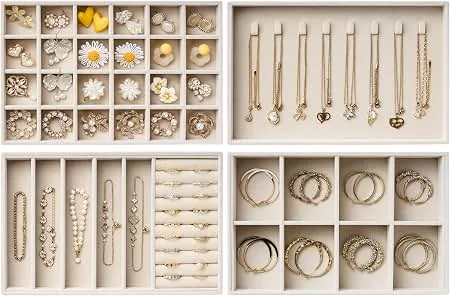
Cut tray
A pocket per SKU, cut from measurements of the actual piece, never guessed from a photograph.
Every SKU rides in its own pocket.
03
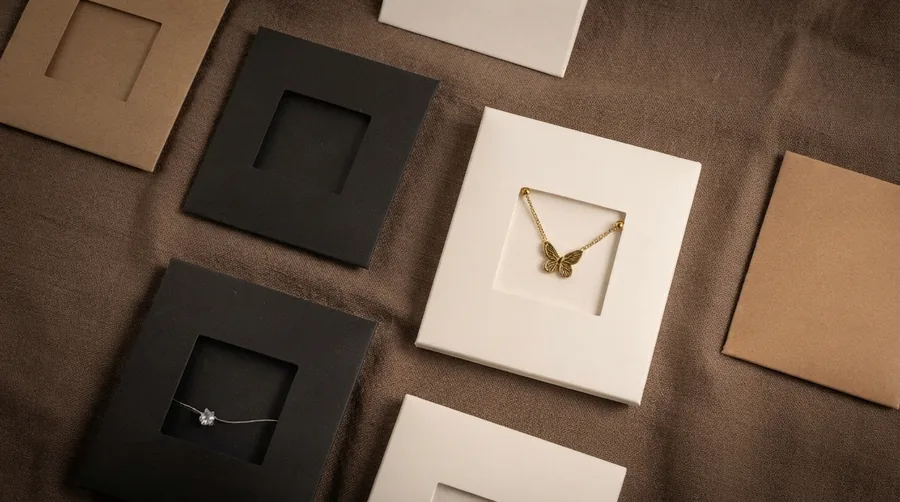
Necklace card
Satin or velvet wrapped over board, notched at the top so the chain hangs in a single curve and the clasp stays clear of the wrap.
A chain that keeps its line.
04
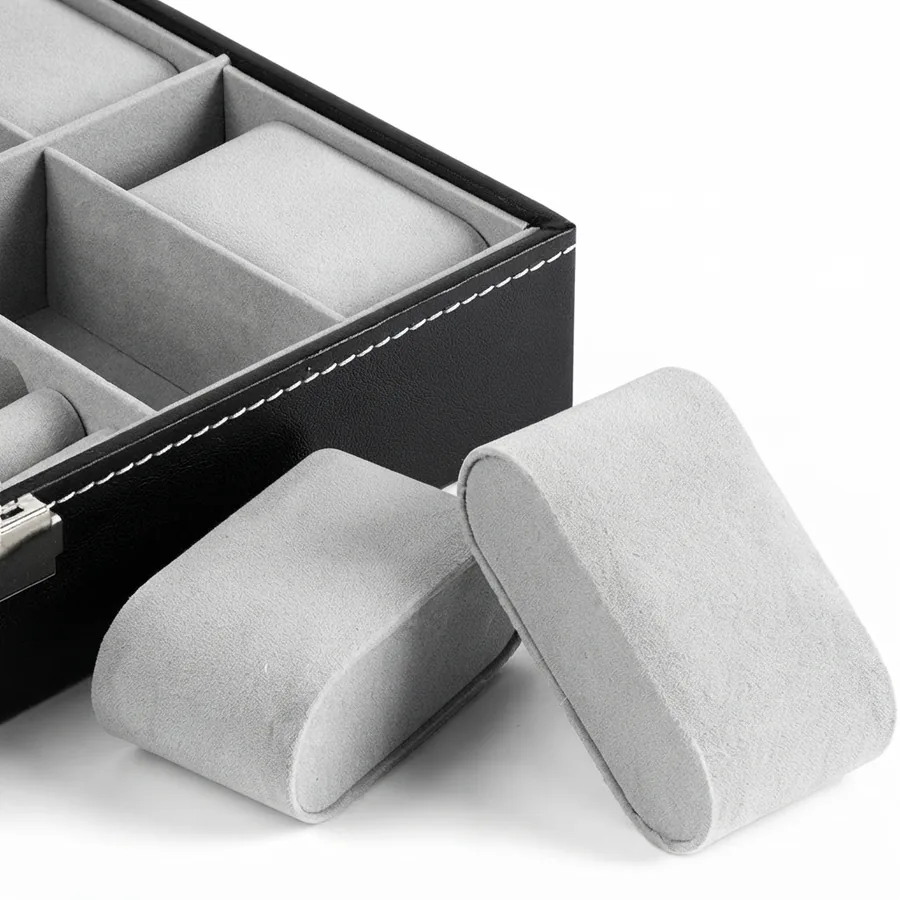
Pillow pad
A shaped pad cut to the inside curve of the piece — the clasp and the band carry no weight at all.
The shape survives the trip.
05
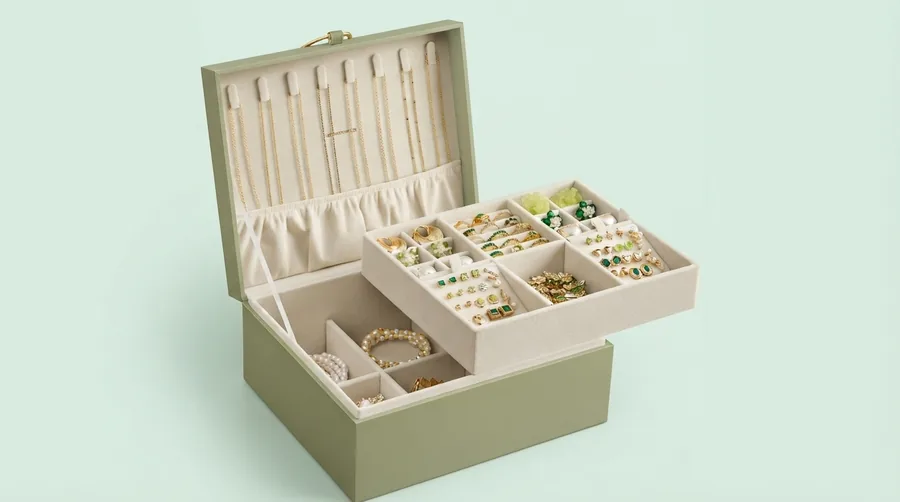
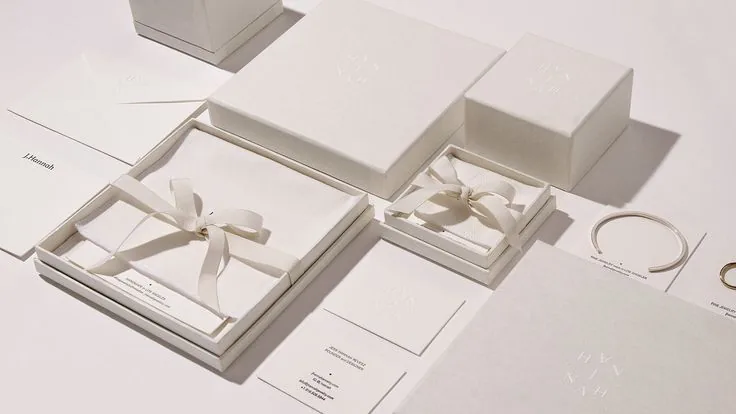
Two-level tray
Two floors taken from the same measurements: the trays ride above, and the papers or the certificate lie in the shallower tray below.
A set travels as a set.
Linings and Anti-Tarnish Protection
Silver dulls in a container weeks before a shop ever sees it, and it is the cloth in contact with the metal that decides the outcome. Four cloths, a single job each.
Velvet
Rings and branded retail boxes
A polished stone meets nothing abrasive.
Suede or microfiber
Modern lines where shine is unwanted
The chain comes out unmarked, on a face with no shine to it.
EVA or foam
Transit and mixed-SKU trays
Freight cannot move the piece, because the cavity was cut around it.
Satin over card
Necklaces and certificates
Under satin, a chain reads as deliberate.
In a sulfur-free lined box
The metal stays display-ready, and stock does not have to be polished or discounted before it reaches a cabinet.
In an unlined box
The darkening happens in transit and in the stockroom, which is why it usually arrives as a customer complaint rather than a packing note.
Structure is settled before the wrap, because changing it afterwards re-cuts the dieline and the insert together. These four cover nearly all jewelry ranges.
Four box structures, what each one does, and when to rule it out
#
Structure
What it does
Best for
Avoid when
01
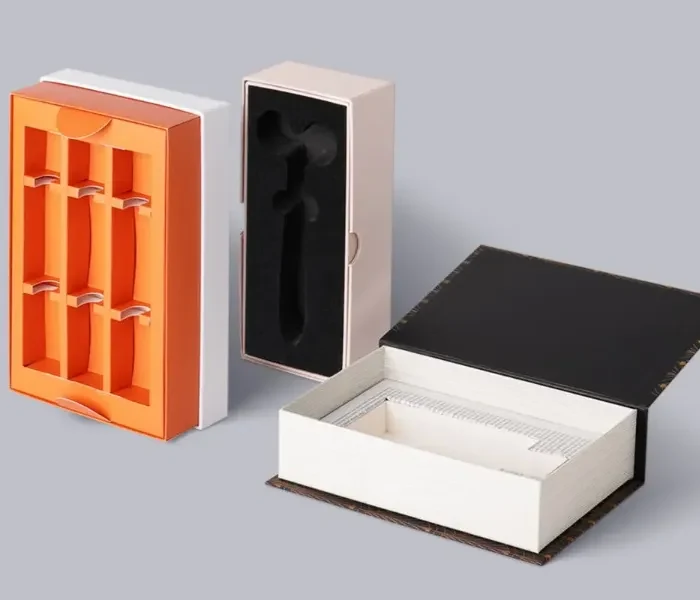
Magnetic Book-Style
A hinged lid frames the piece and shuts on a magnet; it opens one-handed and stays shut in a bag.
Rings, earrings and small pendants
The box has to pack flat for freight
02
Lid and Base
The lid lifts clear, and a wide or deep tray comes out in a single movement instead of being angled past a hinge.
A necklace with a tray, watches, multi-piece sets
You need a one-hand open on camera
03
Drawer With Ribbon
The tray slides toward whoever is holding it: a counter gesture, not a packing step.
Retail counter, gift-with-purchase
High e-commerce volume, where it is slow to pack
04
Two-Piece With Neck
The shoulder holds a tall or standing piece upright, which is something a ring has never needed.
Tall bottles and standing display
Thin rings that need a deep slot
Share one cavity across every size in a range and a mixed order rides in a single run.
Jewelry Packaging Case Studies
One program, published in full: the problem, the rebuild and what it cost before and after. The figures below are the client's own, not a brochure's.
Consumer jewelry, direct to customer
The brand had outgrown a stock mailer
Average order value had passed $300 while the packaging had not moved with it. Stock mailers crushed under courier handling, and the generic foam left an inch of air around each piece, and rings rattled their way to micro-scratches.
The rebuild used a 1200 GSM magnetic rigid box, a 157 GSM soft-touch wrap, a molded EVA insert over black velvet and hidden N45 magnets.
$47,000A month of shipping margin the old boxes were eating
What Our Customers Say
Lisa HarringtonFounder, Artisan Jewel Studio
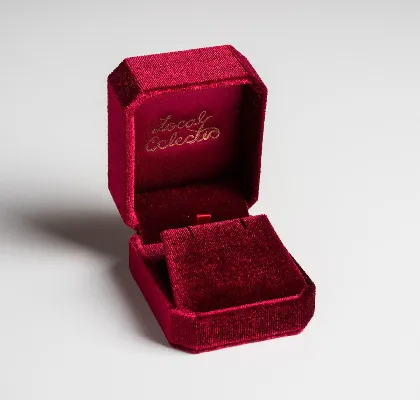
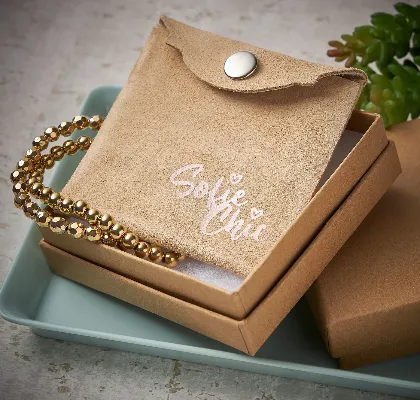
Matching velvet pouches and boxes, colour-matched to the studio palette
Our pieces travel in the velvet pouches and matching boxes now. Nothing marks on the way, and each of our 14 finishes has a box cut to it rather than a stock size that nearly fits.
A replacement lid was cut and shipped within 2 days of us sending the breakage photo, with no back-and-forth.
About 80 % of our orders leave as a single piece, so the box is the first thing a buyer touches. Sending a photo and getting the cavity drawn to the piece stopped us guessing at sizes, and the tray holds it steady from the bench to the door.
James KowalskiOperations Manager
Ribbon-pull gift boxes on FSC-certified board
We order ribbon-pull gift boxes on FSC-certified board, and they come through a courier journey with the corners still sharp. That is 2,400 at a time.
Nothing on the line needs cutting, because the inserts arrive ready to use, and packing a retail order takes one person instead of three.
Consistency is what we needed between runs. Eleven restocks in, and the second order has matched the first closely enough that our retail partners have not seen a colour shift mid-season.
People Also Ask About Custom Jewelry Packaging
Six questions that come up before a brief is settled.
01What do you need to start a quote?
Less than most buyers expect. No artwork and no dieline are needed — those come back from us. What does help is the logo in vector form and the colour reference you print to, so what comes back matches what you sell.
02Can you copy a box we already use?
Send a physical sample, or photographs with the outside dimensions. Both the pattern and its cavity are rebuilt to match, and the files are kept against your reference.
03How is the price built?
Board and wrap, assembly, and the insert with its pouch. The mark sits outside those three as a separate line, because the die is cut once and kept — which is why a reorder reads lower than the first order.
04Do you need the jewelry itself?
It is the fastest route, and the piece comes back with the first sample. Where something cannot travel, the well depth is the measurement worth taking by hand.
05How do the boxes ship?
Flat where the structure folds and assembled where it does not, on pallets or in cartons. The carton count and the weight travel with the despatch papers; the receiving end is not guessing.
06How is the minimum counted?
Once per structure, per size and per wrap — that is the unit it is counted in, not a monthly volume. It is also what makes the first order expensive and the tenth not.
Send Your Sizes, and the Sample Comes Back
Length, width and height for each piece, how many of each size, and where the samples are going. One page is enough — the price and a proposed build come back from it.

 JT-01
 JT-02
 JT-03
 JT-04
 JT-05
 JT-06
 JT-07
 JT-08
 JT-09
 01
 02
 03
 04
 05
 Lisa HarringtonFounder, Artisan Jewel Studio
 James KowalskiOperations Manager