
Child-resistant vape packaging

Custom Child-Resistant Vape Packaging: 3 Locks, 2 Moves Each

A child-resistant vape box is a structure, not a sticker: the lock moves before the drawer or the lid will come out. Three locks cover the shelf, each a two-move action that stops a small hand short. A 16 CFR 1700.20 or ISO 8317 report is supplied on request.

FSC-certified board · ISO 9001 factory · ISTA drop-tested · Free dieline

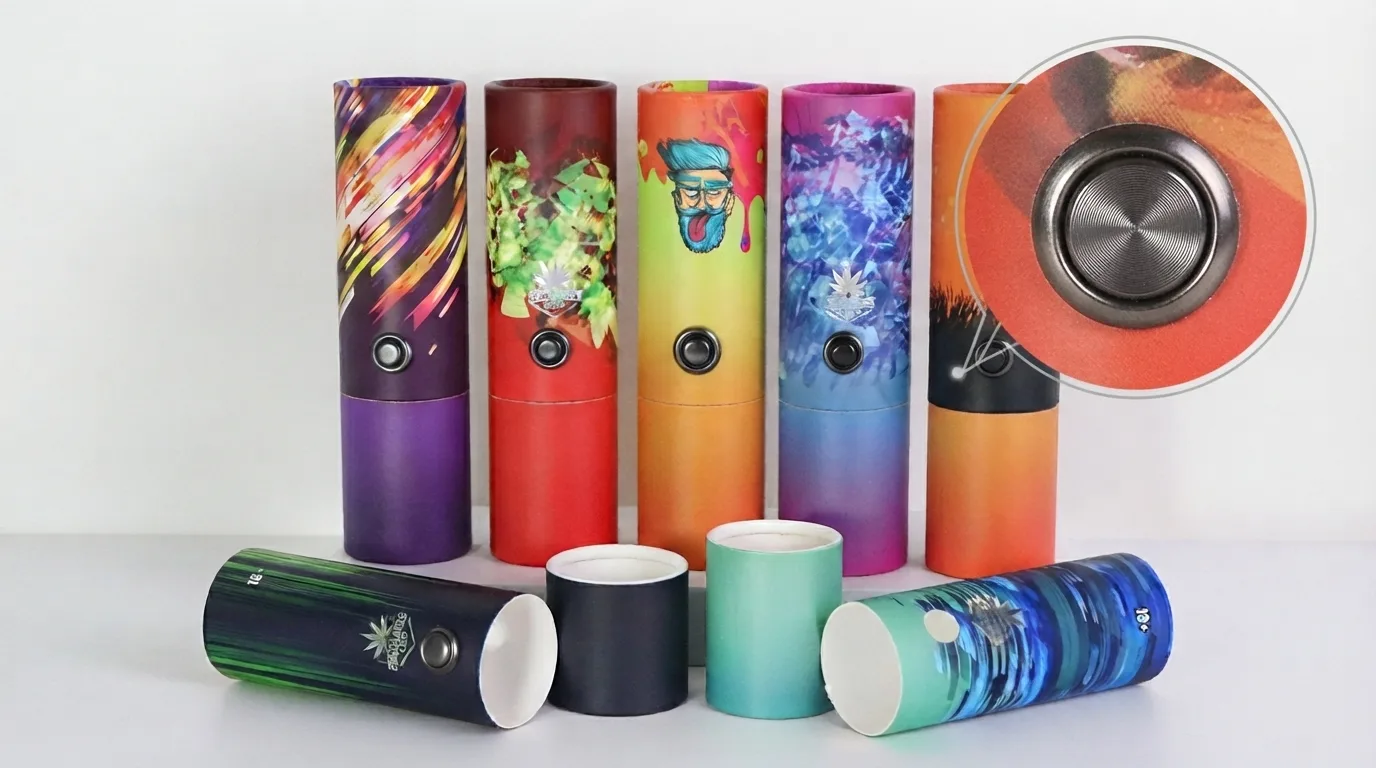
A row of printed child-resistant tube boxes, each with a round push button, one tipped open beside a magnified view of its button
1Hold2OpenA child stops at move 2
Three locks, two moves each

Three Locks, and the Move a Child Misses

A child-resistant vape box does a single job: a child cannot open it, and an adult opens it without reading anything first. Every lock below is a two-part action — and the second part is where an adult and a child part ways.

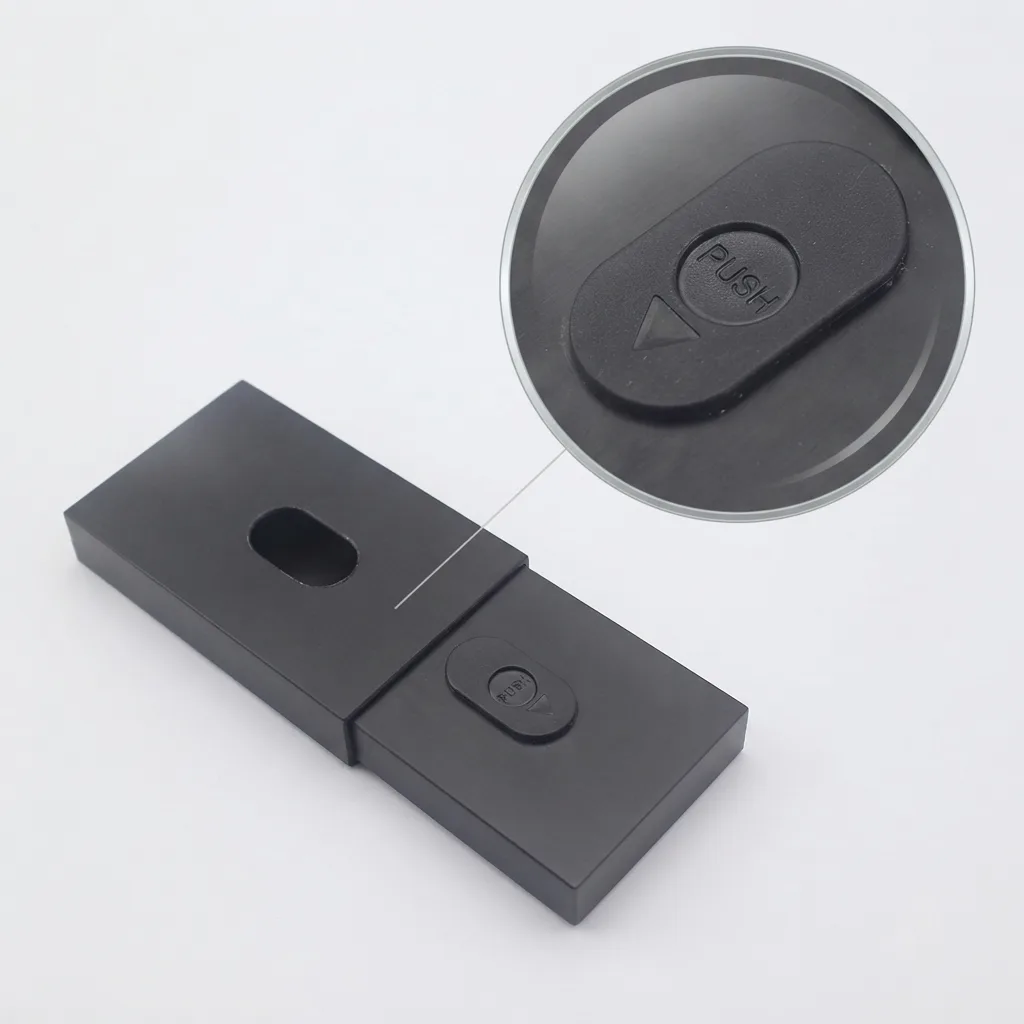
A closed black push-button drawer box with a recessed oval finger hole, beside a magnified view of its embossed PUSH button
01

Push-Button Drawer

Runs flat

Folds flat: the tray and the sleeve collapse, and the button forms on the filler.

  1. 1Press the side button in
  2. 2Pull the drawer out while the button is helda child stops here

A small hand presses, then lets go to grab the tray — and the tray is locked again before it clears the wall.

Never holds a heavy mod host. Weight on a button-locked drawer drags the action loose. A host rides in a compartmented tray instead.

What shipsA flat-packed box that fills on a standard line and stays shut from the factory to the counter.

A push-and-slide box with its inner tray drawn out, holding a glass vape cartridge in a white insert, and a magnified view of the insert
02

Push-and-Slide

Runs flat

A folding blank, so it ships flat; a formed version can be assembled on request.

  1. 1Push the inner card inward
  2. 2Slide the sleeve off — both moves at oncea child stops here

A child manages one action at a time — pushes, or pulls — but never the two together, which is where the sleeve stops.

Never holds a glass bottle. A slide needs a flat face to travel on. Glass has no flat face, and its weight shears the travel.

What shipsA flat blank that stacks and posts light — no formed barrel to freight.

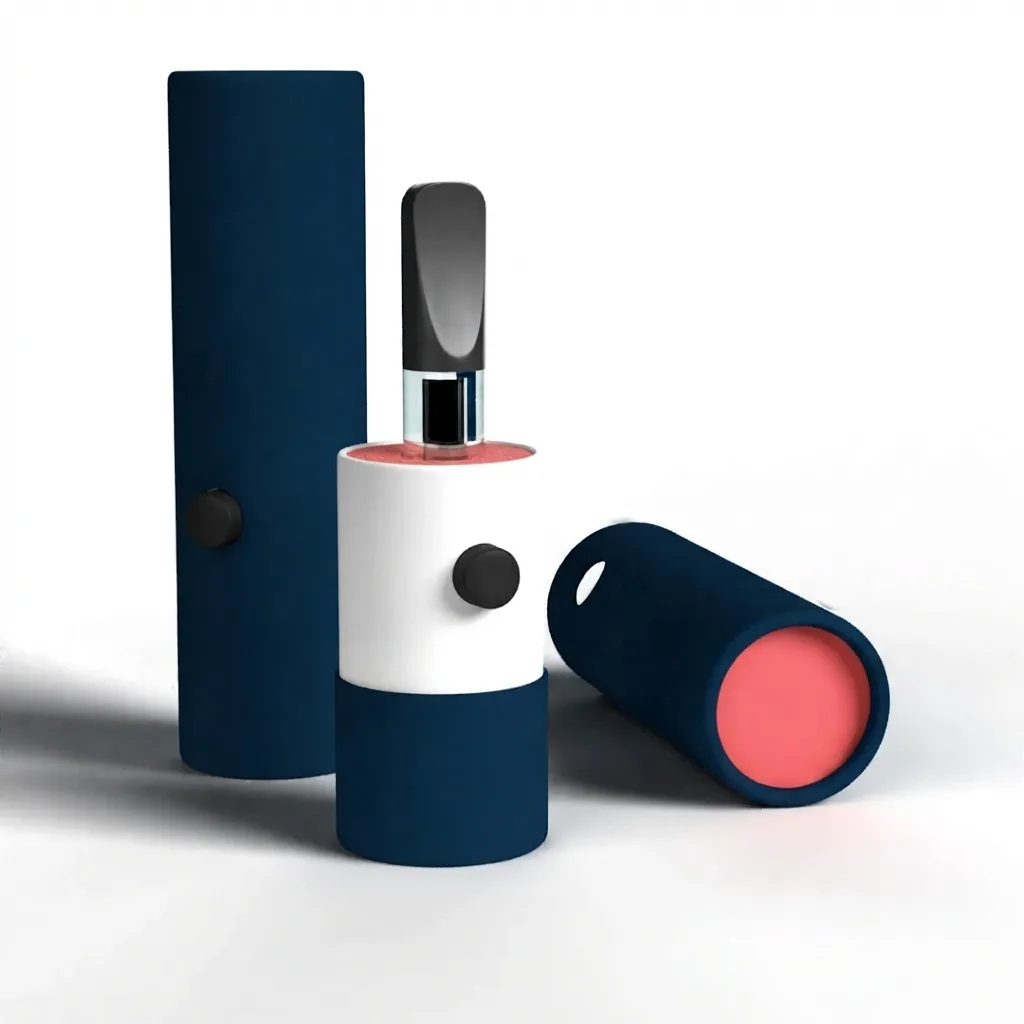
Three navy side-button tubes, one open on its side with the cap beside it and the round side button showing
03

Side-Button Tube

Runs formed

Keeps its round shape, so the barrel ships formed and cannot be folded flat.

  1. 1Press the button set into the barrel
  2. 2Turn or lift the cap while the button is helda child stops here

The button sits low on the barrel, away from where a small hand grips, and a turn without the press leaves the cap shut.

Never holds a kit of two or more parts. A tube is cut for a single item. Two parts need a divided tray, which is a different structure with its own die.

What shipsA formed barrel that reads as premium on the shelf and keeps a single device from rattling.

The test itself

The Test Behind Every Report

A child-resistance report is a result, not a signature. Both standards run the same shape of test, and what comes back is a document a buyer's compliance team can clear without asking for a second run.

  • 50children on the panelaged 42–51 months, half girls and half boys, spread evenly across the band.What it provesThe panel is named in the report — a buyer can see the test was real.
  • 5+5minutes, with a demonstration betweenfive alone, then the tester shows the lock, then five more. Teeth are allowed in the second round.What it provesA pass that answers how a child really attacks a pack, not a single try.
  • 85%must still be locked out coldand 80% after the demonstration — the child line both standards draw.What it provesA figure a compliance team already knows — the report clears without a method debate.

The adult half

ISO 8317 tests the other half too: 100 adults aged 50 to 70, given the printed instructions, must open and reclose the pack — 90 of them or more. A lock that beats a child but stops an adult fails its own report.

Tested filled

The test runs on the filled pack. The lab loads an inert stand-in for the contents, but the container and its lock are proven as a single system: a different cart or pen is a different structure, drawn and tested again.

Test reports

What We Put in Writing, and What We Never Do

A child-resistance report describes one structure, tested against a single standard. It is the strongest sentence a packaging page can carry, and the sentence a buyer reads instead of taking the pack on trust.

On file

Two reports, two markets

  • 16 CFR 1700.20 clears a US buyer without a second test.
  • ISO 8317 does the same for the EU and UK.
  • Released under NDA with the sample, so a buyer can read the method, not just the pass.
Never written

Lines we strike out

  • Certified child-resistantCertification is a body’s word. We hold a report, and a report is what goes out.
  • Zero risk to a childA lock lowers a child’s odds; nothing brings them to zero. The phrase is not a result a panel returns, so it is a line we leave out.
The words

Three Words, Three Different Promises

A shelf uses these three freely, and they are not interchangeable. Two are words; the third is a standard with a test behind it. The term on the pack decides whether the claim survives a buyer's first question.

01

Child-resistant

The regulated term

Defined by the standard, not by a designer: significantly difficult for a child under five to open in a reasonable time, and not difficult for an adult to use properly.

Not promisedIt does not mean a child cannot open the pack at all — no report makes that promise.

In practicePrint it and stand behind it — the only term of the three a report can defend.

02

Child-proof

Not a standard

A common word with no test behind it, and the strongest of the three. It promises what no lab can show: a package that no child ever opens.

Not promisedA report never uses this word, and neither does this page.

In practiceLeaving it off a pack removes a claim no lab can back.

03

Tamper-evident

A different job

Shows the pack has not been opened or altered before it reached the buyer — a seal, a band, a broken line of ink. A useful addition, on a different structure.

Not promisedIt stops nobody. A child can open a tamper-evident pack; the seal only tells you that someone did.

In practiceA visible seal that shows a pack arrived untouched, stacked on the lock rather than instead of it.

How an order runs

How an Order Runs from One Lock to a Sample

The lock is the first decision, and the rest are drawn around it. Nothing downstream is settled until it is.

  1. 1

    Pick a lock

    The die is cut for whichever of the three structures you name, and a run starts at 500 packs.

  2. 2

    Name what goes in

    Enough to fix the lock and its cavity, not a product page.

  3. 3

    Say whether you want testing

    Either standard, or the signed sample alone.

  4. 4

    The dieline comes back

    24 h

    A die per lock, drawn to the fill.

  5. 5

    The sample proves it

    3–5 d

    White dummy first: the sample sits in the lock before a printed run.

Change the lock part-way through and the job is not an edit: a different lock is a different die, drawn and cut again from the start.

What comes back

What Sends a Lock Back, and What Turns It Around

Most lock revisions are not new ideas. They are the same four faults, caught either at the panel or on a first shipment — and each fault costs a die and a test to put right.

01

It stops the adult too

The two moves need strength, a nail-edge press, or a grip a stiff hand cannot make. The adult half of the test is the half most designs forget.

What turns it aroundA light press force, a button a whole thumb can find, and a second move a wrist can make without help.

02

It gives way on its own

A pack squeezed in a bag or knocked along a shelf releases with nobody trying, so the lock undoes itself on the way to the counter.

What turns it aroundThe press sits where a casual squeeze never lands — the two moves cannot line up by accident.

03

The fill works the button

If the product rattles, its own weight drives the button in as the carton rides a truck, and the lock is open before it is unpacked.

What turns it aroundA cavity cut to the part rather than to the box, so the fill stays still and never reaches the lock.

04

The board changes after the sample

A white dummy is approved on one caliper, the run goes to a thinner sheet, and the button no longer seats or the tab no longer clears.

What turns it aroundProve the lock on the board the run will use — the sample and the shipment are the same structure.

Locks only A lock is all this page covers. The wider vape range sits on the main vape packaging page.

On the line

What Buyers Say After the Panel

Buyers in the United States and the United Kingdom describe what the lock did in their own handling, from the adult move to the reorder.

Nathan Cole, Packaging buyer, vape brand, United States
Nathan ColePackaging buyer, vape brandUnited States

Adults on our floor settled the child-resistant question before the lab did. A thumb press and a pull opened the sample first try, and the pad came back 1.5 mm shallower, within reach of a stiff thumb.

Training took 15 minutes for the whole line. Nobody has gone back to the insert note since, and the next production order went out without a tray pulled apart to check the button.

Turnaround held without us chasing it. The dieline arrived the next morning, and 30,000 packs went out on the first plate set.

Priya Raman, Compliance lead, vape distributor, United Kingdom
Priya RamanCompliance lead, vape distributorUnited Kingdom

The pack now clears 8 markets on a single ISO 8317 file. Our buyer read the method and signed, because the report carried the test and the covering note carried nothing.

Repeat orders run on the signed sample. Eleven shipments have come off the same die, and the tab has seated the same way on each. Our QA no longer pulls a carton to check it.

Fixing the tab took another sample. The first sleeve traveled a little too freely, and the stop came back trimmed by 0.8 mm to keep a loose squeeze off the button.

Questions

Six Questions a Lock Raises

01Our market is not the US, the EU or the UK. What then?

Then the panel is written to the standard that governs that market. A market running on a third standard needs its own test, and the lock is proven the same way on the same die and cavity.

02Can the three locks mix in a single order?

They can. Each lock is its own die, so an order carrying two locks carries two dielines and two plate sets — one shipment, two tools. Volume is counted per lock, not per order.

03Does the lock reclose, and does it lock again on its own?

It does. The two moves are only needed to open the pack, never to close it. Let the drawer button go and the tray relocks on its own, and a tube cap turned without the press stays shut.

04Can the lock be added to an existing box?

Not onto an existing one. A lock is cut into the structure, so a box that already runs has no button, tab or barrel to move. The lock turns it into a new structure, with its own die and, if it is tested, its own report. That is why the lock is signed off before the artwork.

05Does a new print run need a new die?

No. A die follows the lock, not the artwork. A reprint in new colors or under a new brand runs on the same die, and only the plates change. Change the lock itself and the die is cut again.

06Can the lock be drawn in a shape that is not one of the three?

The three structures are what the shelf runs on, and each carries its own die. A pack outline outside those three is a new structure: a new die, a new cavity, and a new panel if the market asks for one.

Start with the lock

The Lock Comes First, the Artwork Second

Send the product and the market. The lock, the dieline and the test route come back on a single quote.

Contact Us