
The box that works
A fitted slot
The cavity follows the cart you send
The glass tank rests on a shelf of its own and the mouthpiece sits in a recess. The cart travels upright, and the oil settles on the coil instead of draining back into the airway.

A cartridge is a filled glass tube, not a solid block. The fitted slot is what holds it upright, keeps the oil on the coil and the metal threads off the print, and the lock is what keeps it shut until an adult opens it — all inside a box you can close in one hand.
Free dieline · FSC-certified board · ISO 9001 factory · ISTA drop-tested · no tooling charge at MOQ
Two vape cart boxes can hold the same cart and only one protects it. For 510 thread cartridge packaging the difference is never the lock — it is the slot.
The cavity follows the cart you send
The glass tank rests on a shelf of its own and the mouthpiece sits in a recess. The cart travels upright, and the oil settles on the coil instead of draining back into the airway.

A hole in a box, sized to whatever fits
The cart rolls on the journey, the 510 threads grind against bare board, and the oil migrates into a mouthpiece that spent the trip pointing downhill.
Send three numbers, and pick one of two materials. The slot is drawn to the numbers, then cut in the material you choose.
Send us these three numbers
Pick one of these two cradles
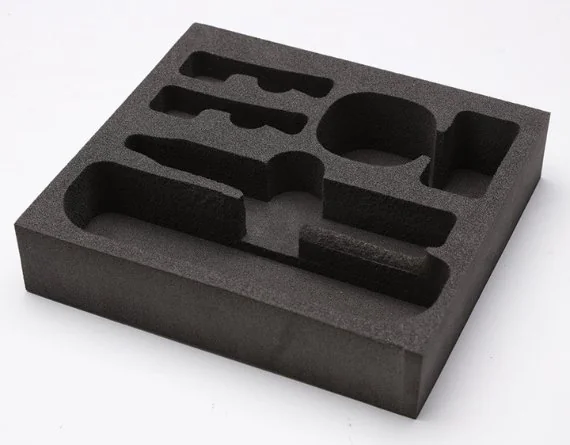
Cut foam, a cavity per cart, finished with a finger notch so the cart lifts out. Holds a full row at a fixed pitch with nothing to rattle.
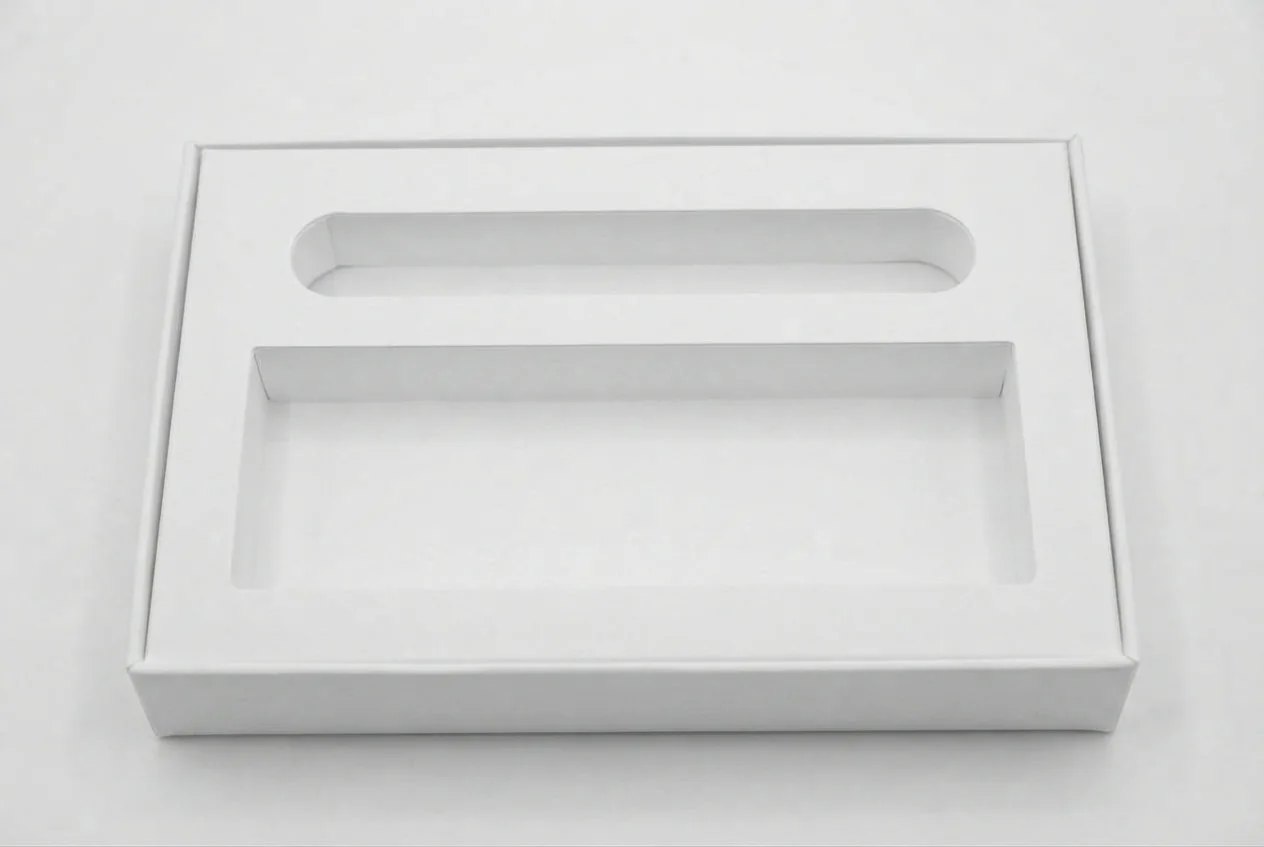
A die-cut board cradle. Folds flat with the box and recycles with it — or a molded paper-pulp tray once a run is large enough to warrant the tool.
Send the cart itself if you can. A cavity drawn from a photograph is a cavity we can only estimate, and glass does not survive an over-sized slot. A clear PET window can be set over the slot when the cart has to show on the shelf before the box is opened.
Send one cart in the post, or three numbers on a drawing — the dieline comes back in 24 hours, free.
The count decides the structure before the board does. Three tiers cover single cartridge boxes through multi cartridge boxes, from one cart to a full tray.
Cartridge drawer boxes, or a side-button tube
A single cavity, moulded to the cart. The smallest order the floor will open a die for is 500, and all of them leave the same way up.
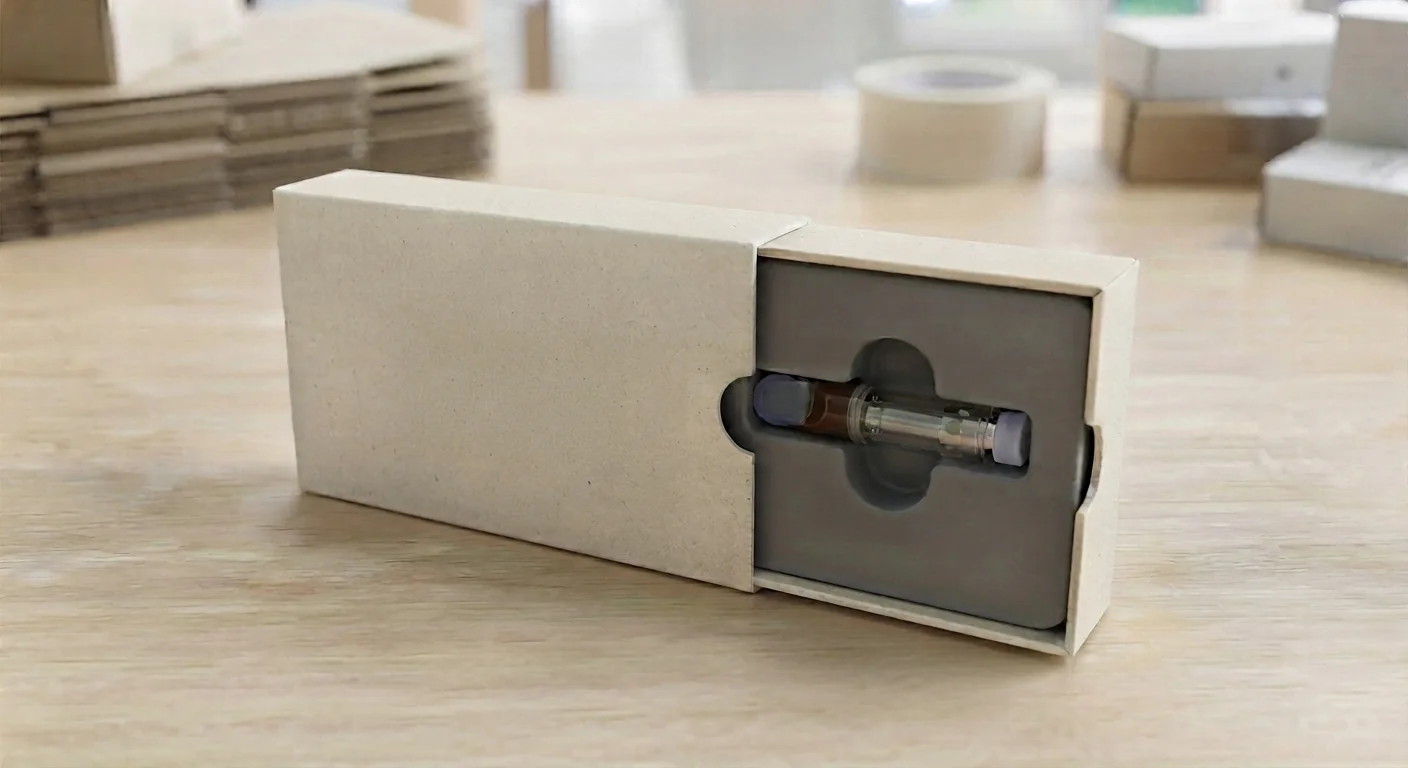
Push-slide box, slots cut in a row
The tab holds the lid while the sleeve draws. Four or five carts come out in a single motion rather than four or five openings.
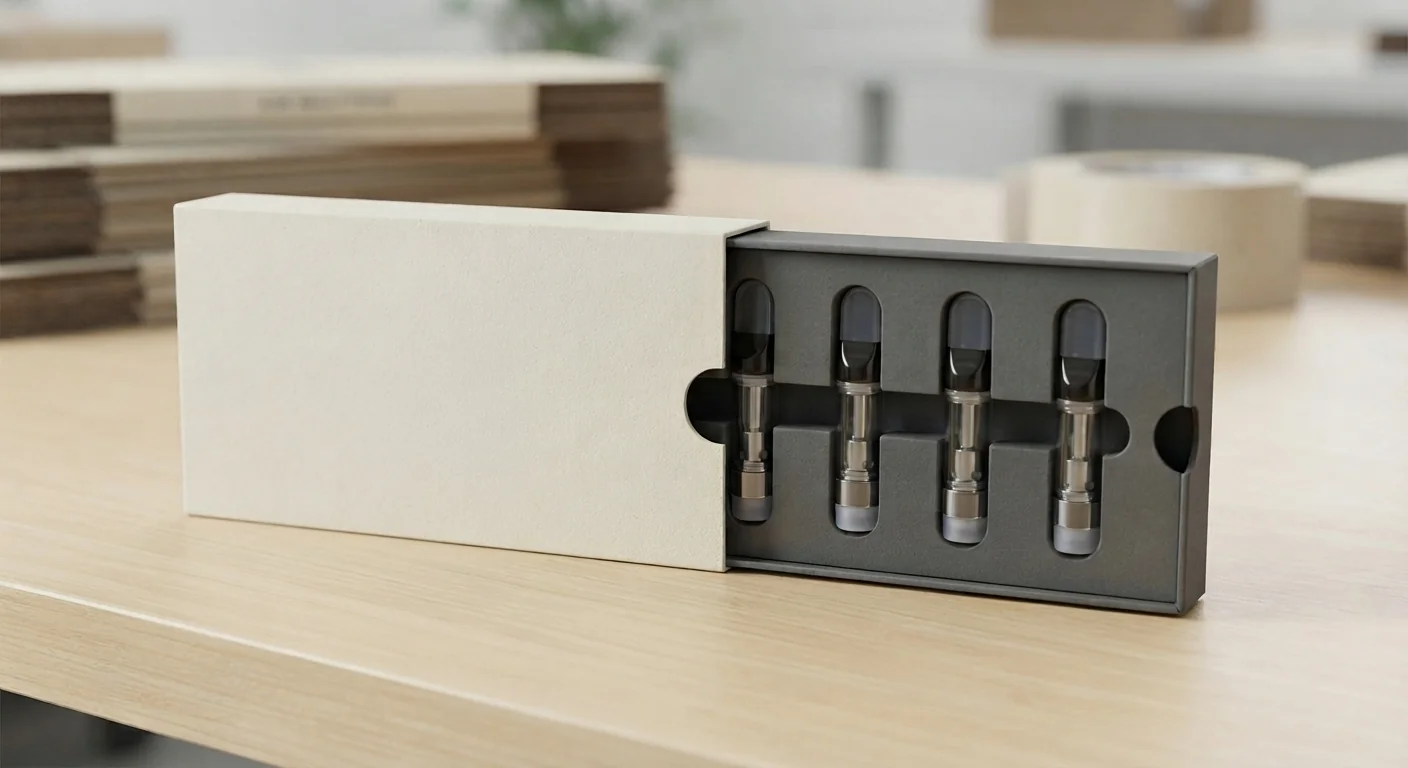
Tray inside a sleeve, lock on the sleeve
The tray lifts straight out of the sleeve, which keeps the lock, the warning panel and the print on a face that never moves.
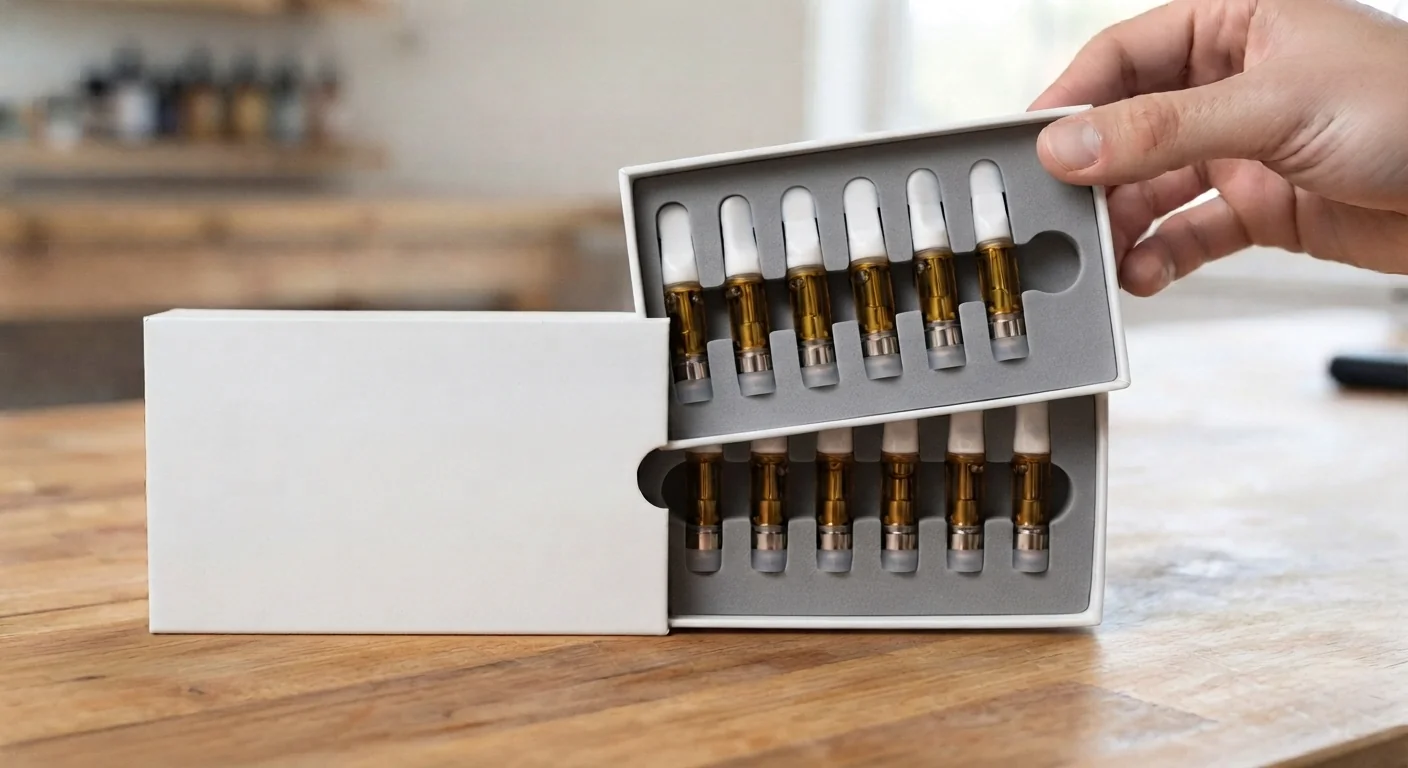
A different count is a different cut file. A four-cart order is not a two-cart box cut smaller: the slot pitch, the lock position and the sleeve depth all move with it, and the order is quoted as its own dieline. Pricing steps down at 1,000, 5,000 and 10,000 units, and a single run goes to 500,000.
The four behind most custom vape cartridge boxes, on the points a buyer asks about — how it locks, what holds the cart, what leaves the floor, and the order it is the wrong answer for.
01Single drawer
02Single tube
032–5 slide
0410+ tray
Lock
Push-button
Side-button
Push-and-slide
On the sleeve
Slot
EVA or card
Barrel only
A row of slots
A tray of slots
Ships
Formed
Formed
Flat
Formed
Not for
Two carts or more
Two carts or more
An order of one
A run of two to five
A cartridge box is not holding a solid object. It is holding a filled tube of oil with a glass wall and a mouthpiece, and each of those parts fails in its own way.
The cavity is drawn so the cart stands mouthpiece-up, which keeps the oil resting on the coil instead of draining back down the airway.
A cart weeps a little at the threads, so an oil-resistant liner sits between the cart and the panel and the warning block stays clean.
The cradle takes the glass tank, the part that cracks, and leaves the threads and the mouthpiece in open air, clear of the lid.
The liner is quoted with the box. It is a coated millimetre of board between the cart and the panel, and it costs less than reprinting a run that arrived stained.
A cart box is nearly weightless, so what you pay for at the port is air. Keeping that air out of the export carton is the last thing the drawing does.
The slide box travels folded and its tray nests inside the sleeve. Only the drawer shells ship formed, and those nest too.
A cart box is light enough that freight is billed on dimensional weight, so a flat-packed carton is the single biggest lever on landed cost.
The export carton is sized around the flat blank, so a full run fills a pallet instead of a pallet's worth of air.
The dieline stays on file. A reprint lands on the shelf identical to the sample that was signed — the tenth run of a cart box matches the first, in CMYK with up to two Pantone spot colors matched against the chip the brand signs off.
A small box leaves less room for a mechanism than a full carton. Two locks do nearly all of the work on a cartridge order.
The tray only travels while its button is held in. Let the button go halfway and the tray relocks before a small hand can work it free.
SuitsA single cart, or a row
A folding blank whose lid stays shut until a tab is pushed inward and the sleeve is drawn at the same moment — two moves, and only one is obvious.
SuitsTwo to five carts
A side-button tube is a single-cart structure only — the barrel has no room for a second cavity. The closures are built to a child-resistant design, and a test report is arranged on request rather than claimed on the page. A tamper band across the sleeve is quoted with the closure, so a box that has been opened once shows it.
The two fills share a 510 connector, not a length, which is why 510 cartridge boxes and 1ml cartridge packaging are two different dielines. A single slot drawn for the first holds the second loosely, and a loose cart is a scuffed cart.
Both fills sit on the same 510 thread and the same tube diameter. The only figure that moves is the length — which is exactly the figure the slot is cut to. A single slot cannot serve both. A 2 ml cart runs longer again, and a pod on a proprietary connector has no standard length at all: send either and the cavity comes off the hardware.
Seventeen mockups came back from other suppliers and every one of them treated a cart as a plain rectangle. The dieline that came back here had the mouthpiece standing in a recess of its own, and our quality lead stopped asking questions about it.
A cart weeps at the threads long before it reaches a customer. The liner they put behind the cavity sits 0.4 mm off the cart, so the oil never reaches the warning block on the panel.
Forty-one cases have shipped since the liner went in and not one has come back with a scuffed tank.
Our carts are sold one at a time. We move about three hundred a week. The box is the only thing a buyer holds before deciding, and nobody on the counter has needed a demonstration of the lock.
Shelf life on a lit case is the part nobody warns you about, so when the boxes still read clean at fourteen months we stopped rotating the front row to hide the faded ones.
We asked for the cart to sit deeper in the cavity. The box came back at the same outside dimension with the recess cut 1.2 mm deeper, so nothing on the shelf changed and the cart stopped moving.
It is. The die-cut slot is cut in the same pass as the box, and an EVA cradle and a paper-card cradle are both quoted inside the box price rather than as a second line.
Yes, and it takes no second pass. Inside print and a printed liner come off the same press, so the reveal under the lid is a printed surface rather than bare board.
Yes. A drawer and a slide box on the same purchase order count against one 500-unit minimum, which is how most first runs test two openings without paying for two tool sets.
A STEP or an STL is better than a photograph and worse than the cart. A file gets the cavity close; the cart itself confirms the thread depth and the taper on the mouthpiece.
Only the box. Carts, batteries and oil are the brand’s to source, and the cavity is drawn around whatever hardware arrives.
It changes the recess, not the outside box. The mouthpiece diameter sets the depth of the recess, so a glass tip is usually a deeper cut on the same cut file.
A cart in the post, or three numbers on a drawing, is enough to begin. The cavity is drawn around it and the quote is built on the box that comes back.