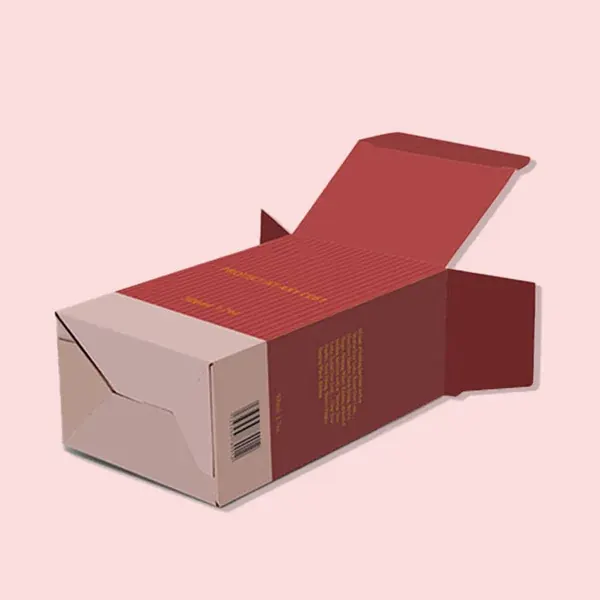
Folding carton (tuck-end / auto-bottom)
Retail shelf + DTC
Light, everyday SKUs in steady rotation
Cheapest per unit, flat-packs for storage, auto-bottom erects fast on the line.

Structure, board and size decide whether a box survives the courier, wastes material or ships cheap. Send the product’s size, weight and channel — a dieline and a board recommendation come back.
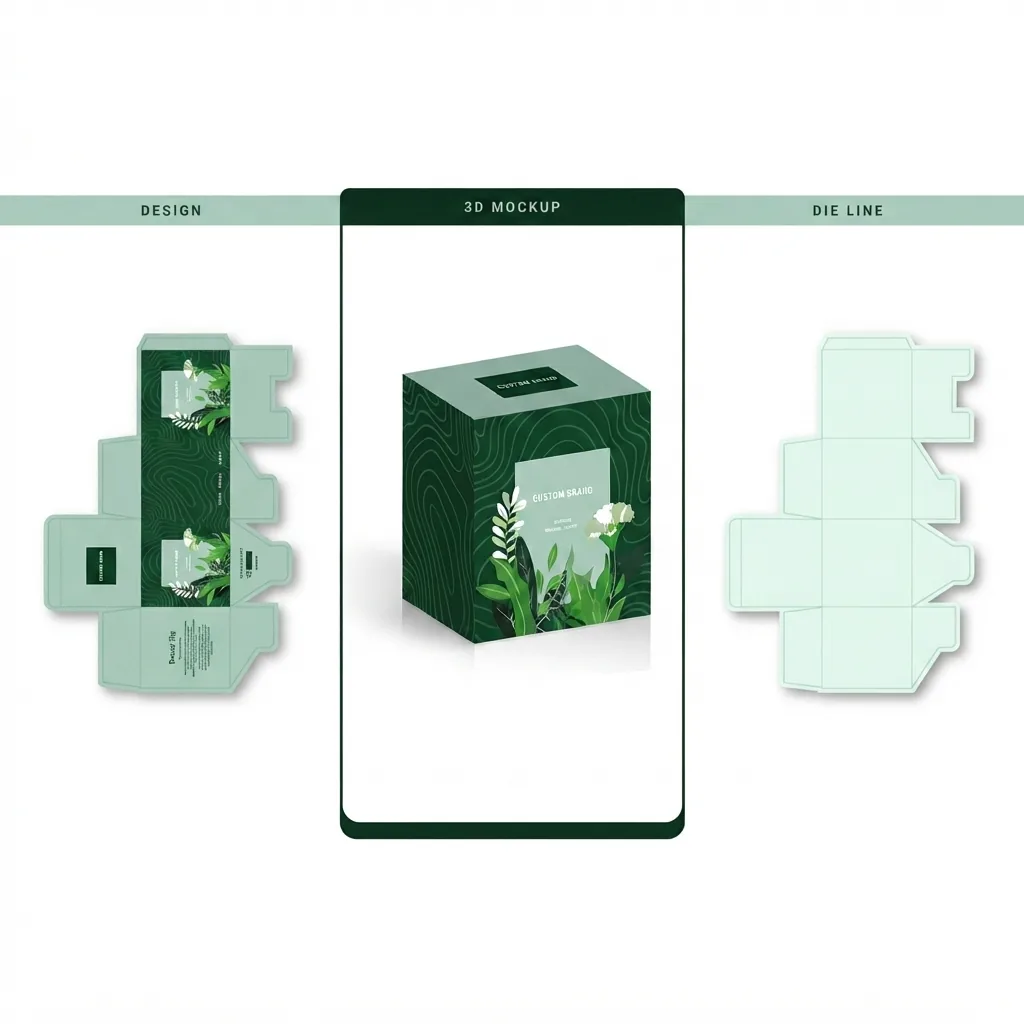
A shelf pack and a mailer protect differently. The right choice fits the sales channel — not the one that looks best in a render.
Light, everyday SKUs in steady rotation
Cheapest per unit, flat-packs for storage, auto-bottom erects fast on the line.

Gifts, premium and fragile items
Thick greyboard walls, four strong corners, and a reusable keepsake the buyer keeps.

Luxury, high perceived value
Fast magnetic seal reads premium on camera — the unboxing moment is the product.
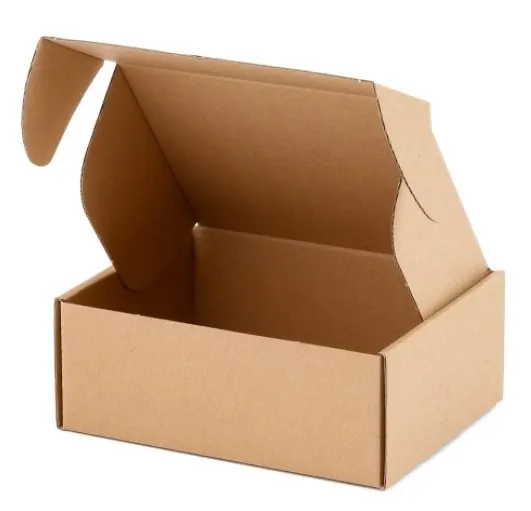
Single SKUs shipping direct to customers
Fits Amazon size tiers, trims dimensional weight, and needs no filler to pack safely.
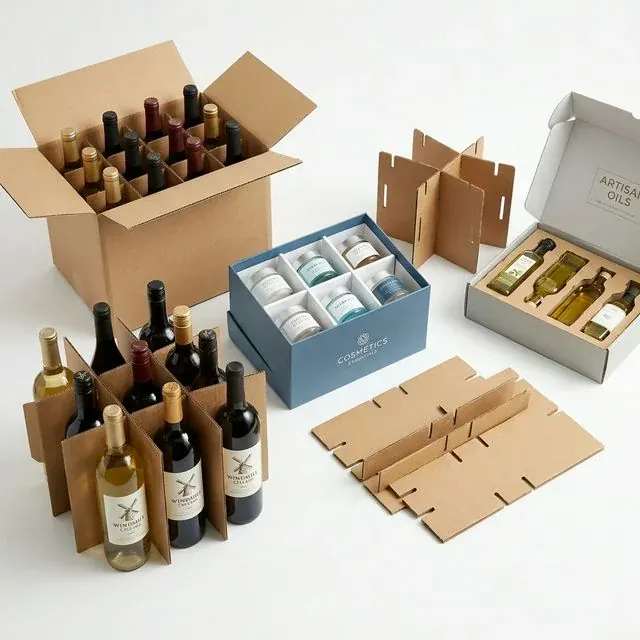
Multi-item kits and fragile sets
Locks each piece in place, spreads load across the box, and replaces foam with recyclable board.

Product-led shelf presence
Shows the product on-shelf while the sleeve holds a cheaper inner box underneath.
Strength is measured in ECT — the load a corrugated edge takes before it buckles. Sized to the stack the box must hold, so a heavy SKU never ships on a light board and a light one never pays for a heavy one.
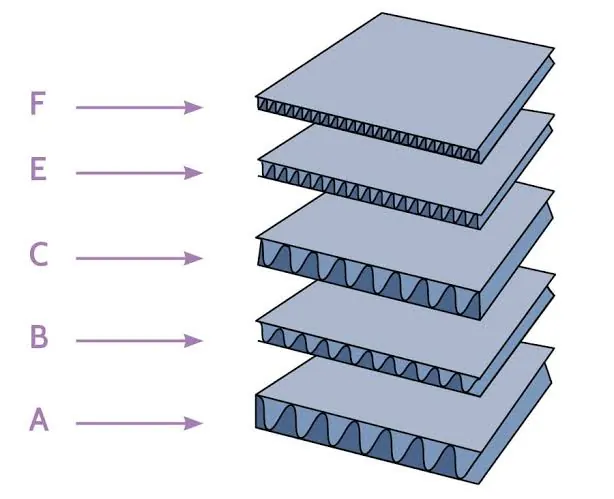
Board depth is the trade-off: a thin flute prints crisply and ships light, a tall one cushions and resists crushing. Choose the shortest depth that still protects the route — the spec for each is in the table below.
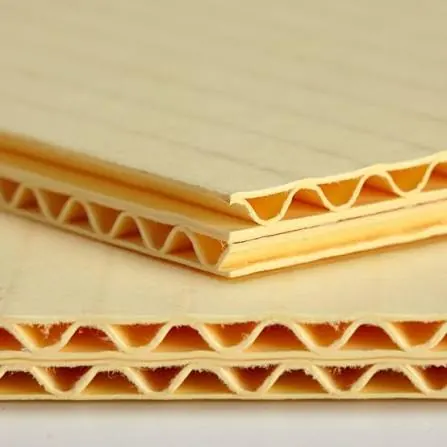
Two flutes bonded face-to-face roughly double the cushioning and crush resistance for about 2 mm extra thickness. The cost is a heavier pack and a little more board — worth it only when the route demands it.
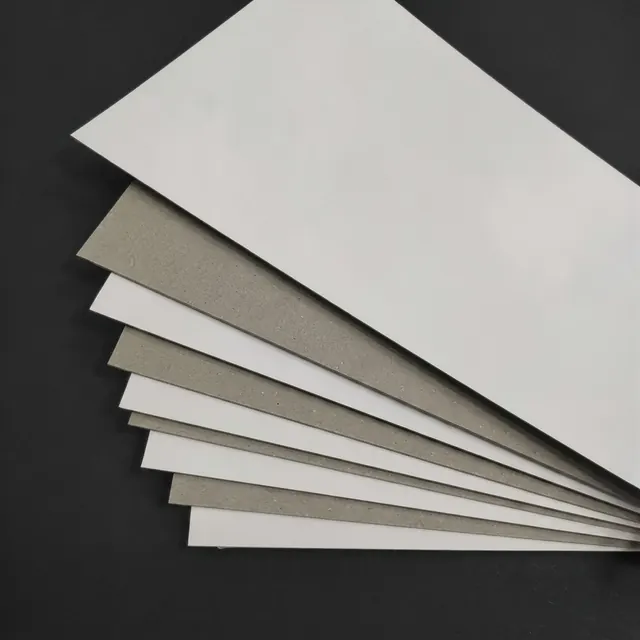
No air pockets — a dense card that keeps its shape. It adds almost no cushioning of its own, so a fitted insert does the protecting; what you gain is a hard, reusable shell customers keep.
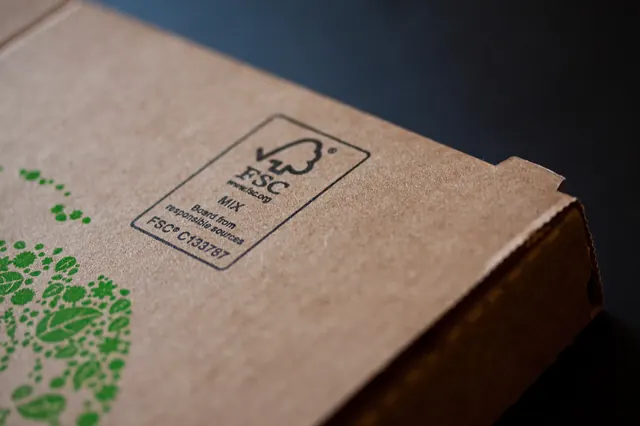
Certified and food-safe grades, sourced on request. They don’t alter the structure — they open retail and food channels that won’t accept uncertified board.
| Board / flute | ECT | Thickness | Typical use |
|---|---|---|---|
| E-flute (single wall) | 32 lb/in | ~1.6 mm | Light retail, cosmetics, printed cartons |
| B-flute (single wall) | 32–44 lb/in | ~3.2 mm | Mid-weight mailers, good cushioning for fragile |
| C-flute (single wall) | 44 lb/in | ~4.8 mm | Heavier retail, better stacking strength |
| BC double wall | 55–70 lb/in | ~8 mm | Heavy or breakable goods, long-haul freight |
| Solid greyboard (rigid) | — (no flute) | 1.5–3 mm | Lid & base, magnetic boxes, keepsakes |
| FSC & food-contact grades | on request | on request | When retail compliance or direct food contact requires it |
Most damage isn’t a crushed carton — it’s the product moving inside it. The insert is what stops that.
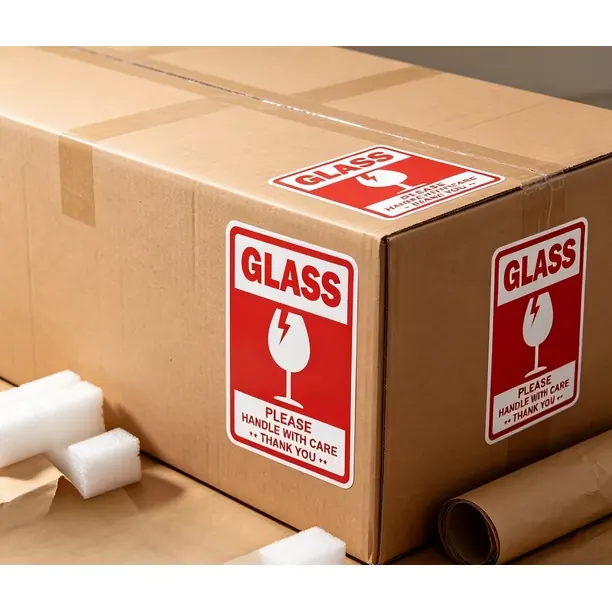
A die-cut corrugated or EVA insert pockets each item with a 3 mm+ air gap off each wall — so a 1 m ISTA drop leaves the bottle intact.

Card slots or a partition separate each unit, so product never touches product — and stays recyclable with no foam.

Double-wall BC board, corner protectors and a moisture-resistant tape keep a full pallet stack from distorting.

A well-fit carton with no foam and no filler — the smallest volume that still tracks through the line.
Tested to the protocol the ship route actually uses, then recorded on the engineering note — so a buyer sees evidence before the first unit ships.
Dropped flat, edge and corner from 30–76 cm depending on package weight, to confirm the insert keeps the product off the box faces.
Pass: Product functional + box intact after the test drop.
1–3 hours of random vibration that mirrors truck / air transfer, checking the insert does not migrate during a real journey.
Pass: No movement of the item inside its pocket.
Hold 1.4× the tallest warehouse stack for 24 h; a 44 ECT single wall carries ~55 lb per edge, BC double wall ~95 lb.
Pass: No collapse at the load the DC will actually use.
Unit price is half the story. Structure moves freight, filler, pack time and damage rate — here is one fragile SKU redesigned.
| Cost line | Before (generic box) | After (engineered) | Change |
|---|---|---|---|
| Freight (dim weight) | 1.50 kg billed | 0.92 kg billed | −39% |
| Material per box | 44 ECT board + foam insert | 32 ECT board + die-cut insert | −18% |
| Secondary pack | Bubble wrap + loose fill | None | −100% |
| Damage returns | 3.2% of units | 0.6% of units | −81% |
| Pack time per unit | 2.1 min | 0.8 min | −62% |
Landed cost per unit is what procurement signs off on — and what a well-drawn dieline moves.
Not a render — files and notes a team, printer or agent can run with.
Dimensioned dieline in CAD and PDF — the master file for tooling and reprints.
A working 3D mockup within 24 h of a photo or rough dimensions, before any tooling is cut.
The exact board, flute and grammage to prototype, so the first physical sample is already on-spec.
Tolerances, ECT and stacking strength, plus the ISTA test plan for the ship route.
A photo or sketch, the product size and weight, and the channel — retail shelf, DTC or Amazon. Rough dimensions are enough; the dieline is drawn around the product to those figures.
It depends on fragility and the channel. A folding carton wins for everyday DTC SKUs; a rigid lid-and-base or magnetic box for gifts and premium; a mailer for Amazon size tiers. Send the channel and get one recommendation plus a comparable option.
No supplier can guarantee a courier, but structure is the biggest lever. The box is engineered to an ISTA protocol matched to the route, then evidenced with drop, vibration and stack tests before the run — damage returns typically below 1%.
Mostly in freight and damage, not the unit price. A tighter dieline cuts dimensional weight, a die-cut insert removes foam and loose fill, and the right flute stops breakages — usually a double-digit % off landed cost per unit.
Corrugated in E, B, C and BC double-wall, plus solid greyboard for rigid boxes. ECT is sized to the stack the box holds; FSC-certified and food-contact grades are sourced on request for retail compliance.
Yes. The dieline and tooling belong to the customer; a master stays on file so a reorder is a reprint, not a redesign.
We’ll come back with a structural option, the exact board and flute to prototype, and a price band — usually within 24–48h. No design files needed to begin.