
Custom Package Stickers Manufacturer: ±0.2 mm Die-Cut Labels Built to Reduce Line Rejections
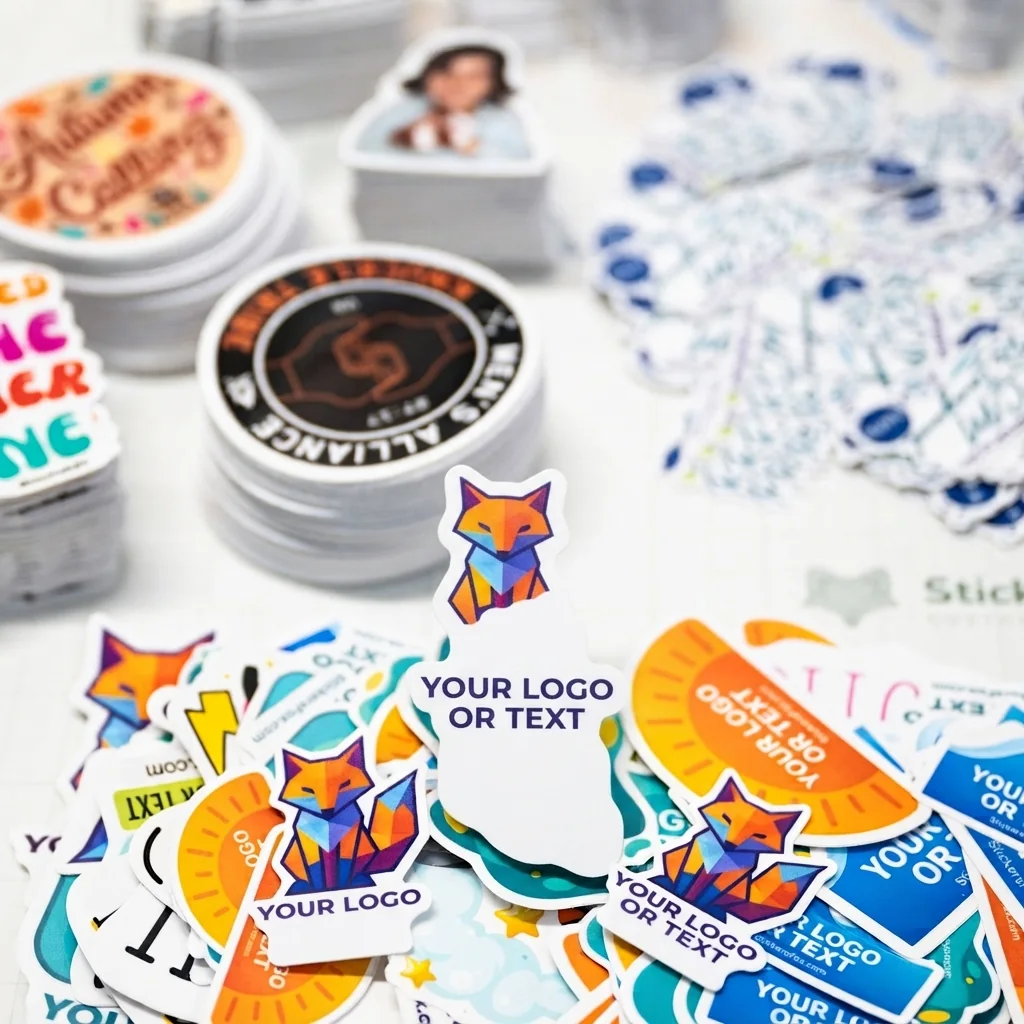
Give the pack more shelf presence with high-saturation print that stays flat—no curling or edge peel. Cold-resistant adhesive and waterproof face stock keep automatic application smooth on glass, plastic, and corrugated packaging.
- 01Run500–500,000 units
- 02Hold−18 °C to 70 °C
- 03Samples7–10 days from proof
 Artwork
6 900000 000000
Product name · Net weight 000 g
Lot 000000 · Best before 00 / 0000
Nine Label Types, and the Job Each One Does
Each card carries the stock that ships and a property that decides something. By the fourth card the choice is usually obvious.
 LA-01
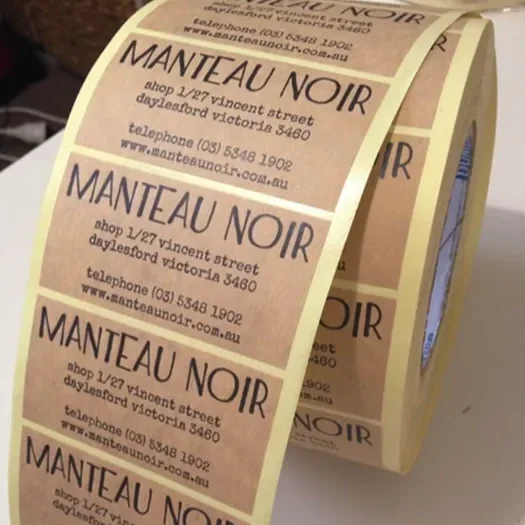
Custom Kraft Paper Labels
Uncoated, takes a penUncoated and cream: a pen, a stamp and a handwritten batch code all take to it.
 GL-02
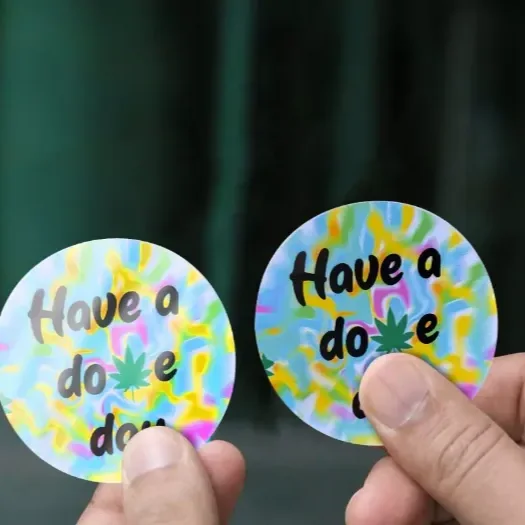
Glossy Package Stickers
Highest color popThe face for a photograph — gloss holds the saturation matte flattens.
 MT-03
Matte Package Stickers
No flare under a lampMatte kills the flare a shop spotlight throws, and wipes clean without a smear.
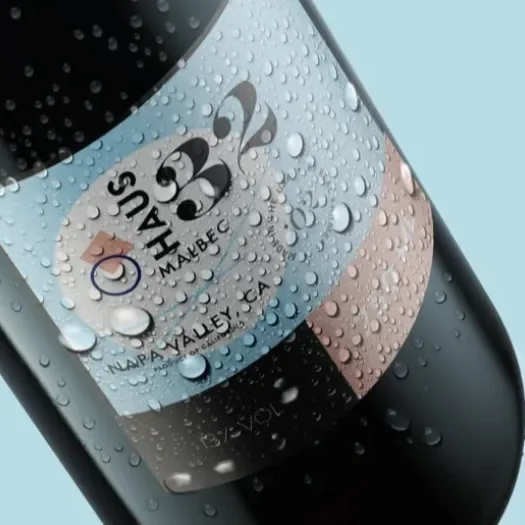 WP-04
Waterproof Custom Package Stickers
Ice bucket and fridgeMore labels end in condensation than in handling. This one sits through ice and fridge.
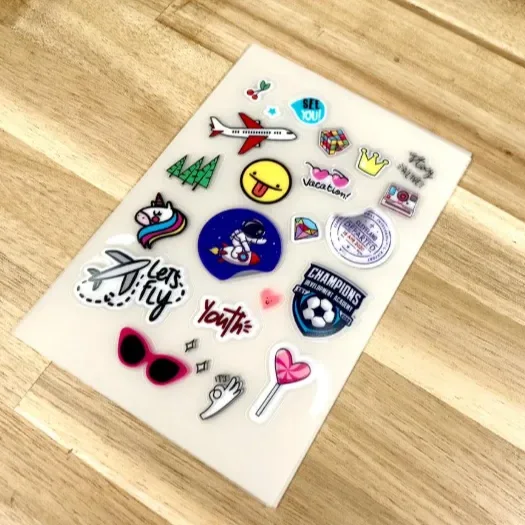 CP-05
Clear PET Package Stickers
No white edgeNo white edge on glass: the product reads unlabelled, the sticker still carries the barcode.
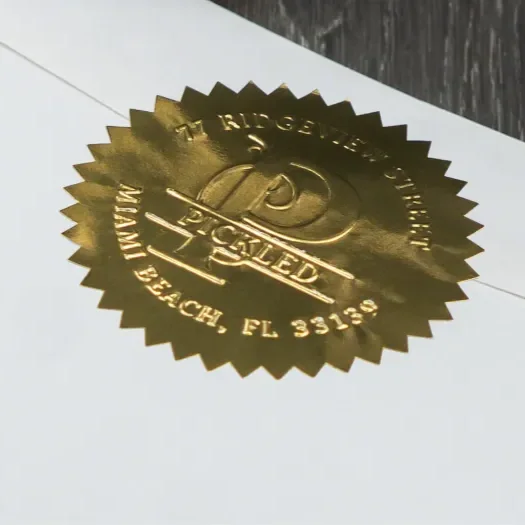 FS-06
Foil Stamped Package Stickers
Real metal, not gold inkMetal, not a gold-colored print — the cheapest premium signal a package can carry.
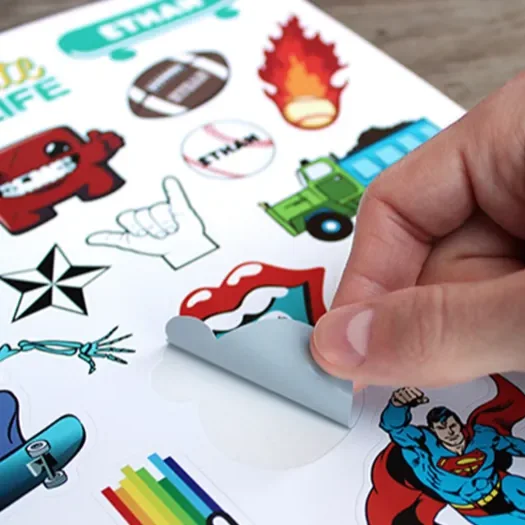 DC-07
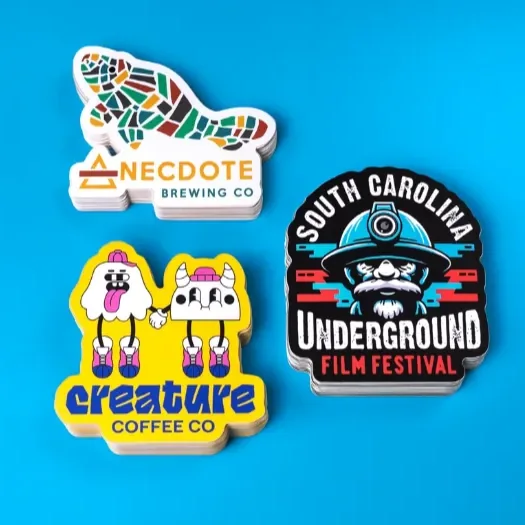
Die Cut Package Stickers
Any contour, ±0.2 mmWhatever outline you send is what the blade follows, not a stock rectangle.
 CL-08
Custom Logo Stickers for Packages
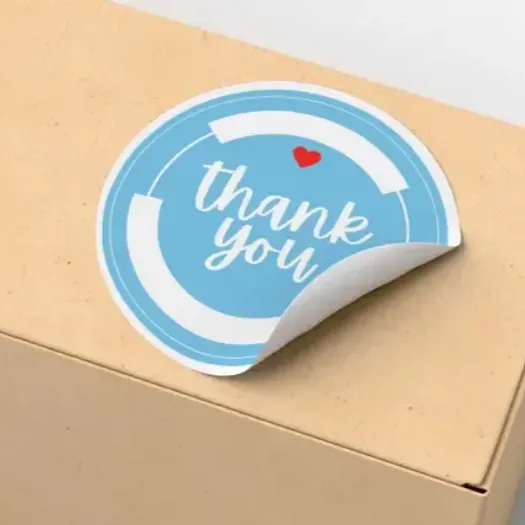
Seals the cartonOne sticker closes a mailer, carries the logo and replaces a strip of branded tape.
 RL-09
Custom Package Sticker Rolls
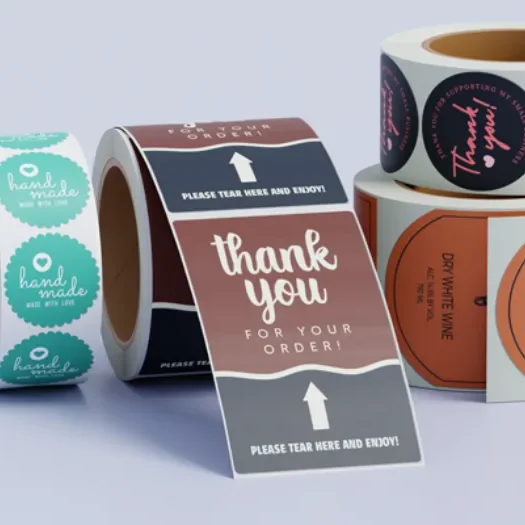
Hand or machine appliedCut onto a lined roll, so the roll can be machine-fed — 200 cartons or 20,000 of them.
The Artwork and the Die Are Two Different Tools
A designer draws the label. A diemaker draws the outline that cuts it. The two agree on one file before anything is printed — which is why the artwork sits back from the cut, and why the blade stops short of the backing.
- 01
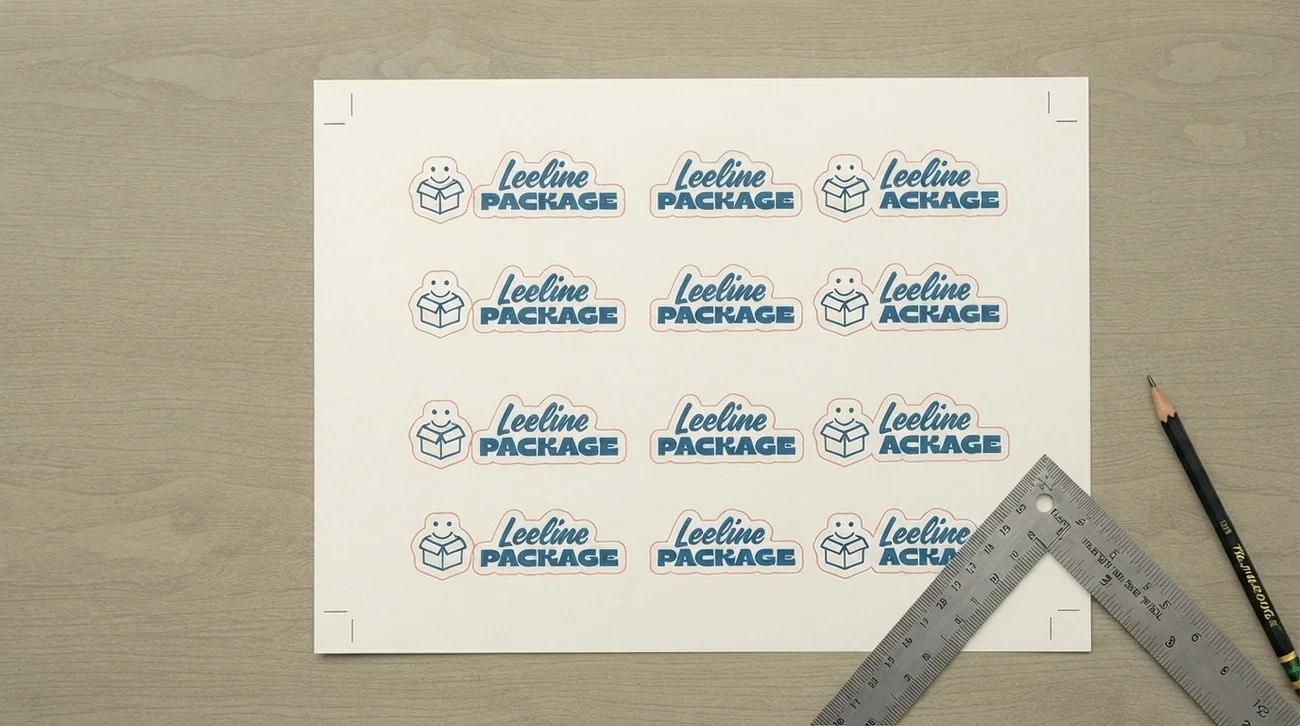
The artwork
Drawn at the finished size, with the cut line on its own layer.
The barcode survives the blade.
- 02
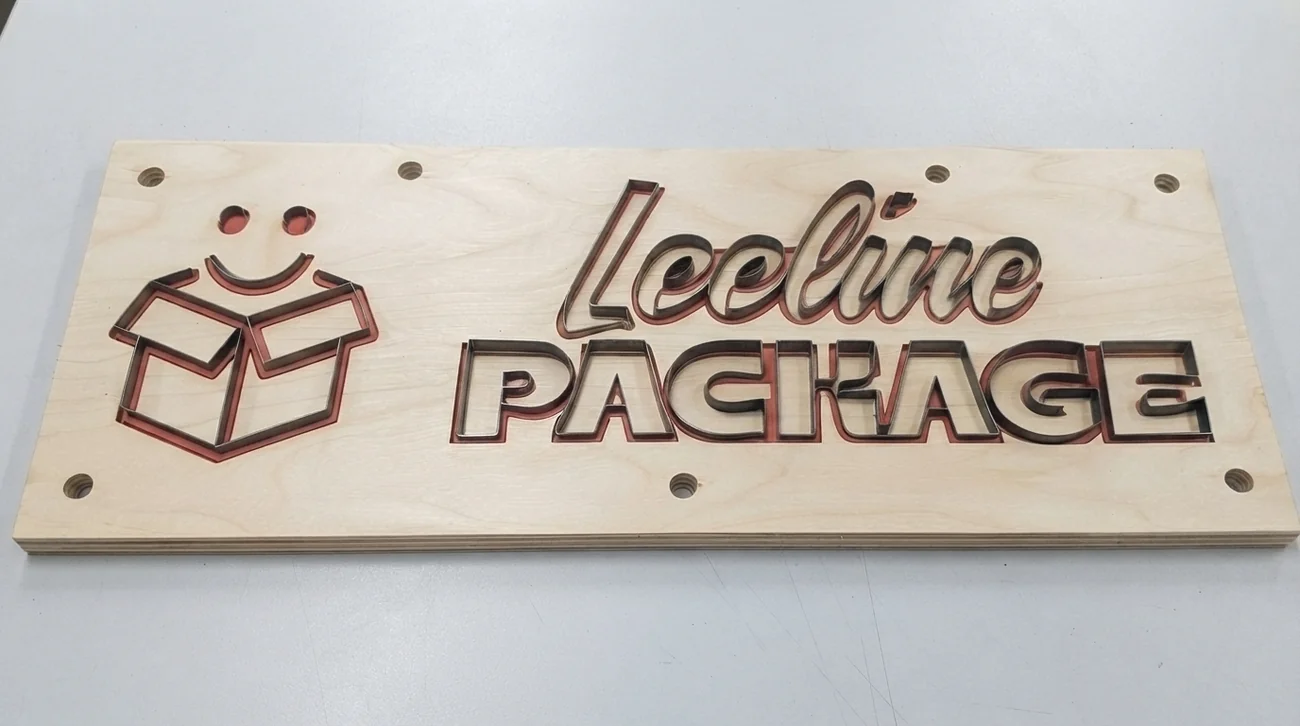
The die
Registered to the print: the trim, the 1.5 mm gap and the cut depth.
A reorder needs no new tooling.
- 03
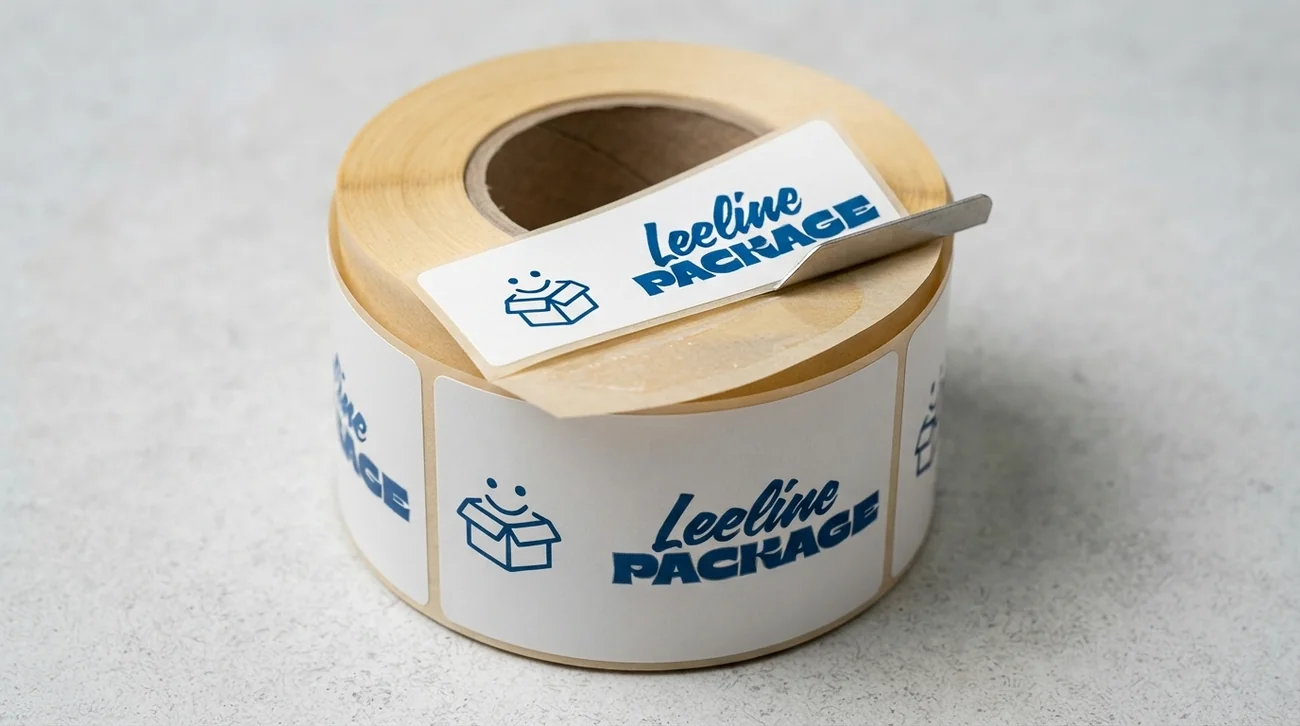
The format
In a roll, kiss-cut on a 76 mm core; or loose cut through the backing.
Chosen to match how it is applied.
Start From the Surface, Not the Spec Sheet
Say what the label goes on and how many you need. The stock, the adhesive and the print route follow from those two answers, and the quote says why each was chosen.
The Surface Decides the Adhesive
Nearly every label we print sticks to one of six surfaces. Get the pairing wrong and it curls, clouds or slides off, which reads as a printing fault when it never was one.
What you're labelling→The adhesive it takes
- On the surface
Flat board
Dry, flat and sealed, with no radius and no oil to work around.
→Takes the adhesivePermanent acrylicAggressive and immediate, which is why nothing lifts over time.
- On the surface
Curved bottle
A face that has to follow the radius of the bottle.
→Takes the adhesiveConformable, with an overlapSoft enough to bend with the curve instead of bridging across it.
- On the surface
Oily jar
Oil at the shoulder of a jar crawls under an acrylic and lifts it.
→Takes the adhesiveRubber-based, high tackEnough tack to grip through the film of oil.
- On the surface
Chilled and wet
Milk tanks and cold rooms, where water sits between the label and the glass.
→Takes the adhesiveWet-surface acrylicPushes the water aside rather than sitting on top of it.
- On the surface
Frozen, −18 °C
A standard adhesive goes hard below freezing and pops off.
→Takes the adhesiveFreezer-gradeStays soft enough to hold through the freeze.
- On the surface
Recycled kraft
Dusty, porous board that drinks adhesive.
→Takes the adhesiveExtra-coverage coatA heavier coat, which is what keeps the corners down on day three.
Four Substrates, Four Ways a Label Fails
Each stock buys a property and pays for it in another. The failure named on each panel is what that stock exists to prevent.
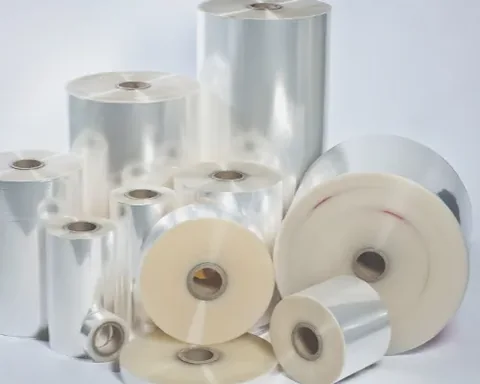
BOPP film
Sharpest print of the fourClear or white film with a glossy face, which is why it prints the sharpest of the four. Left on a sunlit shelf it hardens. It belongs indoors on a jar, not outdoors on a crate.
Fails atGoes brittle in sunlight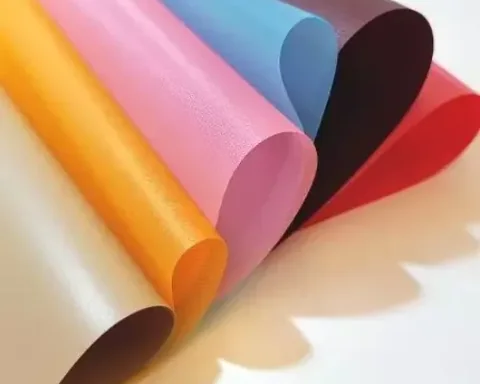
Vinyl (PVC)
Outdoors and in waterWater resistant, UV resistant and soft enough to conform to a curve. The stock for anything that spends its life outside or below the waterline — the price is the trade.
Fails atCosts the most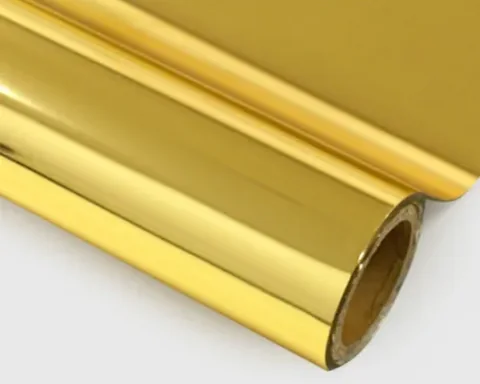
Metallic foil
Returns the room lightRefuses a laser scanner, and turns as the angle changes. It reads as the room rather than as a print, which is why a foil panel and a barcode belong on two different labels.
Fails atWill not read as a barcode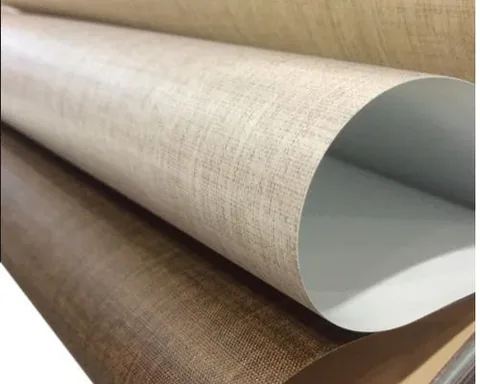
Textured synthetic
Tactile, and crack-freePaper-look, and it shrugs off water and bends around a tight radius without splitting, printed with a texture you can feel under a thumb. No pen marks it.
Fails atNothing writes on it
Five Finishes, Scored Against Four Failures
Four things end a label's life early: a scuff, water, sunlight and cold. The grid scores each finish against them and against its unit cost, because the print is the cheapest part of a label and the area is what you pay for. Say where the pack lives and the choice narrows to two.
| Finish | ScuffScuff | MoistureMoist | SunlightSun | ColdCold | Unit costCost |
|---|---|---|---|---|---|
| MatteGlare goes, fingerprints stay | Weakens | Holds | Holds | Holds | $ |
| GlossThe default under a cameraBright, and it wipes clean | Holds | Holds | Holds | Holds | $ |
| HolographicDoubles as anti-copy | Holds | Holds | Weakens | Holds | $$$ |
| Soft-touchBest under a dry hand, worst under a greasy one | Weakens | Weakens | Holds | Holds | $$$ |
| Spot UV + embossRaises the mark off the face, so a thumb finds it | Holds | Weakens | Holds | Holds | $$ |
holds weakens$ relative unit cost, from lowest to highest
Matte is the finish most buyers move to after a first reprint.
What Each Vertical Demands of the Label
The artwork barely changes between these four. What changes is the standard the label has to meet after it leaves the plant. That standard picks the stock, rather than the file as sent.
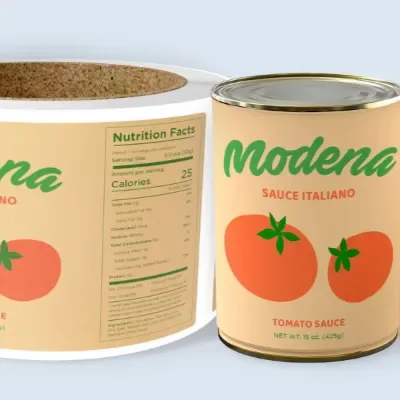
Food and drink
Your label goes freezer, chilled aisle, shelf without a wrinkle, and the barcode still scans at the till.
- FDA 21 CFR Part 701
- Migration-safe adhesive
- Freezer-grade adhesive
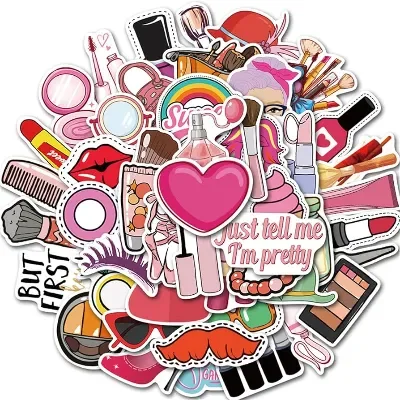
Beauty and cosmetics
On a curved bottle it lies flat and holds its color under a spotlight all day, so the shelf premium survives the shop floor.
- Conforms to a radius
- Solvent resistant
- Foil and spot UV
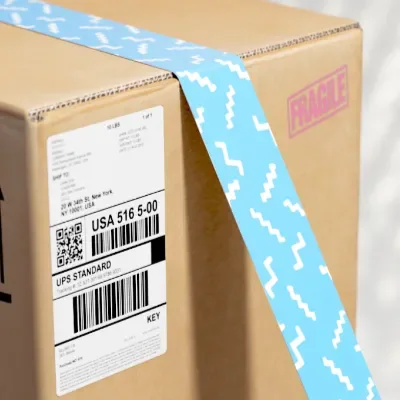
Shipping and fulfilment
Courier networks are where a label is tested hardest, and a label that gives there is a parcel pulled out for manual re-sorting.
- Thermal printer ready
- Tear resistant
- Roll-fed
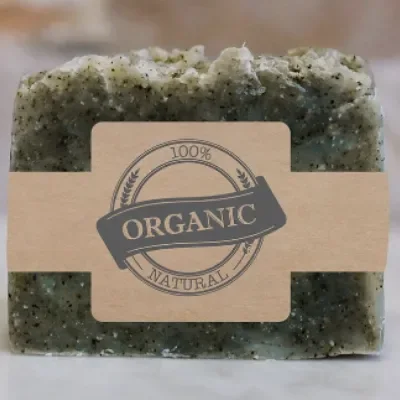
Handmade and small batch
Five hundred units still buy a premium look, on the stock that suits a hand-stamped product.
- From 500 units
- Kraft and textured paper
- Digital, no plate
Precision Printing for Bulk Labels
Our advanced rotary presses control color drift and die-cutting tolerances to microscopic levels. The result is a bulk roll that feeds a high-speed applicator without a stop.
- ΔE < 1.5Color drift control
- 1,000,000+Daily capacity (Pcs)
- ±0.2 mmDie-cutting precision
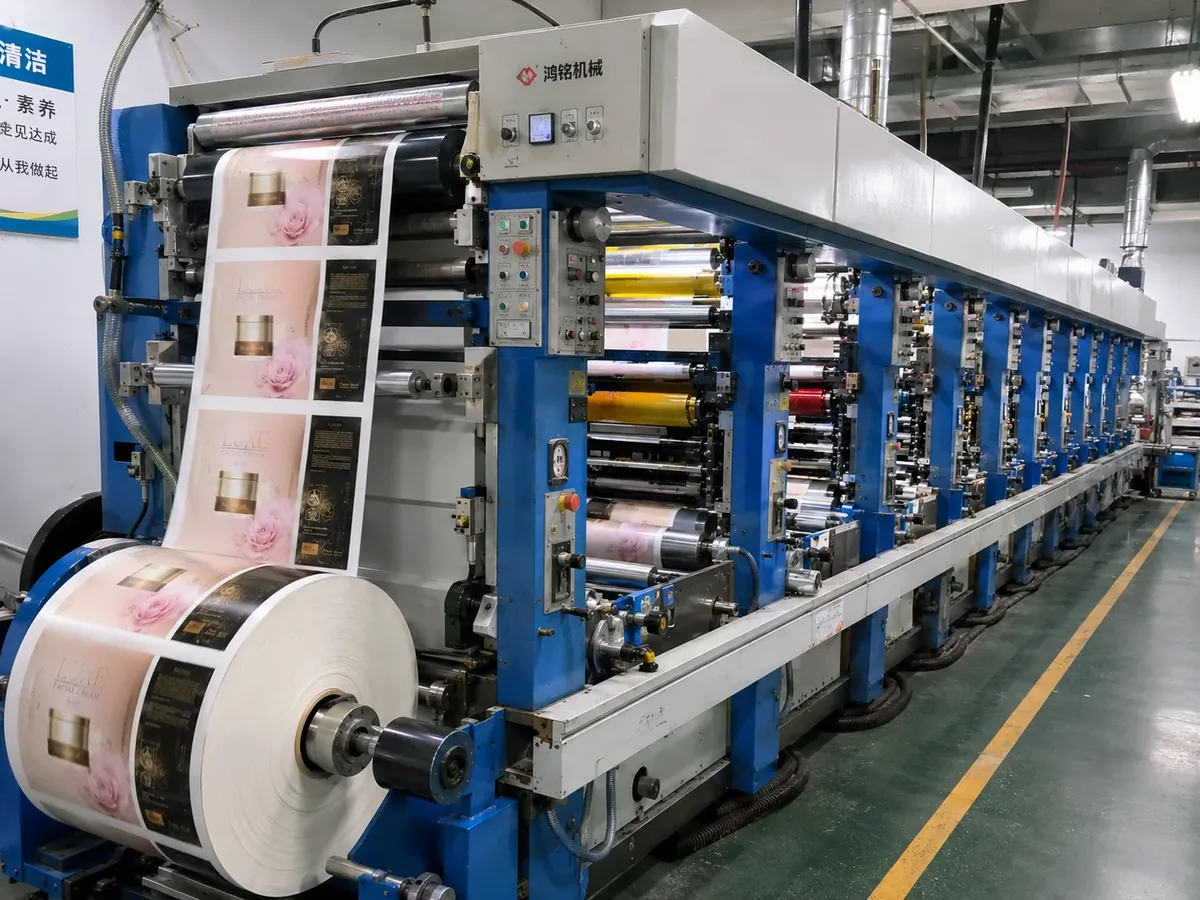
High-Speed Rotary Flexo Printing 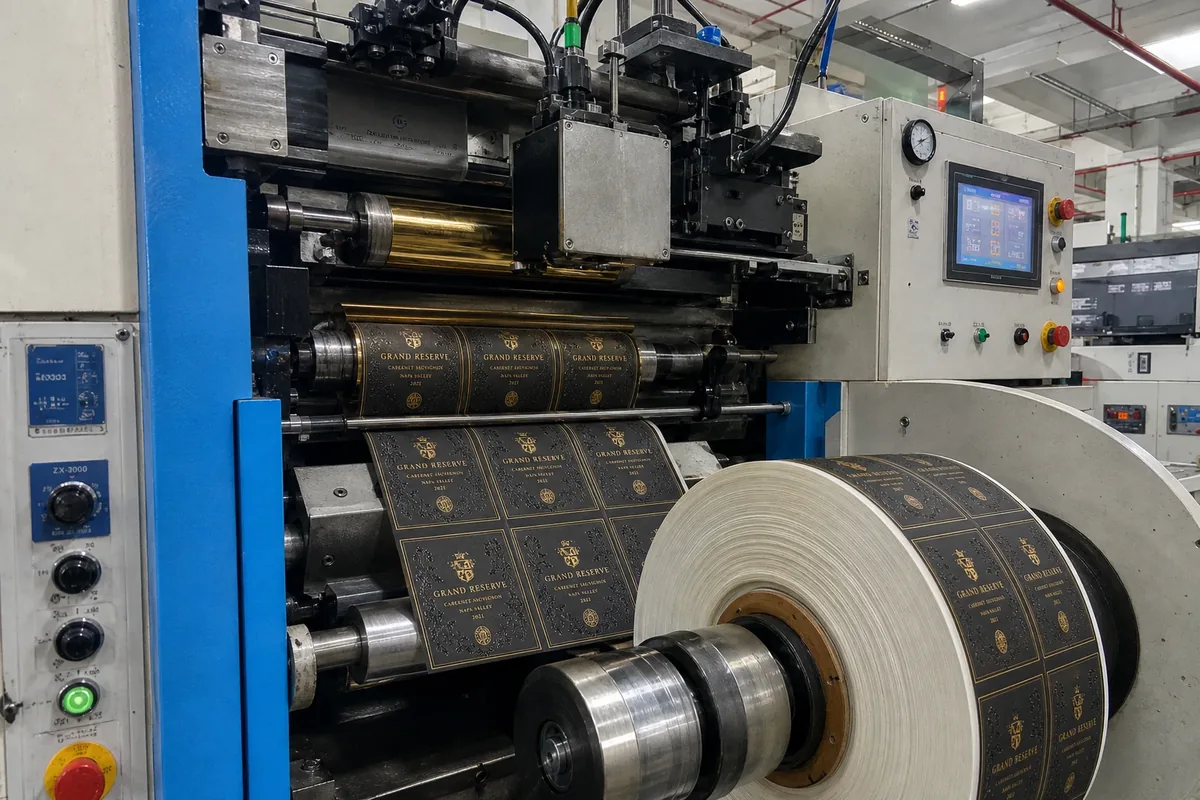
Premium Foil & Spot UV Finishes 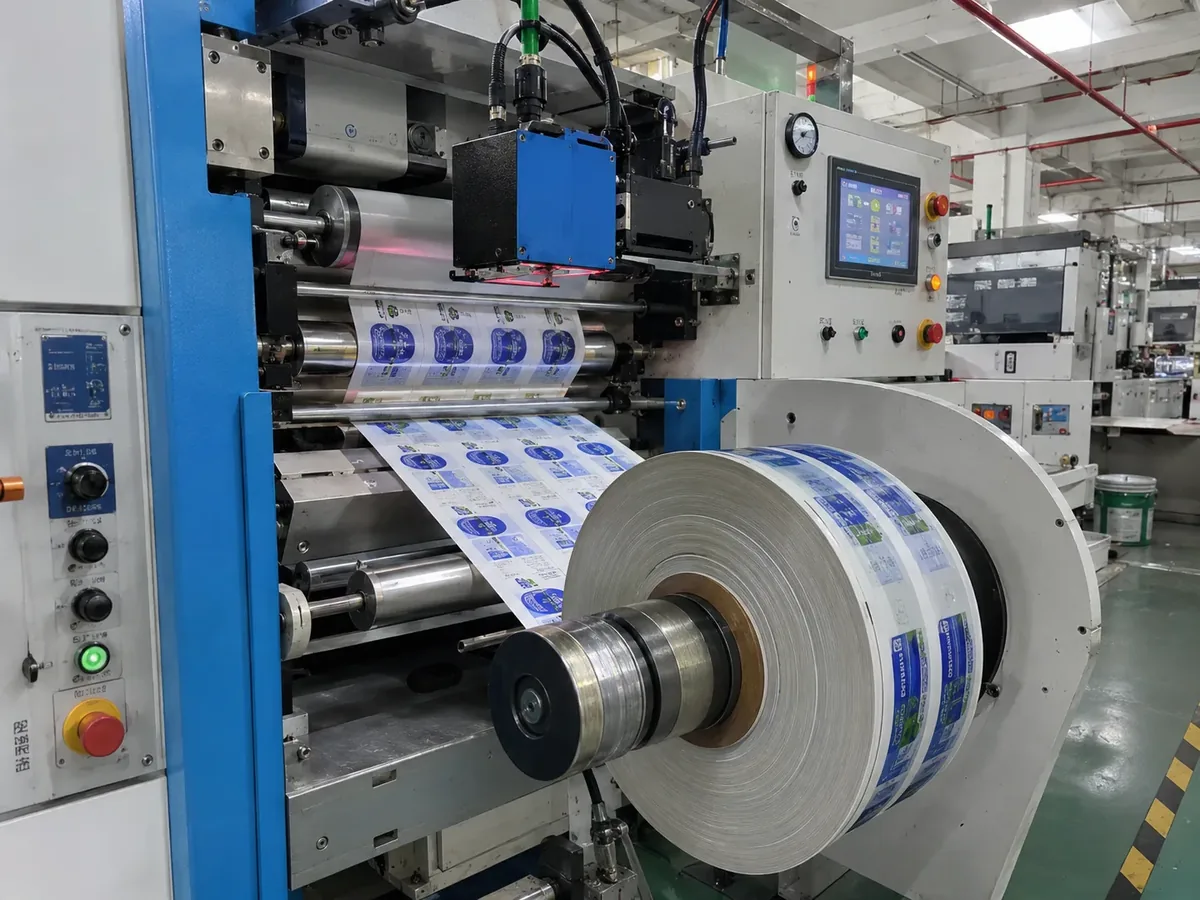
100% Automated Optical Inspection
Engineering Assurance: Every production run undergoes inline electronic color monitoring and full-process matrix tracking. By utilizing servo-driven die-cutting and high-tensile glassine liners, we maintain identical physical tolerances and roll tension profiles across million-piece batches, ensuring your labels deploy flawlessly on high-speed automated applicators.
Five Stops, From Press File to Shipped Roll
Two of the five happen before a single label is printed, and both are the ones that decide whether the run is right.
- 01Day 0–1
Artwork check
The file is read before a die is quoted, and what comes back is a short list of anything that would have stopped the run. No charge for the check, and no die is drawn until the list is clear.
- 02Day 1–3
Die and press proof
Your outline is cut into the die, and the proof is printed on the stock you chose rather than on a generic sheet. Nothing goes on the press until that proof is signed.
- 03Day 3–10
Sample roll
A short run off the real die, with the cut, the peel and the color all tested by hand. Seven to ten days from proof approval, and the sample is credited against the production order.
- 04Week 2–5
The run
Press time is booked at the proof, on the stock booked with it, at the gap and the register the drawing specifies. Four to six weeks door to door on a sea shipment, on a slot that was locked the day the proof was signed.
- 05On dispatch
Inspection and pallet
Each roll is checked for register and for cut depth before it is wound onto the core, shrink-wrapped and palleted with a packing sheet. Under 0.2% of what ships arrives unusable.
Not Just a Pretty Packaging
- Permanent
- Recyclable face material
- FSC® Certified
- Soy-based inks
How Buyers Use Them
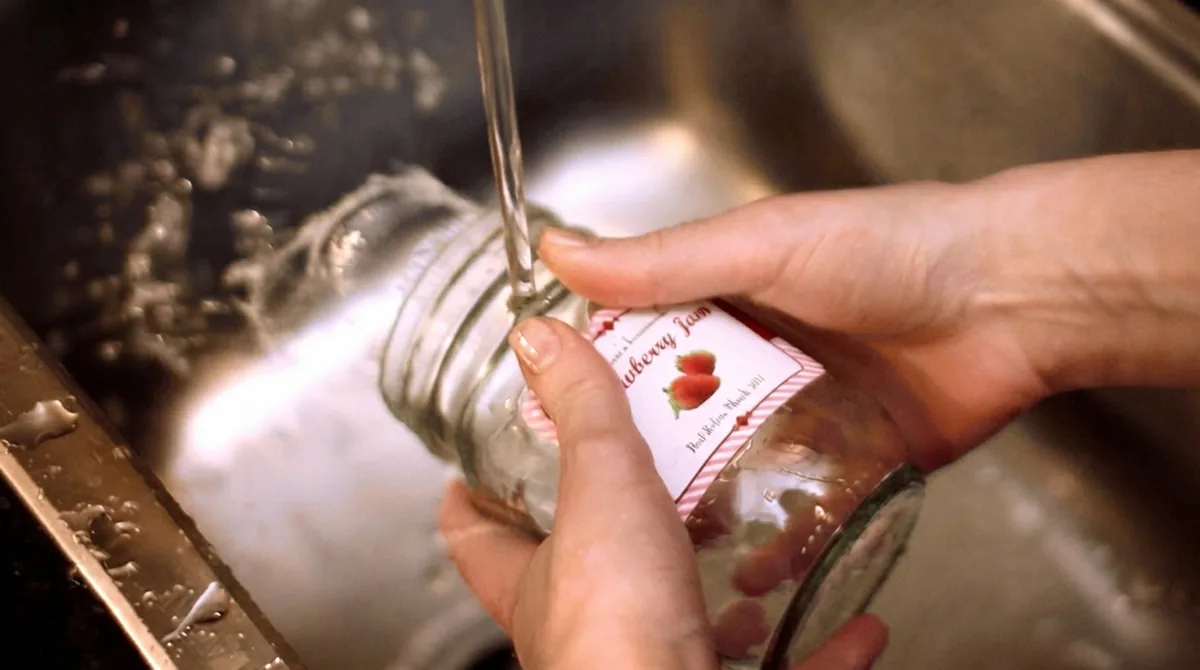
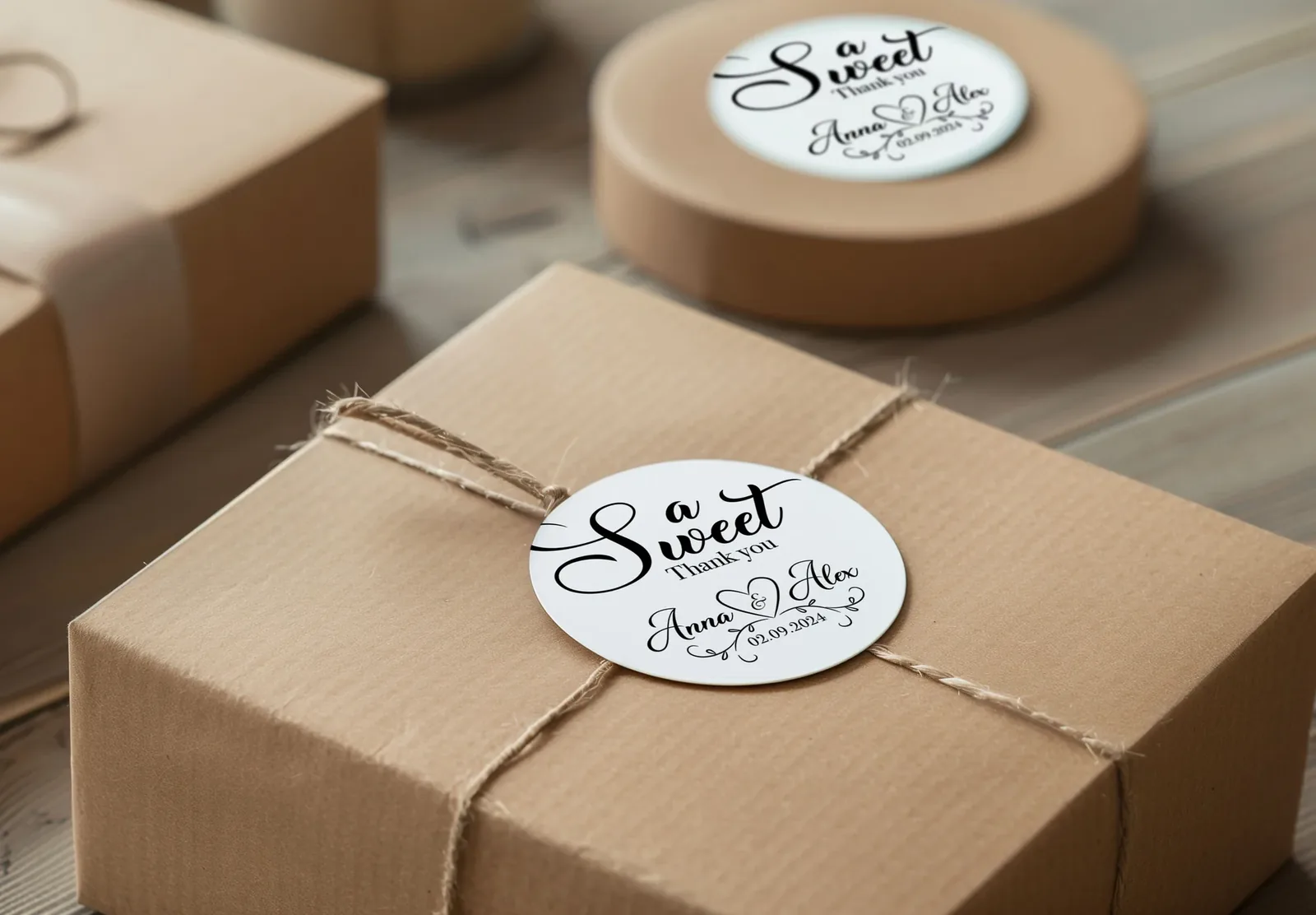
Six orders, six surfaces, three at a time. Each frame is a label doing the job it was chosen for.
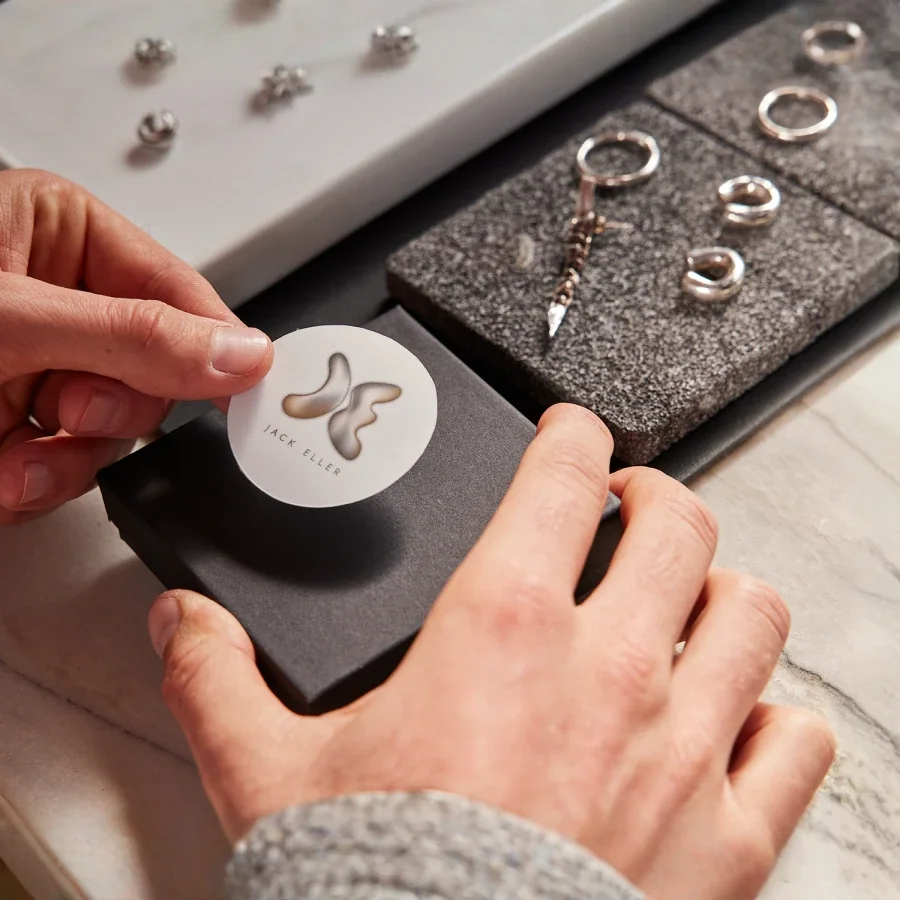
Jewelry box
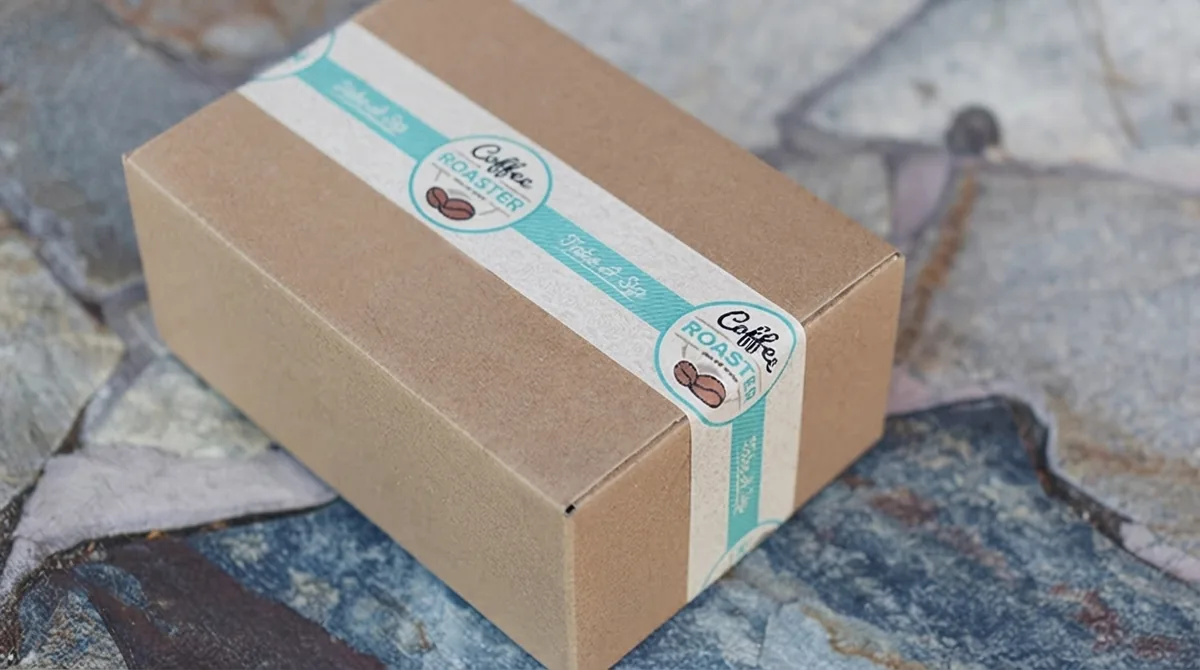
Coffee carton
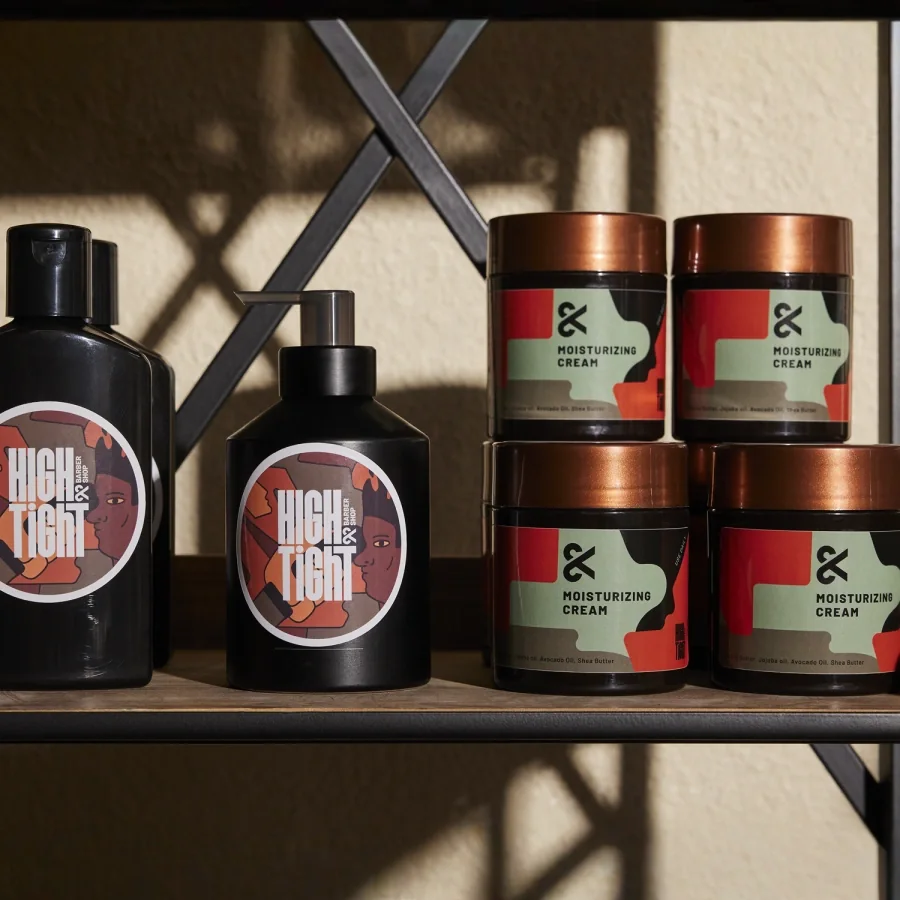
Skincare shelf
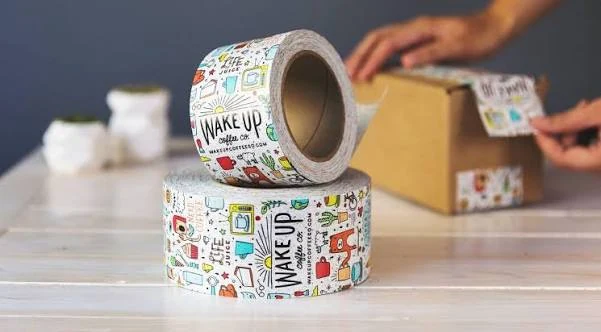
Packing bench
Jar under the tap
Thank-you parcel
Reviews From Buyers Who Reordered
We seal every order with a printed thank-you sticker, a small thing to get wrong and a very visible thing when it is. Matte came back flat and consistent across three SKUs, and the colors were read against the chip we signed rather than against a screen.
Nothing about our outline was print-ready. Someone on their side redrew it to clear the print and had it back the same day, which is why the first run left on the promised date.
Two thousand stickers landed a week ahead of the date on the order confirmation, and the third run matches the first — a reorder is a matter of quoting the same file.
 Emily RodriguezMarketing Director · United States
I sell from a spare room, which is a size most printers do not want to talk to you about. My first file had the artwork at roughly half the resolution it needed at final size; they caught it, told me the number it had to be, and charged nothing for the check.
Kraft mailers are dusty and unforgiving. Six hundred went out over a fortnight and no corner lifted, including the cartons left in a cold van overnight.
Wound on the core with the liner unbroken, the roll went straight into the dispenser, and the cut has matched on the two reorders since.
 Lisa ThompsonOnline Seller · United Kingdom
Six Answers Before the Artwork Goes Out
The questions that come up between approving a proof and opening the first carton.
01Can you match the label we already buy from another printer?
Send a sample of the label being replaced, unstuck from the bottle or the carton. A physical piece carries the face, the cut depth and the adhesive in a way no file describes, and it settles what the replacement has to equal before anything is quoted. Where the current label has lifted is the part of the brief worth telling us about.
02How close will the color be to the brand palette?
A spot color goes on press as a mixed ink and is matched to a physical chip, not to a screen — which is the part buyers find hardest to accept, because each screen renders the same hex differently. A chip is signed before the run, so the color is argued about once and not at every reprint.
03What happens if the outline changes after the die is cut?
A change inside the outline — a legal line, an ingredient list, a price — is a change to the artwork alone and leaves the die untouched. Moving the outline itself needs a new blade, because the blade is cut to that line and cannot be edited.
04Several different labels on a single order — is that possible?
Yes. Each design is cut on its own die and wound onto its own roll, which means a mixed pallet arrives already sorted and nothing on the packing line has to be separated by hand.
05If the cut or the color is off when the roll arrives, what happens?
The signed proof is the reference, and a roll that does not match it is remade at our cost on the same tool — scheduled ahead of new work rather than behind it.
06Is the label recyclable, and what happens to the backing paper?
A paper face from FSC-certified stock with soy-based ink is recyclable in most streams. The release liner is silicone-coated and generally is not, which is a real limit on a sticker and worth knowing before a sustainability claim goes on the pack.
Send Artwork, Get a Die and a Price
A vector file, a phone photo of a sketch, or a shape drawn on paper — any of the three is enough to cut a die from. What comes back names the face, the adhesive for your surface, the print route, the die, and a unit rate at the quantity in question.