
Custom Acrylic Box Manufacturers: 92% Light Transmittance & 3-Year Anti-Yellowing
Command up to 25% higher retail shelf margins with optical-grade cast boxes from a certified manufacturer. Bonded joints survive shipping, and the display looks new next season.
- 3 mm
- 4 mm
- 5 mm
- 8 mm
- 10 mm
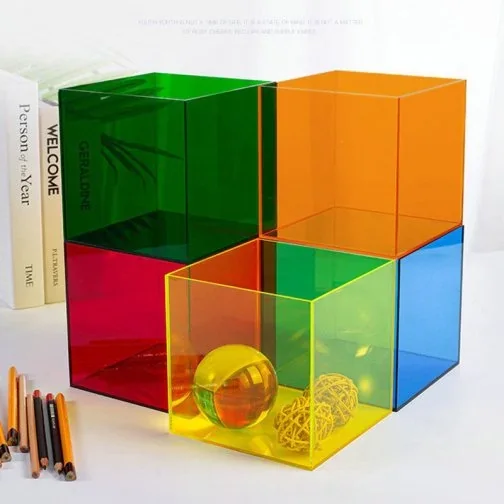
Nine Acrylic Boxes Most Buyers Order First
Each answers the same question a different way: what has to be seen, and what has to be kept off it.
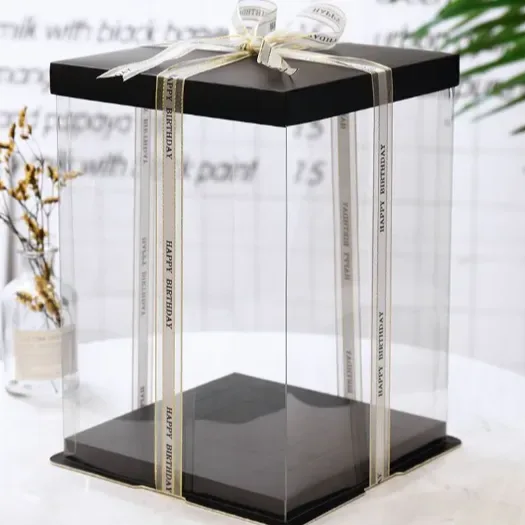 AD-01
Custom Acrylic Display Boxes
Counter and shelfThe product is the display. Branding goes on the base and the product sits behind nothing at all, which is what a printed carton cannot do.
 WG-02
Wholesale Acrylic Gift Boxes
Long programsA single specification held across a long program, with the unit rate stepping down at the volume tier a reorder actually reaches.
 CL-03
Clear Acrylic Boxes With Lids
Lift-off, hinged or claspedA lid is where a box is judged. The lid here seats the same way on the thousandth unit as on the first, which is a jig, not a technique.
 OE-04
OEM Acrylic Boxes
Drawn to your sizeAny footprint inside the sheet, cut to your drawing. There is no nearest stock size to compromise a product against.
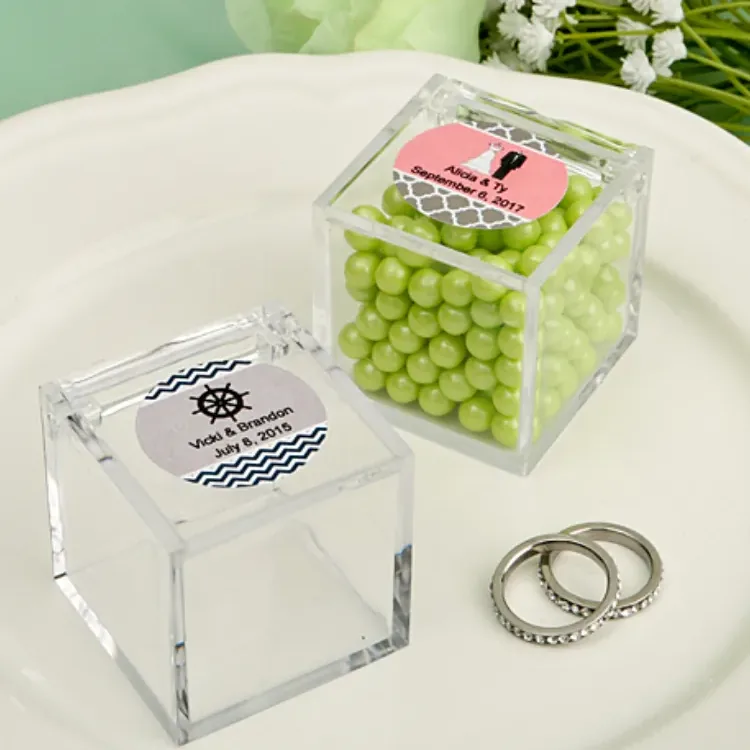 PR-05
Custom Printed Acrylic Boxes
Four print routesArtwork goes on the box rather than on a label, either cured under the surface or cut into it. Nothing to peel, nothing to sit crooked.
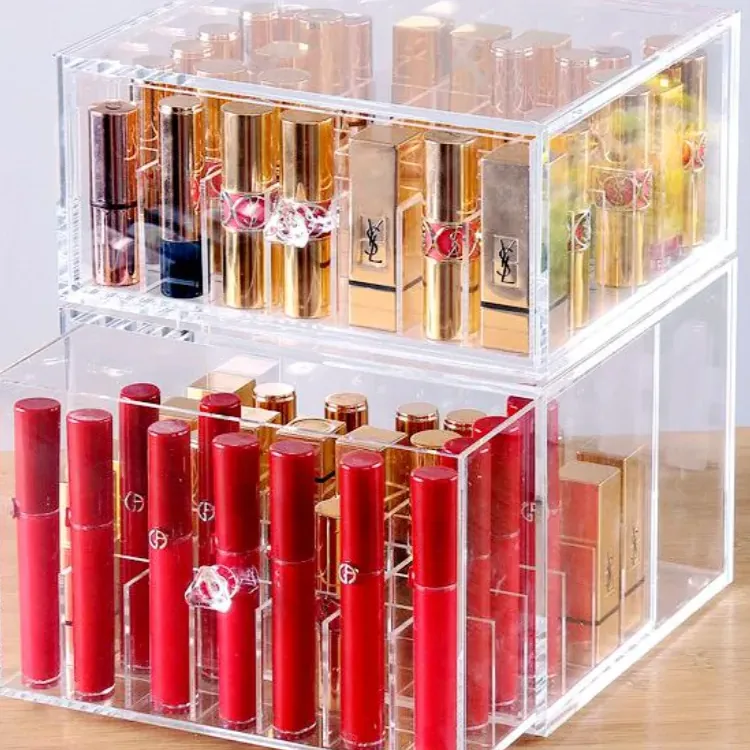 JW-06
Acrylic Jewelry Boxes
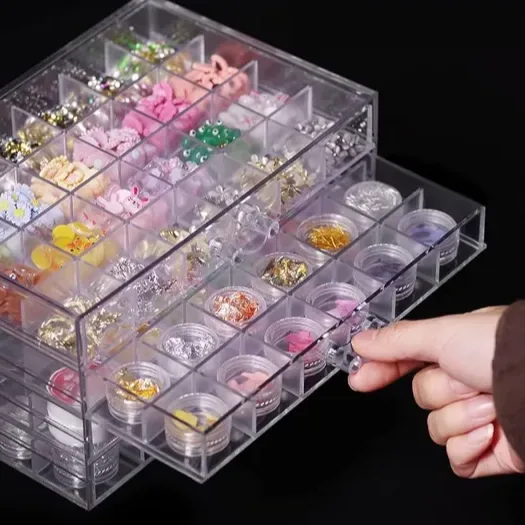
Divided compartmentsCompartments and a tray built to the piece rather than a stock tray, so a chain arrives unknotted.
 ST-07
Acrylic Storage Boxes
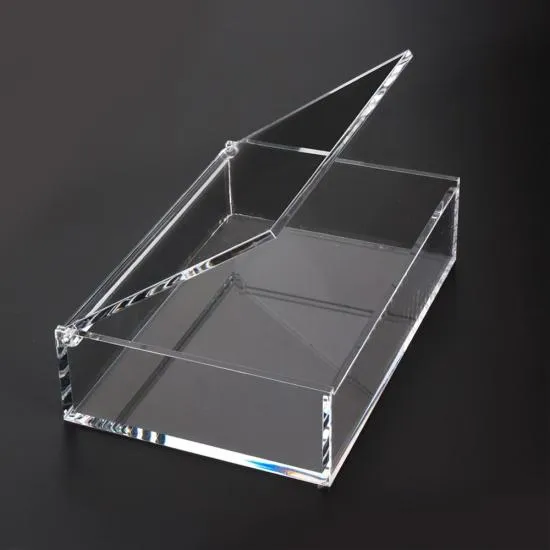
Stackable, load-ratedWalls sized to the weight above rather than to a default, which is the difference between a stack of four that stays square and a stack that leans.
 PX-08
Custom Plexiglass Packaging
Cast PMMA sheetThe same material under its trade name, sheet and fabrication in the same building, which is what holds the wall to the grade that was quoted.
 LK-09
Lockable Collection Boxes
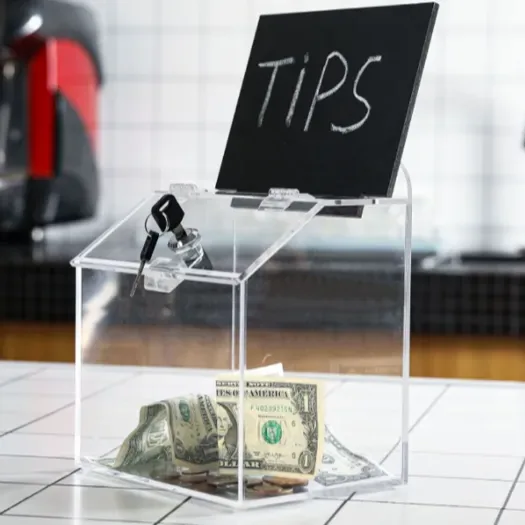
Cam lock and a slotFor donations, ballots and anything emptied by a single person and counted by another, with the lock and the slot set into the panels themselves.
The Product Picks the Family
You do not have to pick a family before you write. Send the size you have in mind and how many you need, and the answer says which of the nine fits and what it costs at that quantity.
How the Box Is Built, and the Four Ways It Opens
Almost everything that separates a good acrylic box from a cheap box happens at two places nobody photographs. Both are set at the bench, and both are visible on the first sample if you know where to look.
✓Polished edge✗Sawn edge
A cut edge is milled or flame-polished until it transmits light like the face. A sawn edge stays whitish and reads as a sheet someone cut.
✓Solvent bond✗Glue line and trapped air
Solvent softens both faces until they fuse, leaving a faint continuous line. Adhesive sits between them as a cloudy seam with bubbles in it.
✓Lid set on a jig✗Lid fitted by eye
The gap is a dimension held on a jig and gauged on the first box off it. Fitted by hand the gap drifts, and a drifting gap rocks.
✓Wall from the span✗Wall from the price
Thickness follows the footprint and the weight above it. Chosen from the price list instead, a long shelf shows a bow inside a month.
Lift-off lid
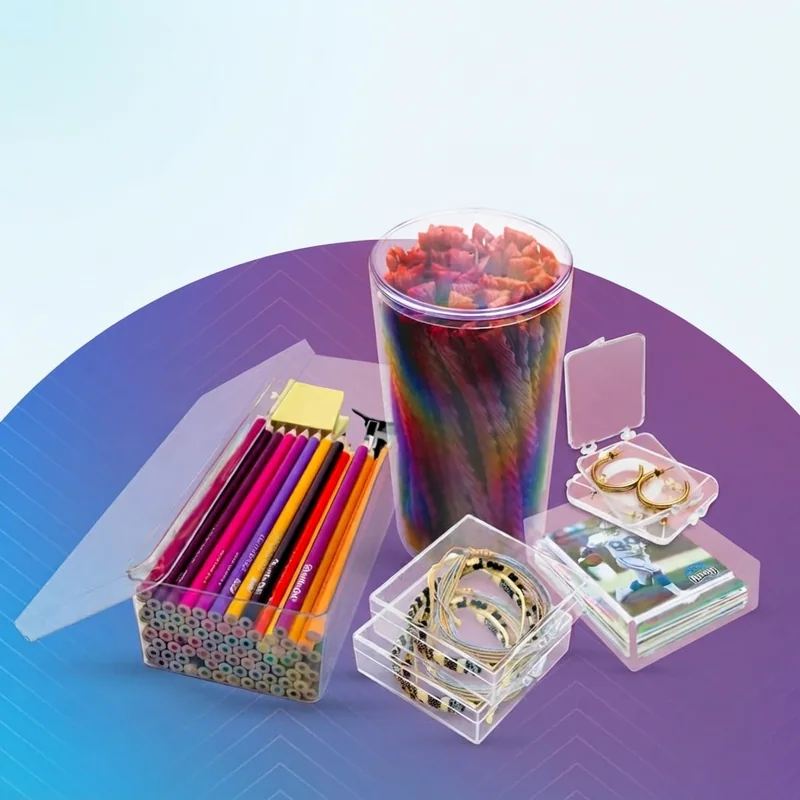
No hinge to failA straight lift with a rebated lip. Nothing to wear out, and the whole top face stays clear for print.

Hinged lid
Jig-set barrelsBarrels are jig-drilled rather than eyed in, and the lid still seats square a thousand openings later.
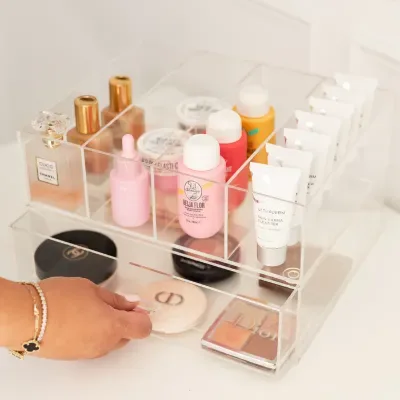
Sliding tray
Runner or frictionA tray that pulls out under the product, for anything that gets handled rather than looked at.

Stepped shelf
Nothing hiddenTiers cut from the same sheet and bonded at the same rake: a whole range reads from the door.
Where an Acrylic Order Goes Wrong
None of these shows up in a photograph of a first unit. Each is something a buyer unwraps, set against the control that keeps it off the order — and against what that control is worth once the box is on a shelf.
The face arrives hazed, with every mark the bench made on it
Both faces are masked through cutting and fabrication, and the film comes off at packing rather than on the bench.
What is unwrapped has not been touched by anything but a glove.
The second order is a different color of clear
Sheet grade is recorded against the SKU, so a reorder runs to the same standard as the first run rather than from memory.
Order twelve looks like order one, and a shelf does not drift over a season.
The print lifts along an edge
Ink is cured into the face instead of laid on top of it, and the print route is chosen while the artwork is still being drawn.
A mark that survives a wipe-down, with no label edge to catch.
A hinge seizes, or a lock corrodes, in a humid shop
Hardware is specified for the room the box lives in: stainless or solid brass, and a barrel rated for the opening count the piece will see.
It opens as smoothly in year three as it did on day one.
One unit cracks in transit and there is no spare to send
Corner blocks are written into the pack and a spare into the run, so a replacement comes out of the same batch.
One damaged box costs a courier label, not a remake and a wait.
Acrylic Against the Alternatives
The wrong material here is usually chosen for the price of the sheet rather than for what the box has to survive.
Acrylic
Shaped, then bonded
Ten to seventeen times the impact resistance of glass at half the weight, and it can be cut, polished and bonded into shapes glass cannot be made in at all. The face is softer than glass, where a scratch shows rather than disappears.
- 92% light transmission
- Half the weight of glass
- Bonded, not framed
Glass
Resists scratching
A harder face than any plastic and no yellowing at any age. It is heavy, it breaks into whatever is inside it, and anything other than flat panels has to be bought rather than made.
- Hardest face
- Breaks into the product
- Flat panels only
PET-G or polycarbonate
Where it gets knocked
The toughest of the three, and the grade to specify where a box gets knocked rather than admired. It is less clear than PMMA of equal thickness and it drifts faster under daylight.
- Highest impact
- Less clear than PMMA
- Drifts under daylight
What the Sheet Can Be
Cast sheet is the baseline. The other three grades each answer a way a display fails — daylight, impact, load. The finish is a separate decision, and a buyer makes it at a glance.
The grade what the box survives
Cast PMMA
92% light transmissionThe baseline sheet, and the grade that machines and polishes without clouding. Extruded sheet is cheaper and is the reason a cut edge sometimes looks milky.
UV-stabilized
Stabilized through the sheetFor a box that stands in daylight. The inhibitor runs through the thickness rather than sitting in a coating, which is why it cannot be washed off a front face.
Impact-modified
To seventeen times glassTougher than standard PMMA at the same wall. The grade for a counter with children at it, and for anything that has to travel.
Structural wall
Sized to the spanFor a plinth or a shelf carrying weight rather than showing product. The wall is derived from the span and the load, then quoted on its own line.
The finish what the shelf sees first
| Finish | What it is | Chosen for |
|---|---|---|
| ClearThe default | The hardest of the six to get right. Cast rather than extruded, which keeps the machined edge clear. | A product that is the display |
| Frosted | A diffuse surface that scatters a spotlight and forgives fingerprints in a way a polished face never does. | A piece that gets handled |
| Smoke | A gray tint deep enough to read as a solid from across a room and still let the product be seen up close. | Reading solid from the door |
| Amber tintAny Pantone | Any Pantone in any transparency. The tint runs through the sheet, which means a scratch cannot cut down to clear. | Matching a brand palette |
| Mirror gold | A metallised face that throws the shelf light back out. The loudest of the six, and it wants a quiet product. | A shelf moment that has to carry |
| Neon edge | A fluorescing edge that lights along the wall thickness. The face stays clear and the edge does the work. | An edge that carries the light |
What Can Be Put On It
A fine gradient and a solid logo do not want the same process. Send the artwork and the route comes back with the quote rather than with the sample.
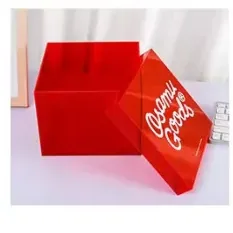
Silkscreen
Exact PantoneA solid color laid through a screen. The route for a logo in a spot color or two that has to match a brand book under a shop light.
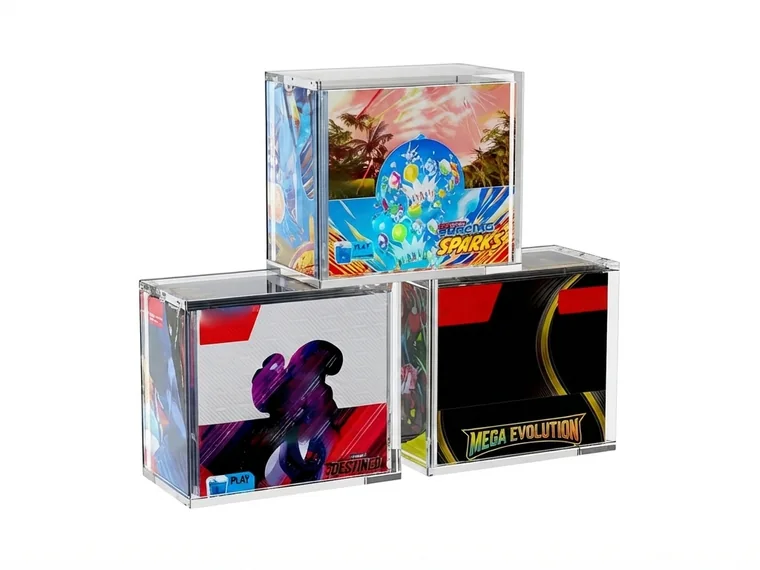
UV digital
No plate, full colorArtwork printed straight to the face and cured under a lamp. No plate, which is what makes a short run carrying a photograph worth quoting.
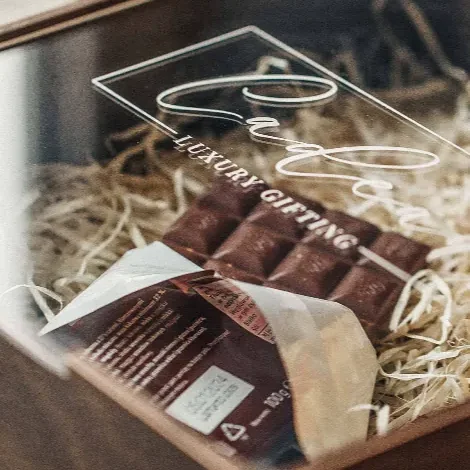
Laser engraving
Cut into the sheetA frosted mark taken below the surface. It cannot rub away, it reads best where a light can catch it, and it survives cleaning.

Hot foil
Real metalGold, silver or rose gold laid as foil rather than as ink. The only route that produces a genuinely metallic face rather than a suggestion of it.
Four Things Move the Unit Price
Three of them are settled on the drawing, before a sheet is cut. That is the point at which a price is still cheap to change.
The sheet and the wall
The sheet is the largest line in the box. A wall matched to the load carries it for less material than a thickness picked off a price list, and that gap is the first place to look.
How the parts nest
Each panel comes out of a standard sheet. A footprint drawn to tile with little waste costs materially less than the same box at a size that throws half a sheet away.
The polish
A polished edge is bench time per part, and it is the first line cut when a price has to come down. It is also the difference a buyer sees across a counter.
The print route
A screen carries a setup and digital carries none, so on a short run the screen setup can be the biggest line on the quote. Above that they cross over.
From Drawing to Pallet, in Five Stops
The sample and the sheet booking run at the same time. Overlapping them is what holds a run to four to six weeks instead of adding to it.
- Day 0
Drawing and mockup
A dimensioned drawing of each panel with the sheet nesting shown on it, plus a 3D mockup of the closed box. The wall and the lid are settled here rather than at the saw.
- Day 1–4
Sheet and white sample
The sheet grade is confirmed against the drawing and an unprinted box is made at the finished size, held against the product and opened and closed by hand.
- Day 5–7
Printed sample
The same box carrying the final artwork, with the color read against the signed chip. Nothing goes to the bench until this is signed off.
- Day 8–35
Cut, polish, bond, assemble
Panels are cut from the sheet booked at the first stop, edged, bonded and fitted with hardware down the bench in sequence rather than in batches.
- Day 36–42
Inspection and pallet
Every unit is checked for haze and for lid seating, the lot is masked, corner-blocked and palleted, and the packing sheet travels with the shipping papers.
Where These Boxes End Up
A fabricated box is bought for a position rather than for a product. Six of them, three at a time.
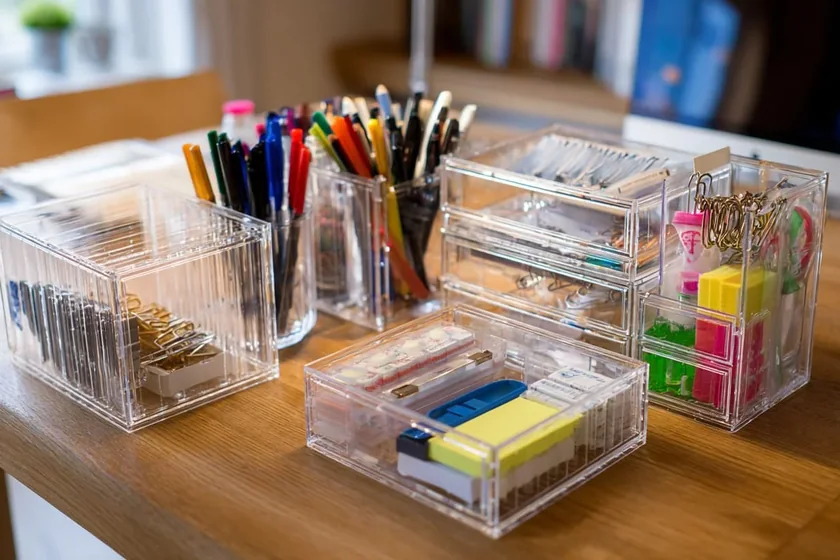 A studio desk
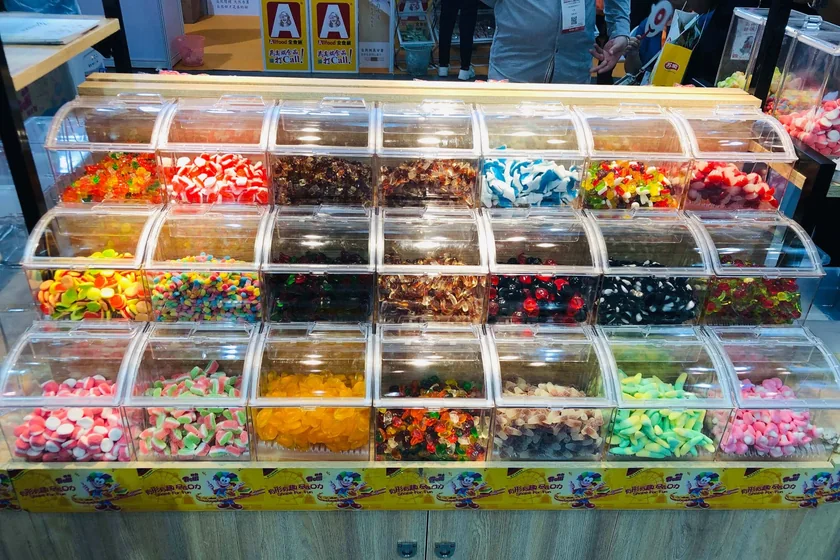 A sweet shop
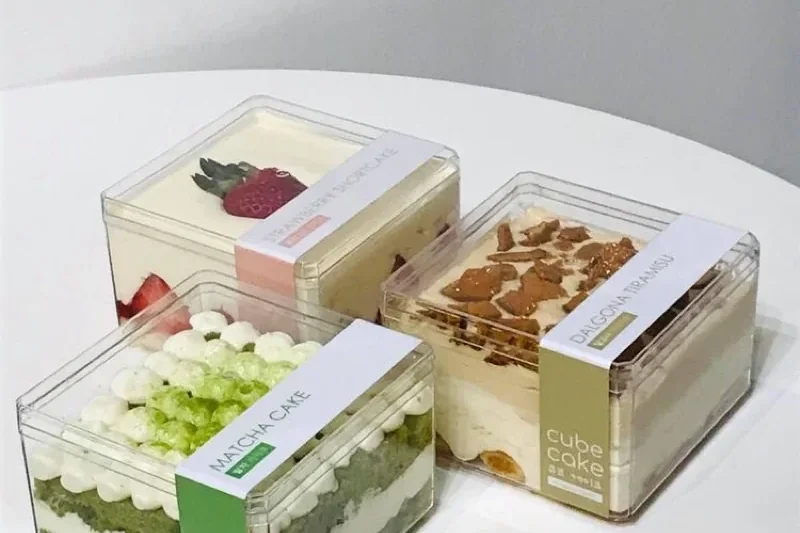 A dessert table
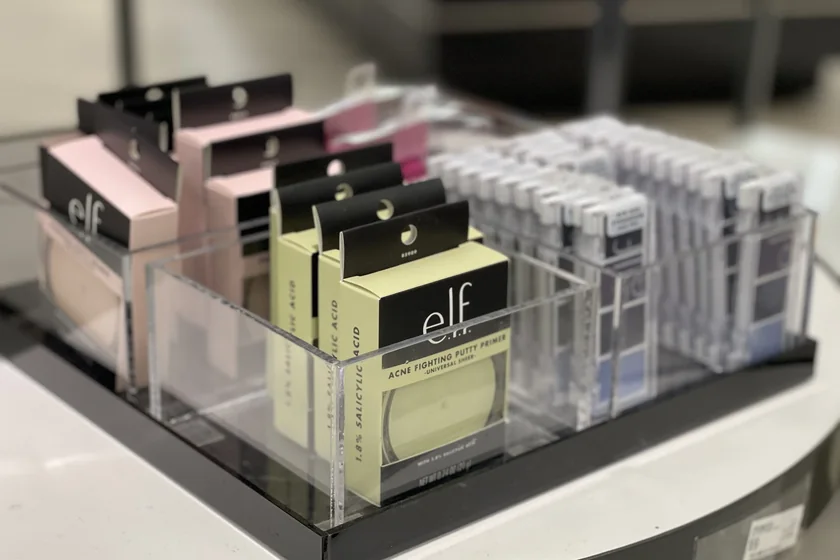 A beauty counter
 A gifting suite
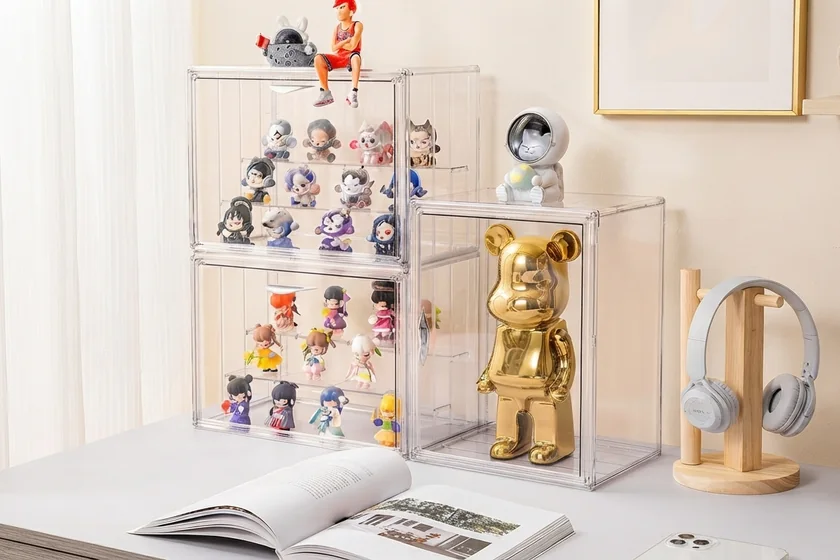 A collector's shelf
What the People Who Ordered Say
The brief was mostly a warning: 500 display boxes headed out with a necklace line, the logo engraved, and the box itself had to disappear. What arrived was clearer than the samples we had been sent by two other suppliers, and the engraving read without a label anywhere on it.
Twelve days, the crossing to California included, and the boxes were on the counter for the launch instead of after it.
The unboxing is the part customers keep mentioning. A reorder for a thousand more is already placed.
We bought 150 heart-shaped boxes for a preserved rose line, which is a product where the box is most of the gift. The laser-cut edges came out mirror-smooth and the shape held on all hundred and fifty.
The courier held the pallet three days, and that is the only reason this is not a five. What mattered was being told: the tracking was checked daily and passed to us before we could ask.
Three days late and no customers lost. We would buy them again.
Questions an Acrylic Order Hangs On
The six things a first-time buyer asks before committing to a run.
What is the minimum order for a custom acrylic box?
500 units, which is roughly where the sheet cost and the bench time stop dominating the unit rate. A size already in production reordered in new artwork carries no new setup at all, and a market test can go below that on a shape we have run before. Send the size and the quantity and the tier comes back as its own line rather than as a surprise on the invoice.
Will the acrylic yellow or cloud in a shop window?
Only where the box actually faces daylight. A box on an interior aisle, or on a counter away from a window, does not need the stabilized grade at all, and specifying it there buys nothing. A position in direct sun does, and the position is what decides — say which way the box faces when the drawing goes out.
Can the inside face be printed or engraved?
Yes, and it is worth doing wherever the lid comes off and the interior ends up on show. A mark on the inside face reads from the front while the surface the customer actually touches stays unbroken. Either comes back quoted separately.
What happens if a box arrives damaged?
Send a photograph of the damage. The pallet was photographed before it left and the packing record travels inside the carton, so the claim is settled against a record instead of a description, and the replacement is raised against the batch record.
Can one order carry several sizes and several print methods?
Yes, and most ranges do. A shelf set with three tiers, or a range in four sizes, is a single order with several drawings, each size carrying its own rate. Print routes can be mixed inside the order, which is what lets a logo be screened while a photograph beside it goes down digitally.
What do you need to quote a run?
The product’s own dimensions, the quantity, where the box will stand, and whether the artwork covers the lid or the whole outer face. Size and quantity settle the sheet grade and the tier, the position settles the grade, and the print area settles which route is quoted. All of it comes off our own bench in Wuhan, China, with nobody in between the drawing and the saw. A ruler laid against the product closes the last gap.
Send a Drawing and Get a Box Priced Against It
A phone shot of the product beside a ruler is enough to start. What comes back is a dimensioned drawing, a nesting layout, a print route and a unit rate at your quantity.