 01
Poly Mailers
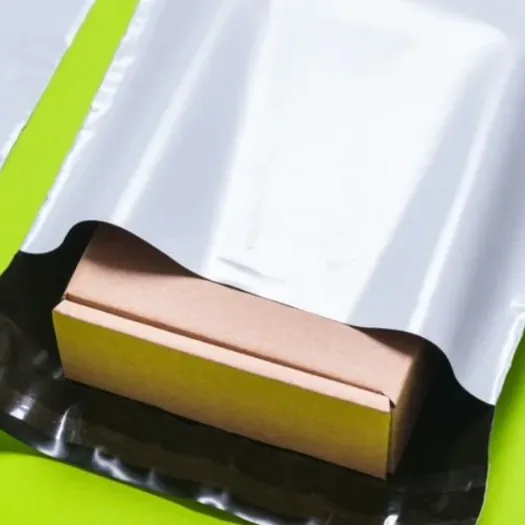
A light, water-resistant film that keeps a garment dry and flat, at a unit cost that barely registers on the freight line.
Best forApparel, accessories, soft goods

Mailers run up to 80% lighter than traditional corrugated boxes, drastically reducing volumetric freight charges. Engineered with multi-layer co-extruded film, our custom mailers deliver 100% puncture, tear, and moisture protection to keep your products completely safe in transit.
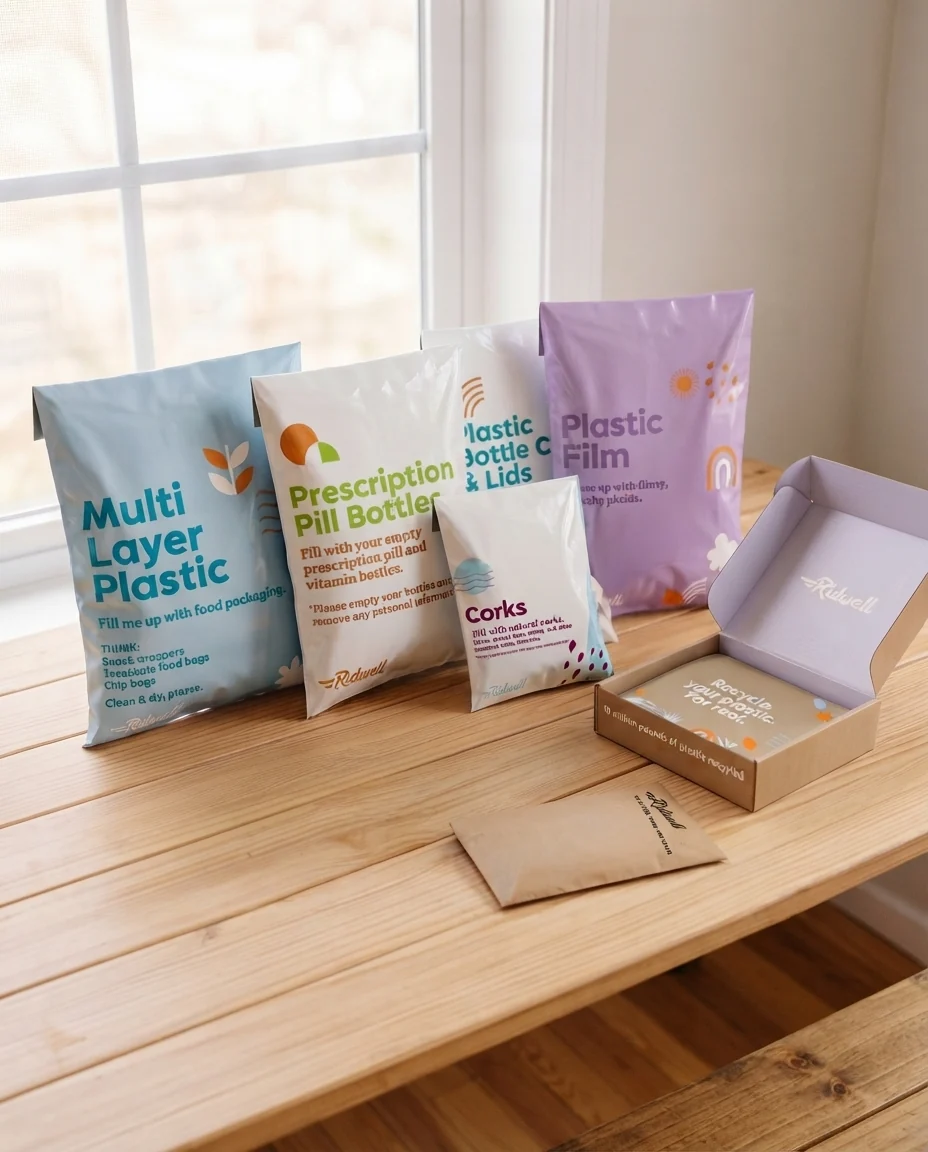
The film is chosen by what travels inside it and how it has to be packed, then cut, printed and sealed by the team that quoted it.
01A light, water-resistant film that keeps a garment dry and flat, at a unit cost that barely registers on the freight line.
Best forApparel, accessories, soft goods
 02
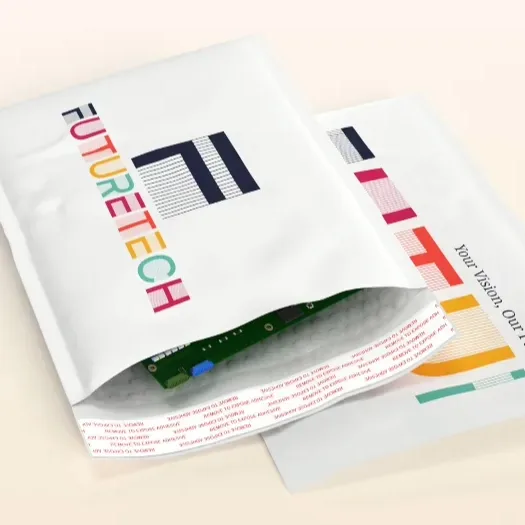
A bubble layer bonded inside the film; a bottle, a phone or a pair of earrings lands without a mark and without a box.
Best forElectronics, jewelry, small fragile items
 03
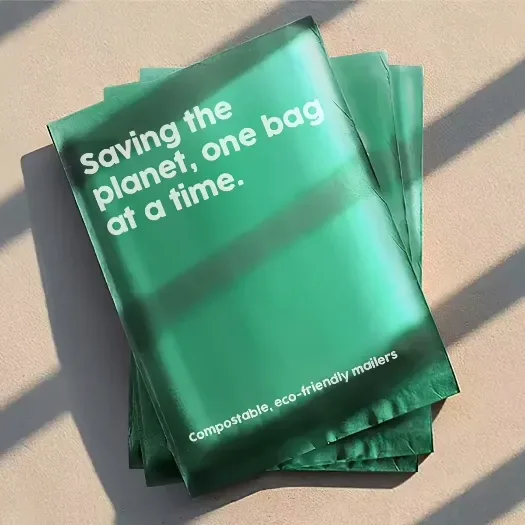
Recycled or compostable film that decomposes after use, for a range whose sustainability claims are already public.
Best forRanges carrying a public target
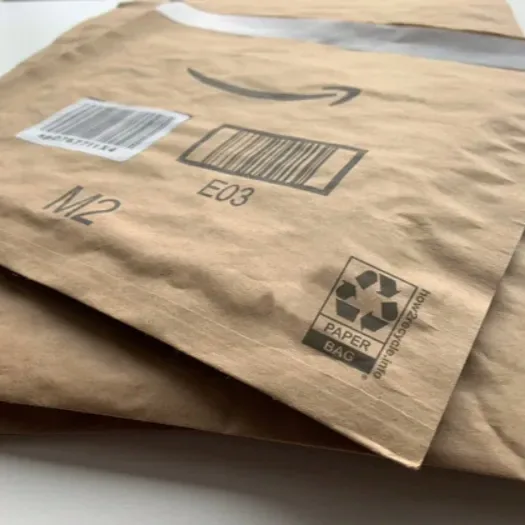 04
Kraft paper over the same protective core, with a face that takes a stamp, a sticker or a handwritten note.
Best forPremium unboxing, gifting, retail
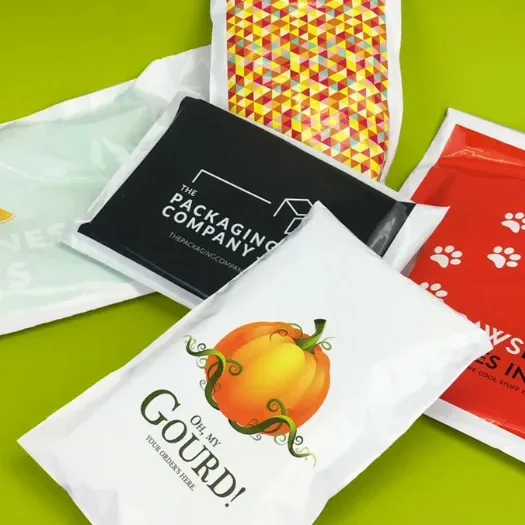 05
Full-color print across the whole panel: a logo or a pattern is the first thing the customer meets.
Best forCampaigns, seasonal drops, launches
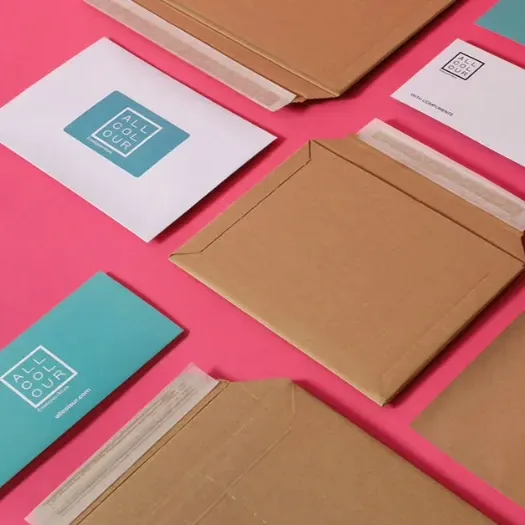 06
A stiff board shell that keeps a certificate, a print or a photograph flat from the press to the frame.
Best forDocuments, photographs, flat art
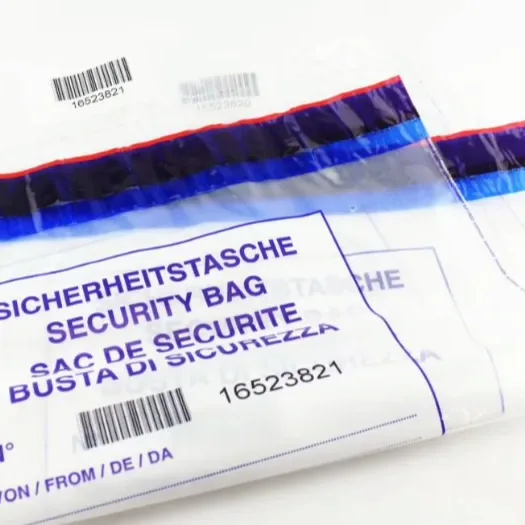 07
A tamper-evident seal that shows when a bag has been opened, keeping a high-value order accounted for end to end.
Best forHigh-value, confidential shipments
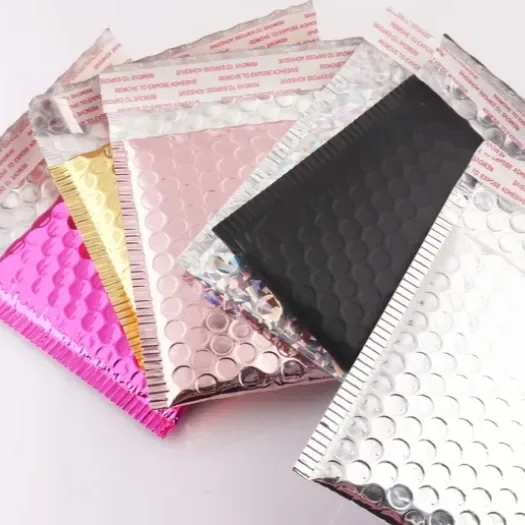 08
Solid film in the exact shade the palette uses; a shelf of packs then reads as a single range, not several.
Best forRange building, shelf presence
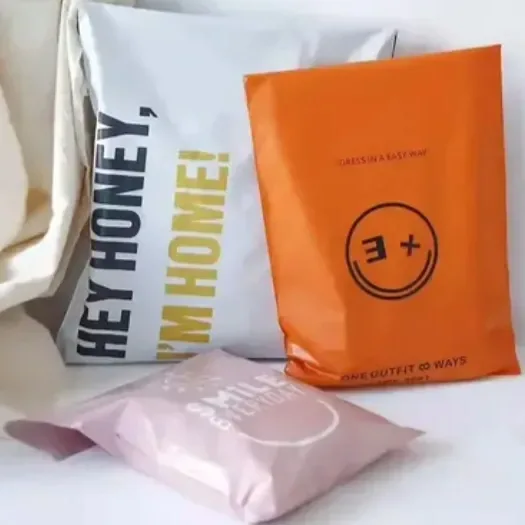 09
Any dimension between the smallest and the largest stock size, drawn to the object instead of rounded to the nearest standard.
Best forOdd-shaped or oversized products
One plant, material sourced nearby, and the team that takes the brief also answering the questions on it.
One production site has run since 2015 and now ships for more than 10,000 clients. Film, print line and packing benches share the building, so nothing is handed down a chain between the quote and the seal.
The plant sits beside its material markets, so film is sourced directly rather than through a broker, and a spec change or a reorder does not wait on someone else’s stock.
Technical questions go to the people who priced the bag, and a spec that will not work is raised before the run rather than after it ships, with answers that come back promptly.


AQL 2.5 inspection on every lot
Give the item’s own measurements and the quantity you expect. Film, size and print come back as one itemized price, with a proof inside the first 24 hours.
Five questions decide every mailer quote. The answers are where the two columns stop matching.
Nine stock sizes cover most orders, and anything else is drawn to the item that has to travel inside it.
The quote starts from the item, not a catalog page: the footprint of the folded, rolled or boxed piece, taken at the widest point it reaches.
A loose garment, a taped bundle and a tray each take up a different amount of room, and the dimension follows the way the bench actually packs.
The chosen size is made up and posted, and the fit is judged with the real item in the real bag before the film is cut for the run.
A mailer is a film with a print on it. Those two choices decide what the pack weighs, what it protects, and how the artwork reads at arm’s length.
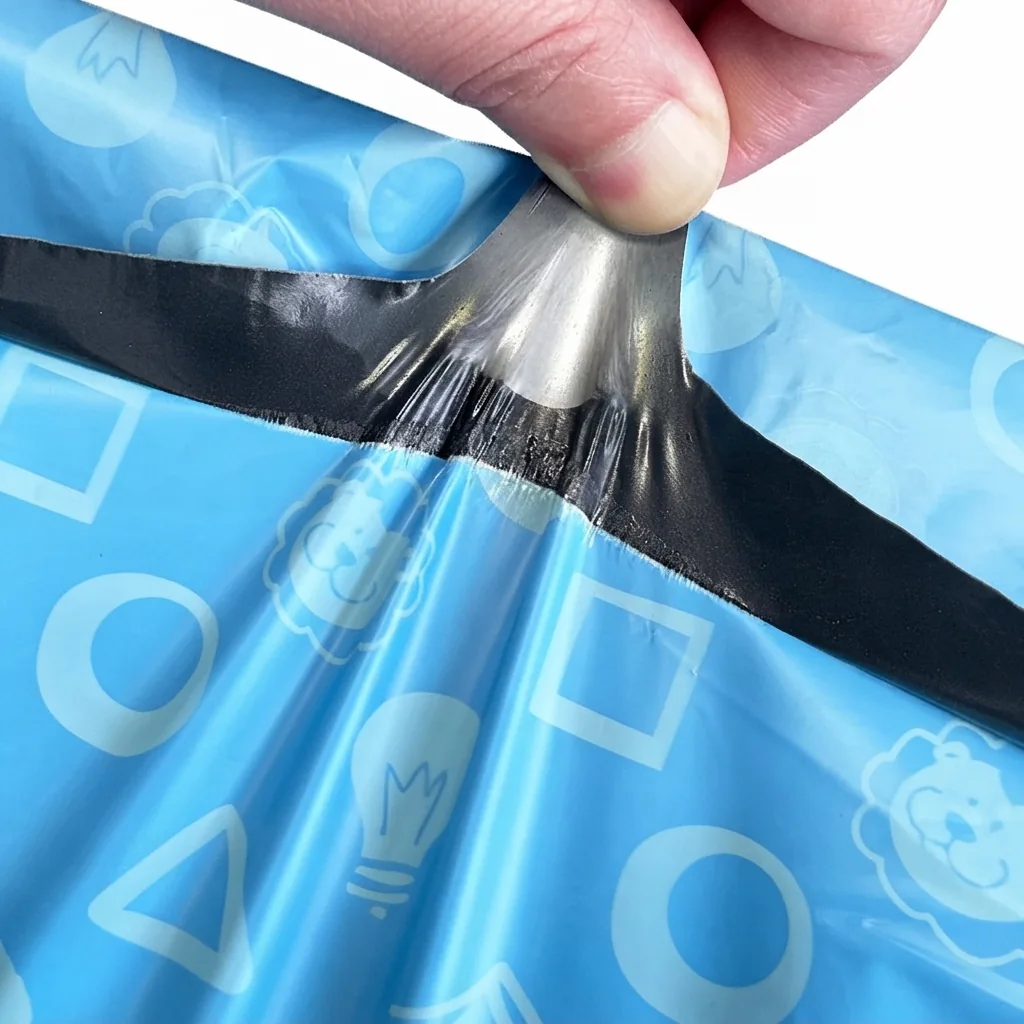
Low-density film gives a soft, flexible bag; high-density film a crisper, stiffer build. Both resist water and take print straight onto the surface.
Best forThe default for apparel and accessories
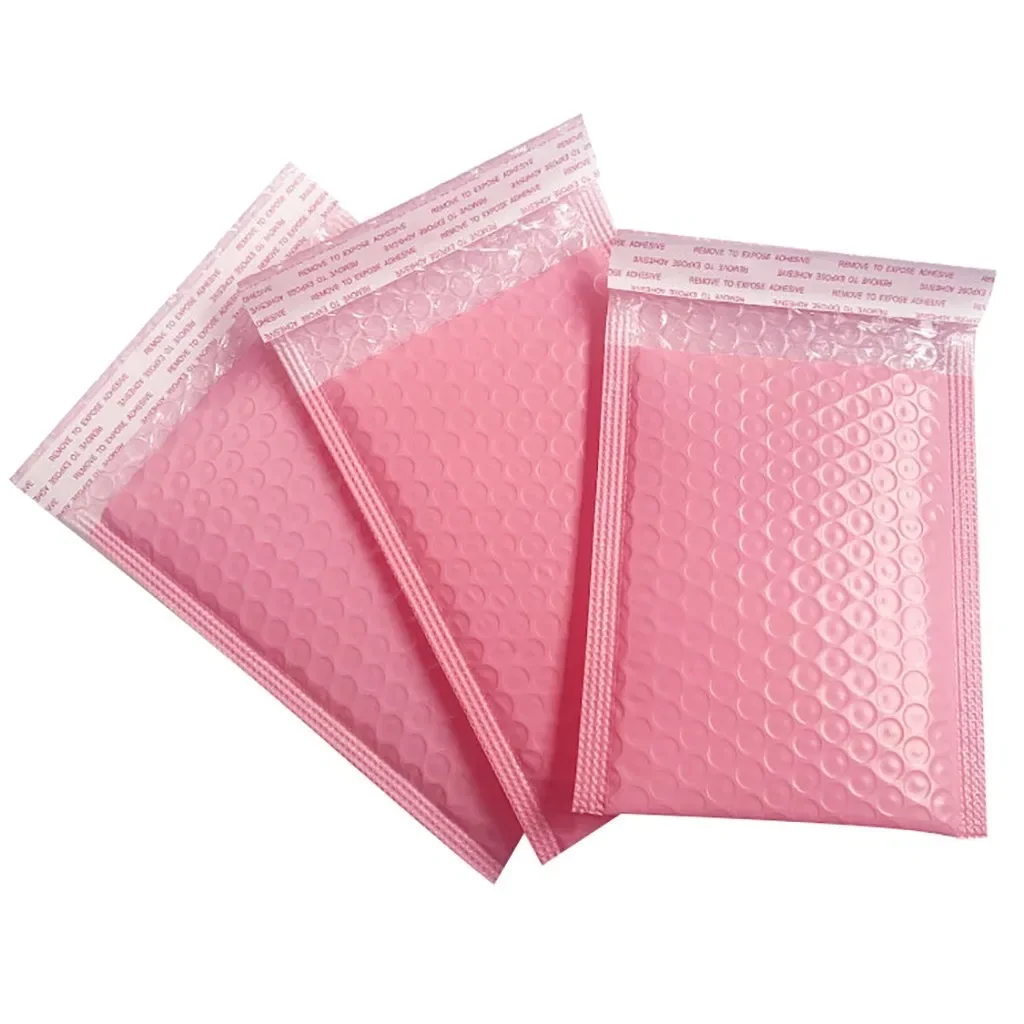
A layer of air cells bonded between two film faces. It is the difference between carrying a fragile item and protecting it.
Best forElectronics, cosmetics, jewelry
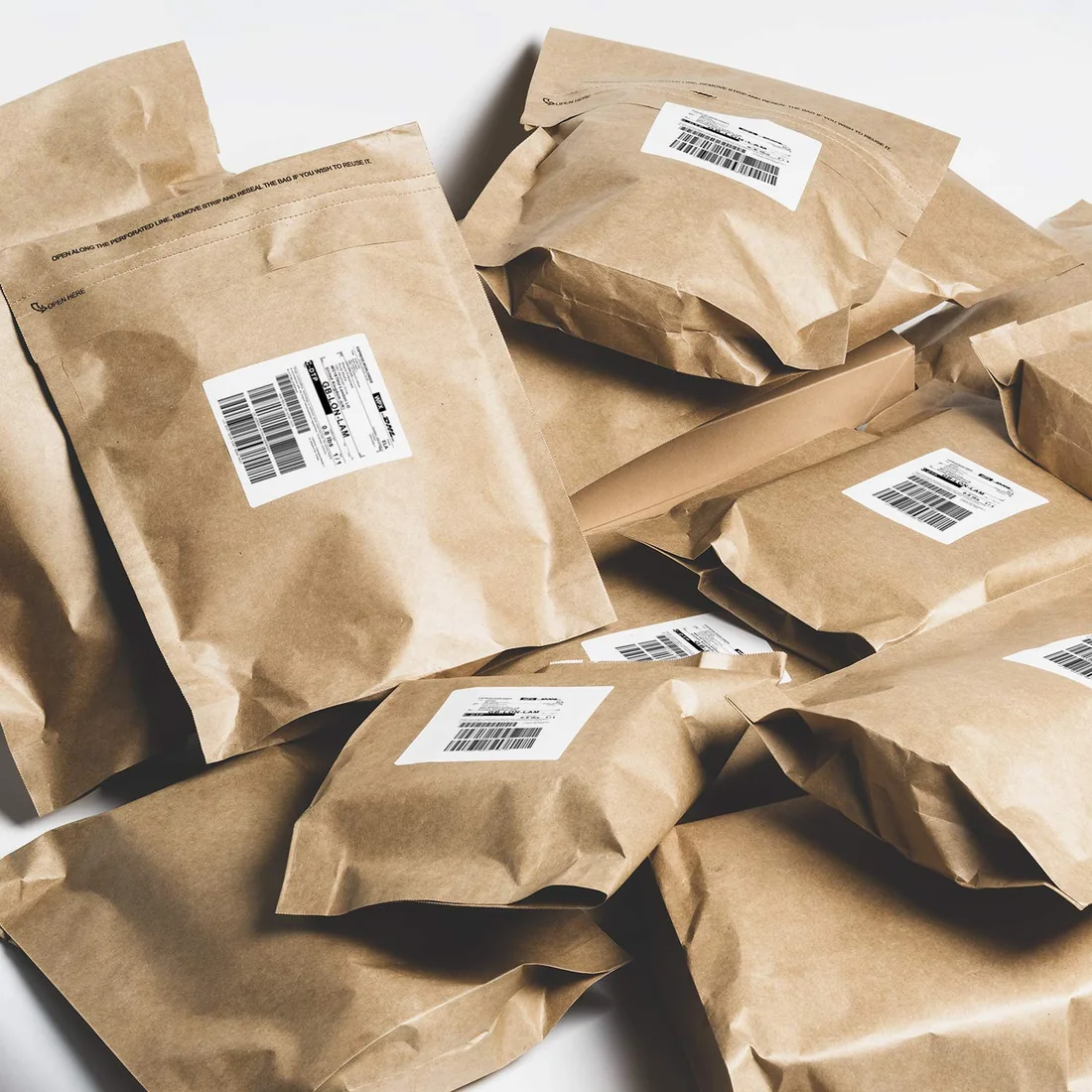
A paper face bonded over the protective core, for a bag that photographs as premium and recycles in the paper stream.
Best forPremium retail and gifting
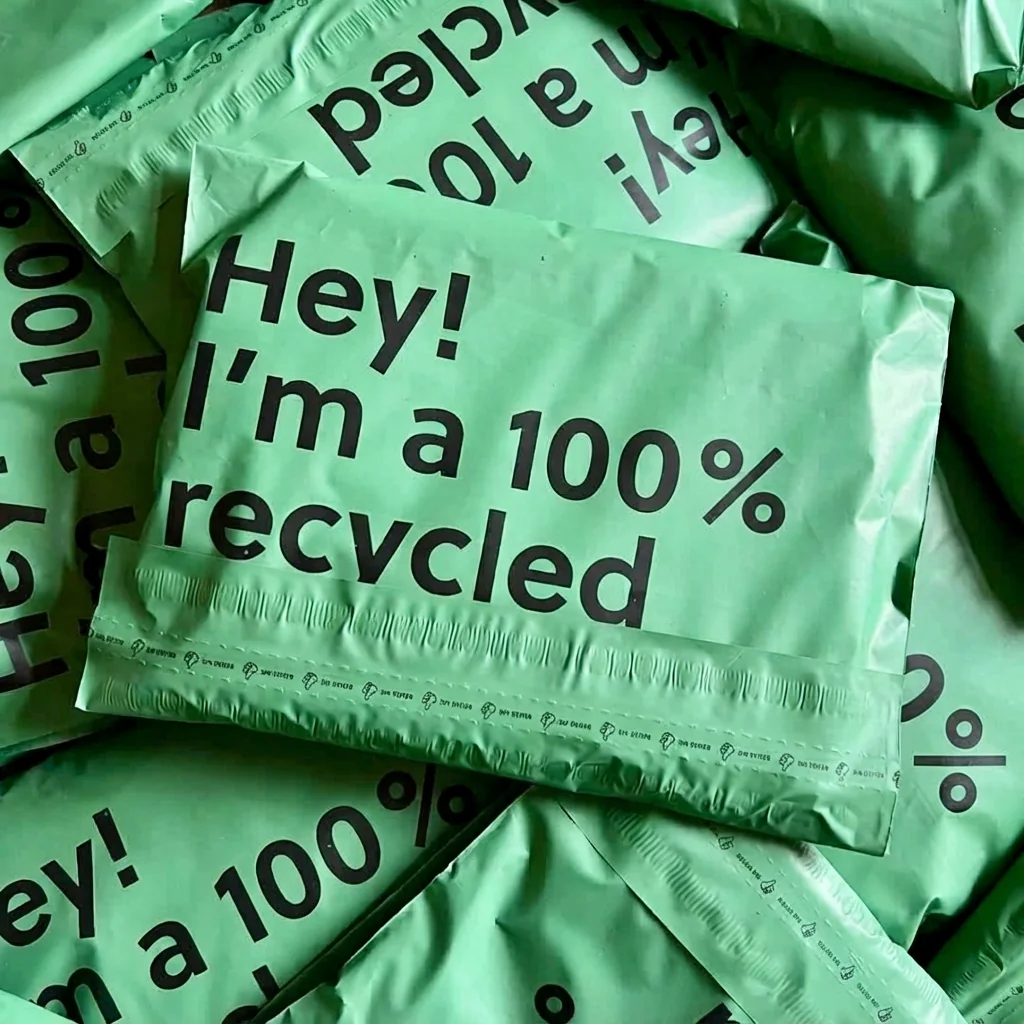
Film made from recovered material, or a film that composts after use, giving a sustainability claim that can be printed on the bag itself.
Best forBrands with published eco targets
Three routes onto the same film, chosen by the artwork and the length of the run.
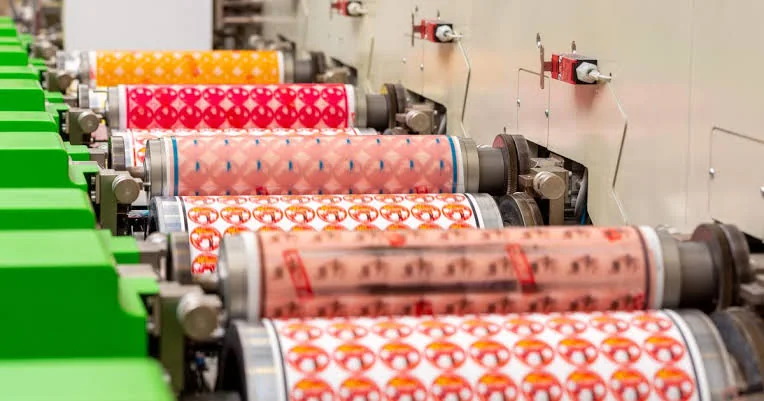
The economical route for flat two-color work at volume.
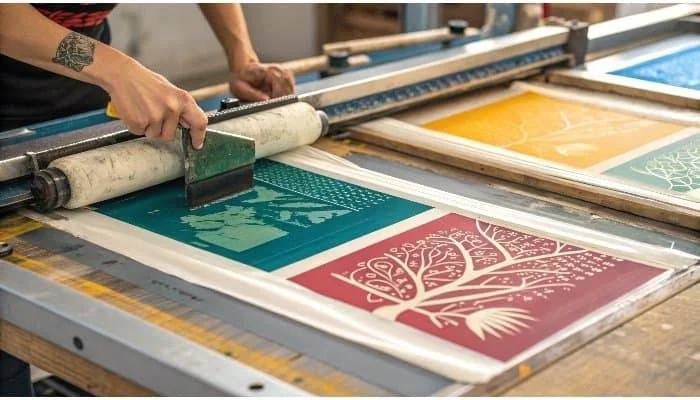
Dense, opaque coverage where a flat color has to dominate.
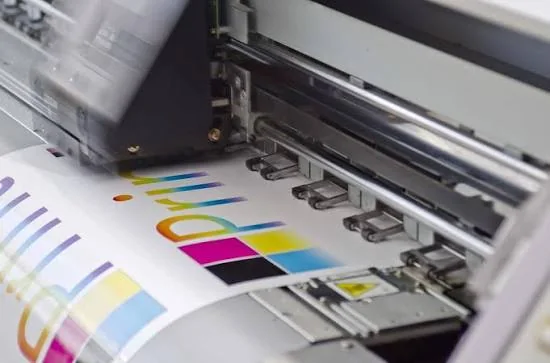
Full-color artwork with no plate cost, for shorter runs and changing designs.
Pantone matching runs across all three routes, and the color code is best supplied before the proof goes out — that is what keeps a screen rendering and a printed film in step.
Each of the three is decided against a real product, and all three are confirmed on the proof.
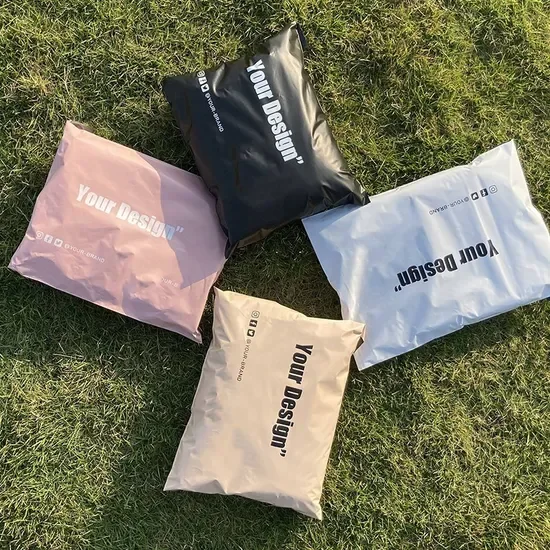
Any Pantone in the book, matched on the film. A reorder two seasons later comes back the same shade, and the range still lines up on a shelf.
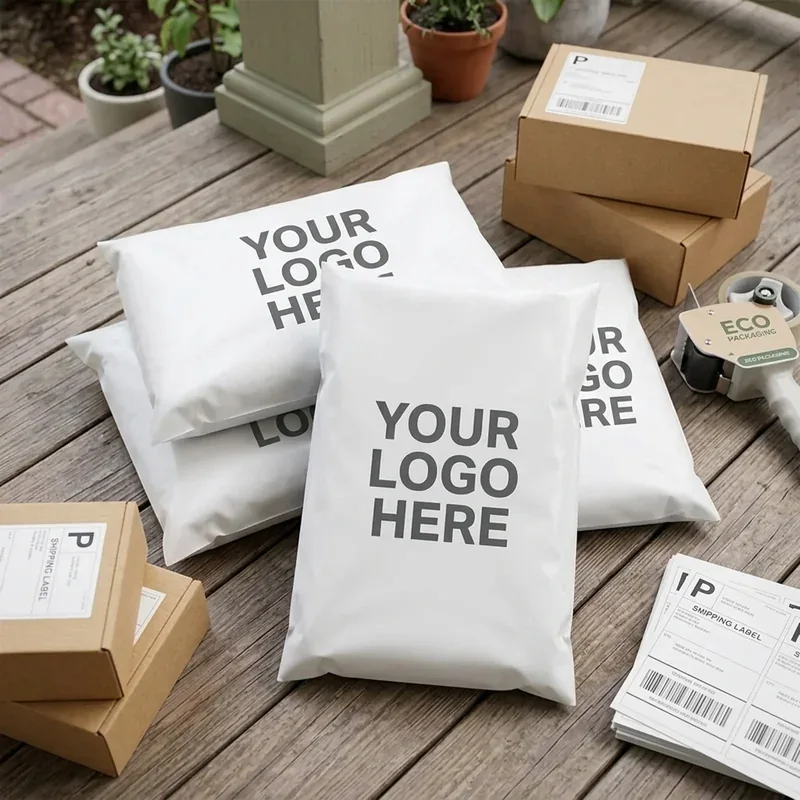
Logo, pattern or full-panel artwork, printed onto the film. The design is settled on a proof before a plate is cut, and the run is held to it — the bag that ships is the bag that was approved.
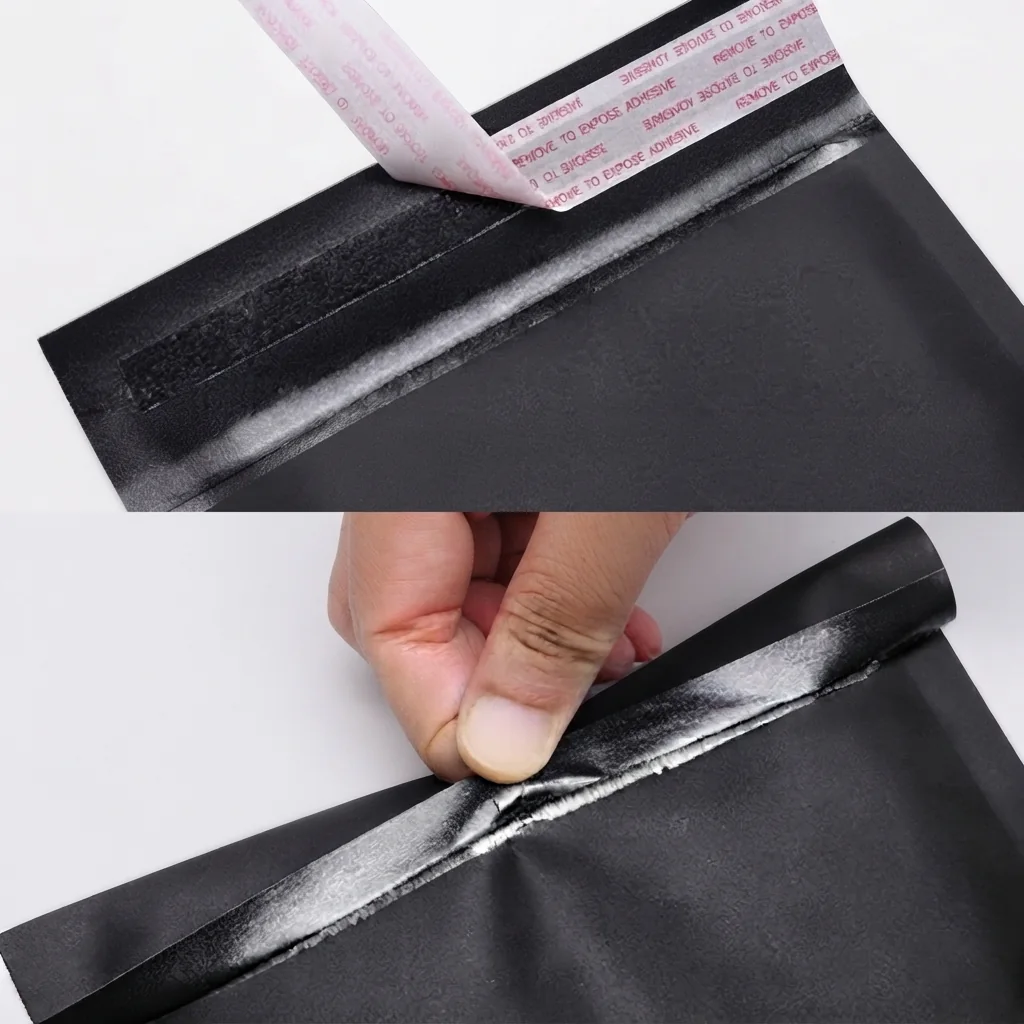
The closure is settled with the size and the film, not added afterwards: a plain seal for steady daily packing, a tamper-evident one where the parcel has to arrive unopened.
Each buys the same product differently. What changes is the line it is packed on.
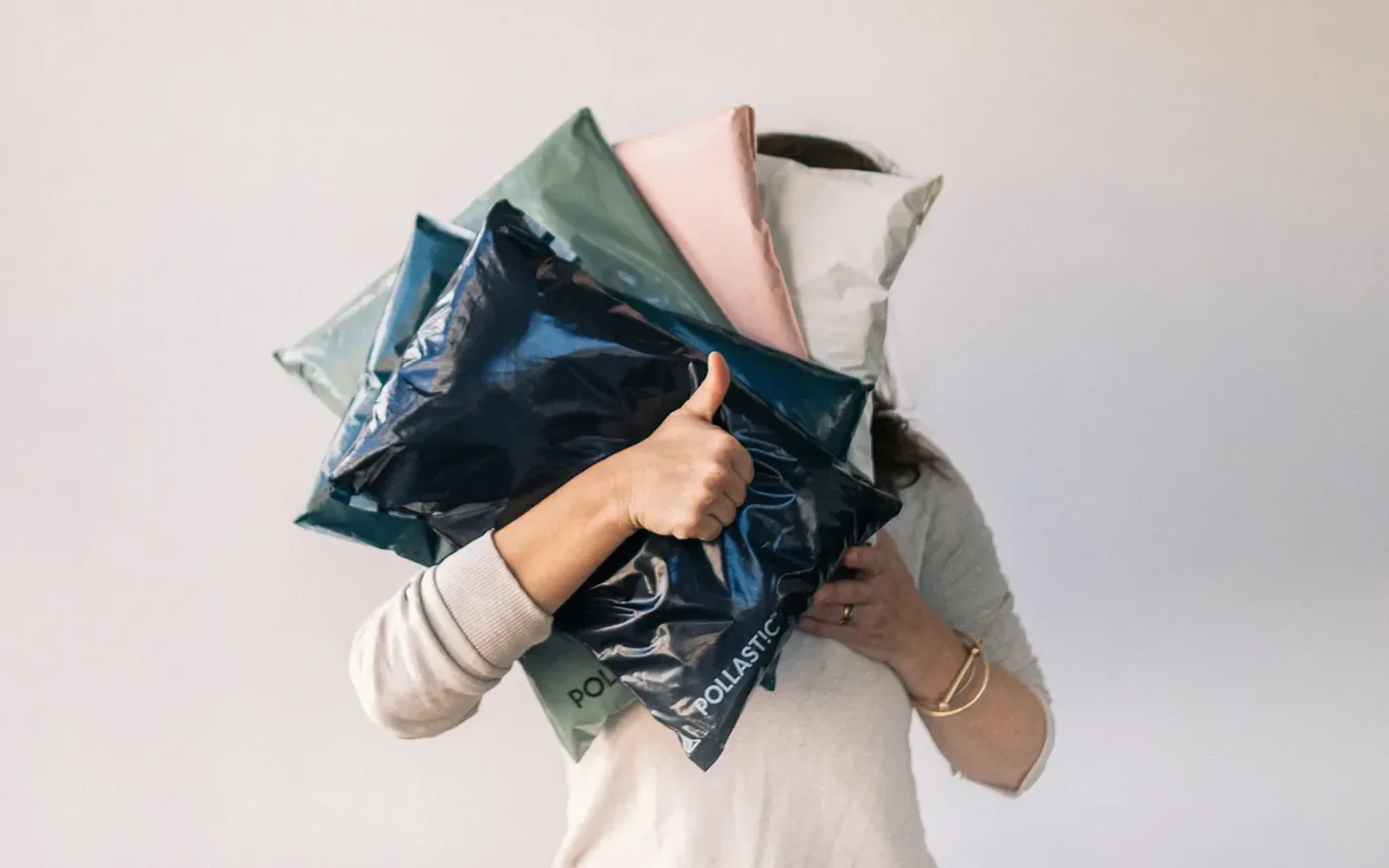
A folded tee or a denim jacket needs a pack that stays flat and dry, not a box that adds weight to every parcel. Stock sizes run from 6″×9″ to 24″×24″, printed flexographically in two colors.
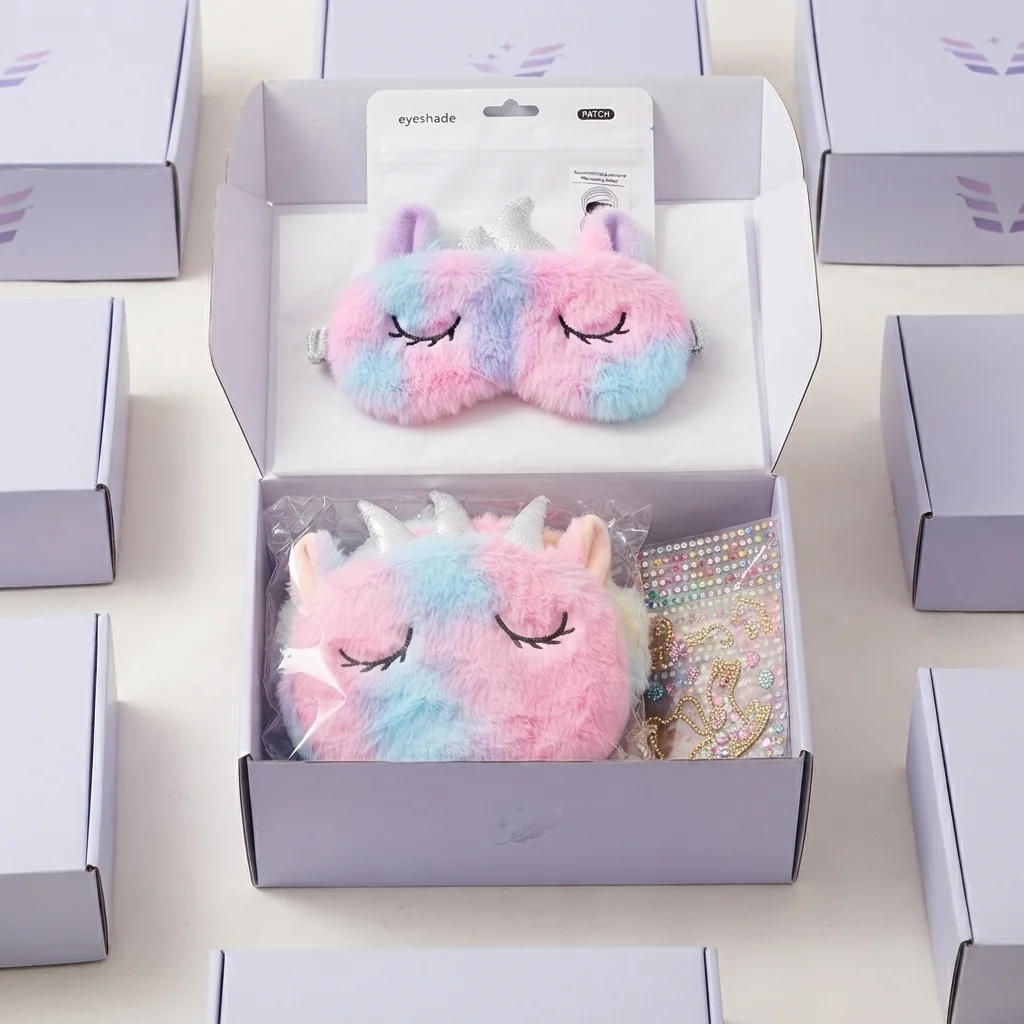
Each cycle is a fresh run, and the bag carries that month’s artwork. The stock film, the mailer size and the sealing line stay where they were, which makes a new design a new plate and not a fresh setup.
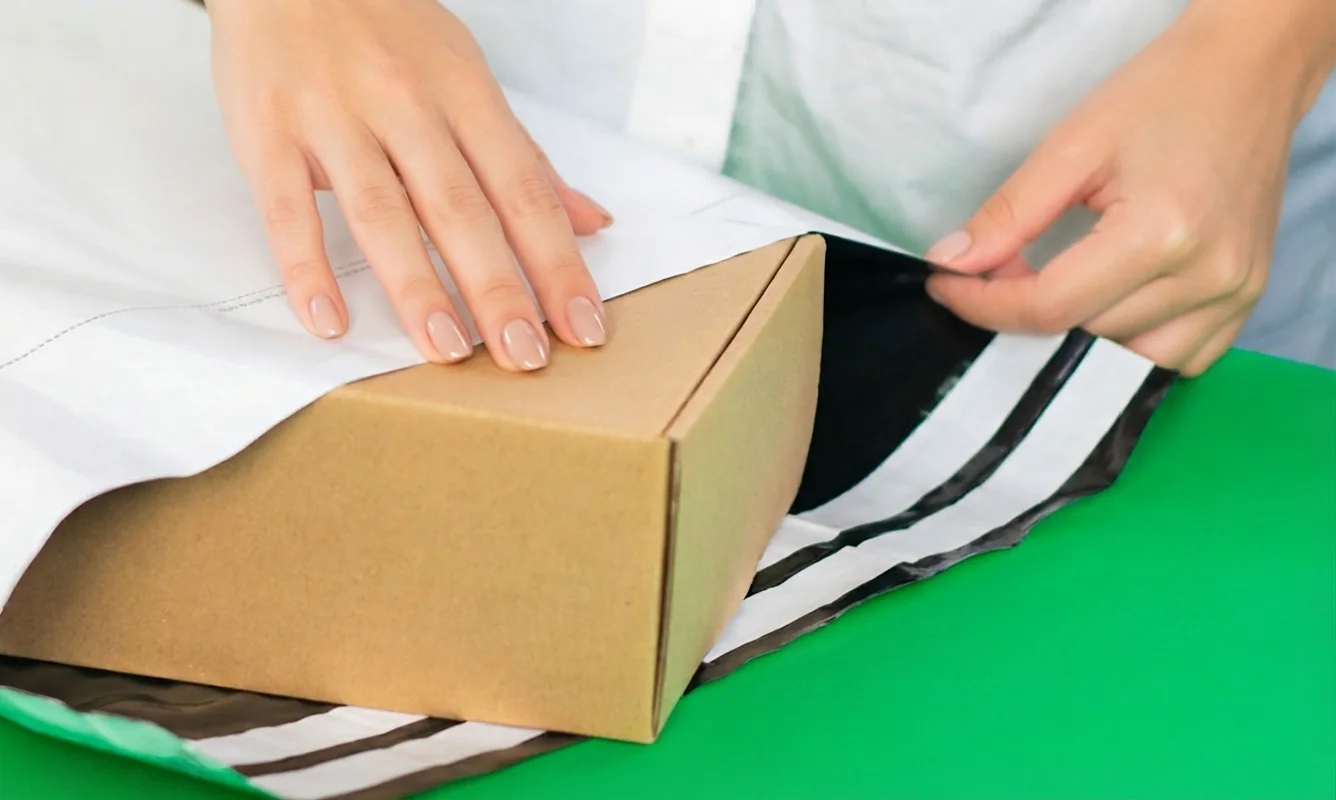
A seal that holds through a courier’s network: parcels arrive intact and returns stop climbing. Pantone-matched film keeps a reorder the same shade as the first run.
Seven to ten business days of production, once a proof and a sample have been signed off.
Artwork comes back as a digital proof with the size, the film and Pantone confirmed on it.
A physical bag in the chosen film, printed and sealed, so the thickness and the color are judged in the hand.
The floor starts from the approved sample, with status reported at each stage.
Bagged, palletized and routed by sea or air to a port, a 3PL, or a warehouse dock.
Six moments a mailer has to hold up in, from the bench where it is sealed to the door where it lands.
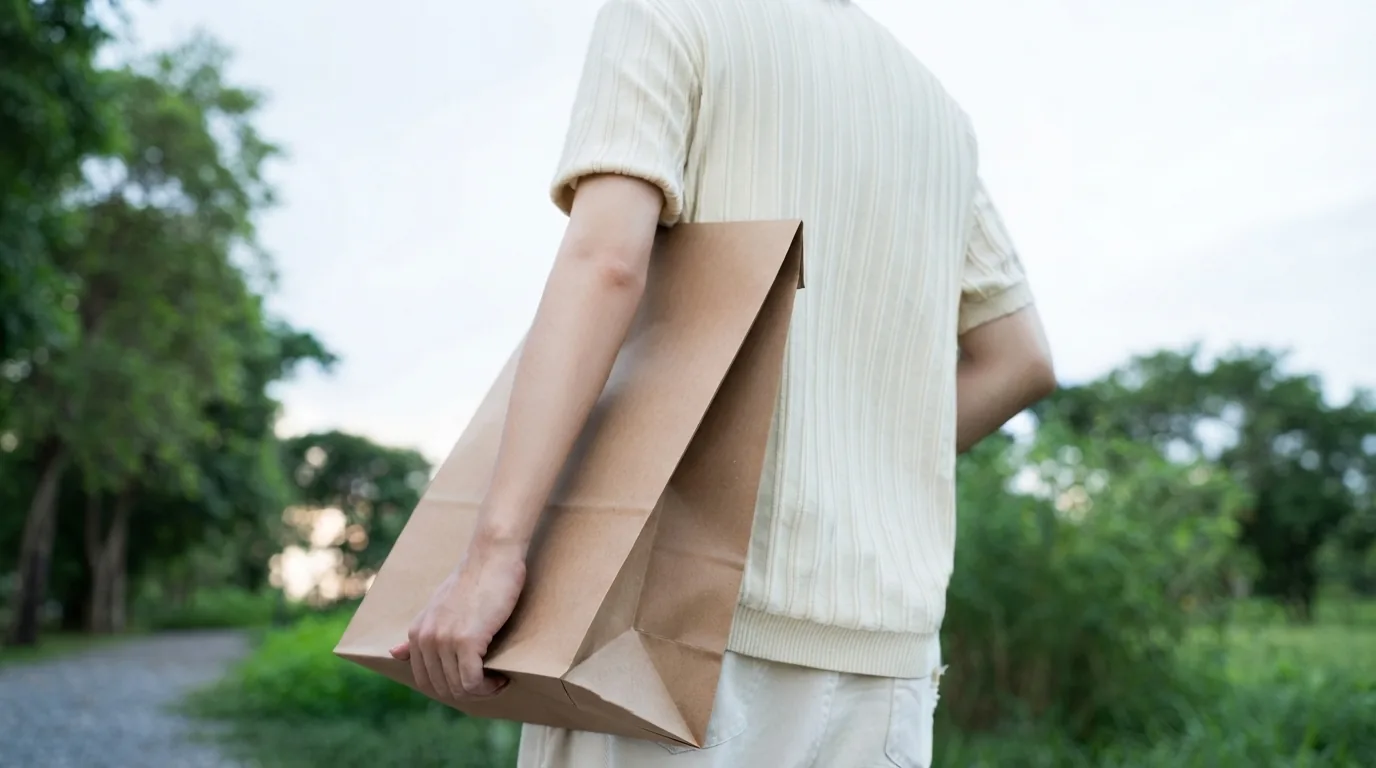
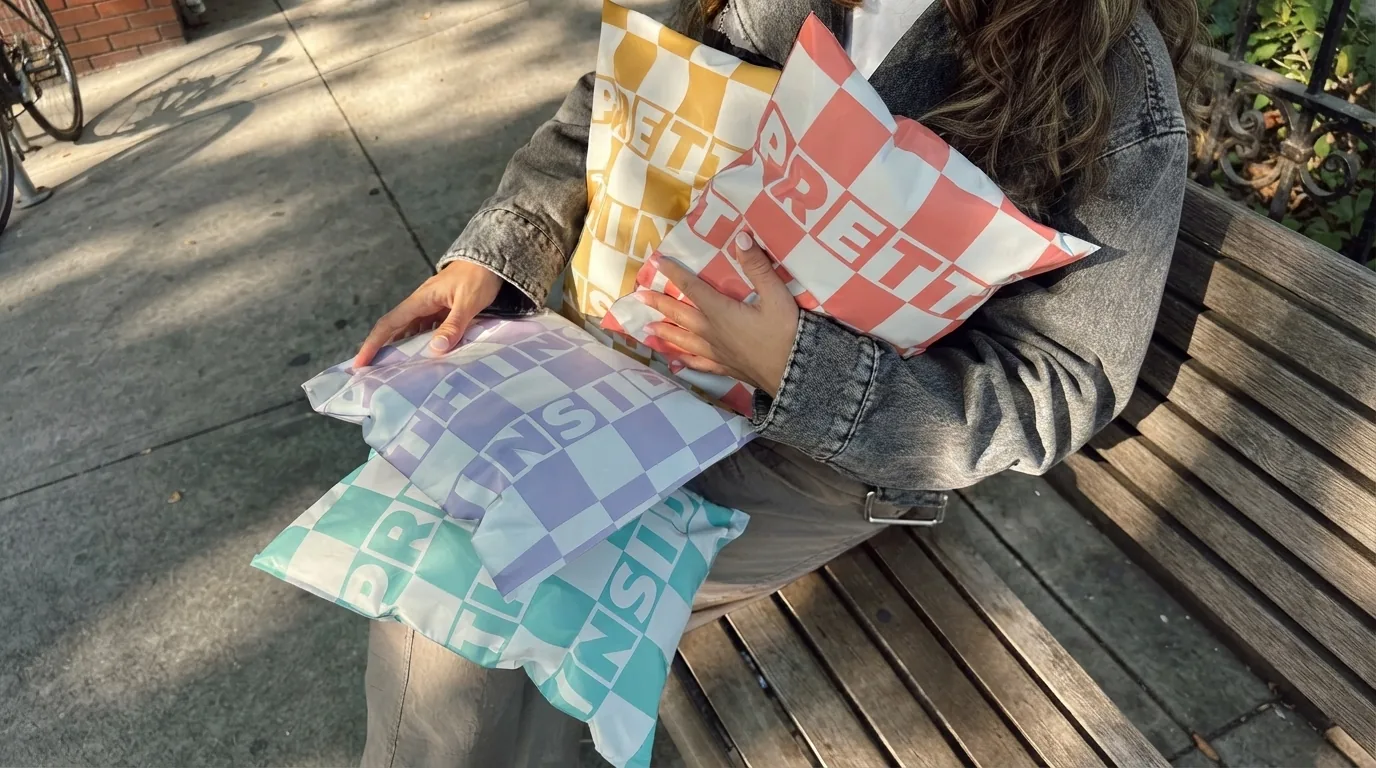
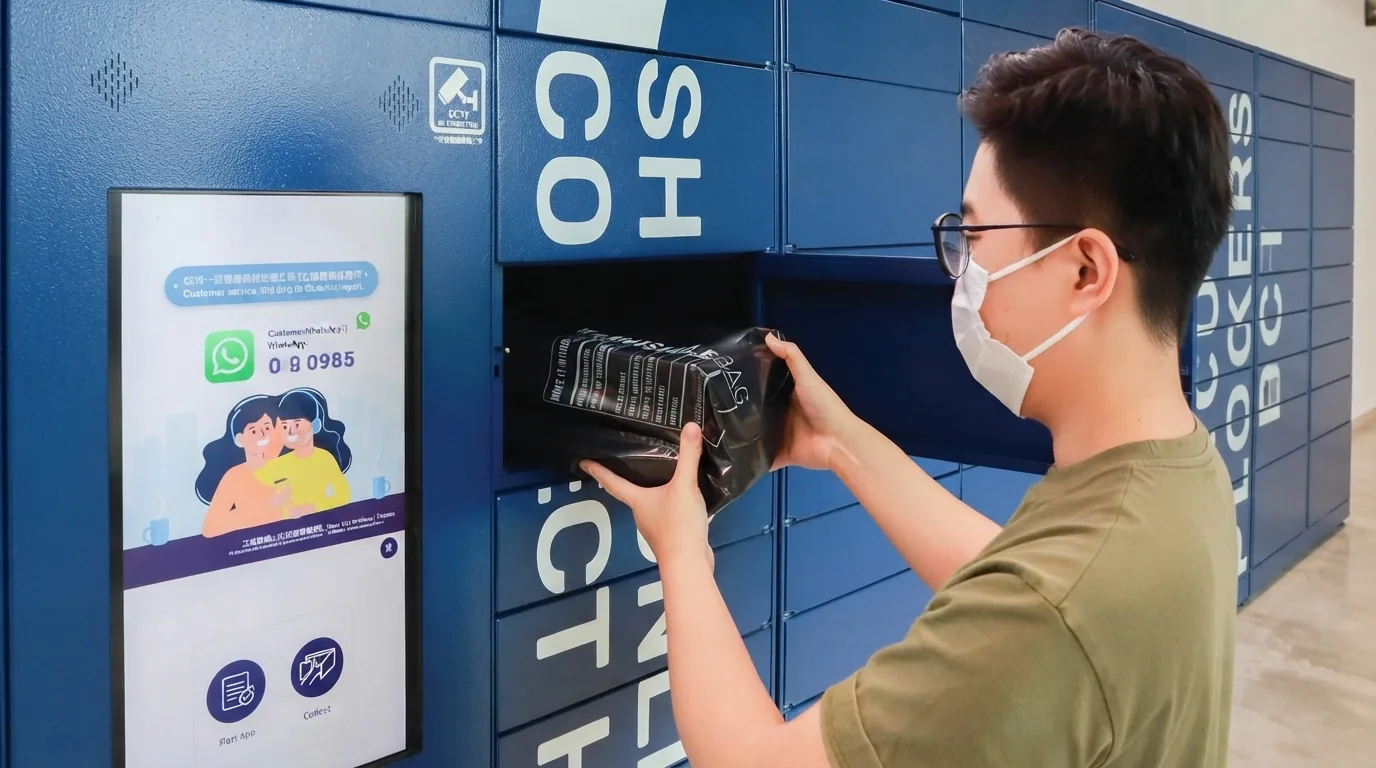
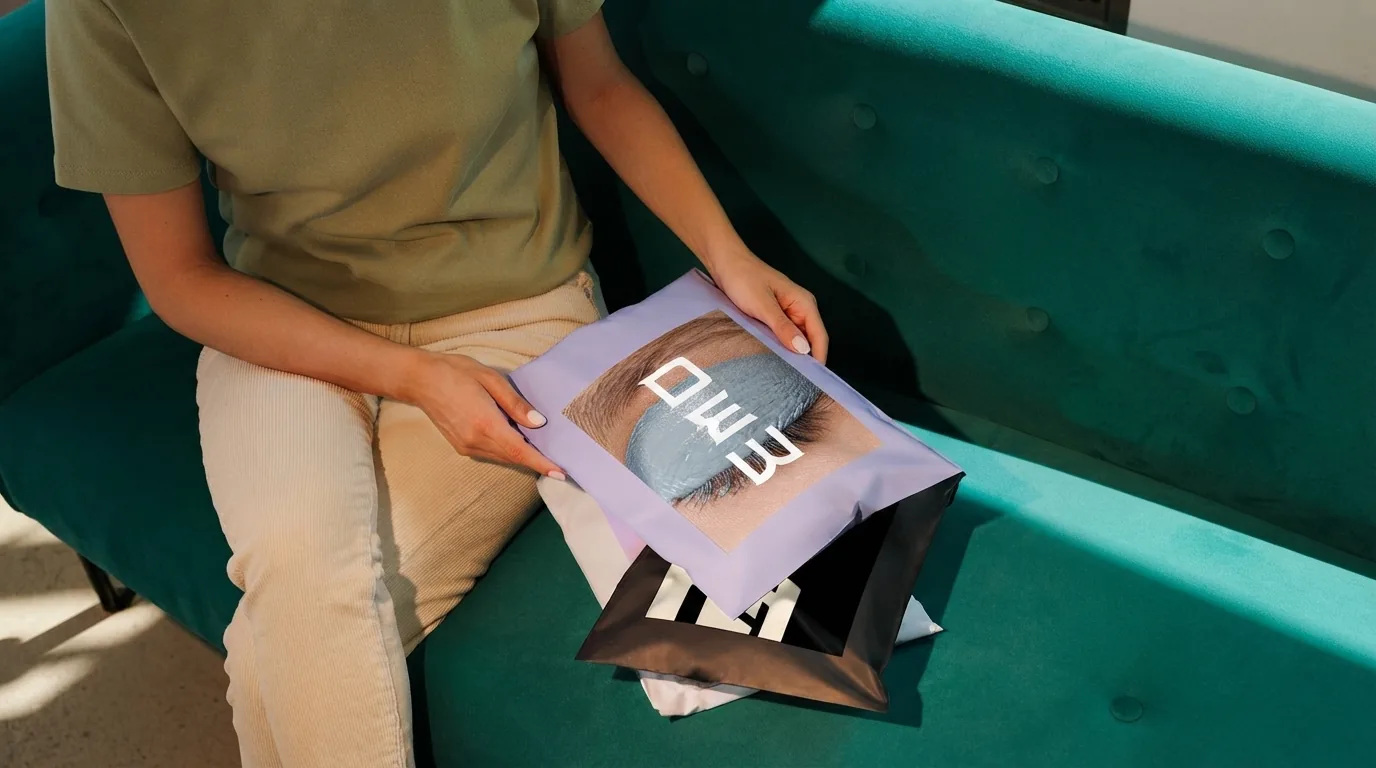
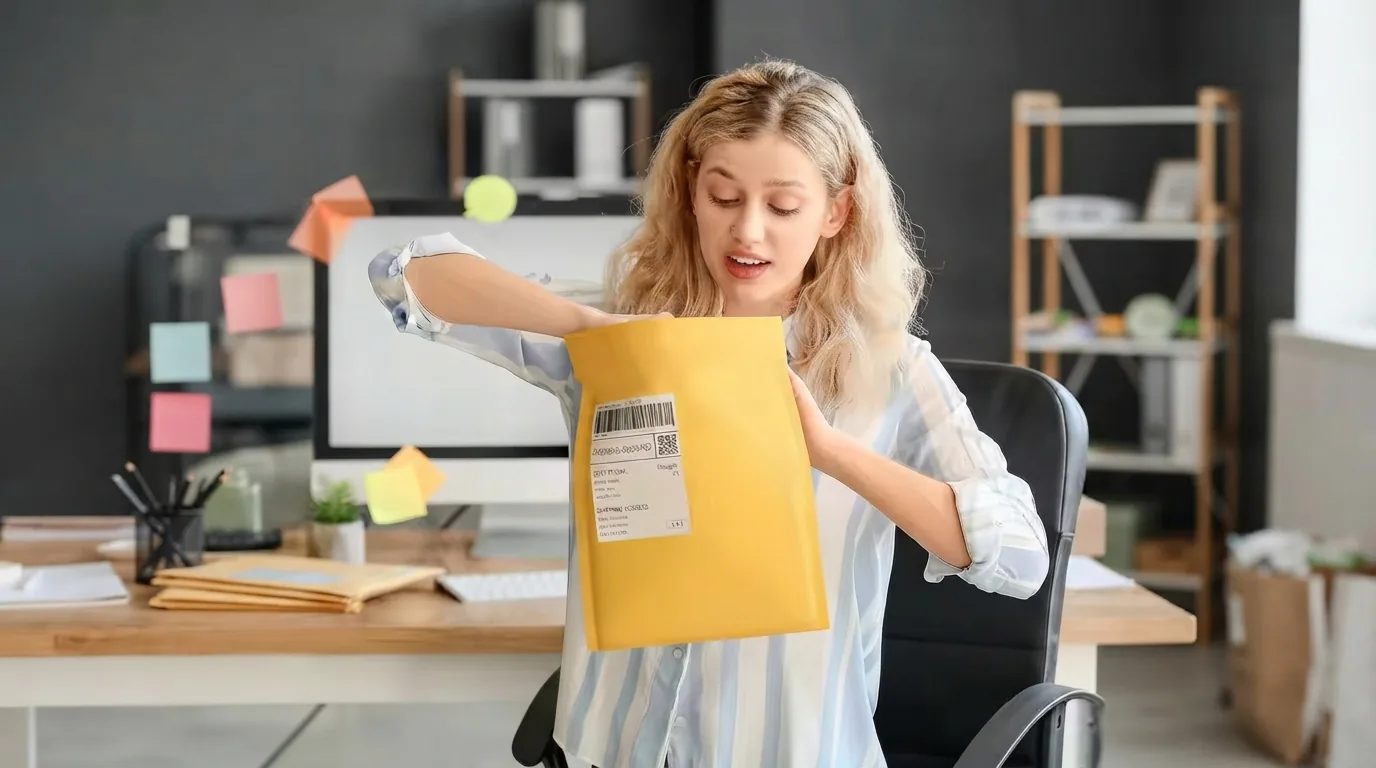
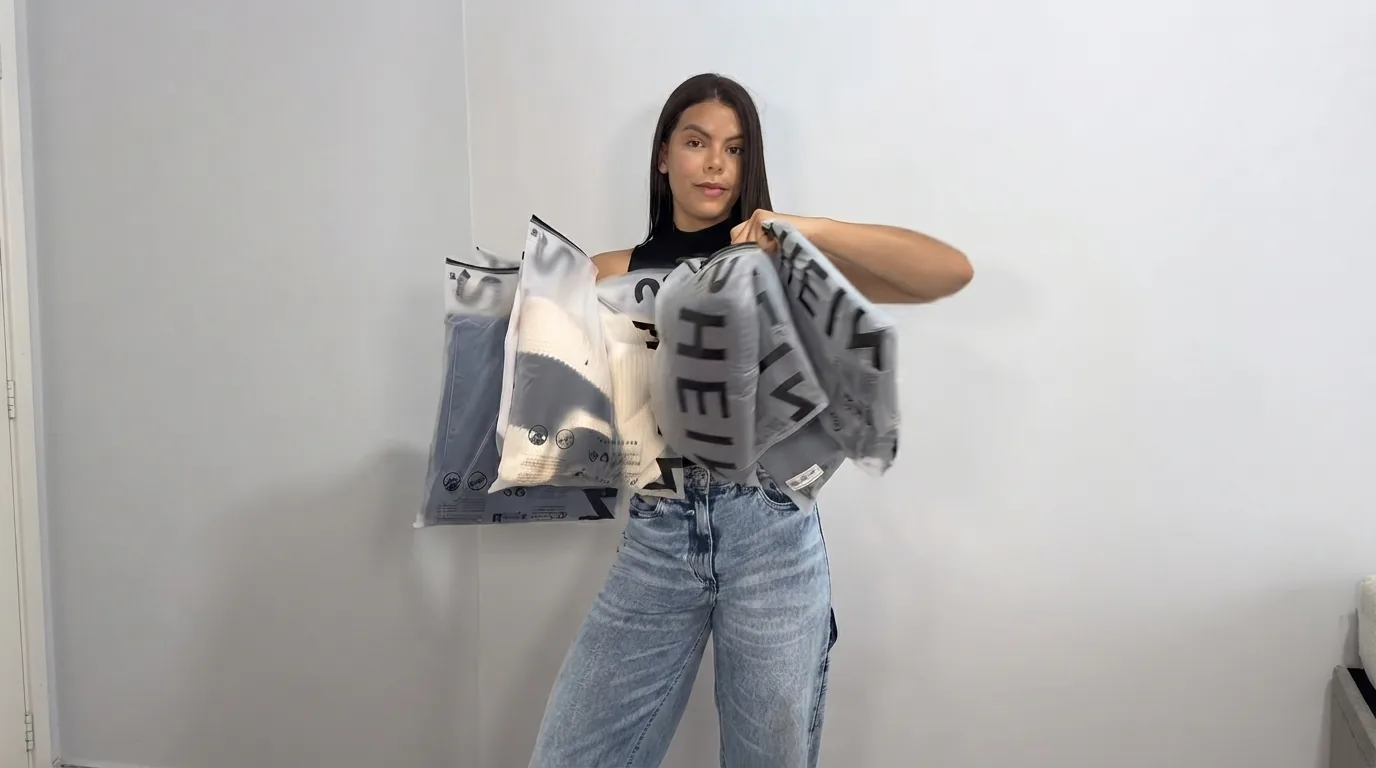
Three buyers describing the same decision from three different businesses.
We ship a clothing line, and these mailers were the first packaging decision that did not cost us anything in weight. They are light in the hand, they stack flat on the bench, and a full season of orders later they have held up exactly as promised.
The look is what customers mention. A plain gray bag used to make a new jacket feel like a return, and this does not — it reads as a considered pack rather than a plastic bag, which is the impression a first order is meant to make.
We have reordered since, and the bags have come through the same each time — the part a repeat order depends on most.

Our boxes go out monthly, and switching to custom mailers changed how they read when they land. What used to arrive in a plain parcel now carries our name on the outside, on every unit in the run.
Professional is the word our own team uses. The pack looks like it belongs to the brand before it is even opened, which was not true of the old packaging, and it has kept that standard cycle after cycle.
Brand recognition has moved with it. More of what people mention is the packaging itself, and that is a change we can trace back to the switch.

We run an online store, so shipping cost is the number we watch. Moving to these mailers brought it down — the bag weighs less than what it replaced, and the parcel rate followed it down.
The customer side improved too. Opening a parcel from us is simply not the experience it was, and the difference shows from the moment it lands.
Another order is already planned. It is the rare change that helps both lines at once — the cost line and the customer line.

Everything else a buyer usually asks is already answered further up this page.
A photograph, a stock bag you already like, or a dimensioned sketch is enough to open the quote — nothing has to be drawn to scale on your side.
Often, yes, and it is worth asking before the quote is written. A single gusseted size frequently covers a whole range, which takes rolls off a packing bench and simplifies reordering.
Thickness is set alongside the size rather than assumed. A heavier film costs more per bag and takes more of a knock before it tears, and the two are quoted together.
Mailers are supplied flat, on the roll or boxed. They store in a fraction of the space a built pack needs, and they are sealed at the bench where the order is picked.
A logo or artwork file starts the job. Panel layout, print method and Pantone codes are worked out with you, and none of it is left to guesswork.
The 3D mockup is free. A physical material sample carries a small fee, credited against the bulk order. The quote lists the initial setup, any plate or tooling, and a per-unit price that falls at 1,000, 5,000 and 10,000 units.
The quote comes back itemized against a specific bag, not a price list — every line costed, and nothing left to ask about. A person writes it and stays with the job.