














Custom tin box manufacturing

Custom Tin Box Manufacturers: 72-Hour Salt Spray Tested, FDA & EU Food-Contact Ready

Protect your margins against ocean-freight rust and compliance rejections with premium custom tin box manufacturers. Our food-grade lacquers and anti-humidity sealing maintain a 99.8% pass rate under AQL 2.5 standards for seamless customs clearance.

  • MOQ 500 units
  • 0.23–0.45 mm tinplate
  • FDA & EU 10/2011 linings
Tin box types

Nine Types of Custom Tin Boxes

The shape, the lid and the lining are set by what goes inside the tin. Name a fill and a run size, and the card becomes a line on a quote.

  • A rectangular tin printed with a full-color illustrated holiday scene, its lid resting alongsidePT-01

    Custom Printed Tin Boxes

    Six-color litho, label-free

    Artwork laid straight onto the metal in six colors. The design runs across the lid, the body and the base with no label edge to lift.

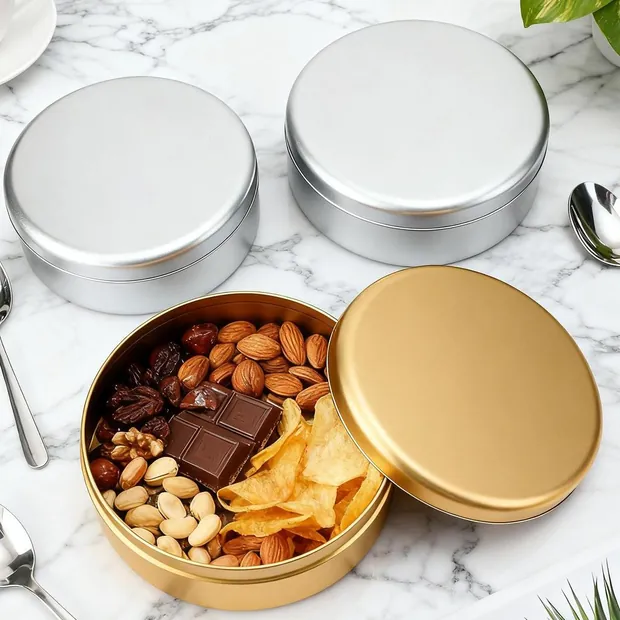
  • Round food tins filled with nuts and savory snacks on a marble surface, one closed with a gold lidFG-02

    Food-Grade Tin Boxes

    FDA and EU 10/2011

    An internal lacquer rated for the fill rather than a generic coating, and the wall is food-contact by construction.

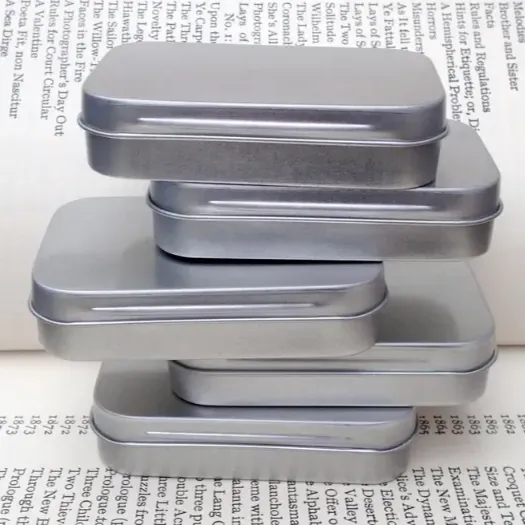
  • A tall stack of plain rectangular hinged tins photographed closed and unbranded on a pale clothWS-03

    Wholesale Custom Tin Packaging

    500 – 500,000 units

    A single specification held across a long program, with the unit rate stepping down at the volume tier a reorder actually reaches.

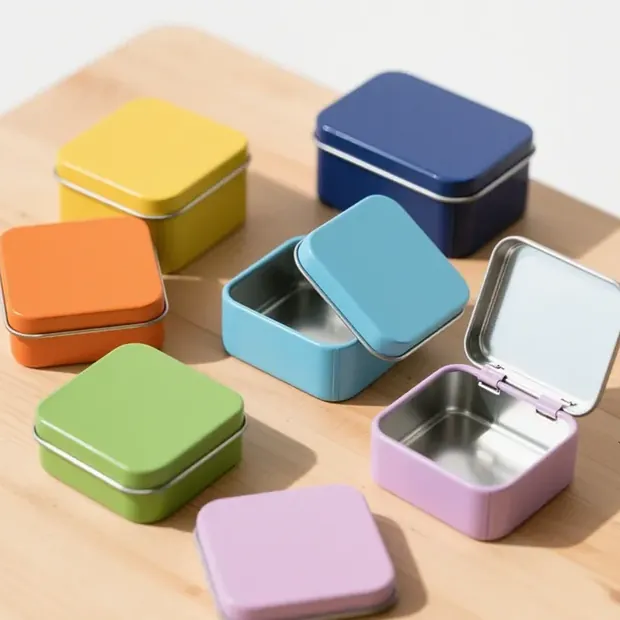
  • Assorted unprinted tin boxes in cube, round and flat shapes, in plain colors with no brandingOE-04

    OEM Tin Boxes

    Drawn to your size

    Drawn to dimensions only you use. The size comes from the product instead of from the nearest stock tin in a catalog.

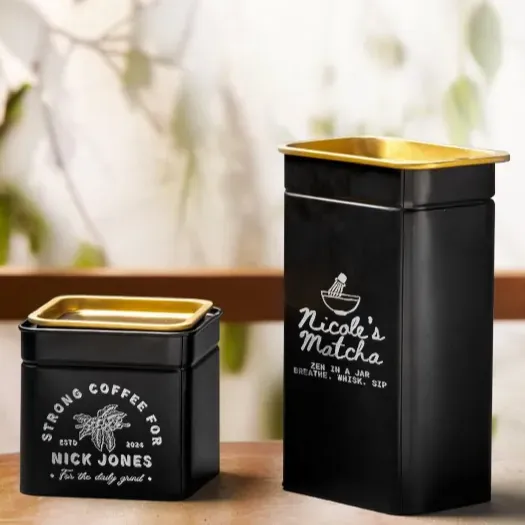
  • Two tall black matte tin canisters with printed labels standing side by sideTE-05

    Custom Tea Tins

    Airtight, light-proof

    An opaque wall blocks the light and a gasket holds the aroma that a clear pack or a paper bag loses in the first weeks on a shelf.

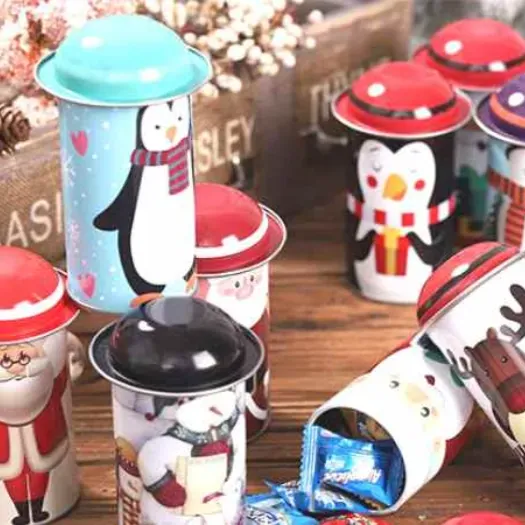
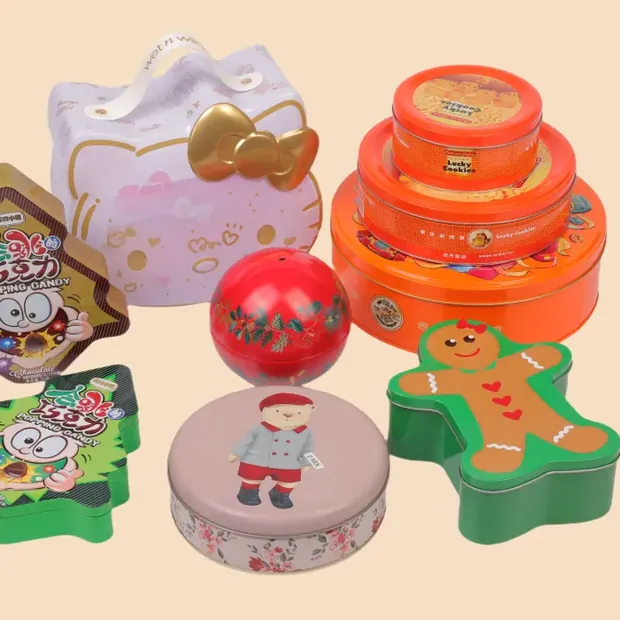
  • A group of printed holiday tins in assorted shapes and colors on a dark surfaceCK-06

    Custom Cookie Tins

    Gasket or friction lid

    A gasket lid keeps crispness through a humid kitchen, and the tin is the gift wrap, which means the packaging outlives the gift.

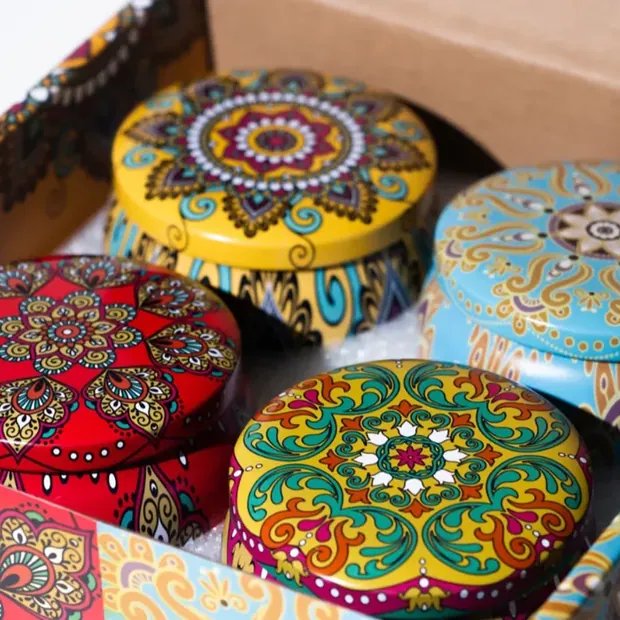
  • Three round tins printed with intricate blue and gold mandala patterns, photographed from aboveDC-07

    Decorative Metal Tin Boxes

    Emboss, deboss, spot UV

    Embossing, inset lids and a full-wrap pattern turn a container into the collectible a repeat buyer keeps on a desk.

  • A lit candle in a burnished gold tin on a marble tray beside a second matte tinCD-08

    Custom Candle Tins

    Heat-safe, resealable

    A wall that takes a hot pour without warping, and a lid that still closes after the first burn, so the candle travels as a product.

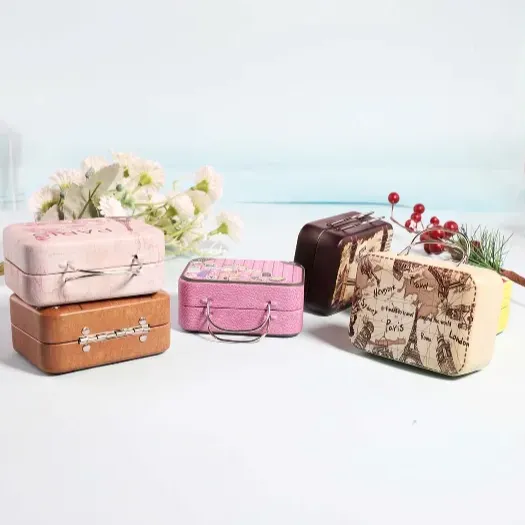
  • A pastel tin case with a rounded handle beside smaller printed tins in a gift setGF-09

    Custom Gift Tin Boxes

    Suitcase, window, shaped

    A shaped or handled tin that presents as a gift box and then gets reused as storage, which earns a second impression at no cost.

Why a tin

Why Choose a Tin Box

A folding carton can carry a better photograph for a third of the unit cost. These four are the reasons to pay for the metal instead.

  • One-Piece Drawn Body

    A tin body is a single piece of metal pressed out of a flat blank and closed on a rolled seam. There is no glue line, no folded corner and no score for a courier to break along.

  • Blocks Light and Moisture

    Metal stops light and moisture by itself. Board gets there with a liner or a film bag inside it; a tin arrives already closed, which is why tea and coffee go in one.

  • No Label to Peel

    The artwork is in the surface of the metal rather than on a label stuck to it. There is no edge to lift, no laminate to delaminate and no second operation to cut a print down to size.

  • Kept and Reused

    A tin gets kept. It becomes the sewing box, the spice tin, the place the good pens live. That second life is the cheapest repeat impression a brand can buy.

Get a quote

Send the Specification for a Quote

The cost comes back split into tooling, metal, print and packing as separate lines, priced at the tier your quantity lands in — with the drawing and a 3D mockup alongside it.

Price My Tin Order
Lid types

The Five Tin Lid Types We Make

The lid is the only part of a package a buyer physically handles before the product, and it is the part a smooth-walled pack has no equivalent for.

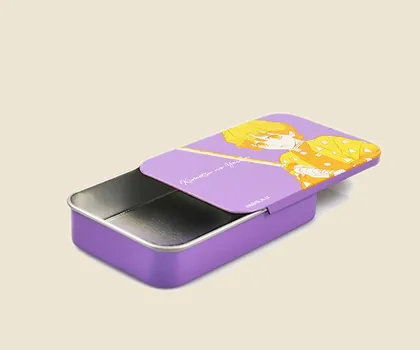
  1. A purple printed tin with its slip lid slid partway off and resting across the open body

    Friction slip lid

    Use it forMints, lip balm, tea sachets, cards

    Presses onto a straight wall with the seam of air escaping as it seats — the cheapest closure to tool, and the closure that still opens with cold hands.

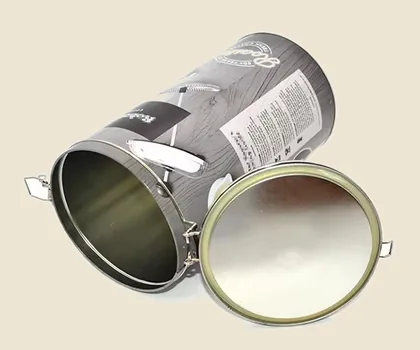
  2. A steel tin lying on its side with the lid removed and the gasket ring set into the lid channel

    Gasket seal

    Use it forTea, coffee, spices, biscuits, supplements

    A food-grade silicone ring set into the lid channel, bearing on the body rim. This is the closure that makes a tin airtight — a friction lid and a hinge do not.

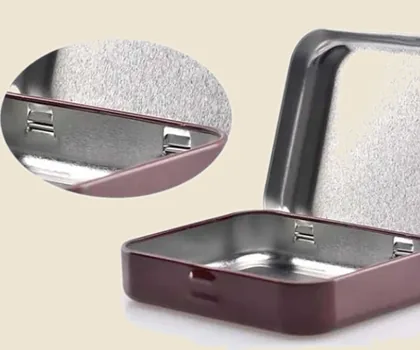
  3. A burgundy tin standing open on its concealed hinge, with a close-up of the hinge inset beside it

    Concealed hinge

    Use it forGift sets, first-aid, sewing kits, tobacco

    The lid stays attached, so it cannot be dropped or set down wet, and the outer face stays unbroken for a wrap-around print.

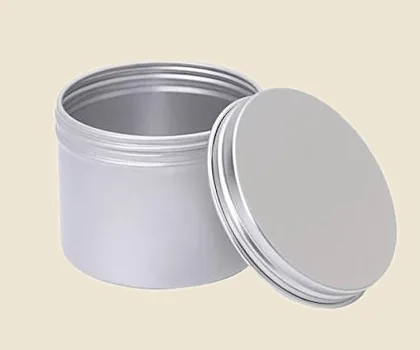
  4. A silver screw-thread tin with its round lid lifted clear and resting beside the body

    Rolled screw thread

    Use it forPowders, creams, waxes, lip balm

    Closes in stages rather than in a single push, which suits a fill opened and closed many times over its life.

  5. A tin closed with a tamper-evident band, a wooden spoon standing inside it

    Tamper band

    Use it forCosmetics, pharmacy, supplements

    A band bridges lid and body and tears on the first opening, so the break reads at a glance from across a counter.

What goes wrong

What Goes Wrong With a Tin Order

Four faults that reach buyers from somewhere else, and what we do about each. Every card ends with the outcome.

  • RiskThey arrive dented, and the lids no longer sit flat

    The wall grade is set from the packed weight and the pallet pattern rather than from the unit price, and the finished lot is dropped and compression tested at the ISTA height before it is palletized.

    ResultA consignment that opens clean at the far end, and no credit notes for damage that was decided at the quoting stage.

    Drop and compression tested
  • RiskThe lid is tight on some units and loose on others

    The friction band is a dimension held on the die rather than a setting on a machine, and the first tin off a new die is gauged against it before the line is released.

    ResultEvery tin in the run handles the same way on a shelf, in a customer’s hand, and on the tenth reorder.

    Gauged before release
  • RiskTooling appears on the second invoice

    The dies are cut and billed once, on the first order, and then held on the line for the life of the program.

    ResultA reorder prices from the metal alone, with no tooling line to explain at the invoice stage.

    Charged once
  • RiskOrder twelve does not match order one

    A retained Pantone chip is read on the press at every run, and each reorder is signed off against the same physical standard as the first.

    ResultA reprint sits beside the original on the same shelf without a visible difference between them.

    Pantone chip retained
Food safety

Food-Grade Linings for Every Fill Type

An acidic or fatty fill will attack an unlined wall, and the fault shows up as a taste rather than as a leak. The lacquer follows the fill rather than the budget.

  • FDA 21 CFR 175.300

    The US route for resinous and polymeric coatings on food-contact metal.

  • EU 10/2011

    The European route, with a migration test run on the finished tin rather than on the print alone.

  • Lot certificate

    The coating batch and the migration report travel with the shipping papers, so a retailer auditing the claim has the document in the box.

Your fill decides the lacquer

Only fatty and acidic fills change the answer — both attack an unlined wall. Everything else ships on the standard food-contact lacquer.

Fill typeWhat goes inLacquerRating
Dry, low fatBiscuits, tea, mints, cards, toolsStandard food-contact lacquerNo migration barrier called for
FattyChocolate, wax, balm, nutsEpoxy-phenolicRated for direct contact with fats
AcidicFruit, tomato, pickles, citrusAcid-resistant, organosolResists a pH down to 3.5
AqueousSauces, honey, jam, dressingsTwo-coat epoxy-phenolicPinhole-tested before the tin is filled
Not foodCandles, cosmetics, hardwareNone, or a clear varnishCoating omitted, which cuts the unit cost
Twelve shapes we tool

Structure

Twelve outlines, so the tin is drawn around the product instead of the product being fitted to a stock size. The shape decides the dies, the seam and the lid — which is why it is settled before the artwork.

  • Line drawing of a square tinSquare Tins
  • Line drawing of a rectangular tinRectangular Tins
  • Line drawing of a round tinRound Tins
  • Line drawing of a tall cylindrical tinCylindrical Tins
  • Line drawing of an octagonal tinOctagonal Tins
  • Line drawing of a heart-shaped tinHeart Tins
  • Line drawing of a hinged-lid tin standing openHinged Lid Tins
  • Line drawing of a tin with its lid slid openSliding Lid Tins
  • Line drawing of a double-lidded tinDouble Lids Tins
  • Line drawing of a tin closed with a metal clipClip Lid Tins
  • Line drawing of a tin with a clear window lidWindow Lid Tins
  • Line drawing of a handled tinHandle Tins
  • Footprint 40–300 mm
  • Height 15–260 mm
  • One draw to 120 mm
Printing and finishing

How We Print on Tinplate

The artwork goes on before the metal moves at all, which lets a tin carry a full wrap where a board carton only gets a panel. Pick a finish to see what it is.

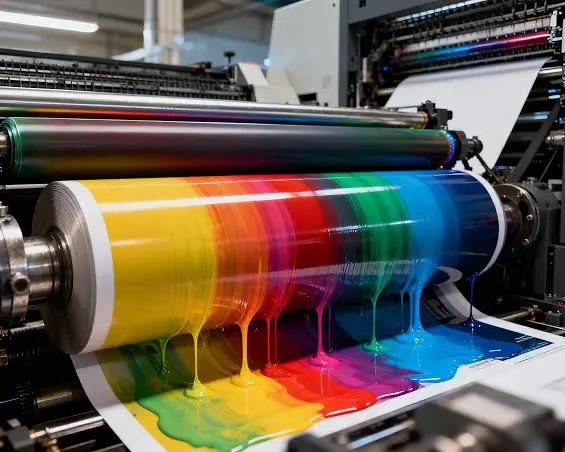
  • A litho press running a wide sheet past four inked rollers, a rainbow of color laid across it

    Six-color offset litho

    Artwork printed on the flat sheet before forming, so the full wrap lands on the metal in one pass. Six colors plus a varnish is enough for a photographic panel on the lid and a second design on the body.

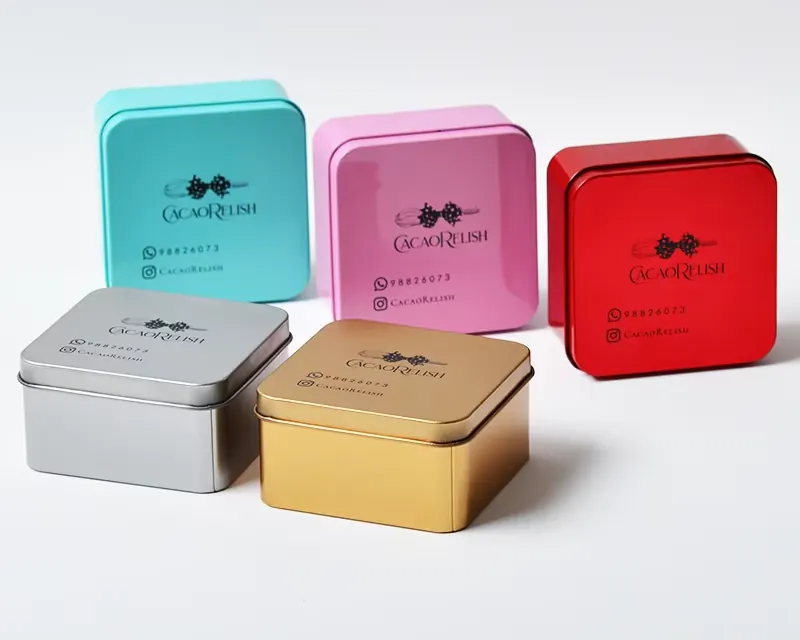
  • Two tan tins side by side, one lid matte and one glossy, the gloss catching the light

    Matte or gloss varnish

    Applied on the press: the tin reads dull to the touch or reflective, with no lamination to lift at an edge. A matte face hides fingerprints and scuffs; a gloss face deepens dark ink and photographs well.

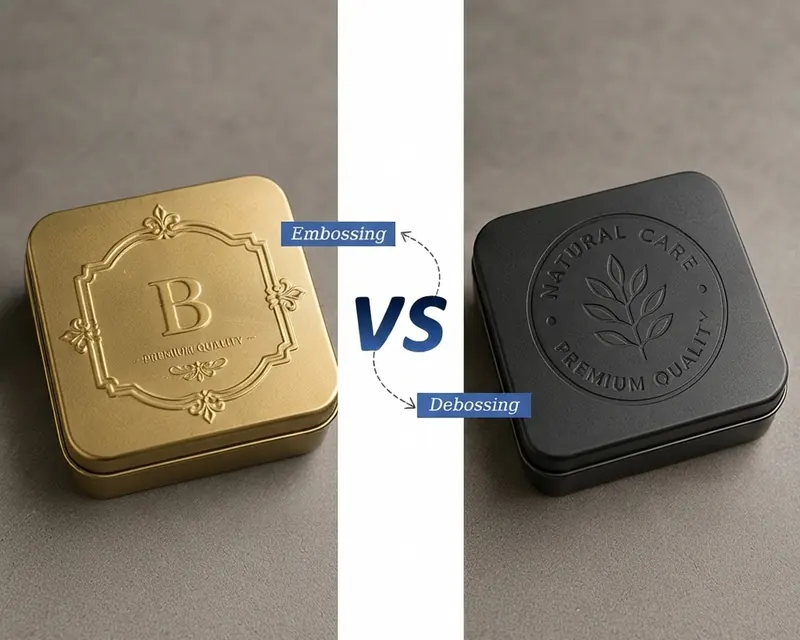
  • A gold tin beside a black tin, the gold mark raised out of the surface and the black mark recessed into it

    Emboss and deboss

    A logo raised or recessed into the metal on the same pass as the print. Tactile, and impossible to peel off. The depth is held on the die, which keeps the raise identical from the first tin to the last, and on the reorder.

  • Decorative printed tins grouped in soft light, a gloss detail catching a highlight across the lid

    Spot UV

    A raised gloss mark over a matte base, for the detail that has to catch a light on a shelf. It is the cheapest way to give one element of a design a surface of its own.

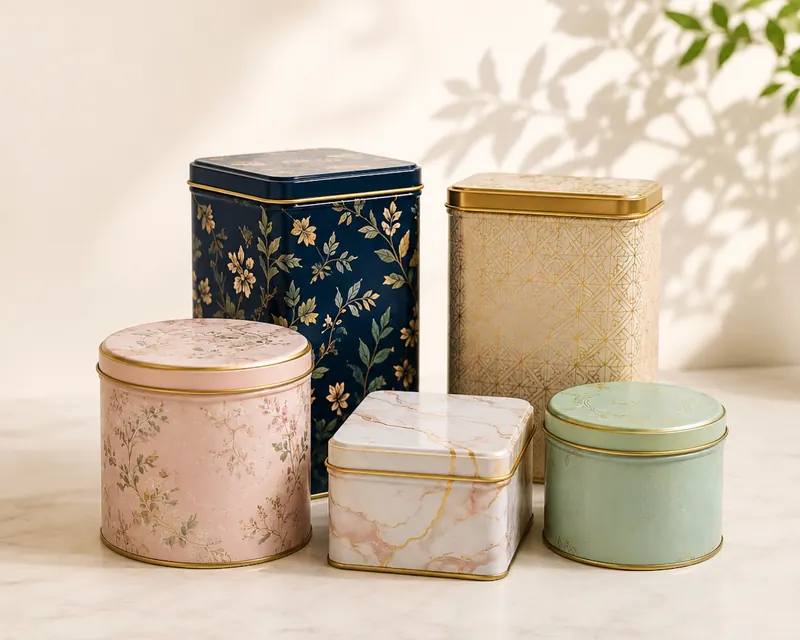
  • Pastel printed tins with metallic gold and silver lids arranged in a row

    Metallic and pearl inks

    Gold, silver and pearl laid as ink rather than as a foil, which keeps the tin recyclable as steel. Foil is pressed onto flat board; on a formed tin the ink route is what holds its edge.

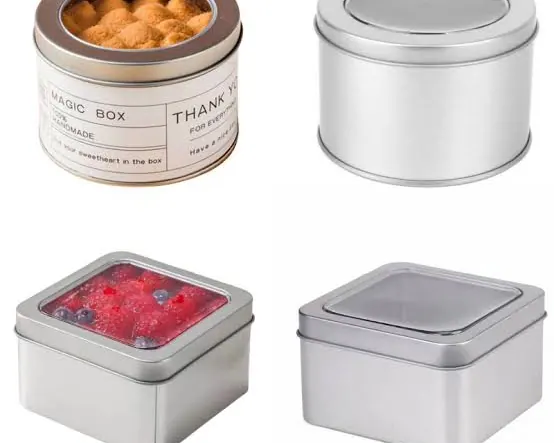
  • Square tins with clear film windows in the lid, the contents visible through the aperture

    PVC window

    A cut aperture closed with clear film, for a fill that has to be seen before the lid comes off. The film goes in on the same pass, which means the window adds no separate assembly step.

Lead time

Tin Order Lead Time

Sampling runs while the metal is being booked rather than after it, and that overlap is what holds a program to four to six weeks. Each stop states what lands in the buyer's hands.

  1. Day 0

    Drawing and Mockup

    A dimensioned dieline and a 3D mockup inside 24 hours, with the wall, the draw depth and the lid settled on the drawing rather than in the toolroom.

  2. Day 1–4

    White Dummy

    An unprinted tin at the finished size in 3–5 working days, held against the product and closed by hand before a plate is ever made.

  3. Day 5–12

    Printed Sample

    A tin in the final lining and print in 7–10 days, with the color read against the Pantone chip and signed off before the run is released.

  4. Day 12–38

    Print, Draw, Form, Seam

    The run goes on the metal booked at the first stop: printed flat, drawn, formed and seamed, with the lids pressed to the drawing that was signed off.

  5. Day 38–42

    Lacquer Test and Pallet

    The lot is inspected and the migration report issued, the tins are nested and palletized, and the lot goes out strapped and corner-protected.

Recycling

Recycling and Sustainability

Tinplate is the rare packaging material that gets recycled again and again without losing quality, and a tin is a lower-impact answer than the film or the foam it replaces.

  • 91.4% recycled in Germany
  • No liner to strip
  • Recycled as steel, not downcycled

    Steel is recycled without any loss of quality, over and over, in any market with a mature collection system.

  • Coatings you can declare

    Low-VOC ink formulations and bio-based coating options, with the food-contact route declared on the lot paperwork.

  • A lining that breaks down

    A plant-based lining option for dry fills, which breaks down once the tin has been separated out and recycled as steel.

  • Lower emissions per run

    Renewable power and heat recovery across the forming lines, which brings down the emissions and the waste a large run otherwise produces.

Where the tins end up

Customer Scenes

  • A customer in a kitchen holding a heart-shaped tin tied with a ribbon
  • A man in a suit holding an open red round tin, photographed against a pink studio wall
  • Two open black tins of balm on a marble tray with a candle and roller bottles
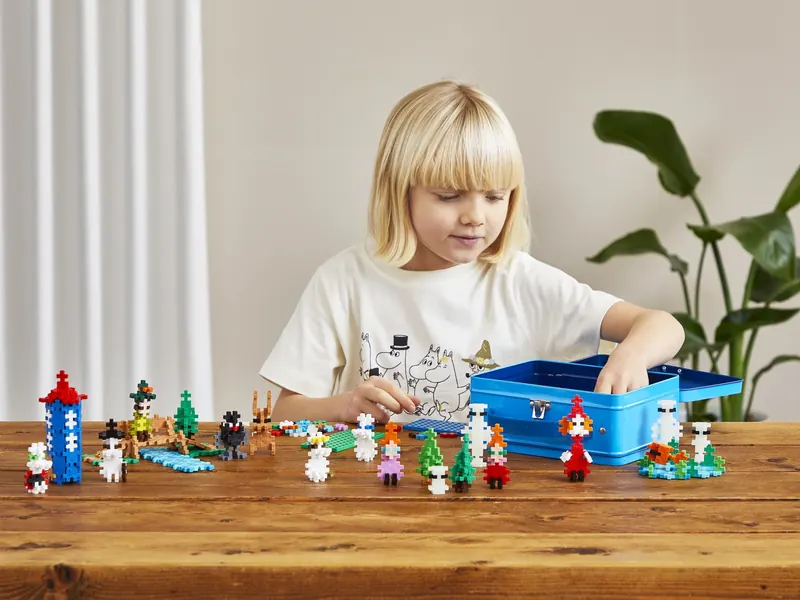
  • A child building a printed tin toy set across a wooden table
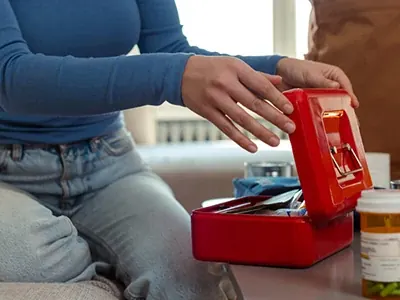
  • Someone lifting the lid off a red tin gift box at home
  • A heart-shaped tin being opened at a table with two children watching
Reviews

Customer Reviews

The brief was a food-safe tin that carried the range’s own colors, and the part that had to be right was the print. What came back held the artwork’s detail in 6 colors on the lid and the body at once, which is the thing a board pack could not do for us.

The lids fit. That sounds like the minimum, but a lid that is loose or stiff changes how the product is handled in a shop, and these closed the same way on every tin in the run.

The material options also lined up with what we had already committed to on sustainability, which meant the packaging did not become the part of the launch we had to explain.

Portrait of Kenji TakadaKenji TakadaProduct Development Director · Japan

We have sourced tins from LeelinePackage for over a year, since a first run at the 500-unit minimum, and the useful thing is that the second order looks like the first. Consistency across reorders is what a procurement desk is actually buying.

The tins improved how the product presents on a shelf, and they survived the shelf. Metal does not scuff and crush the way a board pack does once it is at the front of a store.

The 4–6 week window held, and the communication never left us chasing. Over a year of orders, that is what keeps a supplier on a short list.

Portrait of Emma LewisEmma LewisProcurement Manager · United Kingdom
FAQ

Custom Tin Box FAQ

How do the tins ship, and what does that do to freight?

Nested and palletized. An empty tin is a container with nothing in it, which means tins stack inside each other and a pallet carries several times the number its footprint suggests. Lids are banded separately wherever the nesting would score the print, and the pallet is corner-protected for the sea leg.

Can one order carry several shapes?

Yes, and most ranges do. A gift set with three components usually carries three tins, and each new outline is its own pair of dies. What cannot be shared is the metal booking: each wall grade is a separate coil and each outline a separate setup, and both are quoted as their own line rather than appearing on the invoice afterwards.

Can the inside of the tin be printed?

Yes, and it is worth doing where the lid comes off entirely and the inside face is on show. A printed interior means the ink has to sit under a food-contact lacquer, which adds a coating pass and is quoted as its own line. On a fill that is not food, the interior can be printed directly with no coating over it.

What happens if a lot fails inspection?

It does not ship. The check runs against AQL 2.5 before the tins are palletized, while the dies are still set on the line, so a failing lot is reworked or remade there rather than argued about after it has crossed an ocean. The inspection record ships with the lot.

How long does a reorder take?

A reorder skips everything up to the press. The dies are already cut and the artwork already signed off, so it is the production stage alone — printed, drawn, formed and lidded — and it books into the next free slot on the line rather than behind a new tooling set.

What do you need to quote a run?

The fill, the width and the height you want, the quantity, and whether the artwork covers the lid or the whole body. The fill settles the lining; size and quantity settle the wall and the tier; the print area settles whether a second die is involved. A photograph of the product beside a ruler usually closes the last gap.

Get started

Start a Custom Tin Order

What comes back is a dimensioned drawing, a 3D mockup and a quote split into tooling, metal, print and packing. If the tier that quantity lands in does not work, the drawing is still yours to take elsewhere.

  • White dummy in 3–5 days
  • Runs in 4–6 weeks
Start My Tin Run
Contact Us