
Custom Display Boxes Manufacturer — On the Shelf in Under 90 Seconds
From counter trays to aisle floor stands, engineered to your shelf plan in FSC®-certified 32 ECT corrugated board. Ship flat, fill from a single case, and stand rock-solid on the retail floor.
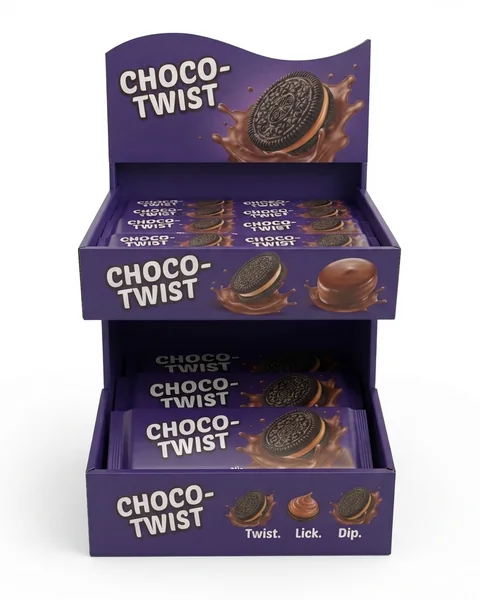


- CounterCD-01
- Shelf-ReadyPDQ-03
- WindowWD-08
- 500 units in a first run
- 4–6 weeks from artwork to dispatch
- AQL 2.5 inspection on every lot
- 44 ECT under the floor units
Nine Display Constructions, One Set of Terms
Board grade, print route and inspection are the same on every unit below. What changes is where the display has to work — a till counter, a shelf run, or the middle of an aisle. If the format is still open, our guide to the ten common box display types compares them side by side.
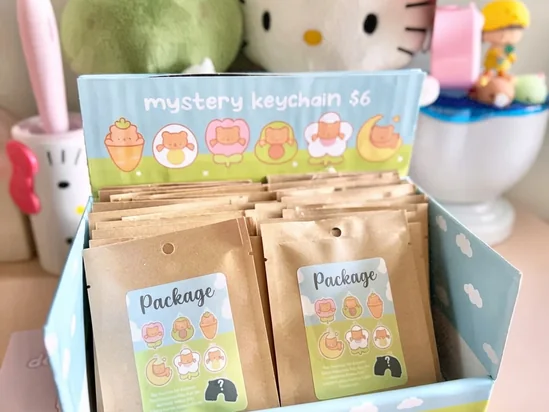 CD-01
Counter Display Boxes
300–400 mm tallSits at the till and takes the pick-up that a shelf two aisles away never gets.
 CT-02
Countertop Display Boxes
1–3 tiersThree tiers inside a single footprint turn a small range into a range rather than a row.
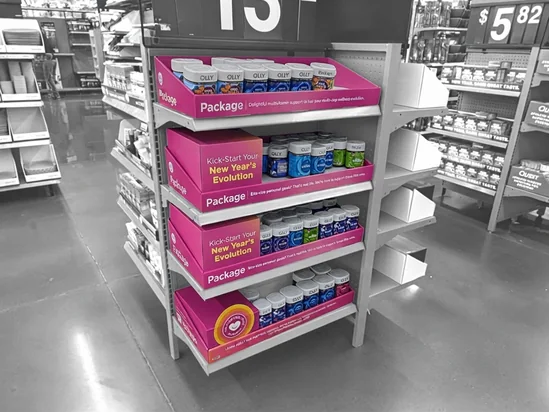 PDQ-03
Shelf-Ready PDQ Trays
Case pack = 1 shelfArrives as the shipper and becomes the display. Nobody at the store handles the stock twice.
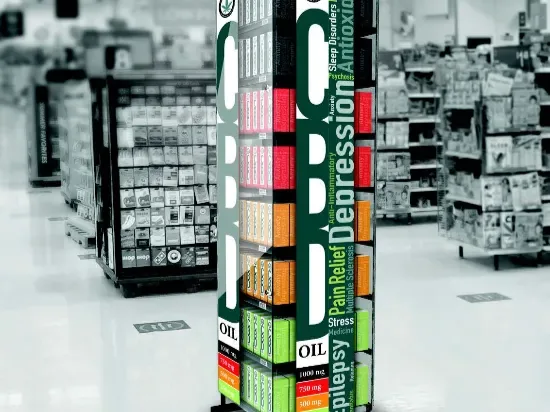 FD-04
Floor Display Boxes
to 1,650 mmClaims floor space a competitor on a shelf cannot, and holds a pallet of stock on a single base.
 CV-05
Corrugated Display Boxes
32–44 ECTBuilt for weight. A corrugated shell carries what a folded board tray cannot and still ships flat.
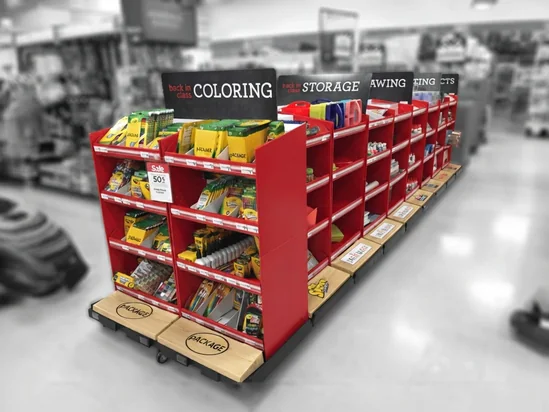 POP-06
Retail POP Displays
4 colors plus spot UVThe backdrop panel does the selling before anyone picks a product up.
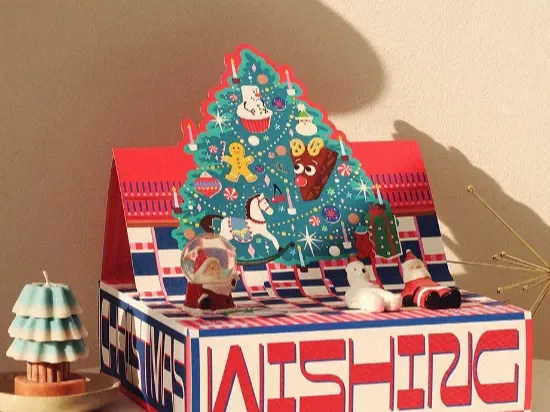 PR-07
Custom Printed Display Boxes
Pantone matchedSeasonal artwork printed on a structure already paid for. A holiday run reprints instead of re-tooling.
 WD-08
Window Display Boxes
PET or PVC windowShows the goods without opening anything, which is the shortest route past a customer’s doubt.
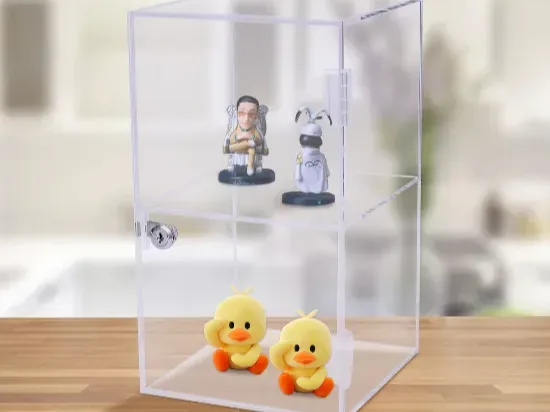 AC-09
Acrylic Display Boxes
3–5 mm cast acrylicFor the counter where the product has to be seen from every side and handled without a mark.
What a Retailer Checks Before a Display Goes In
Every line here is settled on the drawing, before the die is cut. A unit that clears all six goes onto the shelf; a unit that misses two arrives as a case nobody opens. The kitchenware launch in our case studies is a shelf-ready tray built against the same list.
- 01
Shelf envelope
Width, depth and clear height are matched to the fixture plan you send, and the loaded unit is gauged against those figures before the run is signed off.
Pass - 02
Tear-away front
A perforated front panel on shelf-ready trays, scored to release in a single pull and leave no board edge standing in the shelf.
Pass - 03
Barcode and label zone
A clear panel reserved on the outer face for the GTIN and price label, positioned to leave the artwork readable once the case becomes the tray.
Pass - 04
Case pack equals one shelf
The carton count is matched to the facings in the planogram. A case then fills a shelf with nothing left over to store out back.
Pass - 05
No-tool assembly
Slots and tabs are cut to dry-fit. A store associate builds the unit without a knife, a tape gun or a second pair of hands.
Pass - 06
Printed assembly sheet
A diagram is printed inside the lid of the carton, and the floor unit is built once at the plant and the sequence photographed rather than described.
Pass
Set-up time by construction
- 15 sShelf-ready tray
- 90 sCounter unit
- 8 minFloor stand
Three Things You Get From a Maker, Not a Trader
A trading company quotes the work and then looks for a plant to run it. We are the plant. These three are what that changes for you, whatever the volume.
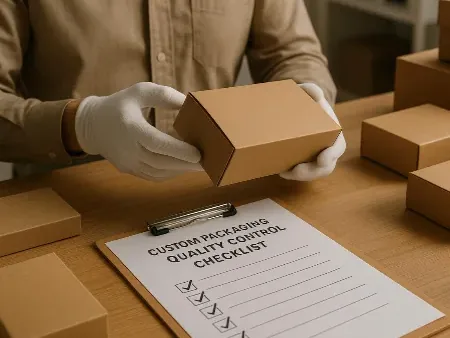
Checked Three Times, Not Once
Mill certificate, mid-run, strike-offBoard grade and flute are read against the mill certificate on arrival, the unit is checked against the shelf envelope mid-run, and the finish is checked against the signed strike-off before the lot is packed.

The Rate Drops Before You Scale
Breaks at 1,000 / 5,000 / 10,000Die and print setup are listed separately in the quote, and the unit rate steps down at 1,000, 5,000 and 10,000. A reorder skips those setup lines, which is where the second run gets cheaper.
One Floor, No Handoffs
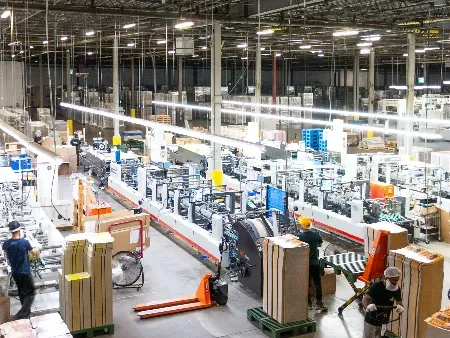
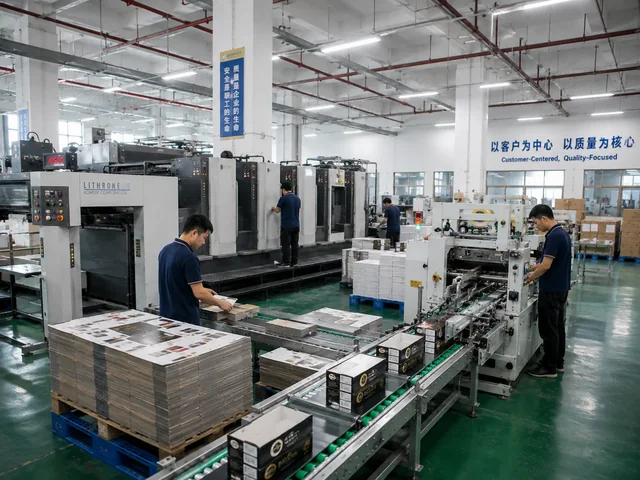
Sheet, press, die-cutter, gluerSheet stock, the press, the die-cutter and the folder-gluer stand on the same floor, so a unit is printed, cut and glued without being palletized between suppliers. A fault is found where it happened, not at the end of a chain.
Measure the Shelf Before the Display
Send the shelf width, its depth and the clear height your retailer works to, plus the unit count and what goes in it. A dieline drawn to those numbers and a solid model come back inside 24 hours.
Check My Shelf FitThe Stock Decides the Top-Load and the Print Route
The stock settles the top-load, the print route and how the order moves. The sample pack carries all four as swatches you can stand on a shelf next to the product. Flute grades behind the corrugated row are broken down on the corrugated boxes page.
| Stock | Sheet or grade | Unit top-load | Ships | End of life | |
|---|---|---|---|---|---|
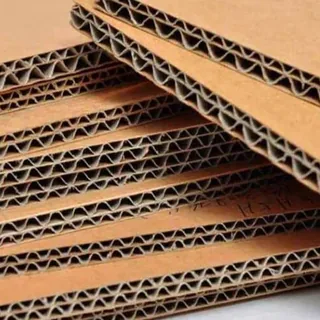 Cardboard | 300–400 gsm coated board | Offset, to 4 colors | to 5 kg | Flat, 12 mm | Kerbside recyclable |
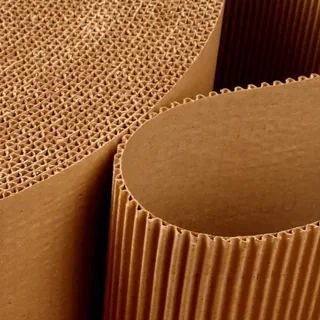 CorrugatedMost specified | E-flute and B-flute, 32–44 ECT | Flexo or litho-laminate | to 15 kg | Flat, 25 mm | Kerbside recyclable |
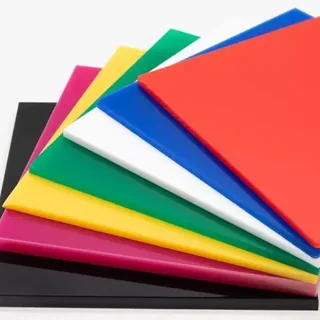 Acrylic | Cast sheet, 3–5 mm | Laser etch or screen print | to 3 kg | Assembled | Recyclable off-site |
 Wood | 12–18 mm MDF or plywood | Paint, screen print or veneer | to 18 kg | Part assembled | Reusable |
Top-load is the rating of the unit built from that stock, not of the raw sheet — the flute grade and the tier count move the figure either way.
Four Coatings, Chosen by Where the Unit Stands
A counter tray is handled by hundreds of people a week and a floor stand is not. That difference settles the coating far more often than the artwork does. Each panel below is the same board under a different finish.
Aqueous (AQ)
Water-based, food-safeCures fast and recycles with the board. The default on food and beverage units, because it clears food-contact review without a film going onto the print.
Sheen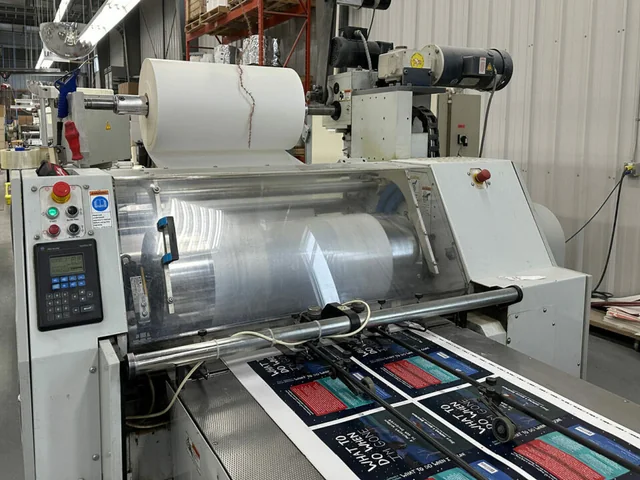
Lamination
Gloss, silk or matte filmTakes the scuffing a counter unit collects and holds color on a display that stands under store lighting for a season. Applied spot over a logo when the budget will not carry the whole panel.
Sheen
Soft-Touch
Velvety, fingerprint-resistantFor beauty and fragrance, where the first thing a customer does is put a hand on the unit. It also hides the handling marks that show up quickly on a plain matte finish.
Sheen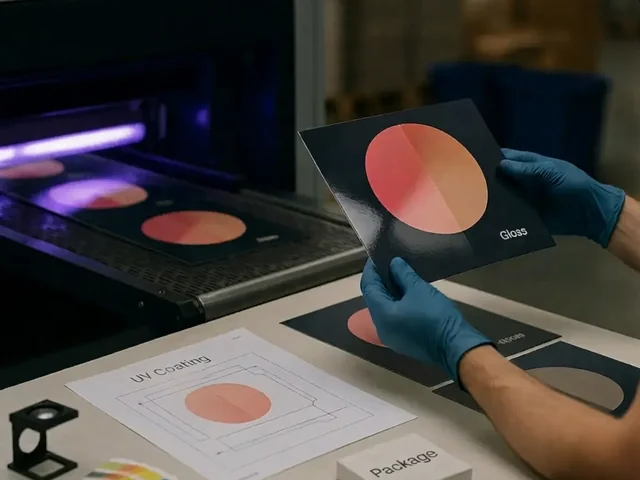
UV Coating
Glass-like gloss, instant cureThe hardest surface of the four and the brightest color underneath it. Spot UV over a matte base is the usual build when a single part of the artwork has to carry the message.
Sheen
What the Unit Carries, and What It Is Tested To
Pick the construction you are buying and read what it is rated to carry, where the weight goes, and which board grade holds it. Nothing on this sheet is a marketing figure — it is the drawing the quote is written against, so what you see is what you can load.
Load travels down the corner posts to the base pads, which is why a taller unit is no weaker than a short one.
- Height380 mm
- Footprint300 × 250 mm
- Top-load5 kg
- Board28 ECT
- Tiers2
- Assembly90 s
- Height180 mm
- Footprint400 × 300 mm
- Top-load3 kg
- Board32 ECT
- Facings6
- Setup15 s
- Height1,650 mm
- Footprint600 × 450 mm
- Top-load15 kg
- Board44 ECT
- Tiers4
- Assembly8 min
- ISTA 1ANon-simulation integrity, unboxed unit
- ISTA 2APartial simulation, paced and packed
- 10 drops760 mm, corners and edges first
- 24 h crushStatic load at 1.4× the rated top-load
- 48 h humidity90% RH, board still square at the corners
One Structure, Six Adjustments
Whichever of the nine you start from, these are the six adjustments that make it fit a given shelf. Each is a change to the cut rather than to the machine, so none of them starts a new tooling charge.
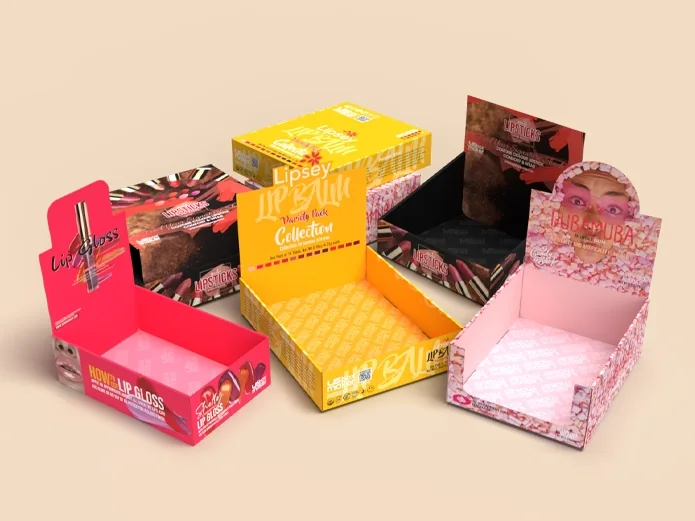 Printed Header Panels
Read From Across the Aisle
A shopper sees what you sell before they reach the shelf, and a counter printed on both faces reads from either side.
The printed panel that stands above the product, printed on either face or both.
 Tiered and Stepped Bodies
More Rows in Less Space
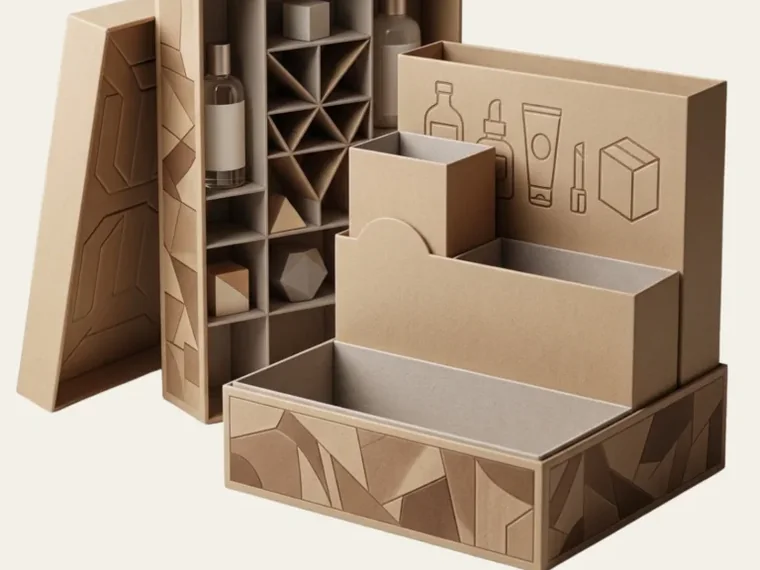
More rows of product in the floor space of one, and nothing extra to assemble, pack or freight.
The steps and shelves fold out of the same board as the body, so there is no separate insert to fit.
 Raked and Stepped Fronts
Front Row at Eye Level
Nothing hides behind the front wall of the tray. Staff see a low row without pulling it out.
The front is cut on a rake or a step instead of square, so the row sits lower and stays in view.
 Magnetic and Lid-and-Base
Kept, Not Binned
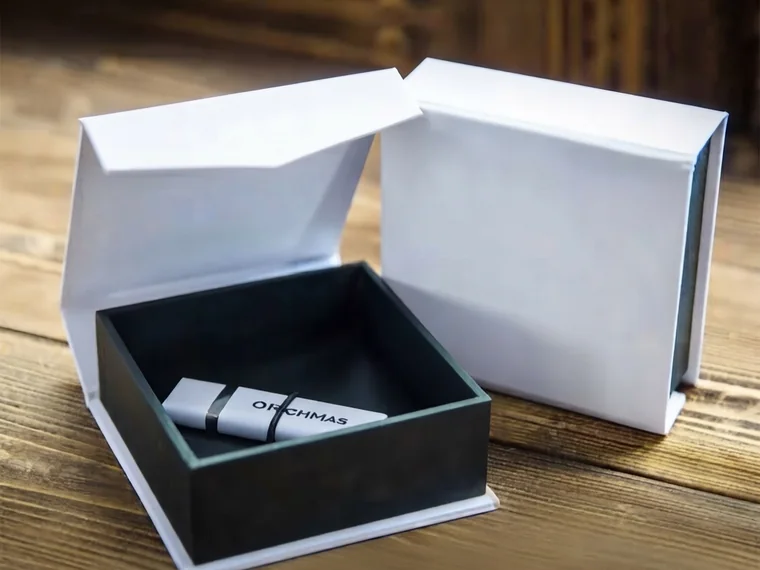
The store keeps the display and puts it back out next season, instead of clearing it into a bin on day one.
A magnetic catch, a lid and base, or a plain tuck flap, chosen to match how long the display has to last.
 Die-Cut and Ribbon Carries
Carried Out of the Store
The customer carries the display out of the shop with the product still in it.
A handle cut from the board itself, or ribbon threaded through punched holes.
 Cut Dividers and Cells
Arrive in Order
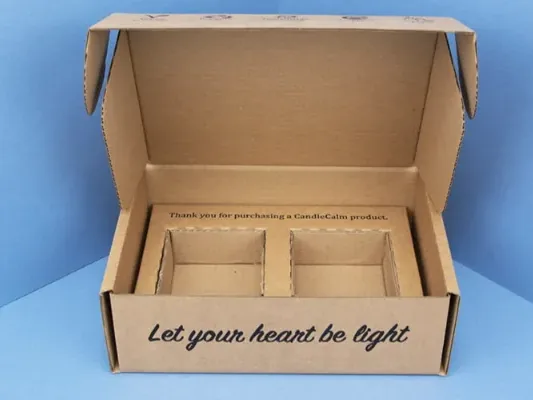
Stock stands up in transit and arrives in the order it was packed. Nothing to reset at the store.
Dividers are cut to fit the product rather than a standard cell size, in board, foam or molded pulp.
From Shelf Measurements to Pallet in 4–6 Weeks
Five stages, 38 days door to door. Board and flute are booked while the dummy is being cut, which is why the material lead time and the sample rounds are not added together.
- 01
- 022–8 days
- 038–18 days
- 0418–33 days
- 0533–38 days
- 01
Shelf Measured, Dieline Drawn
Fixture width, depth and height from your retailer’s plan, then the dieline is drawn to the same figures and a 3D mockup returns inside 24 hours.
- 02
White Dummy
A plain unit to your dimensions in 3–5 working days, stood up and loaded to find a structure that racks before any ink is mixed.
- 03
Printed Sample
A single unit in the final board and coating, 7–10 days, with the color read against the Pantone chip and signed.
- 04
Print and Die-Cut
The run printed, coated, die-cut and glued, then hand-assembled wherever the structure will not run on the folder-gluer.
- 05
Inspect and Dispatch
The lot is inspected against the sampling plan, flat-packed with the assembly sheet in the lid, pallet strapped and documented.
Die and sample charges are credited against the production invoice. The board is FSC-certified and the plant runs to ISO 9001, which is what makes the inspection result repeat on a reorder.
Six Retail Settings a Display Has to Survive
A single unit behaves differently in each of these six settings, and the settings are not ranked. These are the six the plant is asked to hit most often.
- Price-led bins and a free-standing toy unit
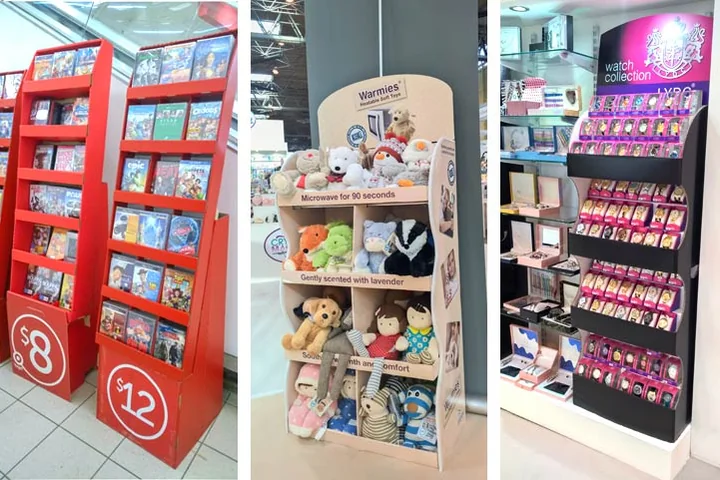
Supermarket and Value Aisles
- Pet aisle with a shelf run and a floor unit
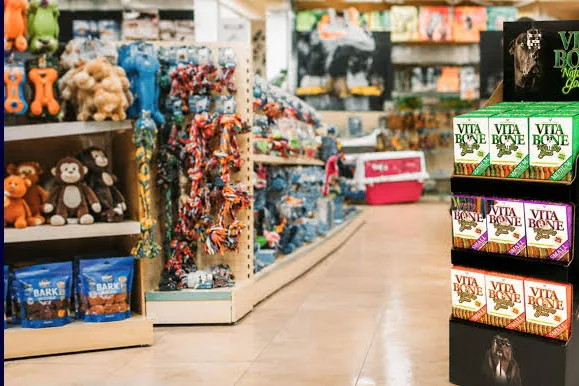
Pet and Specialty Aisles
- Three branded units standing in one aisle
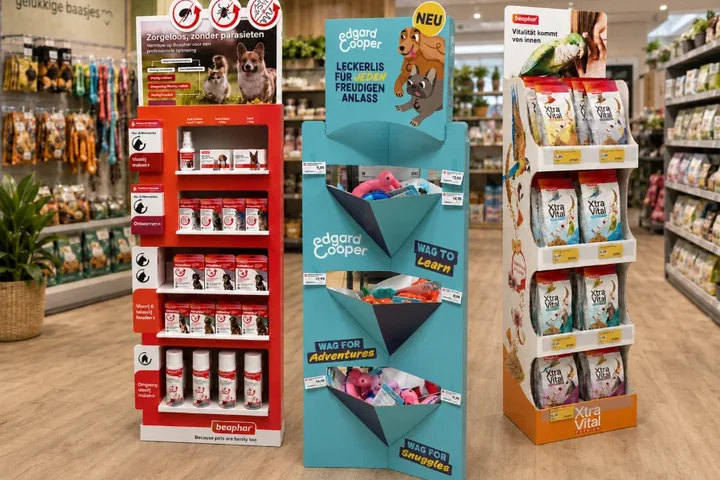
Branded Endcaps and Aisle Displays
- Cosmetics counter with a tiered lipstick unit

Beauty and Fragrance Halls
- Counter of ribbon-tied pastry boxes

Bakery and Food Gifting Counters
- Seasonal aisle with a shopper passing a pallet display
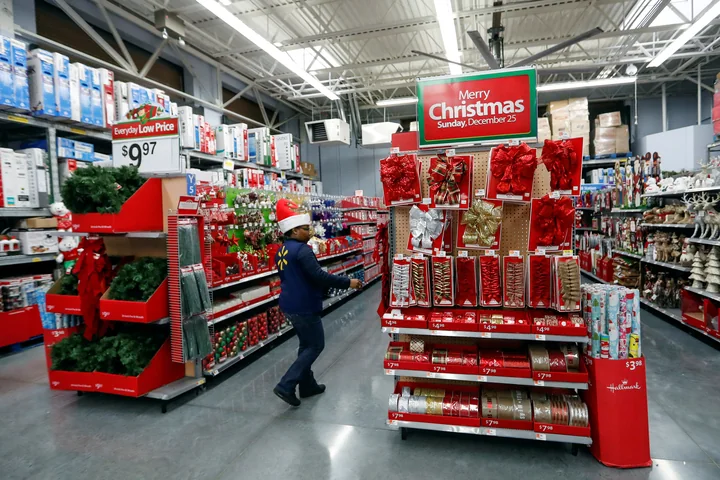
Big-Box Seasonal Aisles
What Two Buyers Said After the First Run
We needed display units that could be crated, shipped and set up by whoever was running the booth that morning, and still look like the jewellery standing in them. Acrylic was the only stock that gave us both at once.
The velvet lining and the laser-etched logo were the details I cared about most, and both came back as drawn. By the third day of a trade show the units were still clean and still standing square, which is more than I can say for what we used before.
They are light enough for one person to move and solid enough that I stopped worrying about them between shows.
- Acrylic
- Velvet-lined
- Laser-etched logo
- Trade shows
 Sarah PatelMarketing Director · EcoGems Jewelry
Our tablets had to sit in something that protected them and still read as a premium product rather than a security case. Foam inserts with a magnetic closure were the answer, and the bamboo accents kept it in line with the wider range.
The quote came back quickly and the revisions came back without an argument, which mattered because we were still moving the insert around when the first drawings landed.
The print on the finished units is what convinced the rest of the team. That, and the displays coming back out of the first store without a mark on them.
- Magnetic closure
- Foam insert
- Bamboo accent
- Tablets
 David KimOperations Manager · TechNova Gadgets
What Buyers Ask Before a Display Order
01Will the unit fit the shelf my retailer specifies?
Not without the retailer’s fixture numbers. Those settle the dieline, and a stock tray size is the one thing that reliably fails a planogram check. Where the plan is not available yet, we build to a common grocery, convenience or club envelope and mark every assumption on the drawing, so you have something concrete to take back to the buyer.
02What does a floor stand actually hold?
Its rating, and nothing past it. The rating is not a default — a heavier product is quoted against a stronger board or an added base pad, so the figure you are given is the figure that unit holds, and it is printed on the elevation that comes with the quote.
03Who assembles the display — the plant or the store?
Both, and the split is fixed at the quote stage rather than left to the store. Shelf-ready trays leave filled and sealed, so nothing gets built on site at all. Floor stands and counter units are the only ones anyone assembles.
04What changes for me on a second run?
Your artwork, and only if the artwork moved. Nothing else is set up twice, and there is no sample round to sign off again. Where a color did change, the new ink is read beside a unit held back from the original run, so the second printing matches the first on the shelf.
05What do you need from me to price a display?
Four things: a size, the product going into it, the quantity, and the date it has to be in store. Product weight and a photo settle the insert and the board grade. Everything else in the quote follows from those four.
06How do the units ship, and what does freight cost?
Freight is charged on a pallet of collapsed board, not on assembled display volume, and that is usually the difference between a landed cost that works and one that does not. Multi-destination orders ship as separate consignments drawn from a single production lot, so a split delivery does not become a second order.
A Display That Fills the Shelf It Was Measured For
Send the shelf envelope, the product and the quantity. A dieline, a unit price and a sample plan come back against them, with the board certificate attached.
Start My Display Run