
Custom Corrugated Boxes Manufacturer: Cut 15% Excess Board and Stop Shipping Air
Right-sized to your product so you are not paying for oversized cartons and unused flaps. Optimized dimensions and flute profiles give higher pallet density in 100% recyclable, FSC®-certified board, without giving up the ECT stacking strength your route requires.
- 32–48ECT board range
- <0.2%transit damage
- 30–55%less billed volume
- 24 hoursto a dieline and mockup
Nine Corrugated Constructions, Cut Around Your Product
Each ships as a flat blank and folds into a carton on your side. The difference between them is what the product needs held: a bottle, a book, a shelf edge or a pallet. Not sure which of the nine fits? The product's dimensions settle it faster than a description does.
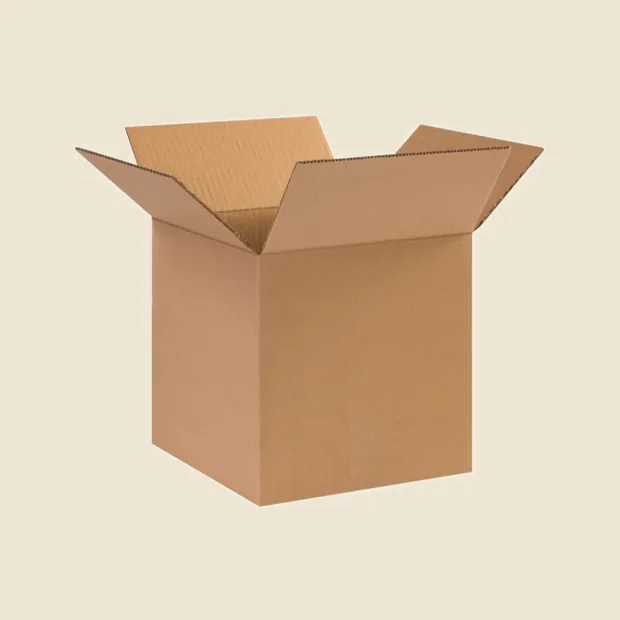 RSC-01
Custom Corrugated Shipping Boxes
32–48 ECTA carton cut to your product’s own length, width and depth, which is what stops a pallet carrying air that is charged as freight.
SuitsGeneral transit: boxed goods, taped shut, no presentation need.Not forA parcel the end buyer opens as part of the purchase.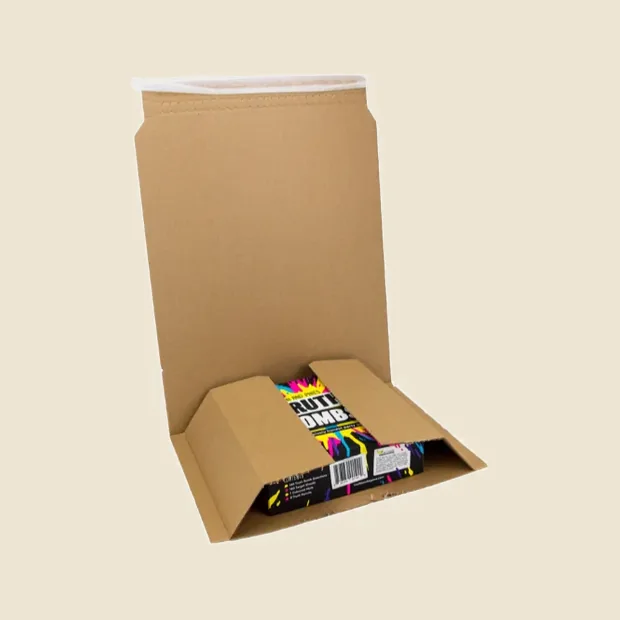 ML-02
Corrugated Mailer Boxes
Self-locking, no tapeA wrap that folds around the contents and locks without tape, taking a parcel out of a gray bag and into printed board.
SuitsA doorstep parcel that carries the brand after the product is unpacked.Not forA product that needs its own rigid presentation box inside.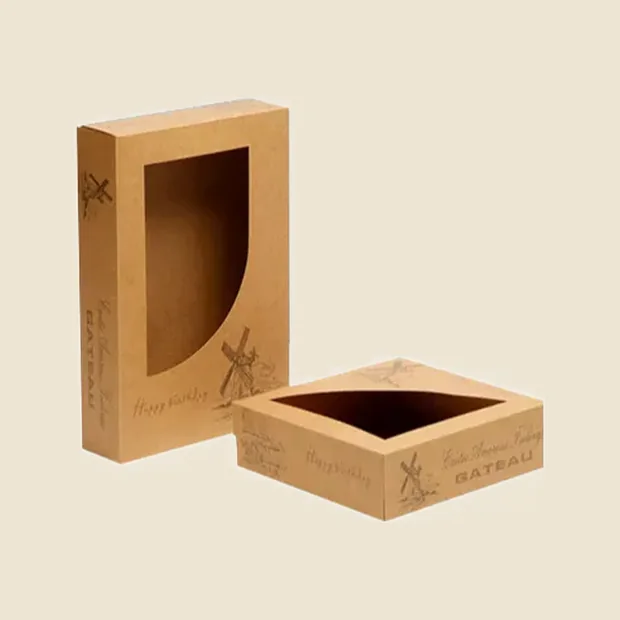 DC-03
Die-Cut Corrugated Boxes
Any aperture, same dieA shaped front or a cut window pressed from the same die as the body. The aperture is part of the blank rather than a second operation.
SuitsA shelf or a window where the product has to be seen before it is bought.Not forA carton whose strength is the whole point.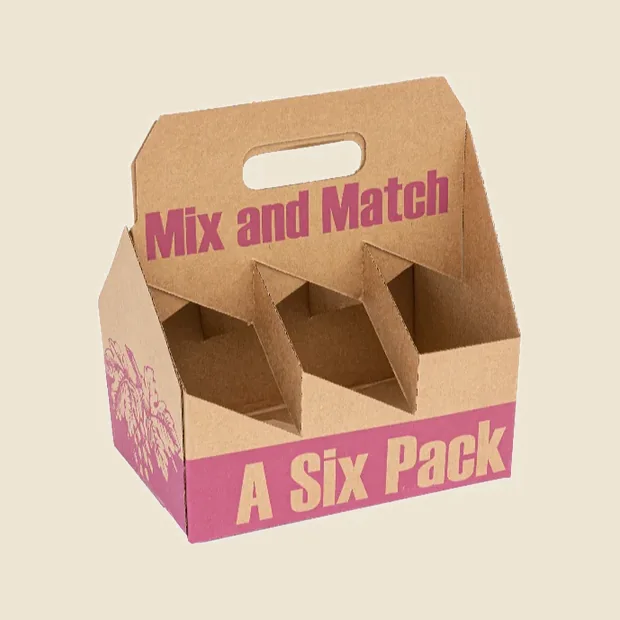 HD-04
Heavy Duty Corrugated Boxes
Divided cells, die-cut handleDivided cells and a reinforced base for the carriers that end up on the bottom layer of a pallet with everything else above them.
SuitsA case that carries several units and sits under the rest of a pallet.Not forA single light item, where the extra board buys nothing.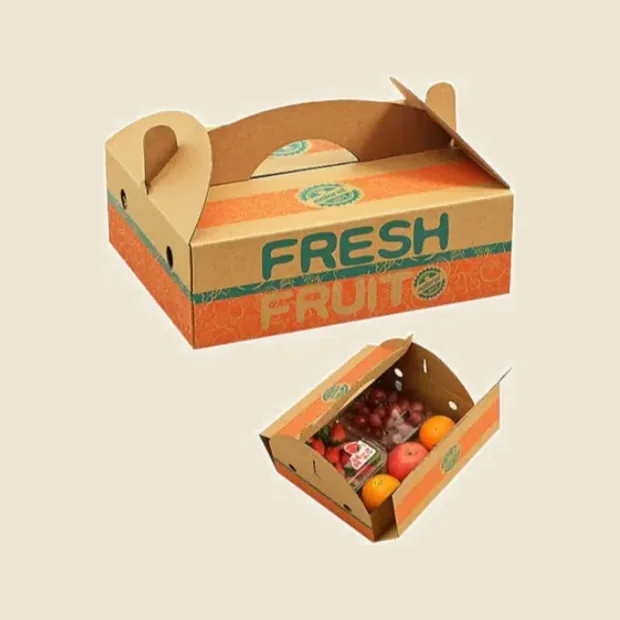 PR-05
Custom Printed Corrugated Boxes
Flexo, spot or full colorFull-panel print on kraft liner, holding registration on a board face that is not flat — which is where most corrugated print fails.
SuitsA shipping carton that is also the brand surface.Not forPhotographic artwork, which wants a litho-laminated sheet.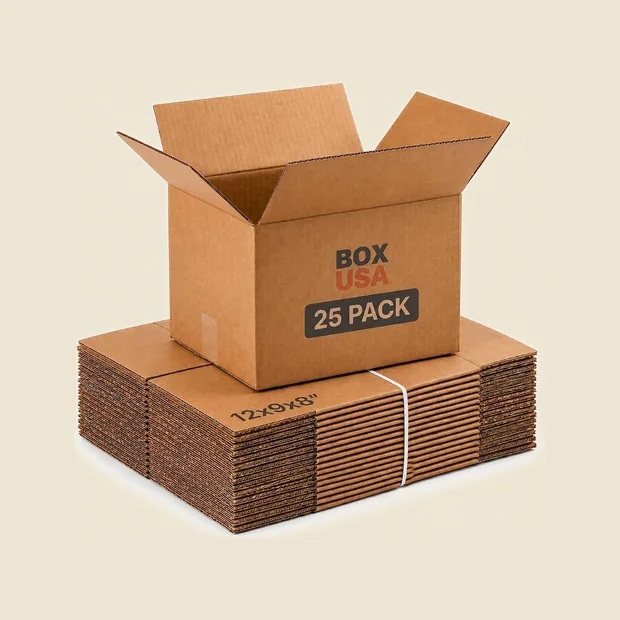 WS-06
Wholesale Corrugated Boxes
500 – 500,000 unitsThe same specification held across a long run, with the unit rate stepping down at the volume tier the order actually reaches.
SuitsA long run of one specification, ordered across a season.Not forA market test, where the die and the plate cannot be spread. DW-07
Double Wall Corrugated Boxes
BC and EB, 6.4 mmTwo flutes bonded, for a lid-and-base box that keeps its shape under a stack and still reads as a gift.
SuitsLid-and-base sets, and loads stacked more than one pallet high.Not forShelf-ready retail, where a thick wall takes up shelf space.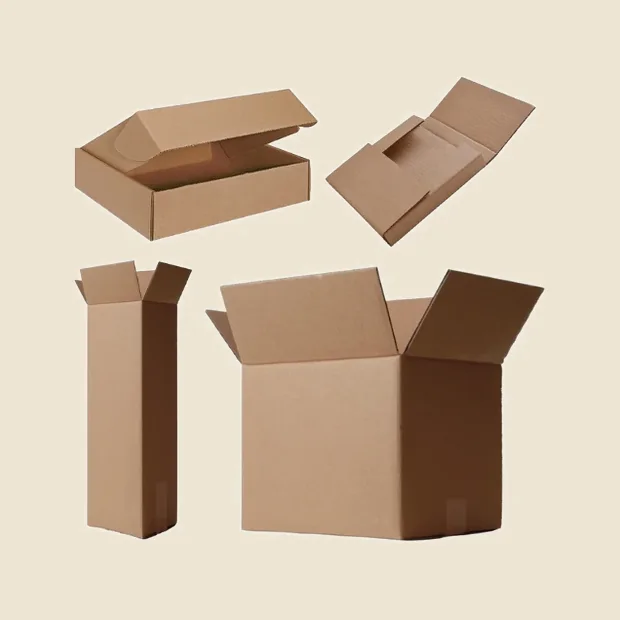 PK-08
Custom Corrugated Packaging Boxes
Roll end tuck topA roll-end assembly that folds up from the flat blank on the packing bench, with no glue line waiting to fail in transit.
SuitsA carton assembled by hand on the packing bench.Not forAn automated erecting line, which wants a glued RSC. TL-09
Tab-Lock Corrugated Boxes
No glue, no staplesBoxes that assemble by folding and unfold the same way, which is what keeps a returns bench moving without a knife.
SuitsA pop-up shop or a sample room, where a carton is opened and reclosed daily.Not forA load that leans on a glued seam to hold its strength.
Nothing Is Quoted Off a Stock Size
A stock carton closes over the product instead of around it, and it costs board that does nothing. The blank is drawn to the packed size, so the box and the freight both come down before a printer is ever involved.
Send My Product DimensionsChoose the Flute Before You Choose the Box
The flute decides how thick the wall is and how much weight it takes on edge — the difference between a carton that holds at the bottom of a pallet and one that does not. Every cross-section below is drawn to a common scale, so the six grades can be read against each other.
Fragile contents, where the board itself has to absorb the drop rather than pass it through.
- Wall thickness
- 4.7 mm
- Flutes per 300 mm
- 33
- Edge crush (ECT)
- 32 lb/in
- Safe top load
- 14 kg
- Safe stacked height
- 600 mm
Both figures are quoted for a 400 × 300 × 300 mm carton conditioned 72 hours at 50% RH and carrying 10 kg. The top load is the lab crush figure divided by 15 — the conservative end of the range — and the stack height is the number of 10 kg cartons that load carries.
Die-cut and printed cartons, because the fine flute leaves the flattest single-wall face to print on.
- Wall thickness
- 3 mm
- Flutes per 300 mm
- 47
- Edge crush (ECT)
- 32 lb/in
- Safe top load
- 16 kg
- Safe stacked height
- 600 mm
Both figures are quoted for a 400 × 300 × 300 mm carton conditioned 72 hours at 50% RH and carrying 10 kg. The top load is the lab crush figure divided by 15 — the conservative end of the range — and the stack height is the number of 10 kg cartons that load carries.
The default shipping carton, and the grade with the widest stock availability at any mill.
- Wall thickness
- 4 mm
- Flutes per 300 mm
- 39
- Edge crush (ECT)
- 39 lb/in
- Safe top load
- 19 kg
- Safe stacked height
- 600 mm
Both figures are quoted for a 400 × 300 × 300 mm carton conditioned 72 hours at 50% RH and carrying 10 kg. The top load is the lab crush figure divided by 15 — the conservative end of the range — and the stack height is the number of 10 kg cartons that load carries.
Litho-laminated retail packaging and shelf-ready trays, where the wall has to look like folded board.
- Wall thickness
- 1.6 mm
- Flutes per 300 mm
- 90
- Edge crush (ECT)
- 26 lb/in
- Safe top load
- 8 kg
- Safe stacked height
- 300 mm
Both figures are quoted for a 400 × 300 × 300 mm carton conditioned 72 hours at 50% RH and carrying 10 kg. The top load is the lab crush figure divided by 15 — the conservative end of the range — and the stack height is the number of 10 kg cartons that load carries.
Palletised loads and anything that spends its life on the bottom layer of a stack.
- Wall thickness
- 6.4 mm
- Flutes per 300 mm
- 51
- Edge crush (ECT)
- 48 lb/in
- Safe top load
- 34 kg
- Safe stacked height
- 1,200 mm
Both figures are quoted for a 400 × 300 × 300 mm carton conditioned 72 hours at 50% RH and carrying 10 kg. The top load is the lab crush figure divided by 15 — the conservative end of the range — and the stack height is the number of 10 kg cartons that load carries.
Heavy contents that also have to carry full-color print on the outer face.
- Wall thickness
- 4.8 mm
- Flutes per 300 mm
- 66
- Edge crush (ECT)
- 44 lb/in
- Safe top load
- 29 kg
- Safe stacked height
- 900 mm
Both figures are quoted for a 400 × 300 × 300 mm carton conditioned 72 hours at 50% RH and carrying 10 kg. The top load is the lab crush figure divided by 15 — the conservative end of the range — and the stack height is the number of 10 kg cartons that load carries.
Choosing by the job, not the grade
- Light contents, print-led retail
- Everyday e-commerce shipping
- Heavy contents, bottom of a pallet
Thinnest to thickest: E 1.6 · B 3.0 · C 4.0 · A 4.7 · EB 4.8 · BC 6.4 mm
Four Liners, and When You Need Each
A corrugated wall is three layers: a liner on each face with a fluted medium bonded between them. The liner carries the print and the sustainability claim, and four of them cover almost every job.
| Liner | What It Is | Pick It When |
|---|---|---|
| Kraft | Unbleached pine fibre, and the cheapest of the four. Hides the scuffs a pallet puts on a white face. | The price leads, and the print is a logo or a line of type rather than a photograph. |
| White | A bleached top liner, for artwork the brown of kraft would dull. | The print itself is the product — a photograph, a light tint, a full-panel design. |
| 100% Recycled | Post-consumer fibre.FSC custody to the packing list | A retailer audits the recycled claim, and the certificate has to travel with the goods. |
| Moisture-Resistant | An aqueous-coated face, wax-free, so the board keeps its stacking strength as humidity climbs. | The carton crosses an ocean, or sits in a cold store before it is opened. |
All four recycle as eco friendly corrugated board, with no wax and no plastic film.
Four Presses, and What Each Cannot Do
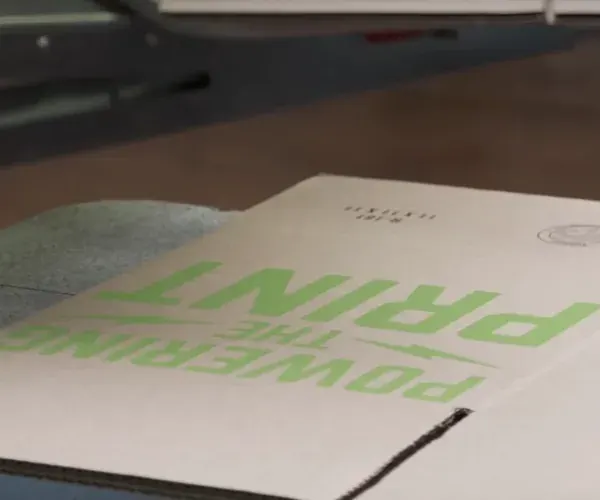
Your artwork decides the route, and the route decides what the print can carry: a logo on kraft, a photograph on a laminated sheet, a different name on every box. Each press below carries the job it should not be given.
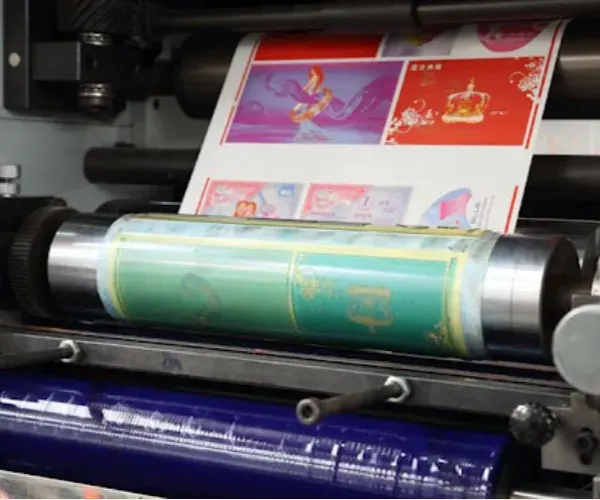
Flexographic
1–4 colors, in-lineKraft liner, a logo or a short line of copy, and volumes where the plate has already paid for itself several times over. It is the only route that prints on a rough board face at speed.
Not forPhotographs and gradients. A flexo plate carries a logo, not a picture.

Offset Litho
Sheet, exact spot colorDetailed graphics and a Pantone that has to land on the chip. The printed sheet is laminated to the board afterwards, which is how a corrugated carton gets a photographic panel.
Not forShort runs. The plate and wash-up are the same whether the run is 500 or 50,000.

Digital
No plate, no setupShort runs, a seasonal change, a market test and the prototype that has to be in hand this week. Each box can carry a different name from the next at no extra cost.
Not forThe cheapest unit rate at volume. Above a few thousand pieces, a plate route overtakes it.
Screen
Specialty ink and textureA heavy pass of ink on a specialty box, and effects that a press cannot lay down at all.
Not forA long run. Every unit passes a screen by hand, and the labor is in the handling.
Three Board Fitments, and What Each One Does
The right size stops a product sliding around inside the carton. A fitment stops it moving at all, and movement is what breaks corners and edges. Each one folds from the same sheet as the box, adding nothing to the material list.
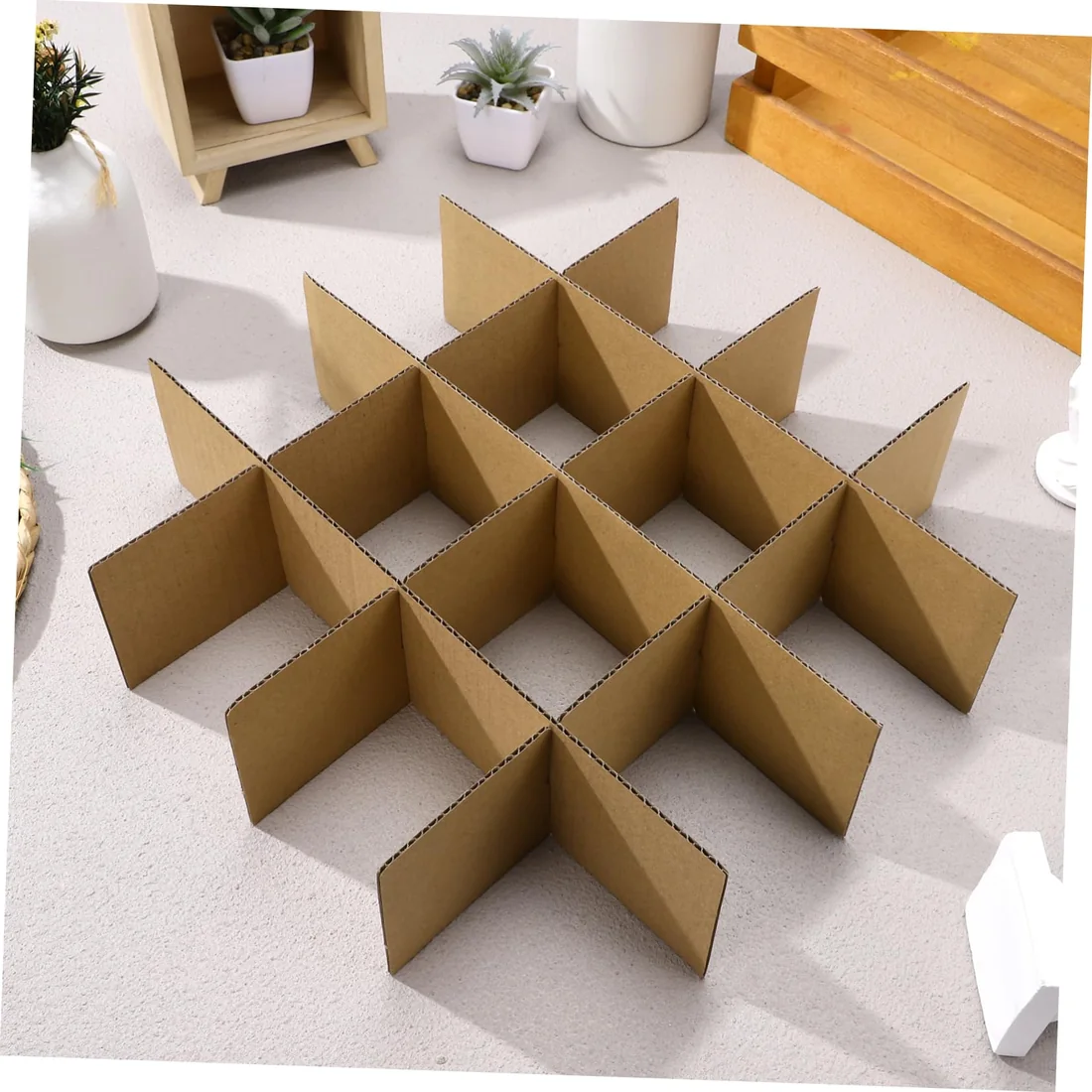
Dividers and cells
Slotted board that holds a set upright and apart, cut to the product’s own footprint rather than a standard cell size.
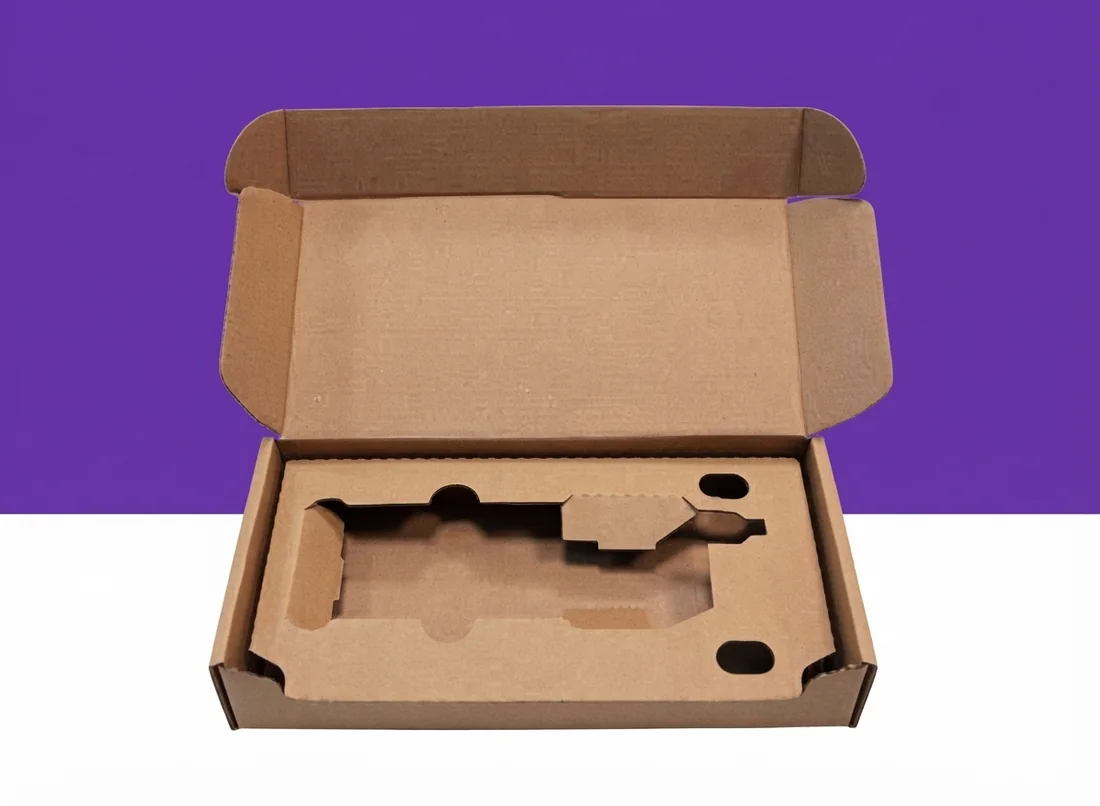
Die-cut fitments
A shaped cradle pressed from a flat board blank, holding a product or several at a fixed spacing.
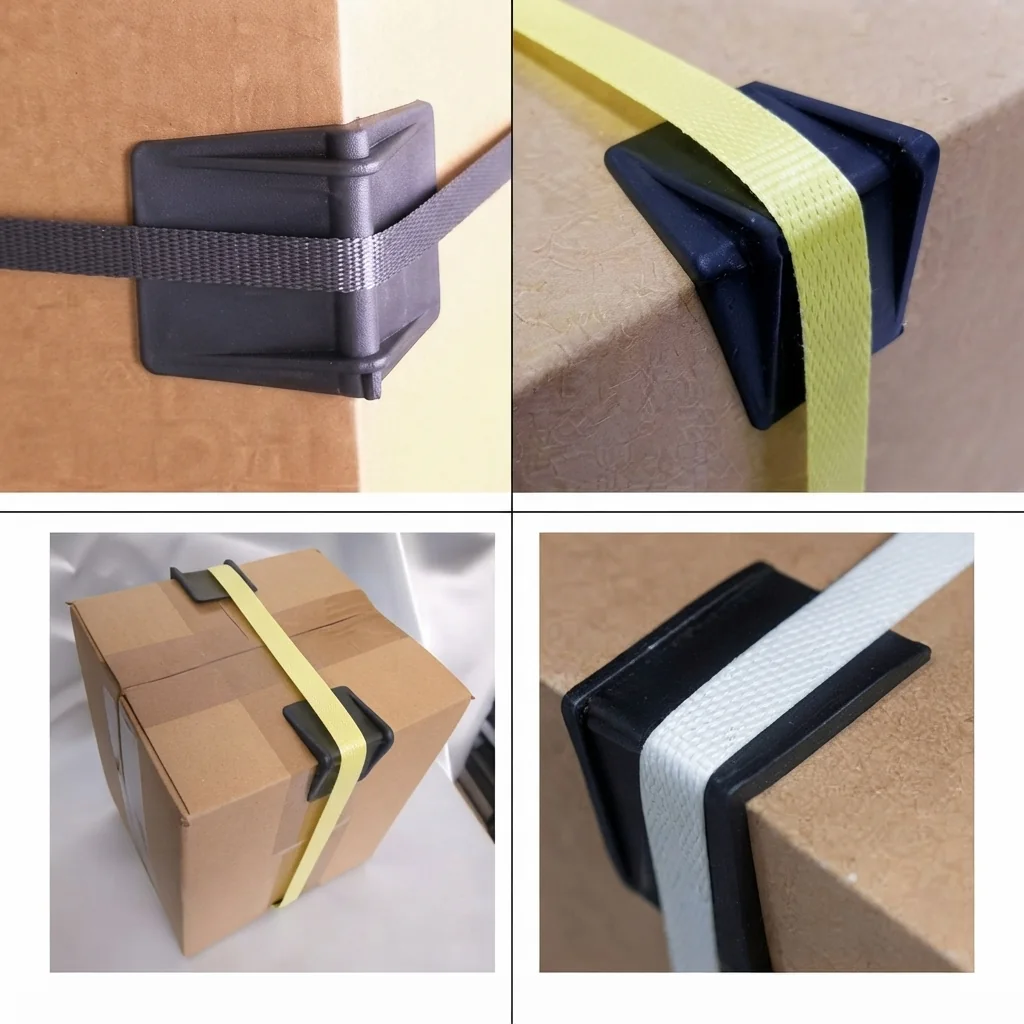
Corner and edge pads
Extra board where the weight lands, which lets the outside of the carton take the impact rather than the contents.
Where the Money in a Carton Goes
Most of a corrugated quote is settled by the blank rather than by a unit rate, which is why the lines below are mechanics rather than prices.
- 01
Board Is Bought by the Ton
A mill sells liner and medium by weight, and the weight of a carton is the size of its blank. The cheapest route to a lower unit cost is a smaller blank, before any conversation about a cheaper liner.
- 02
The Flute Grade Moves the Price Most
A step down a flute grade changes the board weight, the take-up of medium and the stack rating together. It is the largest line in a corrugated quote and the easiest to get wrong in the direction of over-specifying.
- 03
The Die and the Plate Are Paid Once
Both are cut or made for the first run and then held. A reorder carries neither, and a design change on the same carton carries the plate only.
What Right-Sizing Takes Off
- Board in the blank
- 20–45% lessa smaller blank divides out of the same mill sheet
- Billed volume per 1,000
- 30–55% lesson the 1:5000 dimensional divisor
The band is wide because it depends on how oversized the carton is today. Send the product size and the box in use now, and the two get run side by side.
Tested Before It Ships, Not After
A carton that fails in a parcel network fails in front of a customer. Four checks stand between the print run and the pallet, and each check produces a figure rather than an opinion.
- 76 cm
Drop
Face, edge and corner drops on a packed carton at the ISTA 3A height, on the floor of the lab rather than on a loading dock.
- All axes
Random vibration
The same carton run on a vibrating table, which is what finds a score line that would open across a parcel network.
- Stack load
Compression
Pressed to the load the stacked pallet pattern implies, with the figure printed on the report rather than left as a pass or fail.
- AQL 2.5
Lot inspection
The sampling plan, the defect count that would fail the lot and the date of the report, all issued with the shipping papers.
From Dimensions to a Pallet, in Five Steps
Four to six weeks covers the whole sequence below. The sampling stages run while the board is being booked, which is the only reason the total stays inside that window.
- Day 0
Size, Weight, Dieline
A dieline and a 3D mockup in your packed dimensions inside 24 hours, with flap and slot geometry matched to your packing line.
- Day 1–4
White Dummy
A plain carton in your dimensions in 3–5 working days, loaded with the real product and dropped by hand before any plate is made.
- Day 5–14
Printed Sample
A carton in the final board, flute and print in 7–10 days, with the color read against the Pantone chip and signed off.
- Day 14–38
Print, Die-Cut, Glue
The run goes on the board booked at the first stage: printed, die-cut, folded and glued, with the lot inspected as it is packed.
- Day 38–42
Inspect and Pallet
The finished lot inspected and flat-packed, then palletized, with the inspection report issued alongside the shipping papers.
Where the Cartons End Up






What Changed After the First Shipment
 Sarah PatelOperations Director
The run was for a holiday promotion with a date we could not move, and the boxes were still being designed when we first spoke. What came back was a detailed quote and a digital mockup within 24 hours, which is what let the rest of the campaign be scheduled at all.
The useful part was not the speed. It was being told that our dimensions had a little too much clearance on the long side, and that taking that out would save board without changing how the box packed. It did, and it removed waste we had been paying for on every previous run.
The cartons landed in seven business days and went out with the promotion. Recycled board, printed properly, and nothing about the unboxing felt like a compromise.
 Jason WilliamsE-commerce Director
Our cartons were the plainest thing about the brand. Everything else a customer saw had been designed, and then the parcel arrived in a brown box with a label on it.
The change that mattered was the size. Cartons cut to the product stopped the contents moving, and stopped the edges taking the beating they had been taking. Damage claims came down, and the cartons photograph well enough that customers post them.
Customization stayed flexible as the range grew, and the production dates held. That combination is rarer than it sounds.
What Buyers Ask Before a Corrugated Run
01What is the minimum order for a custom corrugated box?
500 cartons, and the wholesale band runs from there to 500,000 units. Tooling sets the floor — the cutting die and the print plate are made once and kept for the reorder — and under 500 units they cannot be spread far enough for the unit rate to be worth quoting.
02Single wall or double wall — how do I decide?
By what sits on top of the carton, not by what goes inside it. The flute table above carries a safe top load and a line on the run it suits for each grade; send the pallet pattern and the packed weight, and the choice follows from those two figures rather than from preference.
03ECT or Mullen — which number should my specification carry?
ECT, unless a customer of yours has specified otherwise. Edge crush test measures the board’s resistance to crushing on edge, which is the load a stacked carton actually sees, and it is the number that survives a change of liner without the spec having to be rewritten. Mullen burst measures puncture resistance, and it still belongs on a spec for a heavy, sharp-edged part. Both figures come off the mill certificate for the lot, and either can be carried on the packing list for the run.
04White liner or litho lamination — which costs less?
A white liner under the print, and it is the route to ask about first. It costs less than laminating a printed sheet to the board, and it keeps the carton fully recyclable, which the laminate does not.
05Can an order mix flute grades and print routes?
Yes, and most do. A range usually has a carton carrying the weight and several carrying the branding, which argues for a high flute grade on the shipper and a fine grade on the retail box. What cannot be mixed is the board booking: each grade is a separate mill line, each route is a separate setup, and each is quoted as its own line rather than discovered on the invoice. Two grades in an order is normal; six is worth consolidating first.
06How flat does a corrugated carton ship?
An RSC travels folded on its glue line at roughly its own depth plus a few millimeters — a carton 300 mm deep ships around 20 mm thick. Trays, wraps and lid-and-base sets travel flatter still, and units are strapped and corner-protected inside the shipper.
07What do you need from me to price a run?
Four things: the packed product size, the packed weight, the quantity, and whether the print covers a panel or the whole carton. Size and weight settle the flute and the blank; quantity settles the tier; the print panel settles whether a plate is involved. A photograph of the product and a line on how it is packed is usually enough to close the last gaps.
Send the Size and the Weight
Those two figures come back as a dieline, a flute grade and a price inside 24 hours. The white dummy follows in 3–5 working days, and nothing is committed to board until it has been packed and dropped.
Start My Corrugated Run