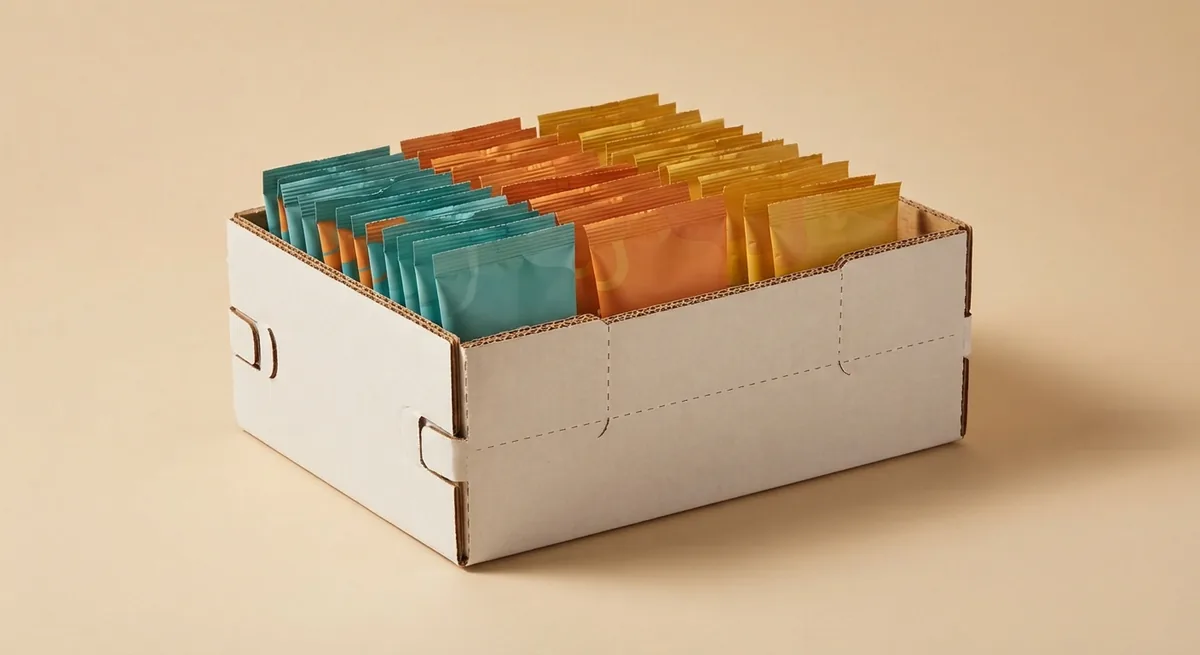
Counter display (PDQ)
A Single SKU Must Fight for the Till Point
It lifts a product to chest height, where it is read between the queue and the till — and becomes the last thing seen before the card comes out.
ships flat · stands in seconds
A retail shelf hands a product a few seconds and a fixed set of facings. Whether the front is still readable six units high, whether a clerk can refill without unboxing twice, and how much a bay holds before it starts costing sales — all of it is settled at the dieline, not discovered on the sales floor.
Before a structure is chosen, four things about the shelf decide it — and each is a fact a phone photo and a walk down the aisle already answer. Read these four before any artwork is drawn.
A pack is rarely seen whole. It is a sliver between two others, or the top quarter above a stack. Identity has to survive that crop, which is why it belongs on more than the front face.
Build for the sliver that survives the crop, not the full front.
The clerk is timed, not patient. A carton emptied unit by unit, or a tray that will not lift out, keeps the bay empty until a quiet hour — and an empty bay sells nothing.
Count the moves to a full bay first, then choose the carton.
Two to three seconds is the whole encounter. That window funds a name, a category cue and a reason to choose. Anything past three is printed for the buyer, not the shopper.
Reserve the front for the three things that read: name, category, reason.
A seasonal unit can fold flat and ship cheap. A permanent fixture is judged in month nine, after the board has sagged and the surfaces have taken a year of hands.
Choose the board grade and finish by how long the fixture has to live.
A logo does not make a pack visible; the face a shopper can see does. Design all three faces, because the front is the first one a stack hides.
Carries the name and the reason to buy — but only while nothing covers it, which is exactly what a tall stack does.
Wins on a single facing, a low bay, or eye height
Hidden first by depthThe only surface seen when packs stand shoulder to shoulder. A repeated name and a color block read three feet down the aisle.
Wins on deep gondolas and dense facings
0 structure costA lid is read by shorter shoppers, by a parent looking down, and by anyone facing a shelf above their eye line.
Wins on counter units and any pack seen from standing height
2× from the lidA shape buys a silhouette a square cannot; a square buys facings a shape cannot. Decide which the bay needs before the box is drawn.
Each situation below is a problem a store will report. The display is the answer — name the problem, and the structure follows.
It lifts a product to chest height, where it is read between the queue and the till — and becomes the last thing seen before the card comes out.
ships flat · stands in seconds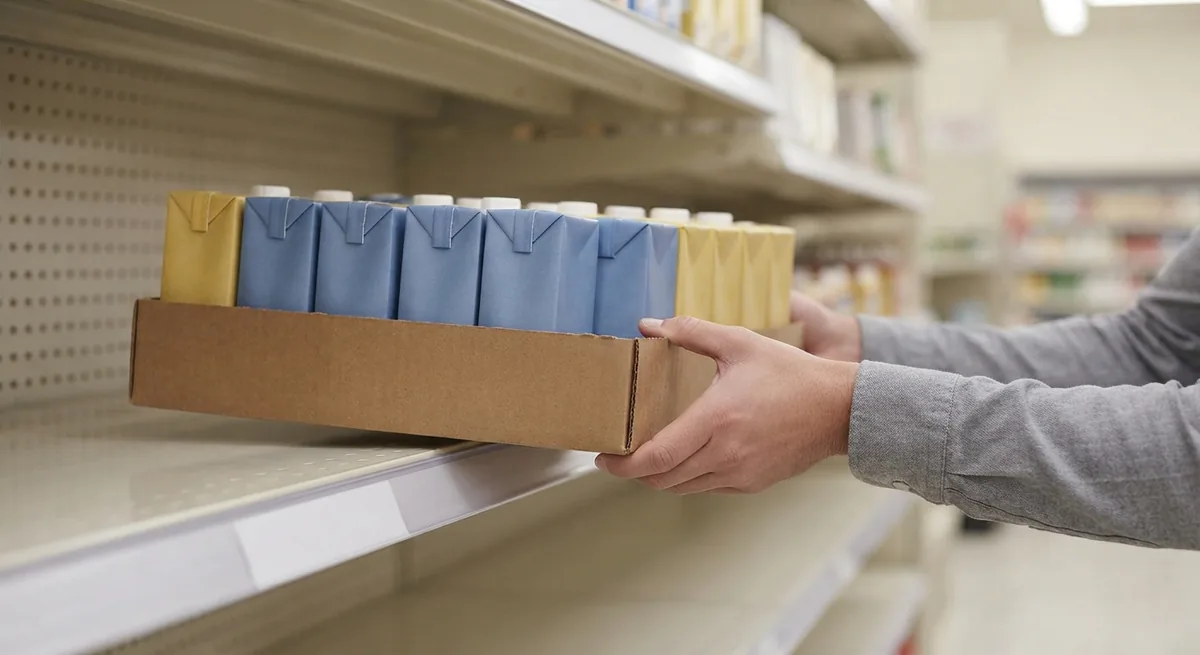
The tray lifts out and sits on the shelf as it is, front face forward, so the shelf is recovered in a single lift instead of unit by unit.
1 lift, carton to shelf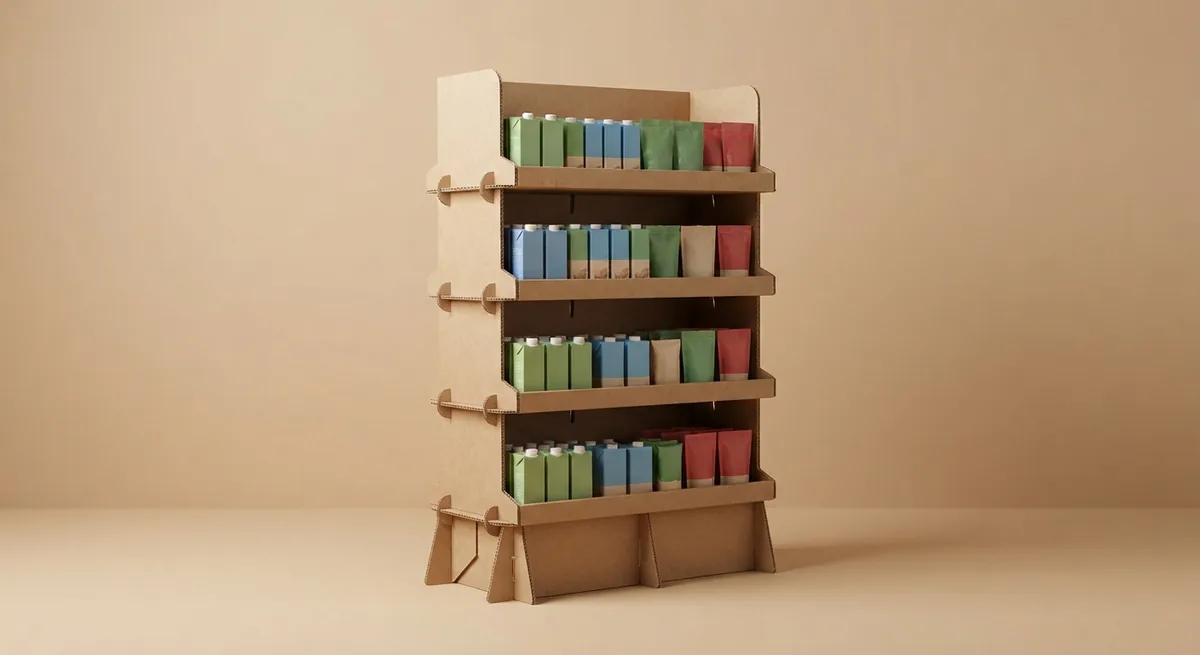
It buys a square meter beside the aisle for a fixed push, then comes down — the space a shelf cannot lend to a new line.
stands a promo, then clears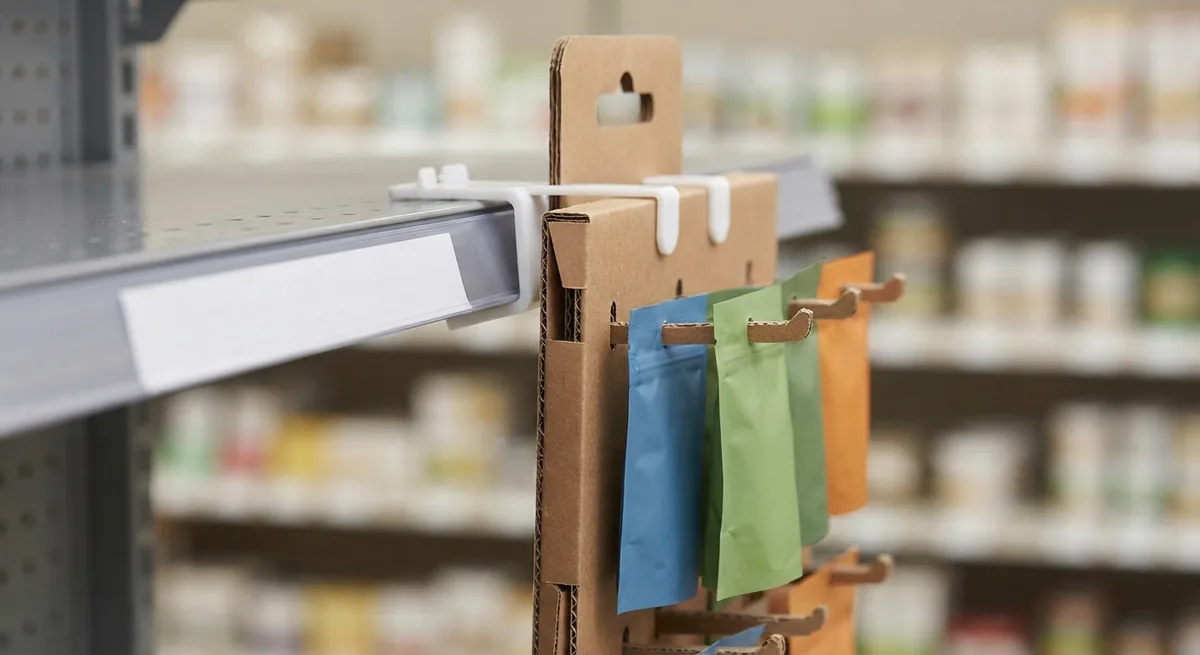
It clips to the shelf edge without a new facing, so a variant stays in sight even when the main bay has no room left to give it.
borrows zero facings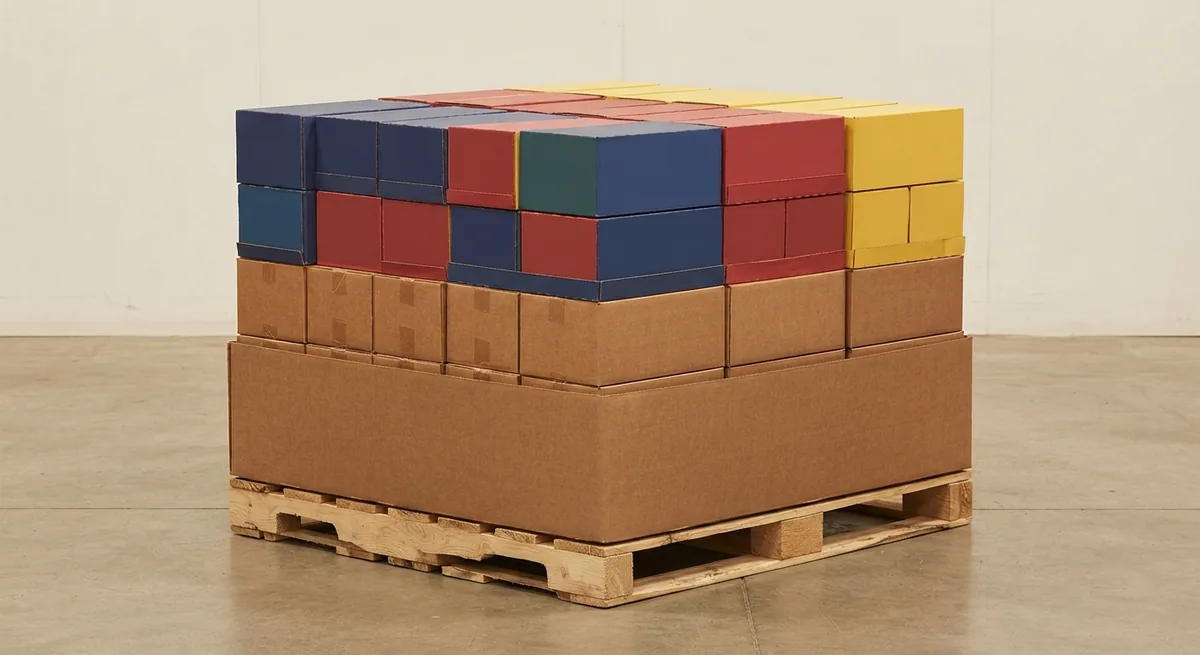
A pallet that arrives floor-ready: the load is set down and sells where it lands, with no shelf to fill first.
arrives floor-ready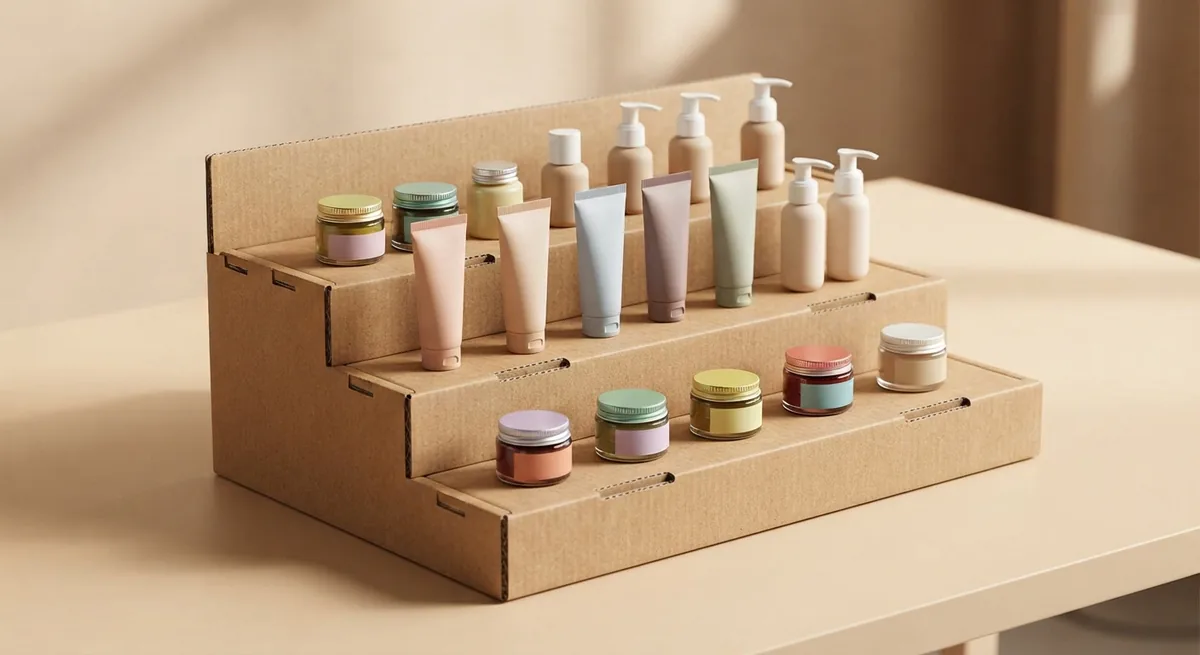
Stepped tiers lift the back row over the front, so every item in a cluster is read at once, not just the nearest.
3 tiers, one footprintThe fastest display is the one a clerk can refill without thinking. Count the moves from a closed carton to a filled shelf — that count is the design, and it decides how often the bay sits empty.
Shelf space is a budget, and it is spent before a design exists. Settle these in order — each answer narrows the next, and the last decides the structure.
Measure the width and the clear height the position allows. That rectangle, not the pack, is the real brief.
width × heightA row of single facings shows every variant; a deep block shows volume. Visibility favors attention; depth favors units per bay.
1 facing vs a blockPast a certain stack the bottom unit’s face disappears. Decide whether that face still matters, or lift identity higher.
stack ceilingIf a campaign changes the message, plan a top card or a side label that swaps in a minute — never a new die.
1 swap panelThe outer pack can feed the shelf or turn into it. One saves handling, the other saves unpacking — decide which the store wants.
handoff or combineSet these five and the structure is nearly decided. Set the look first, and the bay decides it for the design — under protest, and six units high.
Most of these look fine in a render and show up only in the aisle. Each row is a report a store will make, against the one structural change behind it.
| No. | What the store reports | The structural change |
|---|---|---|
| 01 | Set-UpThe Store Cannot Build Itneeds a trained rep or two people | Design a tool-free set-up one clerk finishes without a manual — fewer panels, a pre-scored fold, one unambiguous first move. The bay that gets set aside is almost always the one with an unlabelled third step. |
| 02 | TransitIt Arrives at the Store Crusheda dented corner, a split base | Reinforce the base and the corners, then drop-test the folded unit inside its own shipper. A display that arrives dented is set aside before anyone opens it, so the shipper is part of the structure, not an afterthought. |
| 03 | FacingsReads Premium, Sells Fewa beautiful unit taking half the facings | Rebalance body volume against count so a slimmer unit fills the same bay with more facings. A display that looks premium but holds half the stock of the plain unit beside it sells fewer units, not more. |
| 04 | SeasonBinned When the Season Endsa pallet of empty units at the door | Weigh a durable, re-usable fixture against a throwaway one. Over a few seasons the durable unit earns back its board and its set-up, while the throwaway is binned at the first reset. |
| 05 | RangeFlavors Blur Togethera wall of near-identical fronts | Separate variants with a structural divider or a color block, never with smaller type. When every front is near-identical, the eye cannot tell the flavors apart at three feet, and the shopper defaults to the pack that reads fastest. |
A sample that looks right on a table can fail once it is stacked. Run these five before a run is released; each has a mark it has to pass and a sign that tells a store it failed.
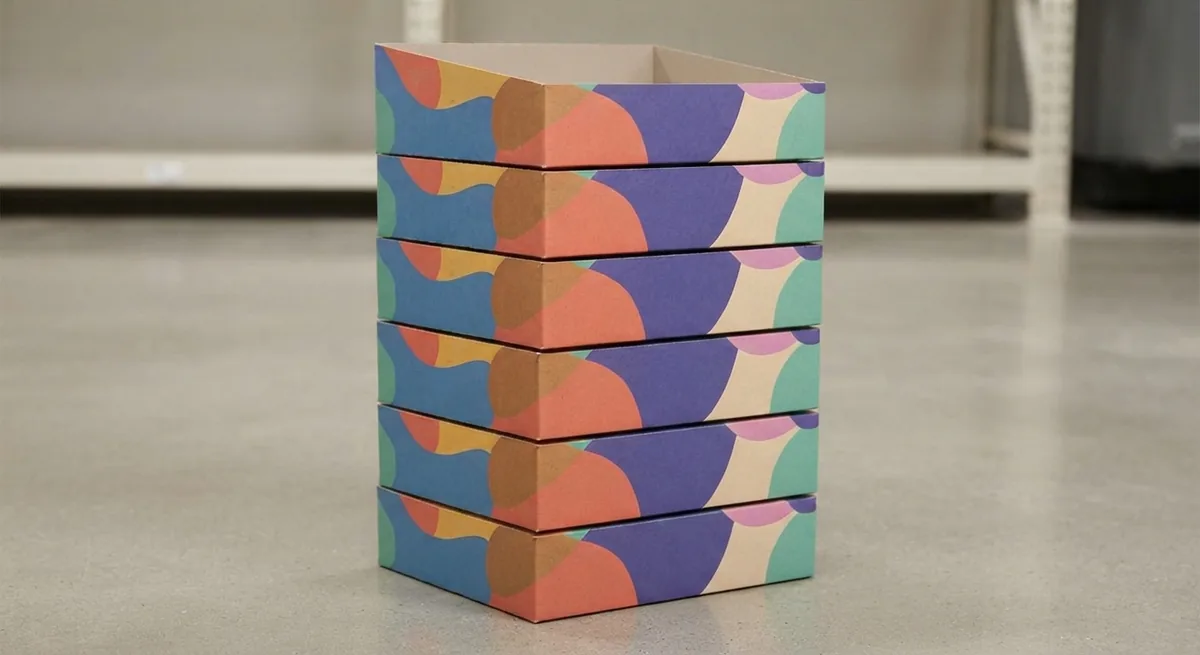
Build the column as tall as the bay allows. What still reads from where a shopper stands is what sells.
Passname + a key cue still visible
Fails Ifonly the top unit reads

Time a non-designer opening and setting the unit. Count the tools and the steps it takes.
Passunder a minute, no tools
Fails Ifa knife or two hands required
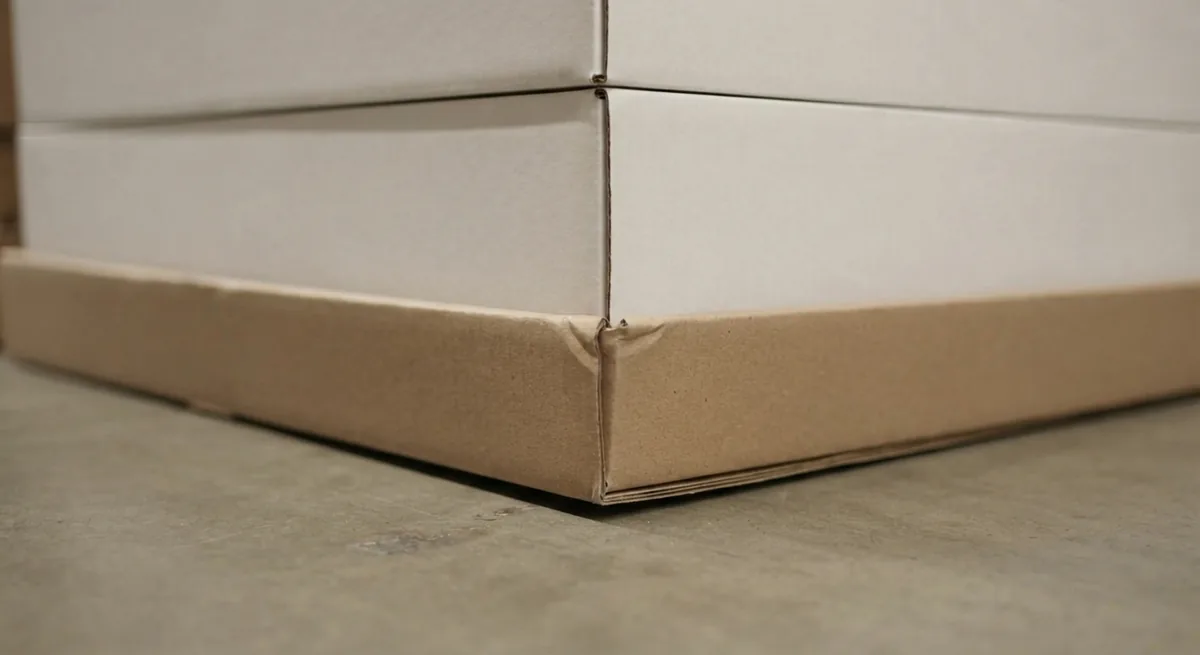
Weight the bottom unit and wait. Watch the lean before the top row starts to drift.
Passno lean at full height
Fails Iftop row leans by week two
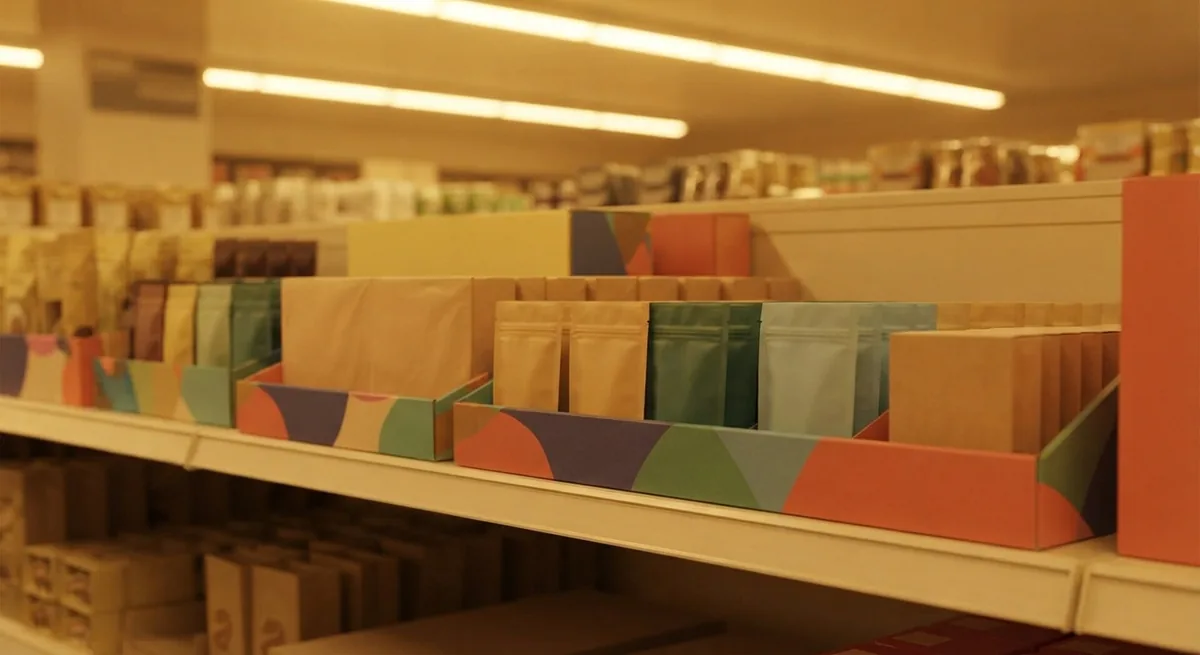
Read the front under warm shop lighting, not studio light, from three feet away.
Passlegible from 3 ft
Fails Iffine print lost to glare
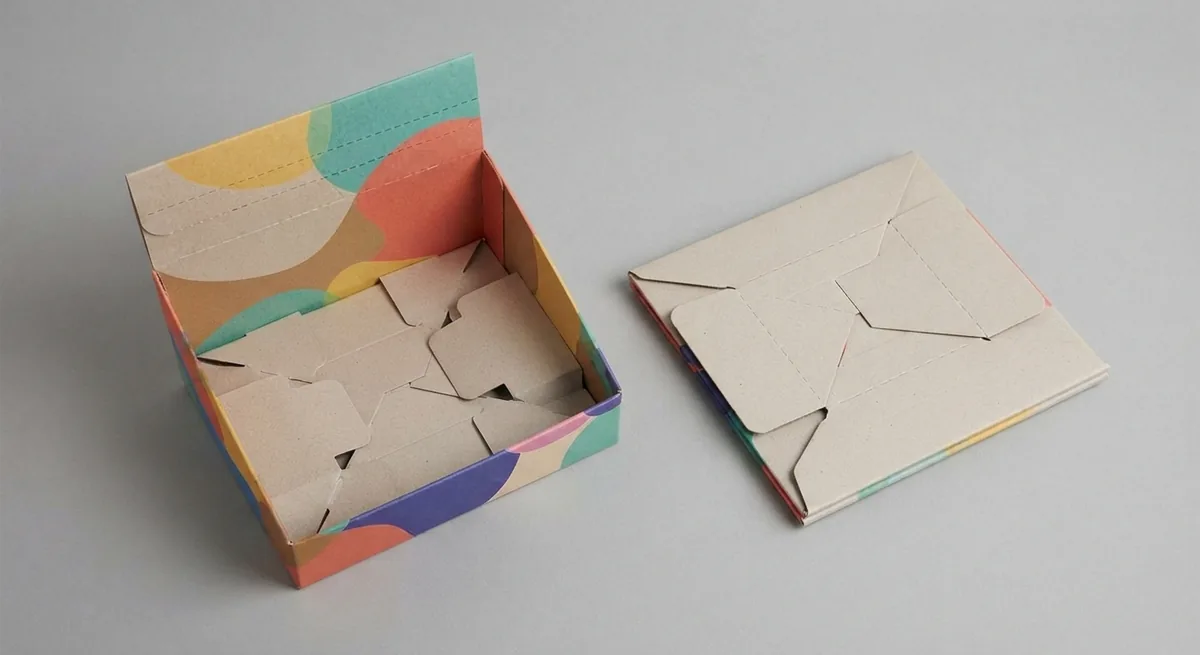
Flatten a used unit the way a store would and see how much stockroom it hands back.
Passfolds flat and stacks
Fails Ifbulky until it is recycled
Six answers that come up before a quote is useful. Each changes the structure, not just the price.
Yes, within a size band. The structure repeats and only the print, the divider and the label change, so a tool and a set-up carry across the range.
Send the smallest bay in the estate and the largest. A modular unit is sized to the narrow one and gapped to the wide one, so a single SKU fits every store.
A white dummy in three to five business days, a printed proof in seven to ten, and a bulk run in four to six weeks. Sampling the structure comes before any print.
The faces follow the same artwork service as the rest of the range — brand color, foil and finish set against the bay, and the panel checked for the market the store sells in.
Yes. Send the incumbent unit, or a photo of the bay as the store merchandises it today. The new display sits in the same position, so the store keeps its planogram and the reset is a straight swap rather than a re-plan.
A one-off costs more, because a display adds a die and a set-up. A tray that doubles as the shipper removes a pack, and a shared die spreads the tool across a range — both bring it back.
If the shelf is already chosen, send the bay width, its clear height and a phone photo of the neighbors — the first reply is a facing plan and a restock path. If the look is still open, lock what must read at a glance and survive the stack first; the visual follows a structure that already works on the floor.