Beauty & Cosmetics

Beauty Packaging That Arrives Intact and Sells on the Shelf

A beauty pack is pulled four ways at once: the bottle must arrive intact, the finish must hold under retail light, the panel must satisfy a regulator, and the unit must still price. The order is settled before a dieline is drawn, so nothing is discovered after the artwork is signed.

  • 1.5–3 mmProtection
  • ±0.5 mmPresentation
  • EU 1223/2009Compliance
  • 1 quoteCost
A 30 ml serum bottle seated in a moulded cradle inside an open rigid box, with a printed folding carton beside it
What goes in
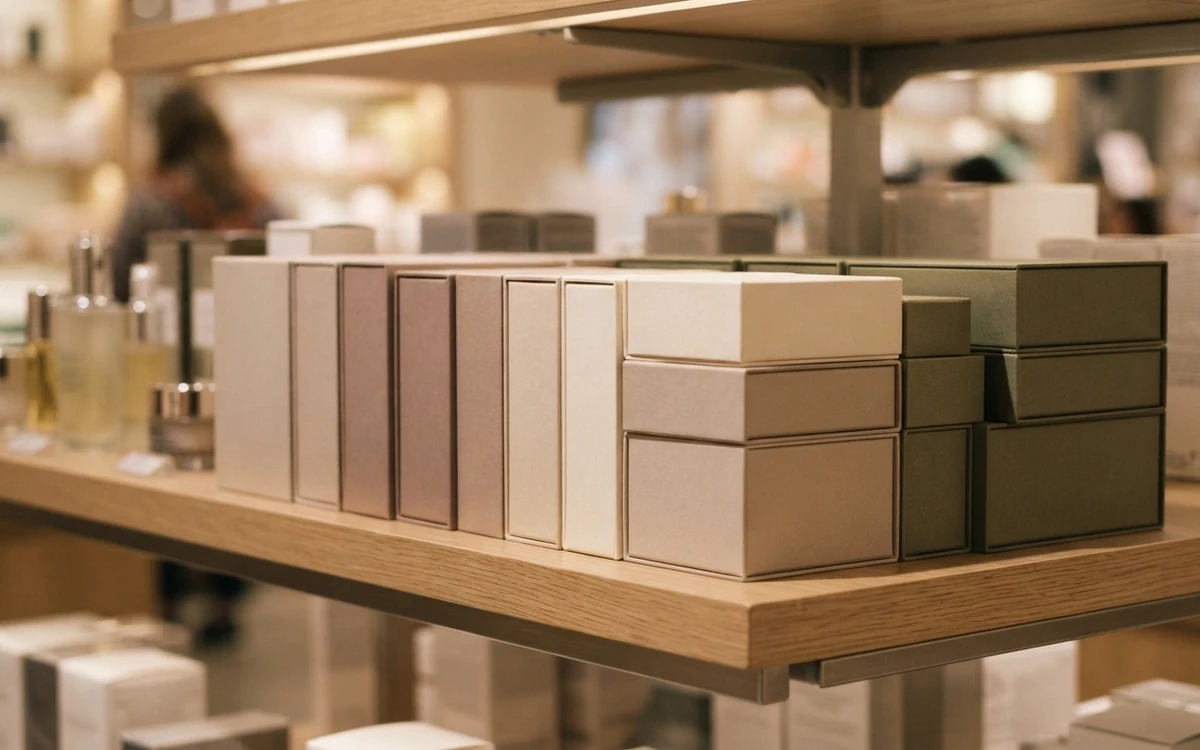
A row of neutral beauty and skincare boxes lined up on a lit retail shelf
What holds it
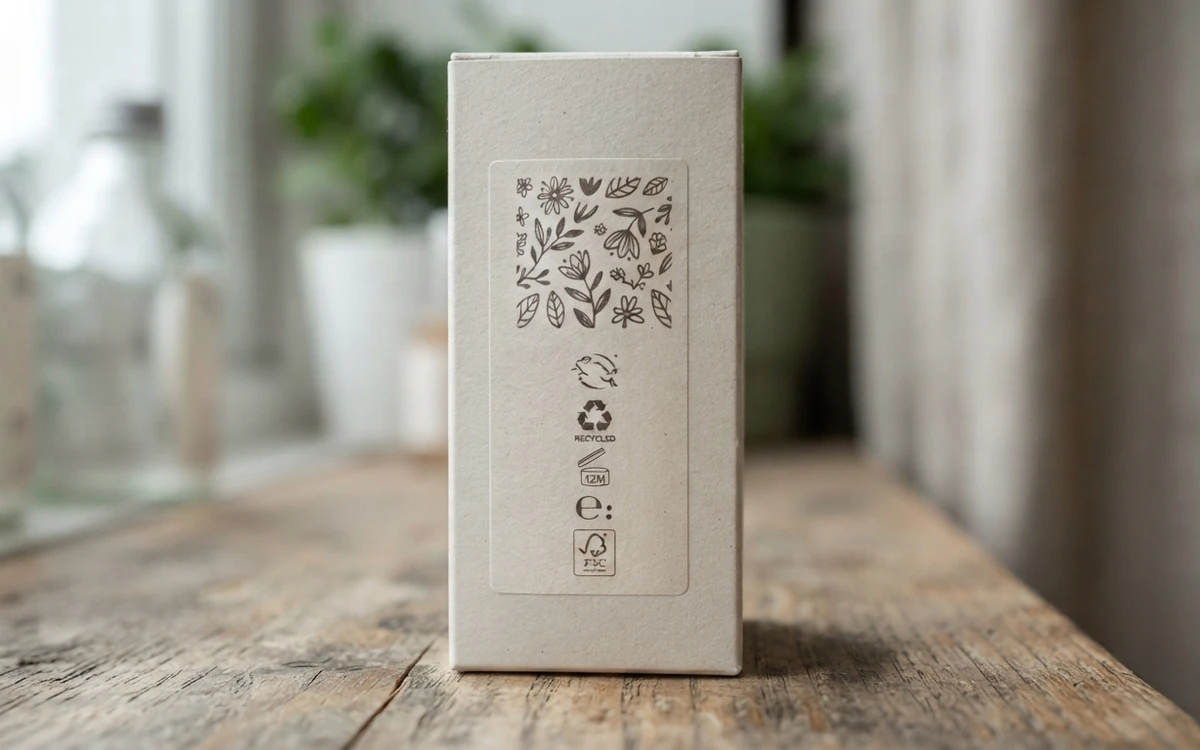
The back panel of a kraft cosmetic carton printed with recycling, period-after-opening and FSC symbols
What it must declare

Send One SKU

Priority

The Four Tensions, in the Order They Bind

Four demands share one box, and they cannot all lead. Whichever leads sets what the other three cost — not as a preference, but as the arithmetic of the brief.

  1. 016 contact points

    Protection

    Leads whenthe unit is glass, a liquid, or both.

    What leading costsA second box, a heavier board, or a slower pack line.

  2. 023 signature finishes

    Presentation

    Leads whenthe first sale happens on a shelf.

    What leading costsA finish that takes the budget and an insert that does not.

  3. 031 sign-off

    Compliance

    Leads whenthe formula makes a regulated claim.

    What leading costsA sign-off that lands after the plate is cut and the proof is booked.

  4. 041 die

    Cost

    Leads whenthe launch is small or the channel is DTC.

    What leading costsA second die for every size, and a launch that cannot afford the second size.

The order is the quote. Change it after the sample and the die, the plate and the proof all change with it.

By situation

What the Channel Decides

Structure follows the journey the box will take, not the product name on the label. Each situation below carries two or three workable builds and the trade-off between them.

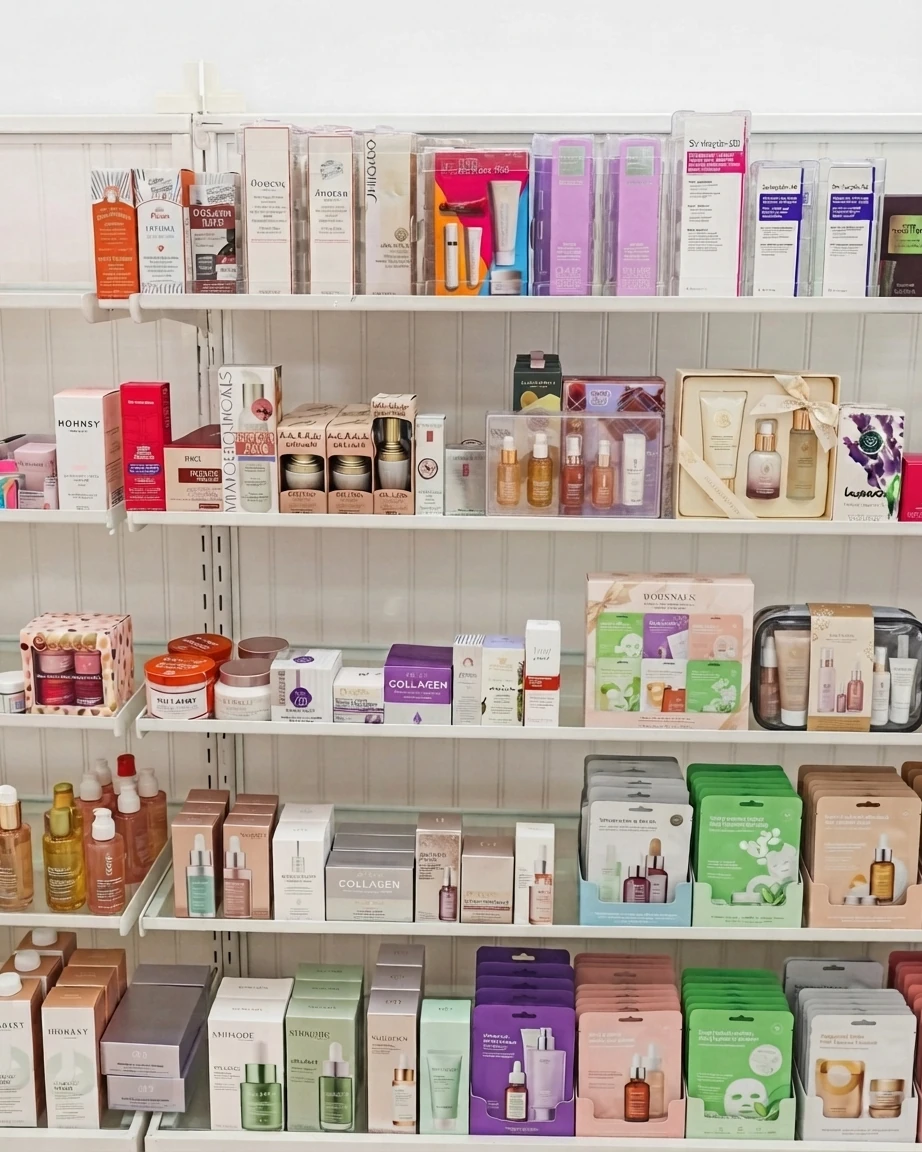
Beauty and skincare packaging lined up across retail shelves
A box is built for the shelf, then asked to survive the parcel.
  1. 01

    One serum or an oil

    1 unit

    Stand it up, then seal it.

    • Rigid box with a moulded cradle
    • Folding carton with a die-cut card
    • Sleeve over a tray

    A cradle keeps the bottle off its own label. A die-cut card does the same job for less board and less drop protection.

  2. 02

    A cream jar

    1 jar

    Carry the weight from the base.

    • Neck-and-base tray
    • Window carton
    • Two-piece rigid

    A window sells the jar before it is opened; the tray is what stops the base taking the load in transit.

  3. 03

    Two to four pieces, one set

    2–4 pieces

    Reveal in steps, not all at once.

    • Tiered tray
    • Book-form box
    • Drawer and sleeve

    Tiers read as a gift. A drawer packs tighter and reorders on the same tool, which is the difference on a small launch.

  4. 04

    DTC first

    1 parcel

    One parcel, not a box in a bag.

    • Right-sized corrugated mailer
    • Printed mailer with an inner tray
    • Rigid box in a fitted outer

    The mailer takes the courier network. The rigid box takes the photograph. Asking one box to do both is how a launch pays twice.

  5. 05

    Retail first

    3 facings

    Win the shelf, then the shelf space.

    • Window carton
    • Shelf-ready tray
    • Slim sleeve

    A window costs board and gains recognition. A sleeve gains facings and gives up presence. The shelf decides which one is worth paying for.

Solutions

What Each Build Has to Solve

Six problems a beauty launch runs into, and the build that answers each one. Every card states what the buyer gets before the quote, so the trade-off is visible before anything is drawn.

01300–400 gsm

Print on One Panel, at the Lowest Board Cost

A folding carton does this with one die, shipped flat, at the lowest board cost that still puts a printed panel in front of a buyer.

What the buyer getsPrint where the buyer looks, without tooling per SKU.

022-piece

A Lift-Off Lid Turns a Jar Into a Gift

A rigid lid-and-base lets the lid lift clear while the base carries the weight. The build that turns a jar into something worth keeping.

What the buyer getsA gift impression without a second outer box.

032 magnets

An Opening the Customer Films

A magnetic closure holds the lid on a felt stop and opens on a held edge. The unboxing build for a serum or a two-piece set.

What the buyer getsAn opening the customer films without being asked.

041 sleeve

New Artwork, Same Die

A drawer and sleeve keeps the tray and changes only the sleeve; a new season reorders on the same die and the same insert.

What the buyer getsNew artwork without a new tool.

05E-flute

One Parcel, Not a Box in a Bag

A corrugated mailer takes the parcel network and opens flat; the DTC box does not need a second box around it.

What the buyer getsA single parcel instead of two.

062–3 tiers

Three Layers, Revealed in Step

A tiered set box gives each layer its own reveal: a cleanser, a serum and a cream read as a sequence rather than a pile.

What the buyer getsA set that opens in the order the routine is used.

Material and finish

Material and Finish, Matched to the Problem

A treatment is a tool. It earns its place when it answers a failure the pack would otherwise have — and it is cut when it answers nothing.

Material and finish treatments, each matched to the failure it prevents, with its figure
The failureThe treatment, and what it buysFigure
The finish feels thin in the handSoft-touch film, matte, on the show panelThe box feels heavier without a heavier board.+1 pass
The brand mark has to catch the lightHot foil, one color, on the logo onlyFoil lands where the eye lands, so a short run stays affordable.0.6 mm die
The bottle arrives with a scuffed labelMoulded cradle in EVA or pulp, under a board collarThe bottle rides on its base and shoulder, not on its label.2 materials
The carton has to recycle in a paper streamFSC board, water-based ink, and a liner that lifts out by handThe liner separates, so the carton leaves the customer without a fight.80% recycled
The unit price cannot movePrint the front panel and leave the sides uncoatedThe cost sits where the customer looks, not on faces they never see.1 print pass

A finish that answers none of these adds a pass, a proof and a risk. Cut it before the dieline, not after the sample.

What the Quote Is Built From

Five lines move the unit price before a press runs. Only the order size moves it the other way.

  1. Raises the unit price

    Blank Area

    Every extra millimeter of blank takes board off the print sheet, and the sheet is what you buy.

  2. Raises the unit price

    Board Grade

    One step heavier buys stiffness and drop protection. The step after it mostly buys weight.

  3. Raises the unit price

    Hand Work

    A cradle glued and laid in by hand is labor, not material, and it does not scale with the order.

  4. Raises the unit price

    Packed Cube

    The outer carton's volume sets the freight share of every unit, whatever the inner box cost.

  5. Lowers the unit price

    Order Size

    Make-ready is fixed. A small order pays it on every unit; a large one spreads it thin.

Compliance

The Panel Your Regulator Reads

The front is a brand surface; the back is a regulatory document. Both print on the same board, and the back is the one that sends a run back.

01Brand and product function
What it is, on the principal display panel.
02Net quantity
The fill weight or volume, in the unit the market uses.
03Ingredient declaration
Set at 1/16″ (1.6 mm) minimum, in descending order of concentration.
04Warnings and directions
The text the formula’s own safety assessment requires.
05Batch code and period after opening
Traceability, plus the 12 M open-jar symbol or a 30-month best-before.
A back panel, drawn at final print size.
1/16″
Minimum ingredient type
30 months
Unopened shelf life before a date is mandatory
12 M
Period after opening
5
Panels signed off before the run
Approval route

From Artwork to a Sealed Carton

Five gates stand between a design file and a sellable box. The cost of a change does not rise evenly: it jumps at each gate, which is why the order matters.

  1. 00

    24 hours

    3D mockup

    The structure and the opening are checked on screen before a die exists.

    A new direction costs a day, not a tool.

  2. 01

    3–5 days

    White dummy

    Unprinted board, real cavity. The bottle stands, the lid closes, the label is laid in.

    A new die is the price.

  3. 02

    7–10 days

    Printed proof

    Color, foil position and the back panel, proofed on the board the run will use.

    A plate and a second proof.

  4. 03

    500 units

    First run

    The first sellable batch, packed the way the channel will pack it.

    A second run, not a tweak.

  5. 04

    4–6 weeks

    Repeat run

    The same die, the same color, the same insert, on the next purchase order.

    Nothing is redrawn, because nothing moved.

After the draft

Five Ways a Beauty Pack Fails

None of these shows up in a render. Each failure is paired with the design move that prevents it, and the thing that move protects.

01

A Cavity Drawn From a Photograph

How it is solvedCut the insert from callipers on the packed unit, then confirm the seat on a white dummy before a die is committed.

What it protectsNo 4 mm rattle between the bottle and the tray.

02

Choosing the Finish Before the Channel

How it is solvedMatch the finish to the journey first. A soft-touch panel that ships in a poly bag takes a scuff-resistant laminate instead.

What it protectsThe feel survives the parcel, not just the render.

03

Every SKU Gets Its Own Die

How it is solvedCarry the range on a shared tray or a stepped insert, and let only the print change between SKUs.

What it protectsThe same tool across the range, not a tool per size.

04

The Back Panel, Drawn Last

How it is solvedLay the back panel before the front. The ingredient grid and the net quantity set the column widths.

What it protectsThe artwork does not go back for a second approval.

05

Recyclable Is Claimed, Not Designed

How it is solvedDesign the liner to separate from the carton without a tool, and keep foil to the logo.

What it protectsA recyclable claim that survives the paper bin.

Before the brief

The Briefing Sheet: Seven Checks

These are the seven answers that turn a description into a quote. Anything missing becomes a question on the first call rather than a correction after the sample.

Briefing sheet7 checks
  • Which channel leads — DTC, retail, or both?

    It sets the structure before the finish.

  • What is the packed size and weight of each SKU?

    It sets the cavity and the board grade.

  • How many SKUs can share a die or a tray?

    It sets the tooling bill across the range.

  • Who signs the panel the regulator reads?

    It sets the proof route.

  • Is the finish structural or decoration?

    It sets what can be cut when the price moves.

  • Does the box open in one motion or in steps?

    It sets the unboxing sequence and the insert.

  • How large is the first run, and what must stay identical on the second?

    It sets the tool, the print and the color target.

A brief that answers all seven reaches a sample without a follow-up round.

Before you commit

Questions Before the Brief

01Who owns the dieline and the artwork files?

The dieline and the artwork are handed over with the project, so the design is yours. The tooling is kept between runs, which means a reorder starts from the same die and skips the setup.

02Can the same outer carry a gift-with-purchase?

Yes, when the gift unit shares the cavity or takes a smaller tray. A GWP is usually a second insert in the same outer, so the tooling is shared rather than duplicated.

03Can the same pack be sold as a refill?

Yes, if the refill is designed at the same time. A thinner refill carton or a refill tray reuses the outer box and cuts the material on the repeat purchase.

04Can one box carry a different panel for each market?

Yes. The structure stays the same and only the printed panel changes, so an EU, UK and US version can share one box. Each market’s panel is signed off before its plate is cut.

05Do you work with the contract manufacturer’s fill line?

The fill line’s own measurements set the tray and the opening. A sample of the filled unit is the brief, and the first dummy is checked against the line.

Start here

Start With Structure, Not a Finish

Send a packed unit and the channel it sells in. The first reply is a structure, a board grade and the three things still missing.

Get a Structure First

Contact Us