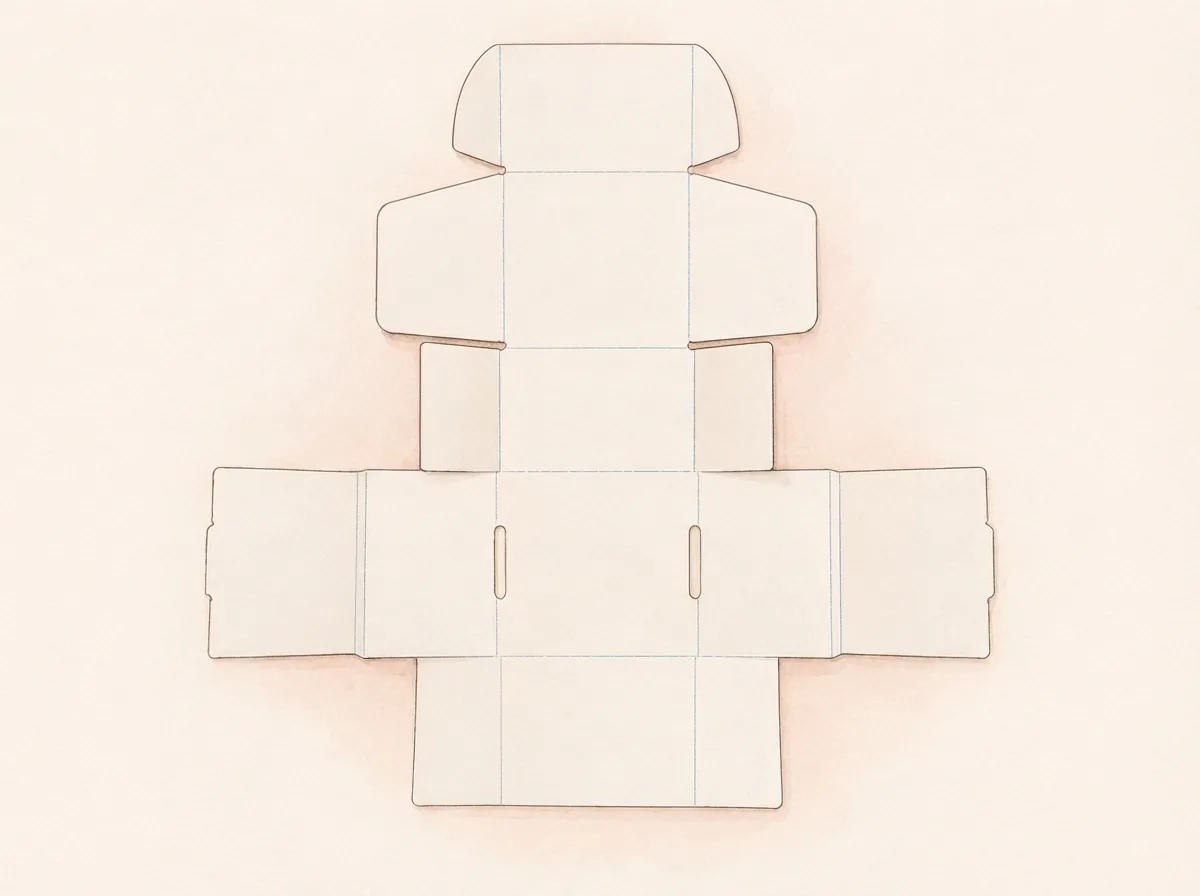
01Folding mailer
The range never changes shape
A carton cut close to the product leaves no void to fill. The smallest box the product allows is the whole decision here.
1 die

A courier bills the room a parcel takes, not the product inside it. Cut the box around the packed unit and the bill follows actual weight instead of the air around it. The saving repeats with each order, and the same structure is what the customer opens.
Freight is the only line on a pack priced by volume. The rule is short: measure the packed box, divide by the carrier’s divisor, and bill the greater of that number or the actual weight.
L × W × H÷139=DIM lb
Some carriers use 166. Either way the divisor is fixed and the box is not, so the size is the only dial that moves the bill.
Every cubic inch above the packed unit is charged at the same rate as the product. The empty top third of a box is the most expensive part of it.
billed in cubic inches
Void gets filled before it gets sealed: film, paper, pillows, and the seconds at the bench. Cut the void and the fill leaves with it.
a bench step, each parcel
A box too large lets the product move. A product that moves arrives marked, and a marked product becomes a claim, a return and a second parcel.
1 claim, 1 reship
A subscription pays the same bill on a fixed date. A box with air in it in January still has air in December, and the total is what a right-size saves.
twelve times a year
Right-sizing lowers the other three without touching board grade, print or finish. It is also the only charge that resets on the next cycle.
The box is chosen last, not first. Three measurements and a fixed tolerance decide the size, and the size decides the bill before a dieline exists.
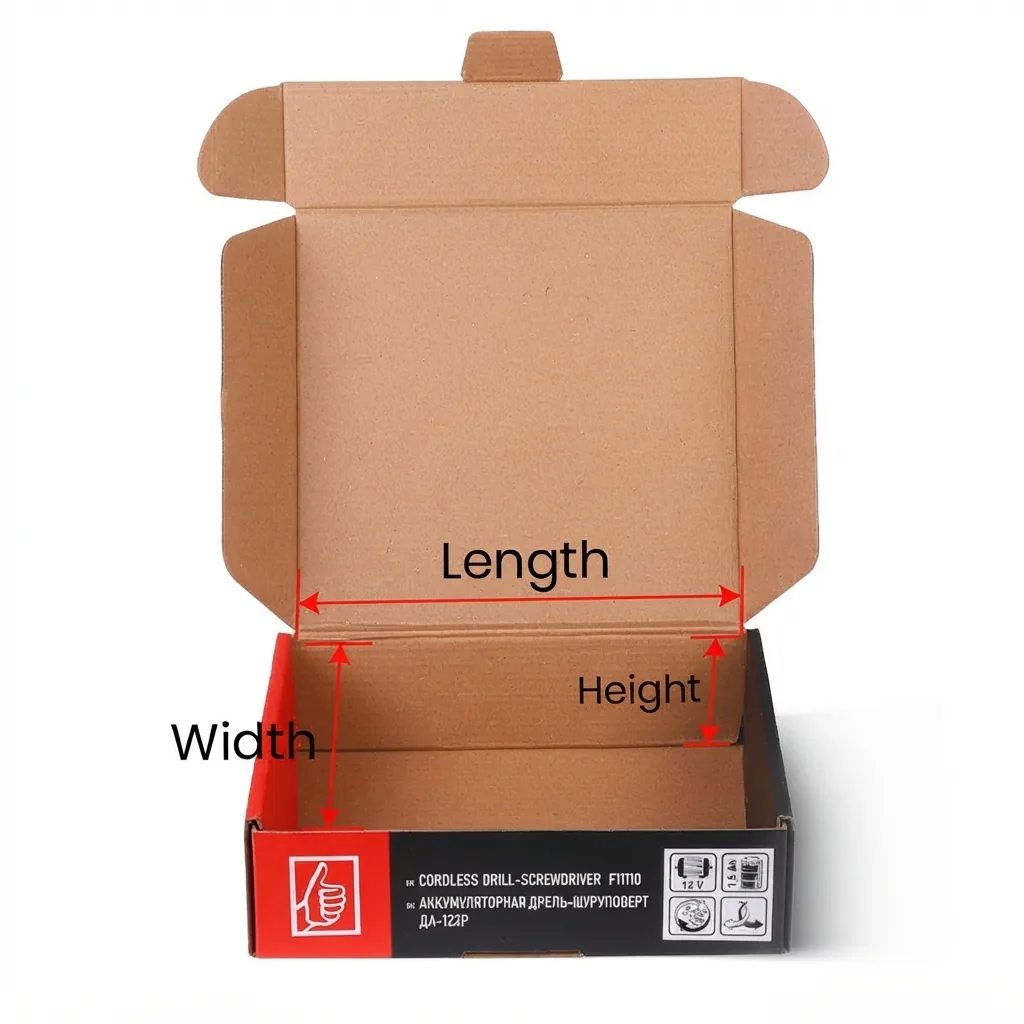
Measure
The packed unit
Product, closure and any inner wrap, measured as it will ship.
Buffer
3 mm per side
Enough for a hand to seat the unit. More is a decision to pay for air.
Reverse
The smallest die
Start from the packed size and grow outward, never from a stock carton.
Test
A real order
Run a short batch through the courier before the run is committed.
Use the size the unit needs: a single die, and the lowest DIM weight the product allows.
1 dieHold a single outer size and cut a stepped insert for each product. The box repeats; the tray changes.
1 die · 2–4 insertsWork a two- or three-size ladder from the smallest and largest packed units. Everything between rides an insert.
2–3 diesThe order opens at 500 units. From there a six-SKU range is worked through four stages, and the bar under each one counts the dies still in play.
01
Run white dummies on real orders. Record damage and the billed weight of each parcel.
24 hours · 3–5 days
02
Keep the two sizes that carried most of the range. The rest ride an insert for now.
500 units
03
Check whether a neighbour size absorbs a SKU. A merged size removes a die and a pallet line.
7–10 days
04
A fixed structure, inserts rotating. Production settles on a single die and a single print position.
4–6 weeks
The count falls because sizes merge, not because SKUs disappear. Each stage keeps the range and gives up a die, which is the cheapest trade on the page.
Six situations a subscription range runs into, and the build each situation calls for. The build is the tool here, not the subject, so nothing on this band is a product introduction.
A carton cut close to the product leaves no void to fill. The smallest box the product allows is the whole decision here.
1 die
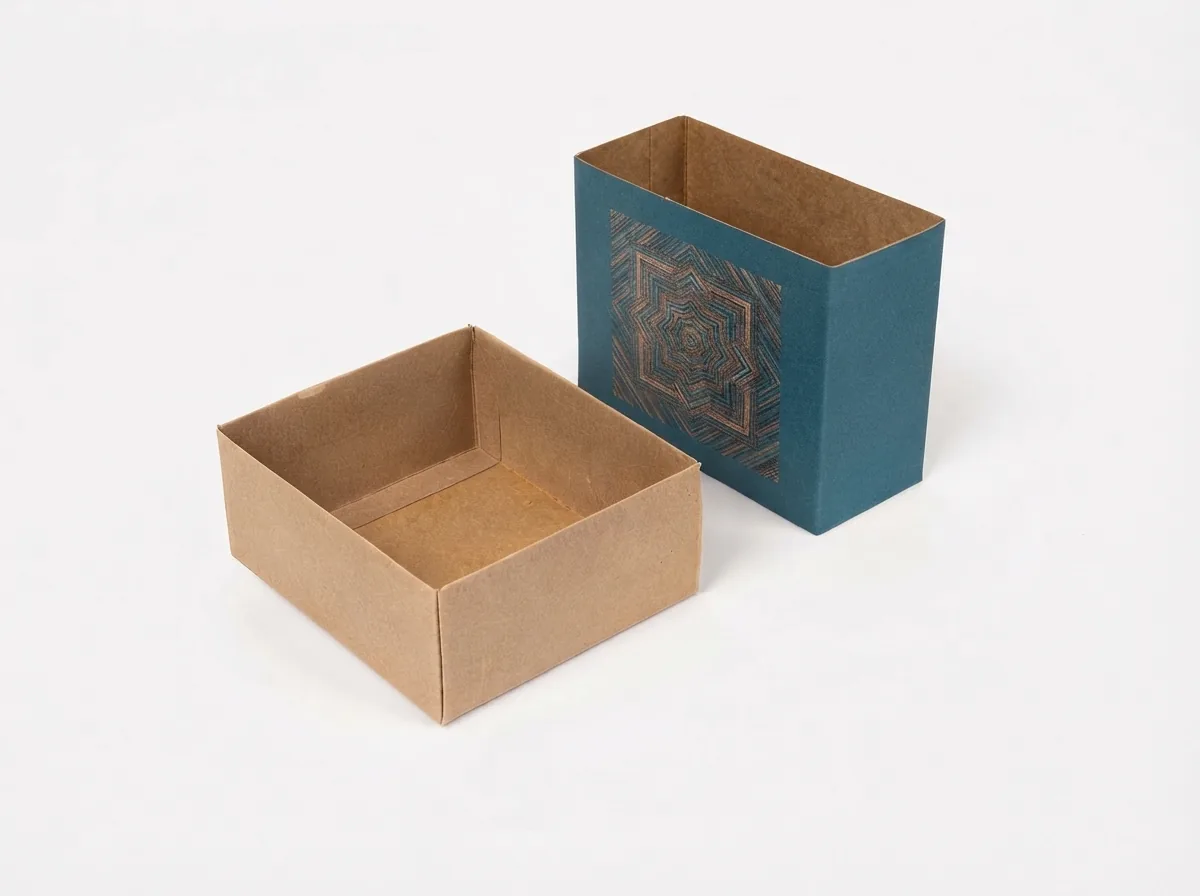
A printed sleeve over a plain kraft tray puts the branding where the recipient meets it first, and leaves the interior raw.
0 new dies
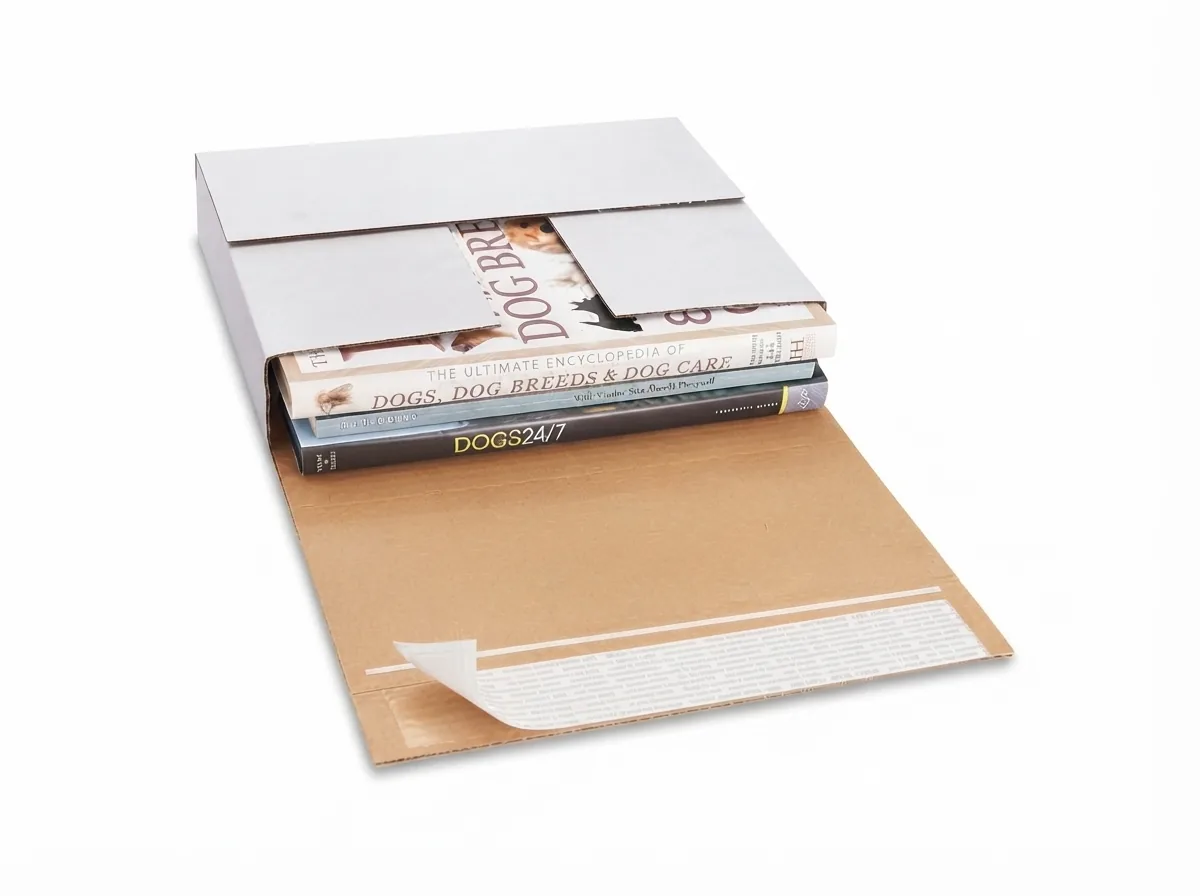
Locking spines carry flat products without a rigid shell or a sheet of fill inside.
0 inserts
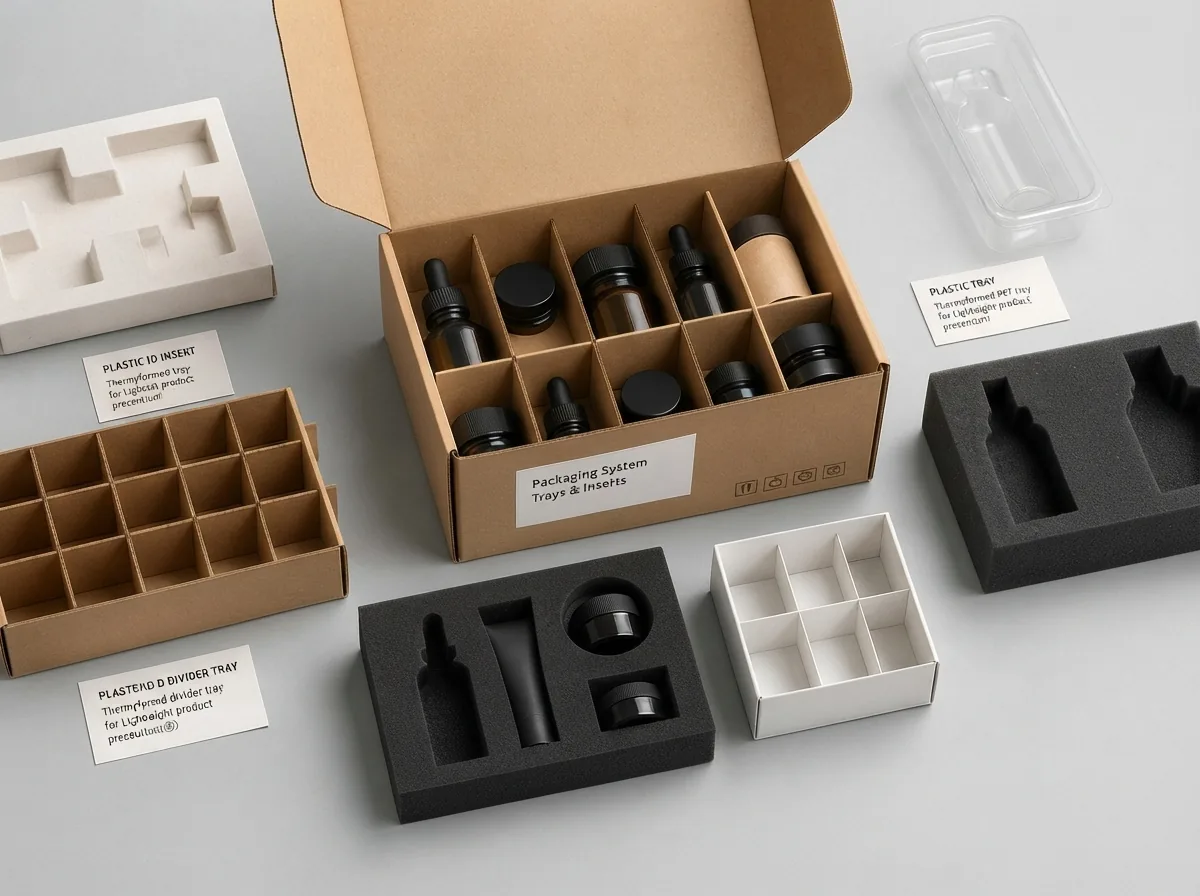
Repeat the outer and let the tray absorb the change: each product gets its own step rather than its own box.
1 outer die
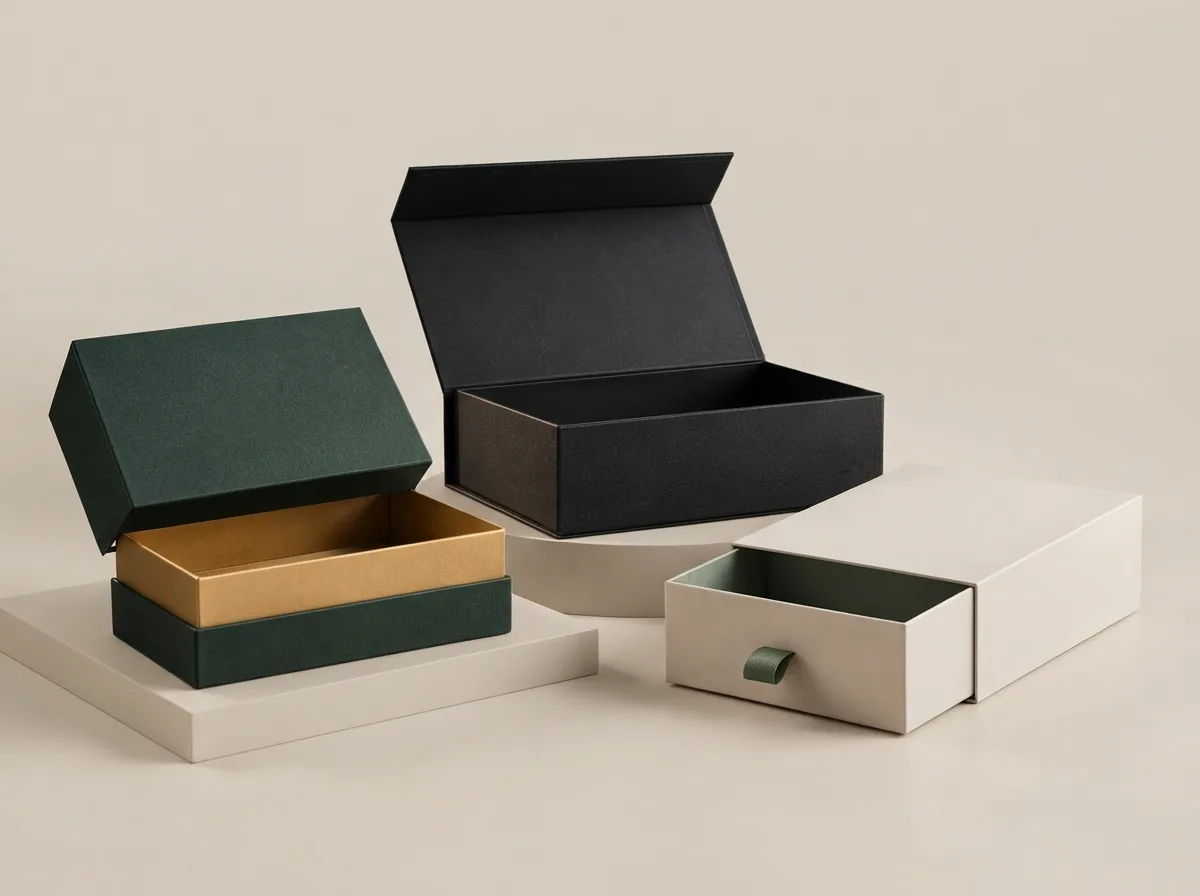
Keepsake builds are the only case where the box is meant to outlast the month, and the opening is made to be repeated.
Kept
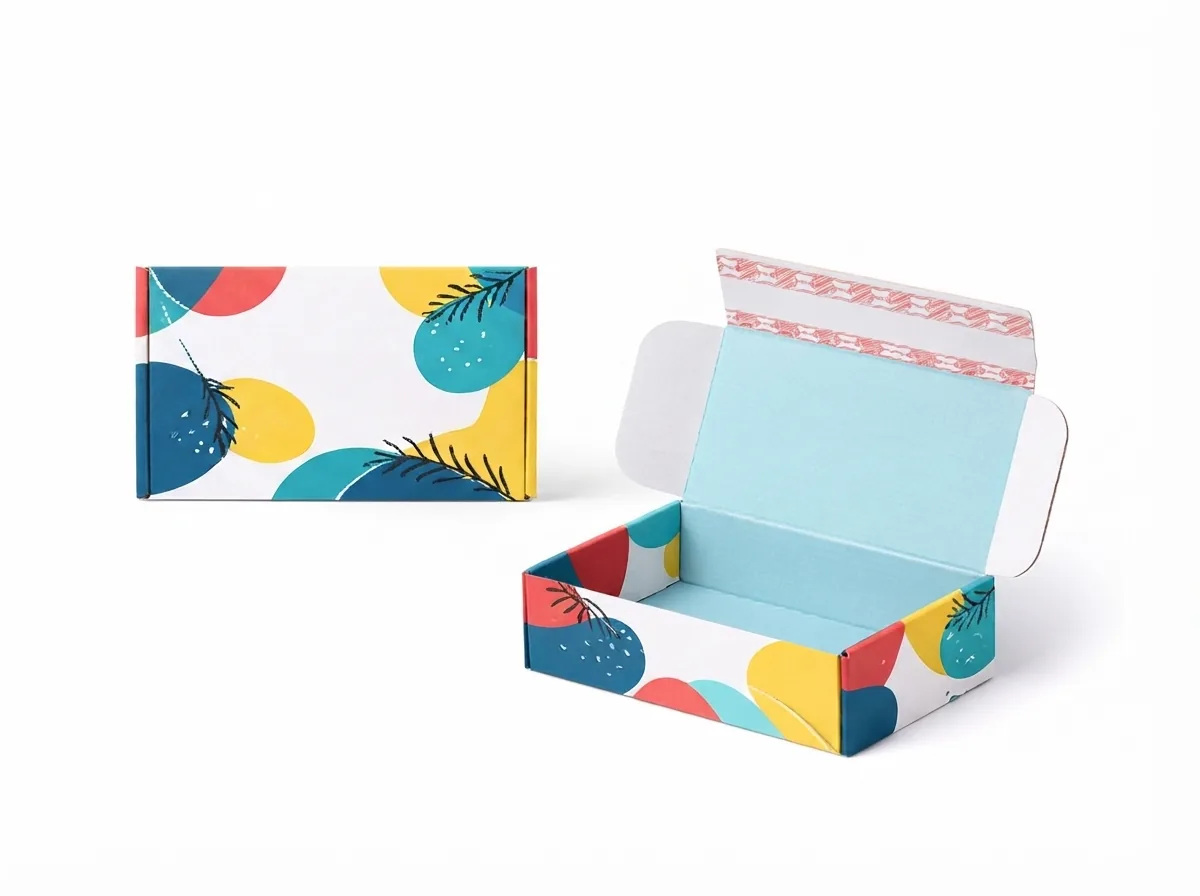
A second seal inside the lid turns the outbound parcel into the return, so a comeback travels in the same box at the size it left in.
1 seal
A subscription opens the same box each month. The experience has to be a path that repeats, not a gift that has to be re-bought.
3paid once
Buy the structure once, then open it twelve times.
Structure
The opening order and the lid action, settled before the first run.
Brand ink
A color in a fixed position, repeated on each run.
Core message
A printed panel that never moves between months.
1 die · 1 proof · the same pack all year
3paid per cycle
Reprint the message, never rebuild the box.
Insert card
Reprinted on the same die-cut shape, with the month’s artwork.
Seasonal panel
A plate change on the sleeve or the inner lid.
Small extra
Seated in a well that is already cut into the insert.
1 print · 1 plate · no new tooling
The twelfth opening is the test. By then the novelty has gone, and what remains is the routine: how the lid releases, where the product sits, how quickly the box folds flat for the bin or the shelf. A structure settled for that moment is settled for the year.
Protection is a level, not a material. Test for the level the product needs, then let the structure carry it instead of the fill.
Ifthe product is flat or flexible
Thenthe box wall is the protection
Apparel, print, flat-packed kits. The wall takes the drop, and the pack needs no void fill at all.
Ifthe product is rigid with a fragile face
Thencorner locks and a die-cut card
A jar, a device, a boxed set. The card holds the face clear of the wall while the corners take the impact.
Ifthe product is glass, liquid, or over 2 lb
Thena cradle cut to the packed unit
A bottle, a serum, a ceramic. The cradle carries the weight on the base and shoulder, not on the label or the neck.
A 10-drop sequence stands in for the courier network: one corner, three edges, six faces. A sample that survives it needs no extra fill, and the same cavity serves the first order and the renewal.
Right-sizing is the first sustainability lever, and the cheapest: the smallest box that holds the unit spends the least board, moves the least fill, and is billed at the least weight. What the box is made of is the second.
The greenest box is the one cut to what is actually inside it, then recycled with the rest of the household paper.
Certified board
Paperboard and corrugated sourced against an FSC chain of custody, so the fibre can be traced back to the forest it came from.
Mono-material
Where the pack allows it, one paper-based structure, so the whole parcel goes into one recycling stream with no laminate to peel apart.
Structure instead of fill
A cavity cut to the unit removes the void fill entirely, which removes both the material and the bench step that placed it.
Flat to the end
The box ships flat and folds flat again, keeping the stock dense on the shelf and the bin small for the subscriber.
Five symptoms, ranked by what each costs per parcel. Fix the top row before the bottom row, or the smaller win is paid for twice.
| Order | If this is the symptom | Move this first | Can wait | Why |
|---|---|---|---|---|
| 01 | Freight is the biggest line | Right-size the box, then cut the fill | A finishing upgrade | Air is billed on each parcel; a finish is billed once. |
| 02 | Damage claims are rising | A cavity and a drop test | A heavier board | The cavity removes the cause; board only widens the margin. |
| 03 | The opening feels flat | Draw the path into the structure | Extra inserts and gifts | A path repeats; an extra is bought again each month. |
| 04 | Unit cost is out of control | Merge sizes, simplify the finish | A new structure | A die can carry a range; a new structure restarts the tooling. |
| 05 | A new SKU is coming | Fit it to the existing ladder | A new box die | The insert changes before the box does. |
Four calls ordinary e-commerce never has to make. Each is decided up front, not at the packing bench.
The box arrives flat and is locked by the hands that pack it. A structure that needs glue, tape or a template at the bench adds a step to every parcel, and a fulfillment center prices that step in.
The move
Ask for a self-locking base and a lid that seats in a single motion, then have a live order packed at the center before the print is released. Flat delivery also keeps a quarter of the stock on a shelf.
The payoffNo training at the bench, a pack time that holds when volume doubles, and the same box whether the packing is in-house or outsourced.
0tape
The first month usually holds a guide, a gift or a starter set; month two holds the unit alone. A renewal box sized for that first shipment pays for that empty space month after month.
The move
Two sizes from one print: a welcome carton that takes the extras, and a renewal carton cut to the monthly unit. The insert that positions the gift is the insert that carries the renewal.
The payoffThe welcome lands as a set, every renewal ships at the smaller billed weight, and neither size needs a second artwork file.
2sizes
Two boxes per parcel is a choice, not a rule: a printed carton inside a plain shipper, or a printed box built to take the network on its own. Whichever is picked, the monthly parcel repeats it.
The move
Read what the courier does to the parcel, then set the wall for it: a double wall where the printed box travels bare, a lighter board where an outer takes the handling.
The payoffThe second box is either paid on each cycle or removed once, and the box the subscriber opens is the box that traveled.
1box
A taped seam sends the subscriber looking for scissors, and the blade often reaches the product first. A tear strip or a thumb tab opens the box by hand.
The move
Cut the opening into the dieline: a tear strip along the seam, or a tab on the lid that lifts the first fold. It adds a line to the dieline and nothing to the run.
The payoffNo blade near the product, a first minute that stays clean, and a box that opens the same way on the hundredth parcel.
1tear strip
The size of a packed unit, the SKUs in the range, and how often the box ships. The first reply is a size, a DIM weight and the tooling it needs.