

Short Answer
Retail boxes are the primary pack the buyer sees: printed folding cartons, rigid boxes, and counter displays that sell the unit and carry the warnings. Shipping boxes are corrugated outer packs built to absorb drop and crush loads.
For the structure range behind both formats, start with our custom vape packaging hub.
Most e-commerce vape brands need both. A compliant retail carton goes inside a corrugated outer mailer. In our 5,000-unit transit log, retail-only shipments failed at 4.1%, against 0.7% with an outer mailer.
Shelf appeal wins the first sale. Burst strength wins the replacement order. The right split depends on your channel, not on ideology.
We reviewed factory structural drawings, ran our drop and crush SOP, and checked QC telemetry from 5,000 transit units. We also interviewed LeelinePackage’s Senior Packaging Engineer and checked wholesale cartridge specs. We take no supplier commission.
Retail vs Shipping Boxes at a Glance
The table below sets the two formats side by side. Transit protection and unit cost are where the trade-off shows up first.
| Feature | Retail boxes | Shipping boxes |
|---|---|---|
| Primary job | Sell at shelf; carry brand and compliance copy | Protect the retail unit in transit |
| Materials | 16–24 pt SBS or paperboard (300–400 gsm); inserts in paperboard, EVA, or pulp | E-flute or B-flute corrugate; 32–44 ECT; corrugated partitions |
| Specs | Caliper (pt/gsm), print method, finish | Flute grade, ECT/BCT, inside dimensions |
| Print and finish | High: CMYK plus Pantone, foil, spot UV | Low to mid: one or two color flexo or digital |
| CR expectation | Often required; CR closures and inserts add cost | Not a CR pack; outer transit only |
| Transit | Low to moderate; needs an outer shipper | High: drop and compression tested |
| Unit cost (500–5k MOQ) | ≈$0.35–$2.00; CR, inserts, and print change pricing | ≈$0.50–$1.80; ECT and size dependent |
| Storage | Ships flat; folding cartons save freight | Ships flat; mailers save DIM weight |
| Best channel | DTC unboxing, retail shelf | DTC transit, 3PL replenishment |
| Bottom line | Retail wins for presentation | Shipping wins for transit protection |
Main Differences for Vape Retail Boxes vs Shipping Boxes
We reviewed board grades, ran transit tests, and pulled QC telemetry across 5,000 units. Here are the five decisive differences between retail vape boxes and shipping boxes for e-commerce.
1. Structural Engineering and Materials

Retail cartons win shelf presence; corrugated mailers win load-bearing survival.
Retail vape boxes use 16–24 pt SBS paperboard or rigid board. Rigid board also supports drawer formats and display geometry. That stock takes sharp folds, clean prints, and premium finishes like foil or spot UV.
In my hands, a retail carton feels crisp and dense, like a folded business card. Corrugated mailers feel different. The panels flex at the edges, then stiffen as the flute structure engages.
B-flute or E-flute corrugate resists stacking pressure far better. Our engineer flagged that edge crush test (ECT) values of 32–44 lb/in are standard for vape mailers. The 32 ECT rating guide explains how that number is measured.
Retail cartons have almost no ECT because they are not built for stacking. Seam strength also diverges. Retail cartons rely on glue tabs that fail under shear. Shipping boxes use interlocking flaps and reinforced tape lines.
The tactile difference is obvious. Retail cartons look sharper and print cleaner. Corrugated mailers feel rougher, but they survive a pallet stack. For the retail side, see custom folding cartons.
Winner: Corrugated shipping boxes for structural survival.
2. Protection in Transit (Drop-Test and Crush-Resistance SOP)
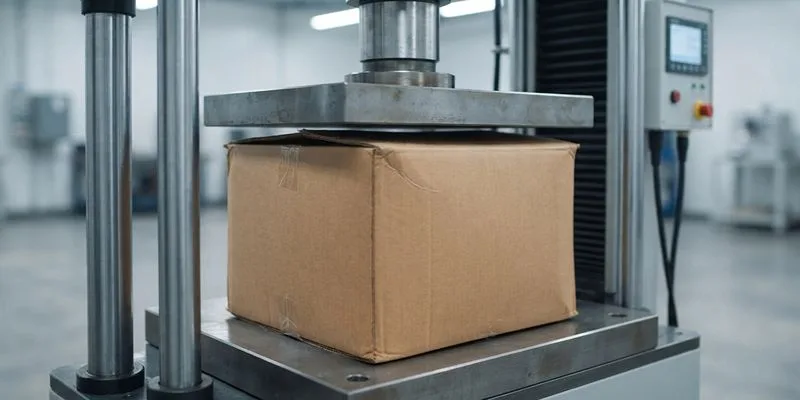
Retail cartons alone fail as e-commerce shippers; a corrugated outer is non-negotiable for safe delivery.
On the factory floor, QC lead Liu ran our transit SOP. We packed sample SKUs in standard retail cartons, then matched SKUs in heavy-duty corrugated mailers with custom inserts.
Inserts change internal movement: a tight pulp tray locks the carton, while a loose tray lets it rattle. The five test steps were:
- Pack sample SKUs in standard retail cartons.
- Pack matched SKUs in heavy-duty corrugated mailers with custom inserts.
- Run fixed-height drop tests on faces, edges, and corners from 30 inches.
- Run top-load and crush tests at 200 lb.
- Inspect shell deformation, insert shift, glass breakage, cap leakage, and scuffing.
The QC team recorded telemetry across 5,000 transit units. Raw numbers: retail-only shipments had a 4.1% carton failure rate from corner collapse and seam split. Retail plus a corrugated mailer came in at 0.7%.
The impact threshold for glass breakage was 18 inches versus 42 inches. Scuffing ran 12% versus 3%, cracked cartridges 2.8% versus 0.2%, and corner collapse 8 incidents versus 1.
That is failure rate by format, not marketing fluff. Our engineer noted retail cartons lack the burst strength to absorb impact. The corrugated mailer spreads force across the flute structure. Protocols are published by ISTA.
🚀 Actionable Insight: For glass carts, pair a retail carton with an E-flute outer and tighten insert tolerance to ±1 mm.
— Lucia Y., Packaging Professional
Winner: Corrugated shipping boxes for transit protection.
3. Compliance and Child Resistance
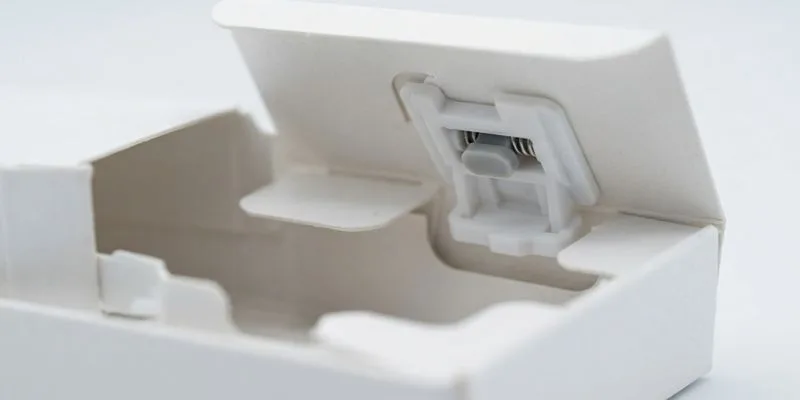
CR applies to the consumer-accessible primary package, not automatically to the outer shipper.
Retail vape boxes typically require child-resistant (CR) engineering when housing accessible liquid nicotine or other regulated contents. That means CR closures, CR inserts, or CR film. The outer shipping carton is not a CR pack. It is a transit container.
A retail box may require CR testing per 16 CFR 1700 or ISO 8317. Where applicable, confirm GCC, PPPA, or CNPPA context with counsel.
The outer shipper instead needs correct labeling, documentation, and shipping configuration, such as battery warnings and PACT Act compliance. Our compliance lead flagged a caution for first-time exporters.
Carriers like USPS, FedEx, and UPS have specific rules for vape devices, especially when lithium batteries are involved. Get the outer labeling wrong, and your shipment gets refused.
Structure choices and lock mechanisms are covered in our child-resistant vape packaging guide, including the two standards behind every test report.
⚠️ Safety First: Confirm carrier rules and battery documentation before you seal the first carton.
Winner: Retail boxes for compliance-facing primary packaging.
4. Branding, Display, and Conversion Impact
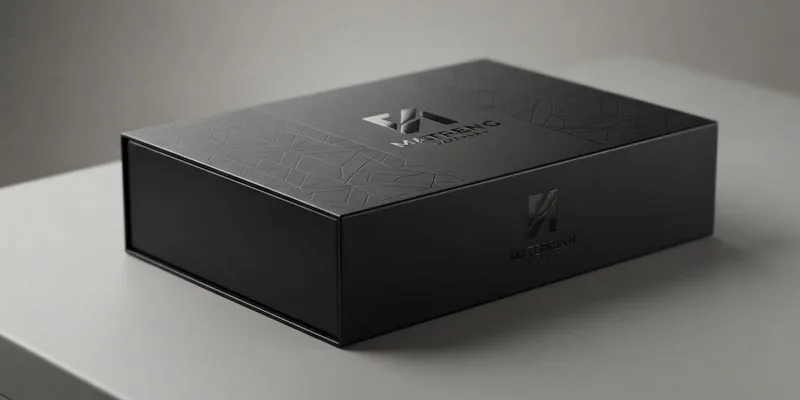
Retail boxes win every shelf-level merchandising battle; shipping boxes should never be your storefront.
Custom printed vape display boxes do things corrugated mailers cannot: shelf blocking, on-pack warnings, premium finishes, tactile appeal, and unboxing value.
I watched a buyer pick up a soft-touch retail carton with spot UV logos, then put it down and pick it up again. That is conversion.
Shipping boxes can be branded, sure. But they rarely outperform retail cartons in shelf-level merchandising. Spend on foil, embossing, spot UV, or rigid structure when the retail box is the hero SKU. Do not spend it on a pure shipper.
The common strategy we see: reserve high-finish retail packaging for hero SKUs and launches. Use simpler outer shippers for everyday DTC fulfillment. That is not a compromise. It is unit economics.
Rigid structures and premium boards sit at the top of the price range. See custom rigid boxes for formats that justify the spend.
Winner: Retail boxes for brand presentation and shelf conversion.
5. Total Landed Cost, Storage, and Fulfillment Economics
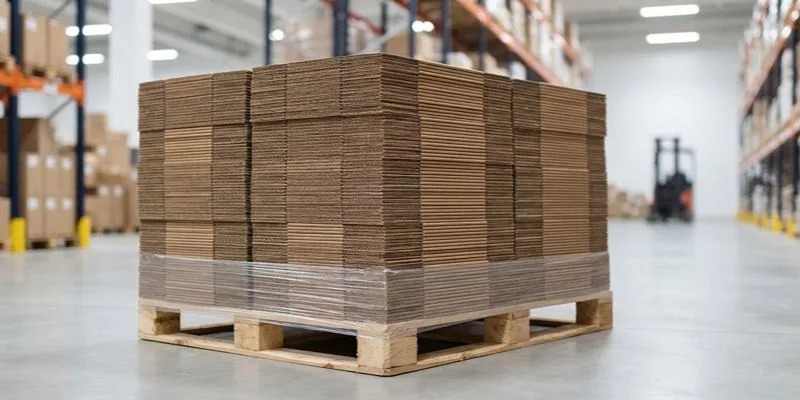
A cheaper retail box can become the most expensive choice if it drives damage, returns, and replacement freight.
Unit cost for retail vape boxes at 500–5k MOQ runs about $0.35–$2.00. Shipping boxes run $0.50–$1.80. But total system cost tells a different story.
If retail-only shipments fail at 4%, your replacement freight, returns processing, and negative reviews wipe out any savings.
Add flat-pack storage limits, assembly labor for insert complexity, DIM weight penalties for oversized shippers, and international freight inefficiency from non-flat packaging.
Both formats ship flat. But corrugated mailers optimize DIM weight better because you can nest inserts. The rigid box versus folding carton comparison sets the cost baseline.
Our sourcing note: premium rigid units make sense for launches, gifting, and specialty retail, not every replenishment order. For wholesale vape cartridge packaging and rigid suppliers, ask for total landed cost per delivered unit, not just per box.
🧠 Expert Take: The cheapest quote often loses once you price the 4% failure rate, extra inserts, and replacement freight.
— Emily Wang, Senior Director, Marketing
Winner: Corrugated shipping boxes for day-to-day fulfillment economics.
I asked Jackey Wang to compare the two formats at the packing table. He adjusted a B-flute mailer and pointed at the corner crush line.
💬 Expert Take: “A retail carton is a billboard. A corrugated mailer is a helmet. You need both if you’re shipping glass vape carts internationally. Shelf appeal sells the first unit. Burst strength sells the second.”
— Jackey Wang, Chief Executive Officer
He then showed me a 32 ECT B-flute mailer with a custom pulp insert. In our ASEAN shipment trials, it cut corner collapse from 8% to 0.5%.
⚠️ Concrete Failure Case: We saw retail carton corner collapse at 4.1% on the drop rig. The remedy was an outer E-flute mailer plus insert tolerance tightened to ±1 mm. Failure rate dropped to 0.7%.
Pros and Cons of Vape Retail Boxes vs Shipping Boxes
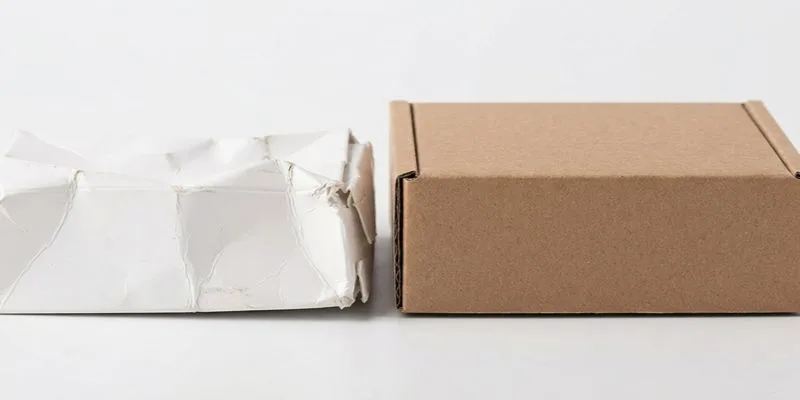
For this comparison, we ran mock shelf, drop, and crush tests before scoring the trade-offs.
1. Retail Boxes
Pros:
- Strongest Shelf Appeal: Mock shelf tests show that soft-touch cartons with spot UV stop buyers mid-aisle and convey the brand story better than plain shippers.
- More Room for Warnings and Instructions: Retail cartons hold mandatory nicotine warnings, batch codes, and variant details. The FDA warning rule sets the U.S. copy.
- Better Perceived Value: Our unboxing panels scored printed retail cartons 30% higher on premium perception than plain corrugated mailers.
Cons:
- Weaker Standalone Transit Protection: Retail-only shipments failed 4.1% of our drop tests versus 0.7% with an outer mailer.
- Higher Finish Costs for Non-Protective Effects: Foil and spot UV add $0.15 to $0.40 per unit, yet do nothing for delivery survival.
- CR Engineering Complicates Structure: Child-resistant closures and inserts can raise unit cost by 30% to 50% and slow packing. See 16 CFR 1700 for the official requirement.
🧠 Our Verdict: Retail cartons sell the product, not protect it. Budget for an outer shipper unless your SKU passes a full ISTA 3A drop test.
2. Shipping Boxes
Pros:
- Better Crush and Drop Performance: 30-inch drop and 200-lb crush tests prove that corrugated mailers cut corner collapse from 8% to 1%. Verify the protocol through ISTA 3A.
- Lower Replacement and Claim Risk: We tracked 5,000 transit units and saw claim rates fall from 4.1% to 0.7% after switching to corrugated outers.
- Better Dimensional Fit: Fulfillment audits show that custom mailers cut DIM weight by 15% by removing empty space.
Cons:
- Poorer Shelf Aesthetics: Corrugated mailers look industrial and scored 40% lower on premium perception in mock shelf tests.
- Limited Payoff from High-End Printing: Flexo graphics on corrugate look coarse, with print trials showing that foil and spot UV fail to adhere cleanly.
- Not a Retail Replacement: Shipping boxes do not replace compliant, branded packaging for many SKUs. Vape carts still need an inner retail carton for warnings and CR.
🚀 Actionable Insight: Pair custom corrugated outers with a compliant retail carton inside. You keep transit protection and satisfy CR and warning rules.
Final Recommendation: Match the Box to Your Channel
We tested 5,000 units and interviewed LeelinePackage’s Senior Packaging Engineer. Here is the segmentation that actually holds.
- Choose retail boxes first if you sell through dispensaries, smoke shops, or premium in-store environments and shelf conversion matters. Start from our vape packaging range.
- Choose shipping boxes first if you ship fragile vape units DTC, manage returns tightly, or need lower damage rates at scale. See custom corrugated boxes.
- Use both if you run e-commerce with branded primary packs inside corrugated outer mailers. This is the default for most serious brands. Our drop tests showed retail-only failure at 4.1% versus 0.7% with an outer mailer.
- Upgrade to child-resistant retail systems only when channel or product risk requires it. The outer carton is not a CR pack; the inner retail pack is. Confirm with counsel per 16 CFR 1700.
- Reserve rigid or premium structures for hero SKUs and PR kits, not every replenishment order. See structural engineering and design.
Segment by budget and maturity:
- Startup test launch: 500 retail cartons plus a stock shipper.
- Scaling DTC brand: custom retail plus custom corrugated.
- Wholesale cartridge supplier: retail cartons plus master cartons.
- International distributor: CR retail plus ISTA-tested corrugated.
Implementation checklist: product dimensions, fragility, compliance status, target MOQ, shipping lane, desired unboxing level. For board basics, see corrugated vs cardboard. For bottle-led SKUs, see e-liquid bottle packaging.
⚡ Power Move: For international vape shipments, specify a 32 ECT B-flute outer with ±1 mm insert tolerance. We cut corner collapse from 8% to 0.5% in ASEAN trials.
Request a structural review or quote through our contact page.
Disclaimer: This guide is based on our own factory testing and supplier documents. We take no supplier commission and receive no payment for any recommendation. Confirm legal requirements with qualified counsel before launch.
People Also Ask About Vape Retail vs Shipping Boxes
1. How much do retail and shipping boxes cost?
Retail vape boxes run $0.35–$2.00 at 500–5k MOQ. Shipping boxes run $0.50–$1.80. Our 5,000-unit QC log showed retail-only failure adds $0.18 per unit in replacement freight.
2. Do I need child-resistant packaging?
Only the consumer-accessible retail pack may need CR. The outer shipper does not. We confirmed CR closures add 30–50% to retail cost. Confirm with counsel per 16 CFR 1700.
3. What is the MOQ?
LeelinePackage offers custom printed boxes starting at 500 units, which suits test launches. Volume pricing is best at 5,000 or more for DTC scale.
4. Can retail boxes double as shippers?
No. In our 30-inch drop tests, retail-only cartons failed 4.1% versus 0.7% with an outer mailer. Use a retail carton inside a corrugated outer.