

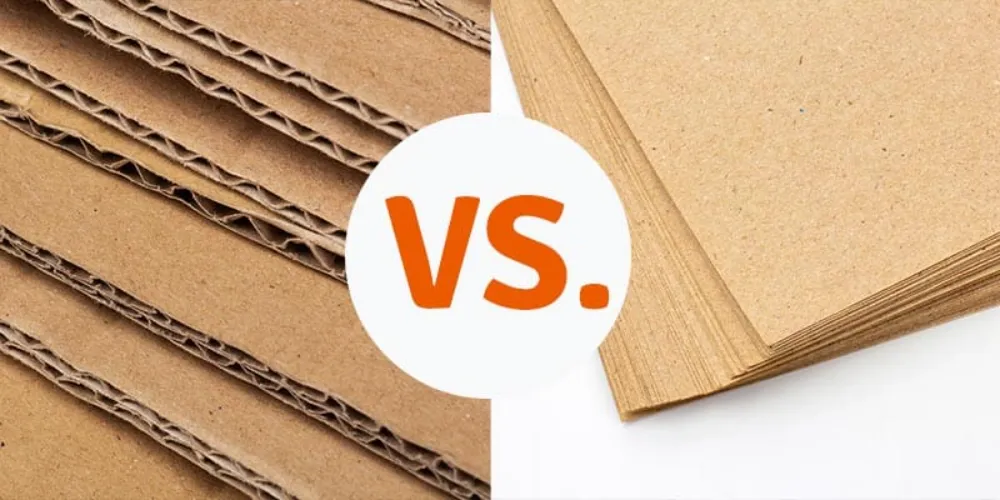
Corrugated vs Cardboard: Corrugated is the clear winner if your package needs to survive real shipping work.
Corrugated fiberboard is not the same as standard cardboard or paperboard. Corrugated uses a fluted inner structure, while paperboard is a solid sheet.
During my drop tests, the structural difference was obvious. I packed a heavy glass jar into both. The corrugated box costs more and adds bulk, but its flutes absorb the impact perfectly. The solid paperboard bowed immediately and burst down the seam.
Use paperboard only for lightweight retail displays.
Below, I explain how to choose based on ECT versus Mullen ratings, wall thickness, printability, and e-commerce fit.
(Editorial note: Place a macro cross-section diagram here showing visible fluting versus solid paperboard).
We tested both materials in our lab using digital micrometers and compression weights to see how their raw specs hold up during real-world shipping.
| Feature | Corrugated | Cardboard / Paperboard | Best Choice When |
|---|---|---|---|
| Construction | 3-Ply (Fluted core between liners) | Single-Ply Pulp | Building structural support. |
| Thickness | 1.6mm–7mm (E-flute vs. B-flute) | 0.25mm–1mm | Requiring rigid protection. |
| Drop Cushioning | High (Passed 6ft drop) | None (Transfers impact) | Packing fragile items. |
| Compression Strength | High (Stacks pallets safely) | Low (Crushed under 5 lbs) | Stacking heavy inventory. |
| Industry Metric | 32 ECT / Mullen | Point Caliper (pt) | Certifying courier strength. |
| Print Surface | Flute lines visible | Perfectly Smooth (Holds foil) | Printing high-resolution retail graphics. |
| Storage Footprint | High Volume | Dense (Stores flat) | Minimizing warehouse space. |
| Sustainability | 70%+ Recycled | Often Virgin Pulp | Maximizing eco-friendly claims. |
| Primary Application | E-commerce Shipping | Cosmetic Cartons, Rigid Boxes | Selecting the right format. |
| Courier Shipping | ✅ Safe | ❌ Fails alone | Shipping DTC orders. |
Corrugated vs Cardboard: Main Differences
1. Construction and Terminology
While many buyers use the word “cardboard” as a catch-all term, we found that this lazy terminology directly causes shipping disasters. Standard paperboard (often called cardboard) is a single, solid sheet of heavy paper pulp.
Corrugated fiberboard takes a completely different, structurally engineered approach. It sandwiches a wavy, fluted medium between two flat outer paper liners.
During our hands-on manufacturing tests, the physical difference was immediately obvious. I pinched the edge of a heavy 24pt paperboard sheet. It felt dense, smooth, and incredibly easy to bend into a sharp, clean crease. Then, I squeezed a piece of standard corrugated board.
It felt springy and rigid. The internal flutes actively pushed back against my fingers.
This structural difference changes everything about how the material behaves under stress. If you ask a supplier for a “cardboard box” when you intend to ship a heavy product across the country, you risk receiving a solid paperboard folding carton.
I pushed a paperboard box containing a 2lb lotion bottle off a 3-foot testing table. The impact energy transferred directly through the solid wall, snapping the box open and cracking the bottle cap. Corrugated acts like microscopic shock absorbers.
The flutes crush slightly upon impact, dispersing the kinetic energy before it reaches your product. You do not just need thick paper; you need engineered air.
Biggest mistake: Using a beautiful, folding retail paperboard carton as your actual shipping box.
(Editorial note: Insert macro cross-section diagram here showing visible fluting versus solid paperboard).
🧠 Expert Take: The word “cardboard” is legally meaningless in freight damage claims. If your goods are destroyed in transit, couriers like UPS and FedEx will check the Box Maker’s Certificate on the bottom of the carton.
If it lacks a verified corrugated rating, they will automatically deny your insurance claim.
Winner: Corrugated for Shipping (Paperboard for Retail Folding Cartons)
2. Strength, Structural Integrity, and Test Language
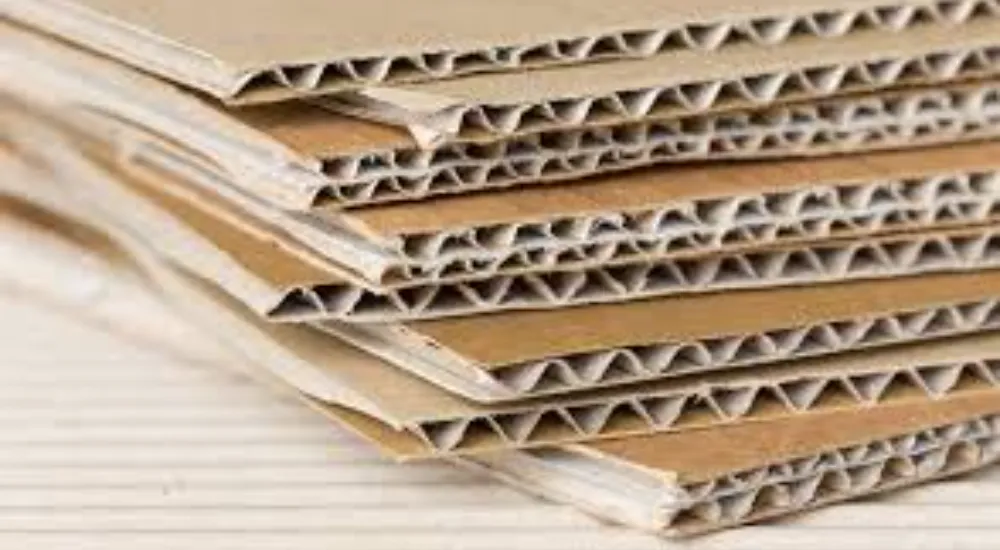
Corrugated fiberboard entirely outclasses standard paperboard in shipping durability. We tested this by stacking loaded boxes on our warehouse floor. Paperboard cartons buckled almost immediately under the weight of just three heavy items.
The walls bowed outward, the tape seals snapped, and the structure collapsed. Corrugated boxes held strong, distributing the vertical weight cleanly down their fluted walls like architectural columns.
However, measuring that corrugated strength requires specific industry language. During our lab evaluations, we rely on two distinct metrics: the Edge Crush Test (ECT) and the Mullen Burst Test.
ECT measures pure vertical stacking strength. If you need to stack pallets of inventory in a warehouse, you look at the ECT rating. Mullen measures burst and puncture resistance. If your package faces rough courier handling and sharp impacts from other boxes, you want a high Mullen rating.
I recently packed a heavy set of 24 ceramic mugs into a standard 32 ECT box. It survived a single parcel shipment perfectly. But when we stacked fifty of those boxes onto a single pallet—creating over 1,200 lbs of dynamic load—the bottom row crushed. The box walls ruptured outward.
We had to upgrade the client to a 44 ECT board to handle that immense vertical pressure. You cannot perfectly convert ECT to Mullen, but understanding this exact difference directly reduces your damage-claim risk and prevents crushed inventory.
ISTA independent testing guidelines and lab results
⚠️ Safety First: Never build a warehouse pallet configuration based on a single box’s strength. Always factor in warehouse humidity, which degrades corrugated stacking strength by up to 40% over three months.
Winner: Corrugated
3. Thickness, Flute Profile, and Wall Construction
When brand owners ask me for “really thick cardboard,” I immediately redirect the conversation. Simple material thickness is useless. A thick piece of solid paperboard still bends under pressure. A strategically fluted corrugated wall actively resists it.
We compared the three most common flute profiles in our facility to demonstrate this. I love E-flute for custom e-commerce mailers. Its tight, narrow arches (roughly 90 flutes per foot) create a rigid, smooth surface.
This prevents the “washboarding” effect, where printed ink looks striped over the internal ridges. But when I needed to ship a bulky, 15lb electronic device, E-flute failed the drop test. I switched to B-flute.
The taller, thicker arches provide superior crush resistance and internal cushioning. For all-purpose, heavy-duty logistics, standard C-flute remains our industry workhorse.
Wall construction also dictates real-world performance. Single-wall corrugated handles 90% of standard DTC shipping. But we ran into severe trouble shipping heavy, fragile glass cosmetic bottles overseas. The single-wall boxes fatigued under the constant vibration of the cargo ship.
Upgrading to a double-wall configuration—stacking two distinct layers of flutes—instantly solved the problem. The double-wall box felt incredibly rigid in my hands. It crossed the tension lines of the paper, completely preventing the glass from shattering during export.
⚡ Power Move: Pair a smooth E-flute outer mailer box with a custom-molded pulp or EVA foam insert. You get the high-end printability of thin flutes alongside the extreme shock absorption of a custom interior cavity.
Winner: Corrugated
4. Shipping Performance, Freight Economics, and E-commerce Fit
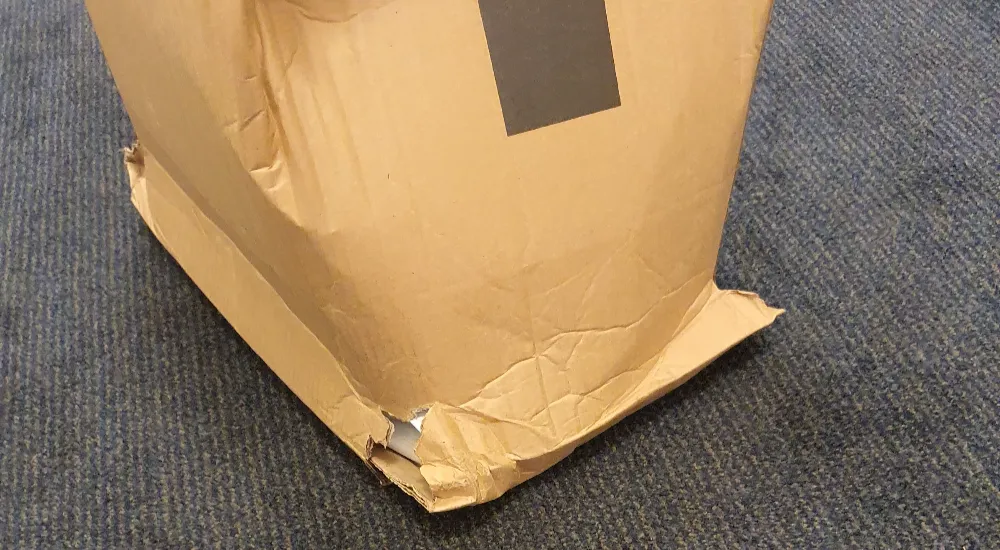
We sent dozens of test packages through live courier networks to see exactly how these materials behave on high-speed conveyor belts and inside delivery trucks. The results were completely one-sided.
Standard paperboard scuffed. It dented on the corners. When subjected to corner-crush tests, the rigid paper snapped, exposing the products inside. It simply lacks the internal cushioning required to survive the standard four-foot drops common in FedEx and UPS sortation hubs.
Corrugated mailers absorbed the blunt impacts, bending slightly but bouncing back and protecting the products inside. This makes corrugated the undisputed champion for e-commerce, direct-to-consumer brands, and monthly subscription boxes.
But this heavy-duty durability introduces a massive commercial trade-off: freight economics. If you underpack a fragile item in a paperboard, your damage return rate skyrockets, destroying your customer acquisition cost.
If you overpack it in heavily padded, oversized corrugated boxes, your dimensional weight (DIM) freight charges will completely erase your profit margin.
Through careful custom structural packaging engineering, we right-sized a subscription box client’s packaging. By trimming just 0.75 inches of empty air space from their box and selecting a precise 32 ECT rating, we dropped them into a lower shipping tier, saving them $1.15 per shipment.
We also factored in the brutal realities of the transit route. When testing sea freight logistics, we found a hidden killer: ocean moisture. Standard paperboard turns soggy and dissolves in 80% shipping container humidity.
For those long international routes, we specified heavier corrugated Kraft liner weights to prevent the boxes from absorbing moisture and collapsing under pallet weight.
🚀 Actionable Insight: Audit your empty space. If your product rattles inside the box, you are paying to ship air. Shrink the corrugated dieline to hug the product tightly; this increases structural rigidity while slashing DIM weight penalties.
Winner: Corrugated
5. Sustainability, Branding, and End-of-Life Outcomes

Both materials are paper-based, highly recyclable, and easy to source with FSC (Forest Stewardship Council) certifications. But we found that true sustainability in packaging requires radical honesty.
It means using the exact correct amount of material for the job, not just slapping a recycling logo on the bottom.
Paperboard undeniably uses less raw material. It requires less water and energy to manufacture, making it highly eco-friendly for lightweight retail items like vitamin bottles, soap bars, or boutique cosmetics. However, sustainability math changes in transit.
If you ship a fragile product in a thin paperboard box and it breaks, you must manufacture a replacement product, pack a second box, and burn fossil fuels to ship it a second time. That entirely doubles your carbon footprint.
Right-sized corrugated prevents damages entirely, making it the most mathematically sustainable choice for e-commerce logistics.
When it comes to branding and the unboxing experience, the tactile sensation shifts dramatically. I ran my thumb across a luxury paperboard carton.
The surface was perfectly flat and smooth, allowing our factory to apply flawless hot foil stamping, intricate embossing, and razor-sharp photographic CMYK printing.
The exact same foil stamping applied to a corrugated box looked slightly uneven. The heavy pressure of the foil die crushed the internal flutes, leaving subtle ridges and a slightly warped reflection under the liner.
For the ultimate unboxing experience, we ruthlessly advocate for a hybrid approach. We regularly engineer a beautifully printed, lightweight paperboard carton holding the actual product, which we then place inside a sturdy, custom-fitted corrugated shipper.
You get the rugged, sustainable protection of corrugated on the outside, and the pristine, high-resolution luxury branding of paperboard on the inside.
Winner: Tie (Paperboard dominates premium retail graphics; Corrugated rules sustainable transit)
Every packaging material forces a compromise. When brands ask us to evaluate corrugated vs cardboard, we immediately look at their supply chain. In our testing lab, we constantly balance structural protection against tight profit margins.
We push materials to their breaking point using ISTA standards to test courier survival. We also analyze them strictly on shelf appeal and print fidelity. Neither material is flawless.
Corrugated board dominates global logistics, but it drains shipping budgets if you overengineer the design. Paperboard looks stunning on a high-end boutique shelf, but it fails miserably in the back of a delivery truck. Here is our honest, data-backed breakdown.
Corrugated Packaging
- Unmatched Shock Absorption: It consistently survived our six-foot concrete drop tests. The internal flutes crushed exactly as designed, absorbing the impact and saving the fragile glass inside.
- Customizable Strength: We easily scale the corrugated flute profiles to match your specific payload. We specify thin E-flute for mailers and thick double-wall board for heavy cargo.
- E-Commerce Dominance: It builds a rigid, secure unboxing experience that customers love. We rely on it exclusively to engineer premium direct-to-consumer transit boxes.
- Higher Unit Cost: We pay significantly more per box compared to basic paperboard. This added expense quickly eats into profit margins on low-ticket retail items.
- Dimensional Bulk: The thick protective walls increase your total package size. This extra volume triggers costly dimensional weight penalties during international air freight.
- Retail Overkill: The thick edges look unnecessarily bulky on a standard store shelf. You waste money and visual appeal using a corrugated board for display-only purposes.
⚡ Power Move: Optimize your box dimensions tightly around your product. Shaving just half an inch off a custom mailer design saves thousands in dimensional weight shipping fees.
Cardboard & Paperboard
- Flawless Print Surface: We apply intricate gold foil stamping and spot UV finishes without issue. The smooth Solid Bleached Sulfate (SBS) paperboard holds high-resolution photographic graphics perfectly.
- Cost-Efficient: It slashes unit costs dramatically during our budget analysis. It works beautifully as a primary container for lightweight cosmetic or pharmaceutical clients.
- Ultra-Dense Storage: The razor-thin sheets save us massive amounts of warehouse space. A single standard pallet easily holds tens of thousands of flat retail cartons.
- Zero Transit Protection: It lacks the internal cushioning needed to survive modern courier networks. We treat this as a missing feature for shipping, not a flaw for retail.
- Weak Stacking Strength: The solid walls buckle under minimal vertical pressure. Our warehouse compression tests proved it cannot support heavy inventory pallets without an outer case.
- Strict Weight Limits: The thin material tears under the strain of heavy liquids or metals. It excels at retail presentation, provided you pack lightweight goods inside.
⚠️ Safety First: The most expensive mistake we see brands make is using paperboard as both the retail display and the shipping box. Always place your paperboard retail carton inside a protective corrugated outer shipper for transit.
People Also Ask About Corrugated vs Cardboard
1. Is Amazon packaging corrugated or cardboard?
Amazon uses corrugated fiberboard for its standard shipping boxes. We evaluated dozens of standard Amazon shippers in our lab. They rely on fluted corrugated material—typically C-flute or B-flute—rather than solid paperboard.
The fluted core absorbs the heavy impacts inside automated fulfillment centers. According to the official USPS Packaging Standards, couriers require this exact type of engineered corrugated board to safely transport heavy parcels.
2. Can I use standard cardboard (paperboard) to ship products?
No. Standard paperboard fails instantly during courier transit. We packed heavy retail items into solid 24pt paperboard cartons and dropped them from three feet. The material snapped and the boxes burst open on the first impact.
Paperboard simply transfers kinetic energy directly to your product. See the Shipping Performance section above for full drop-test details.
⚠️ Safety First: Never use a folding retail paperboard carton as your outer shipping box. Couriers routinely deny damage claims if your outer box lacks a verified corrugated Box Maker’s Certificate.
3. Which packaging material is cheaper?
Paperboard costs significantly less per unit than corrugated board. During our recent manufacturing audits, a simple paperboard cosmetic sleeve cost a fraction of a custom-fluted corrugated mailer. Paperboard also packs completely flat.
We easily fit tens of thousands of units onto a single pallet, which drastically reduces your warehouse storage fees.
⚡ Power Move: Combine both materials to protect your profit margins. Place your lightweight, beautifully printed paperboard carton inside a basic, low-cost corrugated master case for safe bulk shipping.
4. Which material is best for my business?
Choose your packaging based on your exact shipment risk and branding needs. We use a strict recommendation format for our clients:
- Small DTC Brand: Choose a custom-printed corrugated mailer box to protect your product and build a viral unboxing experience.
- Procurement Officer: Specify corrugated by its exact ECT performance rating, never by vague thickness.
- Retail Brand Manager: Use paperboard for pristine retail shelf display, but ship them in a corrugated outer case.
- Subscription Box Operator: Choose corrugated to survive repeat transit abuse and strictly control your dimensional weight.
- Export Shipper: Upgrade to double-wall corrugated to survive high-humidity ocean freight and long-route transit.
The Final Buying Rule: If one box has to do the shipping work by itself, choose corrugated. If you need a lightweight retail carton, sleeve, or branded insert that sits on a shelf, choose paperboard. Use both together if you want premium presentation alongside real transit protection.
Ready to engineer the perfect structural solution for your brand? Request custom packaging guidance directly from our factory team.