

Short Answer
Vape box dimensions start with the device, not the shelf. Measure the widest diameter and full height of three units, add 1.5 mm of insert clearance, then size the outer box around the cavity. A 0.5ml 510 cart lands in a 20 x 20 x 65 mm carton.
Seven families cover most orders: 510 cartridges in two fills, disposables, pod kits, e-liquid bottles, retail multi-packs, and child-resistant cartons. Each one shifts the template because inserts, CR locks, and master-carton math change the internal stack.
A client’s packaging failed a drop test, so we stopped trusting stock-box guesses. The device survived. The insert did not. That is why we build packaging from the cavity outward, so it fits at the packing line and not just on a dieline.
A Detailed Breakdown of Standard Vape Box Dimensions Fits
We match the box size to your product. A tight box stops transit shaking. It saves the corners from crushing. Your product looks great on the retail shelf.
1. Single 0.5ml 510 Cartridge Box Dimensions
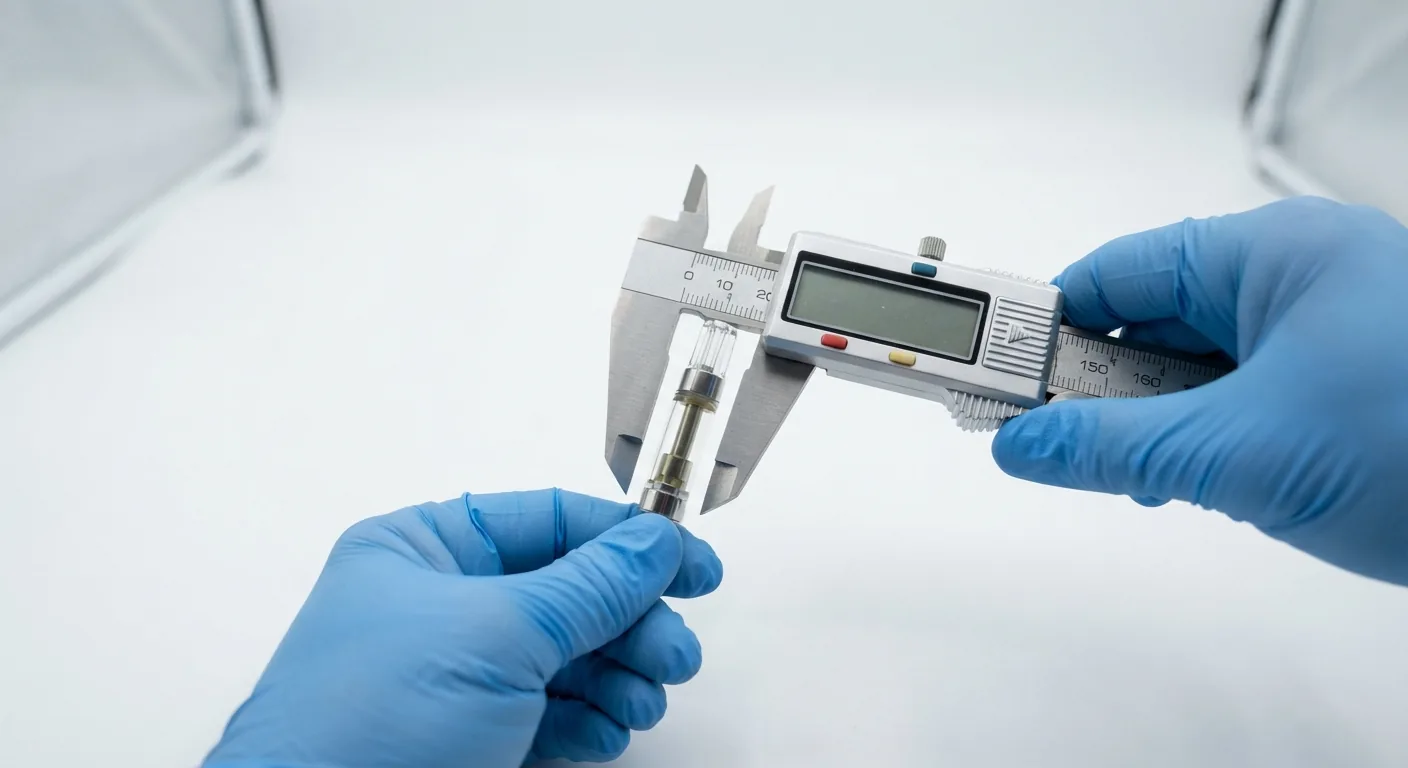
A supervisor once asked for a “standard” 510 box. I measured the carts first. A 0.5ml 510 cartridge runs about 10.5 mm in diameter and 52 to 60 mm long.
That puts the working outer box range at 20 x 20 x 65 mm to 22 x 22 x 75 mm. Treat that as an outer example, not an internal spec.
I size the cavity separately: 12 to 13 mm wide and 58 to 65 mm tall. That leaves room for the cart body, mouthpiece, and thread cap.
Our custom vape packaging team builds the same cavity for both 510 cartridge families.
We choose the box structure based on your retail strategy. Here are the top choices:
- Reverse tuck carton: cheap, fast single-SKU retail.
- Matchbox drawer: premium sample packs.
- Hang-hole card: pegboard display.
Paper trays cut cost. EVA foam kills rattle. Hold anti-rattle tolerance near 0.5 mm.
Slim retail earns tight packs, but tight enough to slow packing costs you more than board.
⚡ Power Move: Build the dieline from the cavity outward, then order a white dummy and drop-test it before you approve print.
— Mia Gao, Sales Manager for Custom Paper Packaging
2. Single 1ml Cartridge Box Dimensions
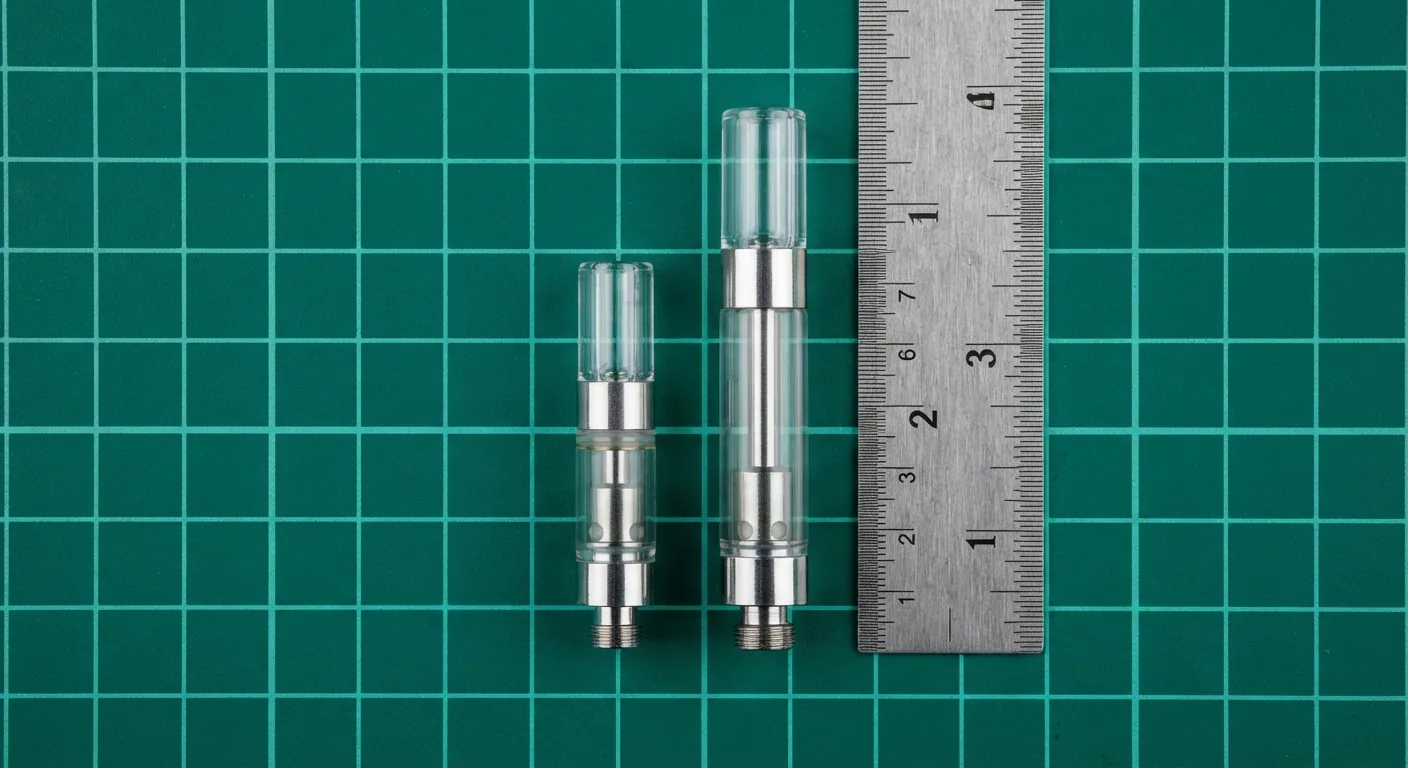
Do not reuse the 0.5ml template for a 1ml cart. The diameter barely moves. The length jumps.
Our last 1ml run measured 10.5 to 11.2 mm across and 78 to 92 mm long. Outer boxes ranged from 20 x 20 x 90 mm to 22 x 22 x 105 mm.
The oil chamber and mouthpiece add height regardless. That gap is why one dieline cannot cover both cartridge families.
Procurement teams miss the add-ons. Lanyard holes, silicone caps, wood or ceramic mouthpieces, and thicker inserts all force extra headspace or width.
Build the cavity first, then confirm the outer with our structural design team.
If the insert stack changes, we re-run the review before print.
LeelinePackage’s Verdict: A 1ml cart needs its own measured template. Copying the 0.5ml box gives a tight pack or a cracked mouthpiece.
🚀 Actionable Insight: Measure three carts from your real batch, then add 1.5 mm clearance to the cavity.
— Kevin Hu, Overseas Director of Sustainable Packaging
3. Disposable / AIO Vape Box Dimensions
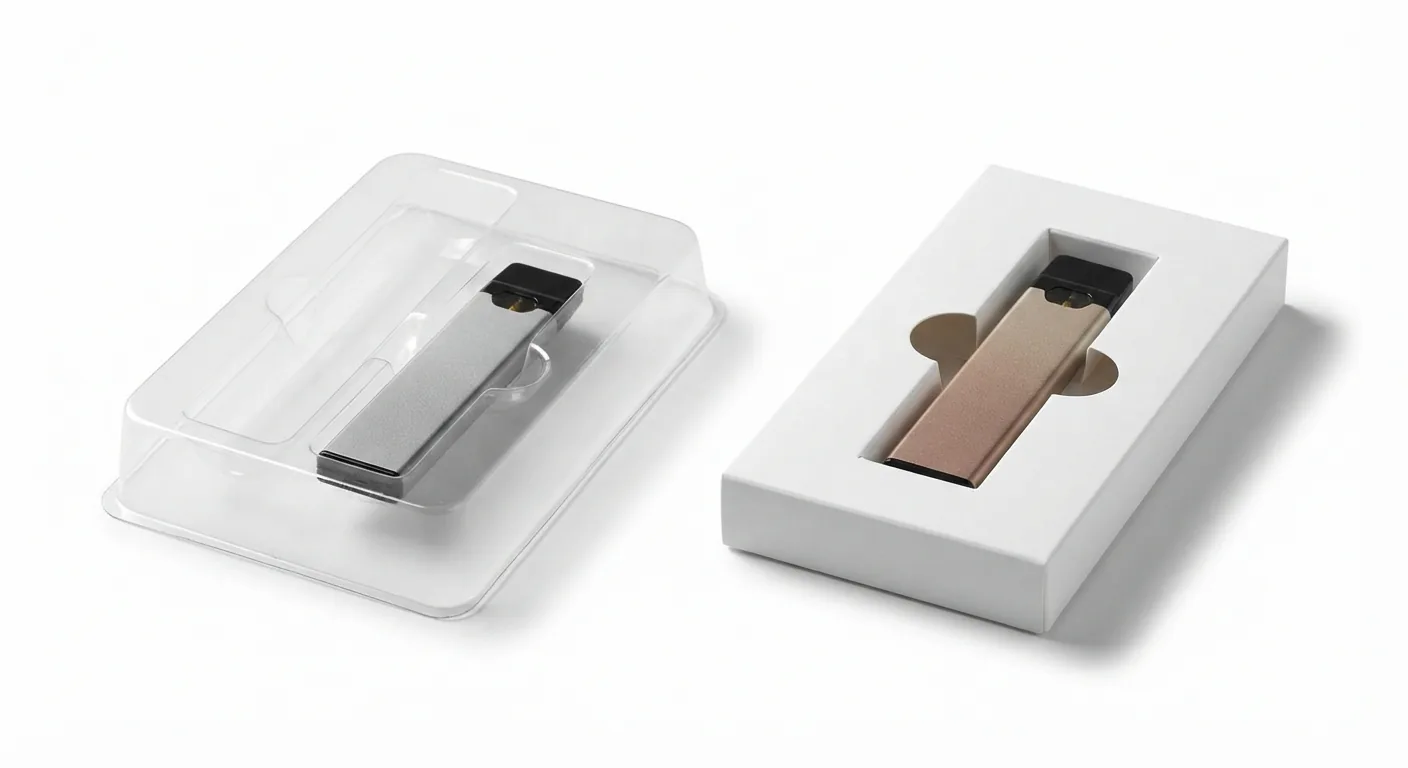
I never spec one “standard” size for disposables. Split the category into two sub-families.
Slim bar devices (like a Geek Bar) run about 100–120 mm long, 18–22 mm wide, 8–12 mm thick.
Boxy AIO formats run 70–90 mm long, 40–50 mm wide, 20–30 mm thick. Two bands, not one.
Stabilization depends on the finish. Soft-touch coatings and exposed charging ports need a blister cavity.
Paper inserts work for lighter bars with no port. Rigid paper trays hold heavy AIO units without flex.
In our test, shaving 3 mm off box width (22 to 19 mm) packed 18% more units per master carton and cut DDP freight 9%.
That is a freight result, not a template. See our disposable vape packaging page for the two bands.
🛡️ Our Verdict: Segment first. A slim bar and a boxy AIO never share a template. Measure each, then shrink the outer box to the insert stack.
4. Pod System / Starter Kit Box Dimensions (Including 510 Thread Battery Box Benchmarks)
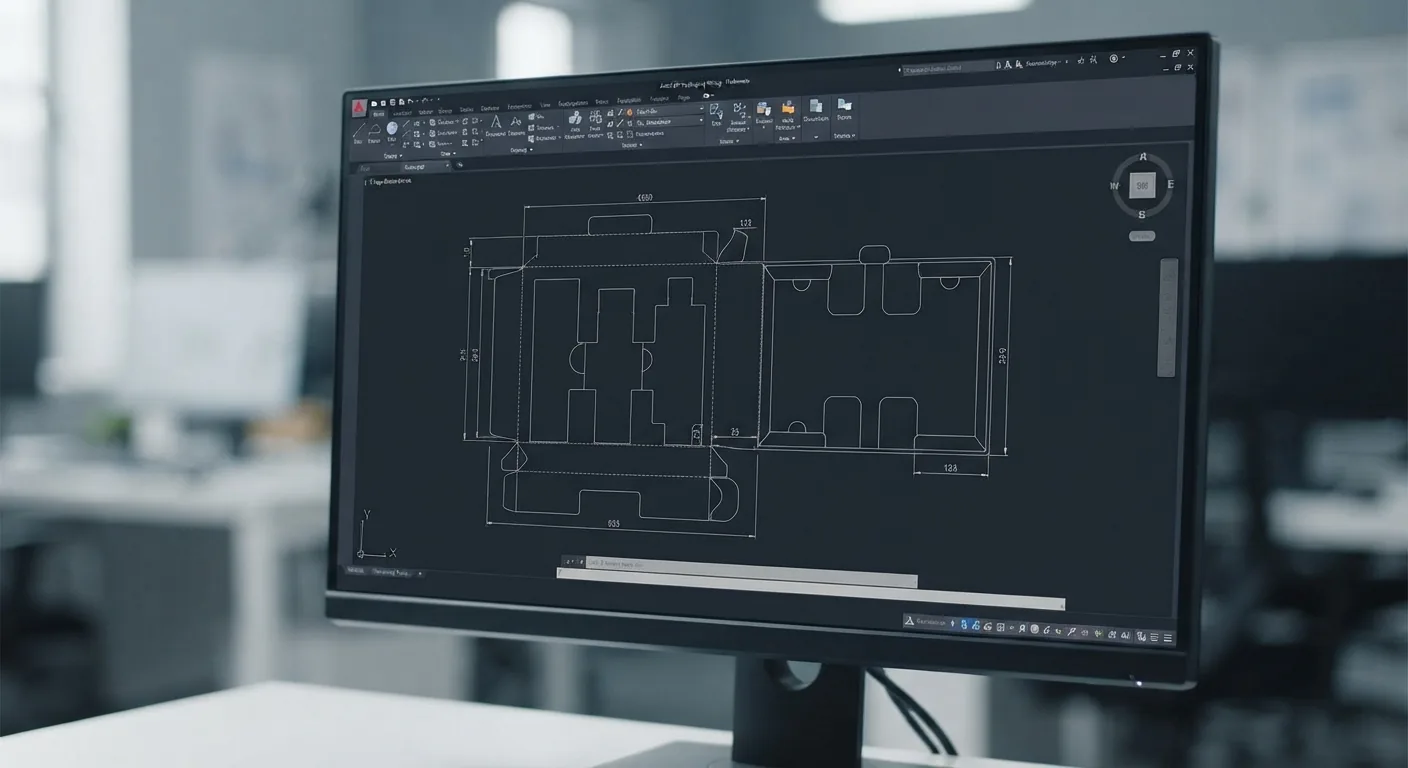
Buyers ask for a starter-kit box size. Wrong question. A pod kit is a tray layout problem.
The box holds the device, spare pod, cable, leaflet, and sometimes a battery. Most kits need book-style magnetic or telescoping rigid boxes.
Size in procurement order: device footprint first, accessory bay around cable and pod second, insert depth third.
In our last 8-SKU run, a 7 mm insert-depth error forced a full reprint.
Our packaging services cover the structural review before tooling. Compare digital vs offset for gradients.
Benchmark: standalone 510 thread battery cartons sit near 25 x 25 x 90 mm. Measure the button collar and USB port first.
🛡️ Our Verdict: A pod kit is a tray inside a box, not a box around a device. Fix footprint, then accessory bay, then insert depth.
5. E-Liquid Bottle Box Dimensions for 10ml, 30ml, 60ml, and 120ml

Buyers search by fill size. I measure by bottle geometry. A 10ml bottle is not a scaled-down 30ml.
Take our last 30ml run: 32 mm body diameter, 18 mm cap width, 78 mm tall. Add 1.5 mm clearance and 4 mm headspace for the dropper tip.
That gives a 35 x 35 x 85 mm carton. The label sets the face panel width.
Each bottle size requires a different box design. A 10ml bottle needs strict retail compliance.
You must leave room for pharmacy labels and must leave space for child-resistant caps.
30ml is the workhorse. 60ml and 120ml need stronger board: 350 gsm for 60ml, 400 gsm for 120ml. Bundled trays cut damage on multi-packs.
Check REACH rules for region-specific compliance, then match the carton to our e-liquid bottle packaging page.
🛡️ LeelinePackage’s Verdict: Never copy a competitor’s size. Measure your bottle’s diameter, shoulder, and cap, then build the carton from the cap down.
6. Multi-Pack or Retail Display Box Dimensions

A display box that sags on the shelf is a shipper problem in disguise. On our last 20-pack run, a 3 mm shipper gap caused shelf sag.
For 2-packs and 5-packs, I start with the bundle footprint, then add 1.5 mm clearance.
The front window sits above the product centerline, not the base. That keeps load off the cutout.
Tear-line geometry needs a clean pull path. A jagged tear drives retail returns.
For 10-pack or 20-pack pop-up displays, load-bearing comes from the shipper, not the display front.
I size the display after the master carton. Use CBM math: length × width × height in meters.
Upgrade to corrugated reinforcement when the stack exceeds 12 kg or the pallet overhangs. Our custom corrugated boxes and corrugated vs cardboard guides explain the board choice.
The recycled corrugated packaging guide covers the recycled-content route.
LeelinePackage’s Verdict: Never size a retail display front in isolation. If the shipper crushes, the display dies.
7. Child-Resistant Vape Box Dimensions and CR Button Allowances
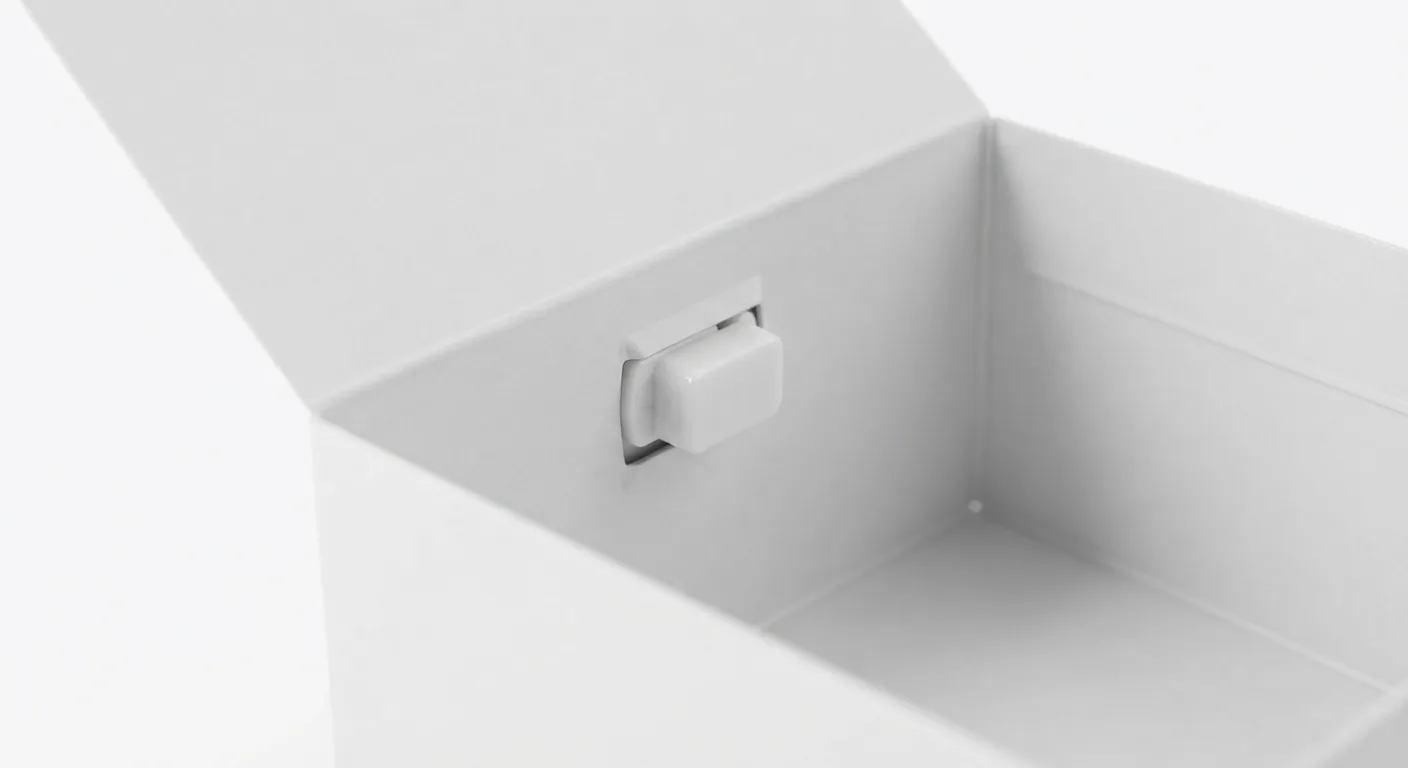
CR paperboard boxes are not standard cartons with a lock added later.
On a 72 mm carton run, I watched the push-lock button steal 4 mm of width, the tray lose 12 mm of travel, and finger clearance vanish.
CR tubes hit it at 84 mm and 116 mm. Push-lock, slide-lock, and button-lock eat space.
🛡️ Expert Insight: “Each CR locking button adds 3 to 4 mm to the width and 2 mm to finger clearance. The tray needs at least 12 mm of travel.”
— George Fan, Packaging Structure & Production Manager
That width shrinks warning-panel real estate and changes closure integrity, so sample testing is mandatory.
We cut a dummy, ran 30 open-close cycles, and checked the warning panel before print.
Review child-resistant vape packaging before you approve artwork.
🛡️ LeelinePackage Verdict: Add CR button allowances before artwork approval. A late lock retrofit kills warning-panel space and closure.
How to Measure Vape Box Dimensions? A Step-by-Step SOP
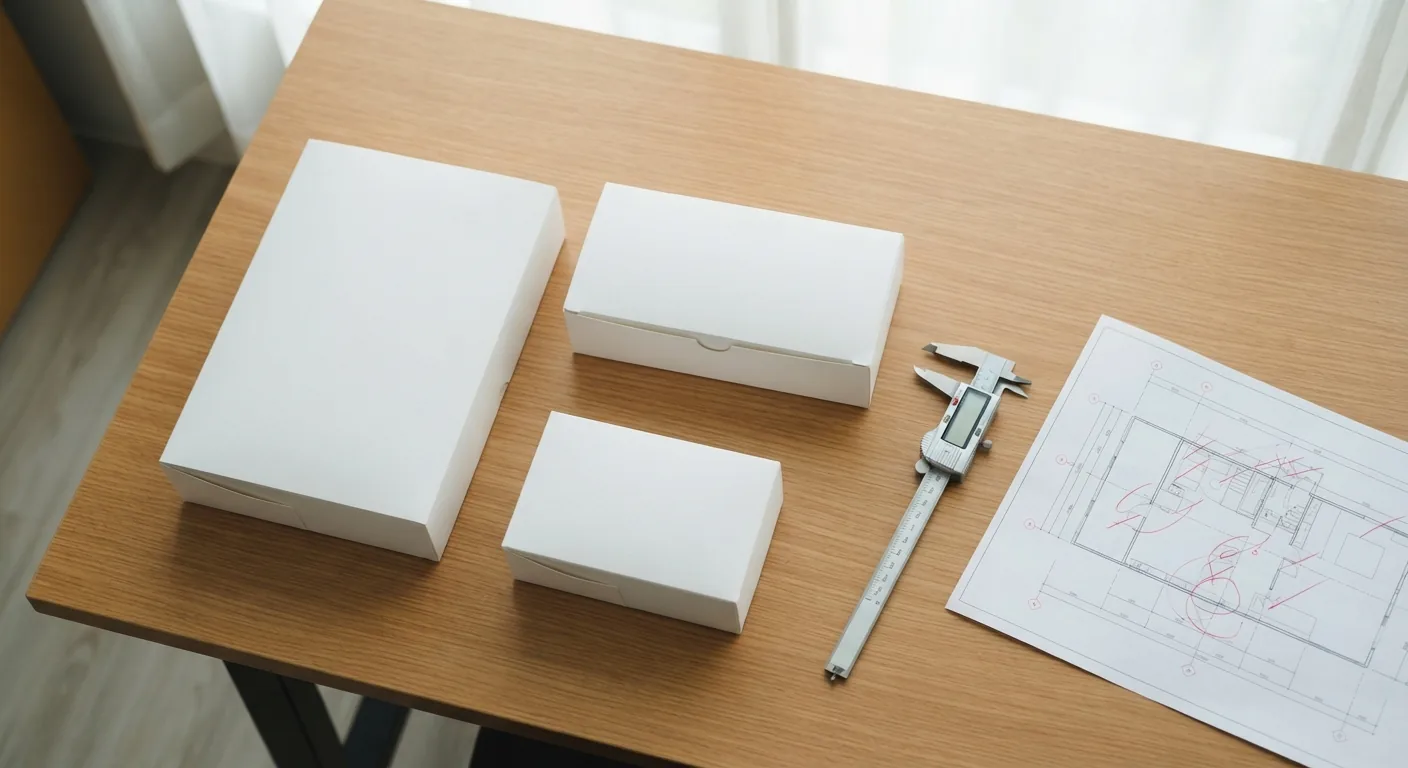
I run this SOP for vape box dimensions on every packaging order and never build specs from the catalog sheet alone.
Step 1: Zero the Calipers and Measure Three Samples
Zero the digital calipers before every batch. Pull three production units, never one.
Log three numbers per unit: widest diameter, full overall height including mouthpiece, cap, or button, and any asymmetrical bulge.
Repeat for disposable body thickness, charging-port protrusion, and lanyard features. The widest measurement wins.
Step 2: Convert Hardware Into Insert Cavity
Cavity width equals measured width plus clearance. Use the measured number, not the catalog number. EVA foam and paper inserts need different clearance:
| Feature | EVA foam | Paper insert |
|---|---|---|
| Grip | 0.5 to 1.0 mm | 1.0 to 1.5 mm |
| Compression | 2 mm | 3 mm |
| Anti-rattle tolerance | ±0.5 mm | ±1.0 mm |
Foam grips hard, so it needs less space. Paper flexes, so it needs more.
This is the die-line clearance calculation: measured width, plus insert clearance, plus wall thickness. Then close the line.
Step 3: Build Internal Size, Then Outer Size
Internal box size equals cavity plus insert walls, usually 2 mm per side.
Add board caliper twice, flap allowance, and child-resistant (CR) button allowance.
Each push-lock button steals 3 to 4 mm of width and 2 mm of finger clearance.
Check the ISO 8317 child-resistant packaging standard before you lock the CR spec.
I re-run the structural review before print if the stack moves.
Step 4: Approve With a White Sample
Checklist:
- Device drops in without force
- No rattle on a 10-second shake
- CR lock opens 30 times clean
- Artwork clears the warning panel
Digital 3D mockups return in 24 hours. Physical white samples take 3 to 5 days.
For eco-friendly material options or plastic-free inserts, state the goal before the dummy run.
Ready to size yours? Send us your measurements.
Disclaimer: one outlier cannot set the cavity. I receive no vendor payments for these recommendations.
People Also Ask About Vape Box Dimensions
1. What size box fits a 0.5ml vape cartridge?
A 0.5ml 510 cart usually fits a 20 x 20 x 65 mm to 22 x 22 x 75 mm outer box. Our samples measured 10.5 mm wide and 52 to 60 mm long.
Size the cavity at 12 to 13 mm by 58 to 65 mm.
2. What size box fits a 1ml vape cartridge?
A 1ml 510 cart needs a taller box: 20 x 20 x 90 mm to 22 x 22 x 105 mm. Our last batch measured 10.5 to 11.2 mm wide and 78 to 92 mm long.
Do not reuse the 0.5ml template.
3. What size box fits a disposable vape?
It depends on shape. Slim bars usually need 110 x 24 x 14 mm to 125 x 26 x 18 mm. Boxy all-in-one (AIO) devices sit near 85 x 50 x 35 mm.
Measure the body and charging port first, then add 1.5 mm clearance.
4. How much clearance should I allow for EVA foam versus paper inserts?
Use 0.5 to 1.0 mm clearance for EVA foam. Use 1.0 to 1.5 mm for paper inserts.
Foam compresses 2 mm and holds ±0.5 mm anti-rattle. Paper compresses 3 mm and holds ±1.0 mm. Our drop tests show paper needs more room.
5. What size benchmark applies to 510 thread battery packaging?
A standalone 510 battery carton usually sits near 25 x 25 x 90 mm. Measure the button collar, USB port, and lanyard loop first.
A 2 mm collar bulge forced a wider cavity. Treat the benchmark as a start.
6. How do child-resistant locking buttons change box dimensions?
Each CR push-lock button adds 3 to 4 mm to width and 2 mm to finger clearance. The tray needs at least 12 mm of travel.
On a 72 mm carton, we lost 4 mm of width. Set CR allowances before artwork and test against ISO 8317.
7. When should I request a white sample, printed sample, or master-carton test?
Request a white sample first to check fit, rattle, and drop performance. Approve a printed sample before mass production to confirm color and warning panels.
Run a master-carton test before the full run to verify stacking, CBM, and freight limits.