

Short Answer
TPD packaging requirements are the EU Tobacco Products Directive rules that control how tobacco and nicotine products are presented, labeled, warned, and traced. They split into two lanes: Articles 8–16 for tobacco products for smoking, and Article 20 for e-cigarettes and refill containers.
The split that causes most failures: 65% front-and-back combined warnings apply to tobacco products for smoking. E-cigarette packs follow Article 20(4)(c) and Article 12(2), at 30% of the two largest surfaces, rising to 32% or 35% in multi-language Member States.
The most expensive mistake is assuming one stock carton or legacy dieline fits every SKU. After auditing more than 200 pre-press files, I have watched teams reuse a template before checking which legal category the product occupies.
Our custom vape packaging team uses this same review sequence before a plate is burned.
The Basics of TPD Packaging Requirements
In our prepress reviews, we define TPD packaging requirements as the EU Tobacco Products Directive rules that control how tobacco and related nicotine products are presented, labeled, warned, and traced.
The rules apply to manufacturers, importers, and brand owners placing packs on the EU market. I treat each pack as a legal document printed on board. The text, panel size, closure, and code must agree before production starts. One wrong millimeter can stop a print run.
The rules split into two lanes. I keep baseline TPD rules separate from adjacent CLP packaging duties because the artwork specs differ.
- Tobacco products for smoking: Articles 8 to 16 of the TPD set health-warning, presentation, traceability, and security-feature duties.
- Electronic cigarettes and refill containers: Article 20 and its implementing decision set product limits, leaflet content, warning text, child-resistant and tamper-evident design, and no-leak refill rules.
Nicotine refill containers are capped at 10 ml. Nicotine concentration is capped at 20 mg/ml. Cartridges and tanks are capped at 2 ml.
Unit packets need a leaflet with use and storage instructions, contraindications, risk-group warnings, adverse effects, addictiveness and toxicity notes, and manufacturer or importer contact details.
Unit packs and outer packs need ingredients in descending order by weight, nicotine content, delivery per dose, batch number, a keep-out-of-reach statement, and the prescribed nicotine warning.
Here is the adjacent-rule trap I see in artwork checks. Nicotine mixtures can also trigger CLP packaging duties. Child-resistant fastenings and tactile warnings then become part of the real pack spec.
ECHA guidance points to ISO 8317 for reclosable child-resistant packs, ISO 862 for non-reclosable packs, and ISO 11683 for tactile warnings.
Our e-liquid bottle packaging and REACH regulations reviews catch these before tooling.
For closed-system formats, our disposable vape packaging team applies the same check.
💡 Key Insight: Build the artwork checklist around both lanes before you approve structure, copy, or closure.
— Vic Ning, Packaging & Printing Professional
How TPD Packaging Requirements Become Factory Decisions?
When I open a compliant nicotine dieline, I see four zones fighting for the same board: warning block, mandatory copy, code and seal area, and surviving branding.
Six failed artwork approvals traced to one root cause: teams applied the tobacco-for-smoking rule to an e-liquid carton or reserved a UID panel that pack never needed. This is the prepress sequence run before a plate is burned.
Step 1: Classify the SKU Before Design

Classification drives every downstream measurement. Get it wrong and the file is decoration.
| Rule set | Tobacco products for smoking | E-cigarettes/refill containers | CLP-triggered consumer chemical overlay |
|---|---|---|---|
| Warning coverage | 65% of front and back external surfaces | 30% of two largest surfaces (32% / 35% with multiple languages) | Hazard pictograms, signal words, hazard statements |
| Traceability | Pack-level unique identifier plus tamper-proof security feature (Articles 15 and 16) | Article 20 track-and-trace applies, but pack-level UID and security feature do not copy across the same way | Not a TPD system |
| Label structure | Fixed combined health warning | Nicotine warning plus leaflet reference | Multilingual CLP label with fold-out options |
| Legal anchor | TPD 2014/40/EU | Article 20 + Implementing Decision | CLP Regulation 1272/2008 |
Many supplier pages blur these systems. Tobacco UIDs must be irremovably printed or affixed, indelible, and not hidden or interrupted.
The security feature must stay authenticable for the life of the pack on market. E-cigarette artwork should not inherit that zone unless a national or customer system demands it.
Step 2: Run Panel Math Before Branding
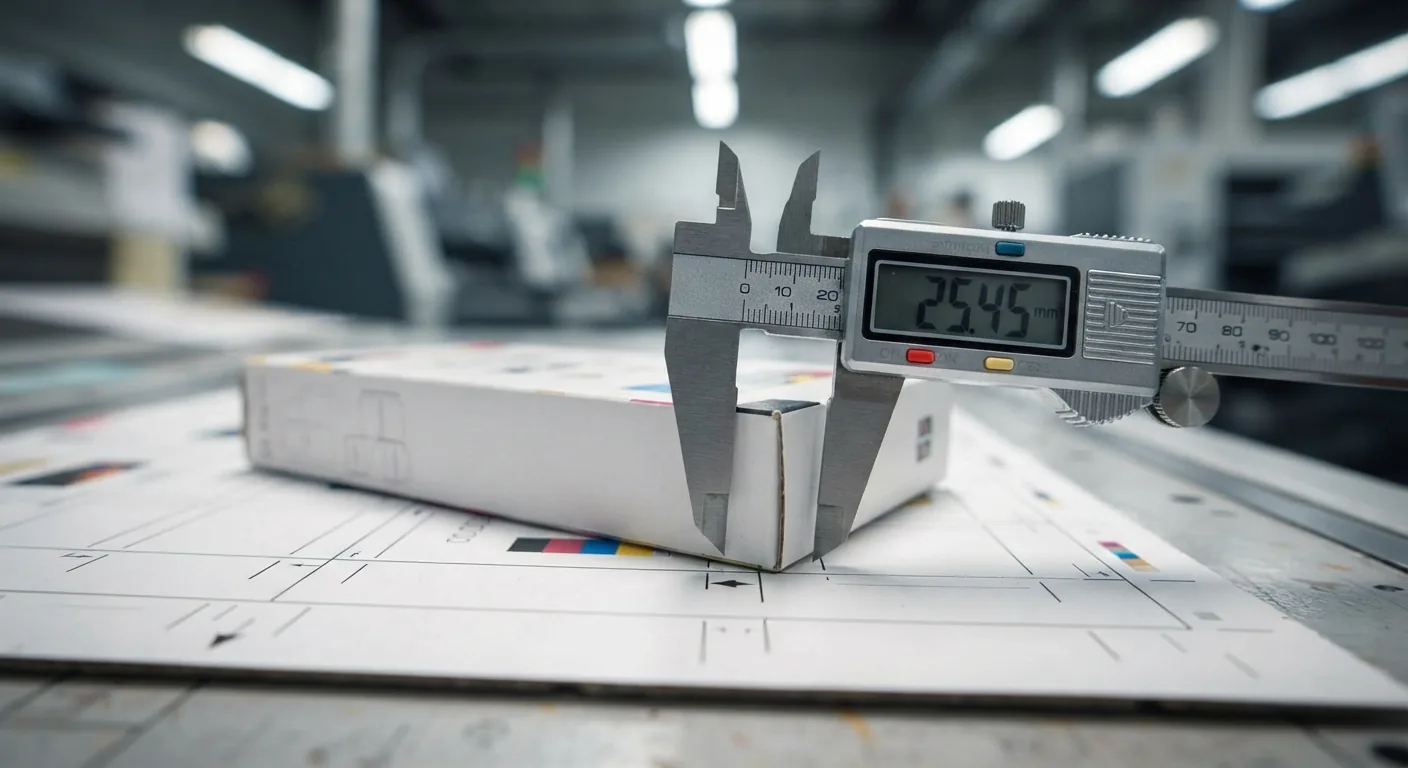
A branded front panel collapses once real obligations land on it. I measure percentages.
For e-cigarettes and refills, Article 20 points to Article 12(2): the nicotine warning occupies the two largest surfaces at 30%, or 32% with two official languages, or 35% with three or more.
For tobacco products for smoking, combined health warnings take 65% of both external front and back surfaces.
⚙️ Technical Detail: Warnings must stay irremovably printed, indelible, and fully visible. Tax stamps, price marks, security features, wrappers, or other items cannot cover them. Put code and seal placement in dieline negotiation, not a post-approval email.
— Louis Li, Professional in Printing & Packaging Manufacturing
Step 3: Six-Point Floor Audit
- Classify the SKU. Confirm tobacco, e-cigarette/refill, or a hybrid with extra CLP duties.
- Measure display surfaces. Verify the two largest panels or front/back surfaces before artwork approval.
- Check warning text, coverage, and visibility. Confirm nothing added in production obscures them.
- Verify mandatory copy. Ingredients, nicotine content, delivery per dose, batch number, child-safety statement, leaflet presence, and economic-operator contact details where required.
- Validate closure and refill hardware. Confirm child-resistant and tamper-proof design, breakage and leak protection, and no-leak refill. Under a compliant route, the consolidated TPD text sets a nozzle at least 9 mm long and flow control of no more than 20 drops per minute.
- Confirm traceability logic or record non-applicability. Tobacco packs need UID and security-feature integration. E-cigarette packs need a written reason why they do not.
Step 4: Fix Structure, Not Just Artwork

When math fails, change geometry. Use booklet labels for multilingual copy, larger cartons, rotated panel orientation, secondary cartons, or reworked closure tooling. Official language rules apply by Member State.
CLP permits fold-out labels, tie-on tags, or outer packaging where space is too limited. Tactile warning triangles and child-resistant features are tooling decisions.
Build them into the mold and supplier certificate from day one, or pay for a second tool.
🧠 Expert Insight: Multilingual architecture belongs in dieline review. Retrofitting Portuguese and Polish copy after plate approval is our most common cause of reprints.
Step 5: What We Document and Prove?

🧠 Expert Insight: Brands must reserve artwork zones for codes, seals, batch data, and nicotine warnings so nothing collides. Treat “TPD Phase 2” as industry shorthand, then confirm which tobacco-category rollout or customer request each brand means.
— Alan Yang, Professional in Packaging & Display-related Quality
Anonymized test log: Record only verified in-house or third-party results.
- Carton compression: crush resistance recorded on the finished carton, not the flat board.
- Anti-tamper seal adhesion: peel behavior checked on the assembled pack.
- Rub resistance: ink and coating wear tested on the production substrate.
- Leakage and closure repeatability: refill cycles run on the certified closure.
Methodology: We run prepress check, white sample measurement, print proof check, pilot-line seal test, and pre-shipment AQL/QA review, and publish no number we have not measured.
Route structural questions to our structural engineering team or print method questions to our digital versus offset guide.
Closure builds go to child-resistant vape packaging, and kit pouch formats go to custom pouches.
The Business Case for Compliant Nicotine Packaging

Compliant packaging is a launch-risk control tool. I have watched brands lose market windows because a warning panel was measured after tooling. The payoff: fewer artwork revisions, no dead inventory, and shorter EU distributor approval loops.
1. Protect Launch Timelines by Front-Loading Compliance
Article 20 notifications for e-cigarettes and refill containers must be submitted six months before placing on the market. That clock is fixed.
I have seen packaging errors found at week 22 restart the notification window and push launches by a full quarter. Lock the artwork hierarchy before you file.
🚀 Strategic Insight: Build a pre-notification artwork gate. Lock warning coverage, panel math, and leaflet content before filing. Retrofitting after filing causes the costliest delays.
2. Cut Costs by Designing for Sourcing Reality
For tobacco products made outside the Union, the unit-level unique identifier must be applied before import into the Union, per the EUR-Lex traceability regulation.
This moves serialization upstream to your supplier’s floor. It is a sourcing timeline issue, not a customs issue. I have seen factories pause because the UID zone was not reserved on the dieline.
Our prepress reviews show four procurement wins:
- Fewer last-minute dieline changes because legal zones are reserved at concept stage.
- Fewer mixed-SKU language errors because multilingual architecture is designed, not added.
- Cleaner coordination between bottle, label, carton, and shipper teams.
- Better separation of legal print zones from branding zones.
Flat artwork fixes do not solve closure failure, leakage risk, booklet-label bulk, or shipping crush. Structural engineering does.
Our custom packaging services and custom corrugated boxes address these constraints before they become customs disputes.
The corrugated vs cardboard guide explains which board earns its cost.
📈 ROI Check: Track artwork revision rounds per SKU. Compliant-first projects average two rounds. Retrofit projects average five. Each round costs about two weeks. Over a year, that compounds into faster launches, lower plate spend, and cleaner audits for finance teams.
The official European Commission page on e-cigarette regulation is the authority source for the notification rule.
Challenges and Limitations: The Real Friction Points
An audit of 200+ pre-press files found that one dieline never fits every nicotine SKU. Five friction points break otherwise solid TPD packaging requirements.
1) Rule Collision and Category Confusion
Teams copy cigarette Track & Trace or 65% warning assumptions onto e-liquid packs. Others under-build tobacco compliance. Articles 15 and 16 cover tobacco-product packs.
Article 20 governs e-cigarette and refill packaging with a different warning architecture. A 65% warning was found applied to a 10 ml bottle from a single brand. It forced a full reprint and missed launch.
2) Language and Space Compression
CLP requires labels in the official language(s) of each Member State. Fold-out labels, tie-on tags, and outer packaging are allowed, but they add cost and time.
A “small bottle, 10-country rollout” project forced the fix: a booklet label that added 4 mm to the pack footprint.
3) Visibility Conflicts
Tobacco warnings must stay fully visible. Tax stamps, security seals, or promo sleeves that cover them are a compliance trap. A tested seal placement blocked 8% of the warning area. That is a rejection risk on any audit.
4) Evidence Burden for Child Resistance and Tactile Warnings
Enforcement looks for test proof, not supplier promises. If your pack triggers child-resistant or tactile warning duties, document it against EN ISO 8317, EN 862, or EN ISO 11683.
Suppliers claiming “child-resistant” without a certificate create a liability you do not want.
5) Cross-Border Version Control
Avoid bundling EU and UK artwork logic into one “universal” pack. A single dieline can fail UK-specific warning requirements, causing a mistake that costs a full reprint and weeks of delay.
⚠️ Critical Warning: Never assume a supplier’s compliance claim is verified. Ask for ISO test reports and check the warning area math yourself. A missing certificate can block your entire shipment.
Conclusion
After auditing 200+ pre-press files, our verdict is clear: standard custom packaging fails EU TPD when teams treat compliance as a late-stage label problem. It works only as an integrated structural, legal, and production system.
The article’s most useful correction stands: tobacco-product packs, e-cigarette/refill packs, and CLP-triggered consumer packs do not share one universal compliance blueprint.
Applying 65% tobacco warnings or a tobacco UID zone to an e-liquid carton creates reprints, tooling delays, and QA holds.
Use this decision framework before mass production: classify the product, measure the surfaces, reserve legal zones early, test the closure/nozzle/seal system, and document evidence before approving plates.
Send your current dieline to our team for a compliance audit today.
Trust disclosure: LeelinePackage is a commercial packaging supplier. This article separates our factory observations from legal text. Confirm Member-State implementation details with qualified regulatory counsel before EU market entry.
People Also Ask About TPD Packaging Requirements
1. What are the TPD packaging requirements for e-cigarettes?
E-cigarettes and refill containers follow Article 20. The pack needs a leaflet with use and storage instructions, contraindications, adverse effects, and contact details; the unit pack needs ingredients, nicotine content, delivery per dose, batch number, and the nicotine warning.
The warning covers 30% of the two largest surfaces, rising to 32% or 35% where two or more official languages apply. Refills are capped at 10 ml and 20 mg/ml, and tanks at 2 ml.
2. Do tobacco products for smoking use the same warning area?
No. Tobacco products for smoking sit under Articles 8 to 16. Combined health warnings must cover 65% of both external front and back surfaces, not 30%.
Applying the 65% figure to an e-liquid carton is among the most common category errors in prepress.
3. Can one dieline cover every nicotine product?
No. Warning percentage, leaflet requirement, traceability, closure, and language all change with the category. A single dieline rarely holds two lanes.
Classify the SKU first, then measure the panels. Teams that skip this step usually resize twice.
4. Where must the warning sit on a vape carton?
On the principal display panels: the two largest surfaces, or front and back. Never on an edge, tuck flap, glued side seam, or a sidewall the buyer sees only after turning the pack.
A tax stamp, security seal, or sleeve that covers part of the warning is a compliance trap, even if the printed area was correct.
5. What evidence do I need for child-resistant or tactile packaging?
Enforcement looks for test reports, not supplier claims. Expect documentation against EN ISO 8317 for reclosable child-resistant packs, EN 862 for non-reclosable packs, and EN ISO 11683 for tactile warnings.
Ask for the report on the exact assembly. A certificate for a cap or bottle does not transfer to a new size.