

Short Answer
2ml tank limit packaging is the carton, label, leaflet, and closure built around the UK and EU vape limits: up to 2 ml for tanks, pods, and disposables, up to 10 ml for refill containers, and 20 mg/ml nicotine. The cap applies to the product, not the box.
Most failed approvals trace to artwork zoning, leaflet fit, or refill safety, not the printing. Start with the custom vape packaging hub to match format to your SKU, then work the eight checks below.
Methodology: I draw on the Tobacco and Related Products Regulations 2016, MHRA guidance, Commission Implementing Decision (EU) 2016/586, and current HMRC duty-stamp rules. This is a manufacturer perspective, not legal advice.
The Basics: What 2ml Tank Limit Packaging Means?
2ml tank limit packaging is the carton, label, leaflet, closure, and approval workflow for nicotine e-cigarettes and refill systems sold in the UK or EU. It has to meet volume, strength, leaflet, labeling, and warning rules before sale. Treat 2 ml as a product rule, not a box-size rule.
The caps trace to Article 20 of the EU Tobacco Products Directive, carried into UK law through the Tobacco and Related Products Regulations 2016. Here are the limits we check first.
| Item | Legal cap |
|---|---|
| Refillable tank | 2 ml |
| Disposable e-cigarette, single-use cartridge or tank sold at retail | 2 ml |
| Dedicated refill container | 10 ml |
| Nicotine strength | 20 mg/ml |
Unit packet is the retail pack a shopper buys; container pack is the outer pack that groups unit packets. Neither name changes the cap. The 2 ml limit sits on the product itself, so a disposable device carries the same ceiling as a refillable tank.
A dedicated refill bottle is held to 10 ml, which is why e-liquid bottle packaging plans for a larger fill. Minimum on-pack copy covers ingredients by weight, nicotine content and delivery per dose, batch number, and a keep-out-of-reach statement.
The leaflet carries use and storage, warnings for at-risk groups, adverse effects, and producer details. Where material declarations apply, we check REACH regulations early so the laminate is not locked before compliance signs off.
The UK health warning must sit on both the front and back and cover 30% of each surface, in black Helvetica bold on white. That single rule removes more artwork space than most clients expect, so reserve both panels before design.
Presentation controls still apply. Branding cannot make misleading health or lifestyle claims, and the pack area around the warning is not free-form.
💡 Key Insight: The 2 ml cap applies to the tank or refill container, not the carton.
The 8-Step Workflow We Run Before Any 2ml Tank Limit Packaging Reaches Prepress
We built this sequence after repeated failures traced to one root cause: the brief arrived after the structure was already frozen. The workflow now ships with every RFQ, and our prepress team signs off against it.
Each step has an owner and a checkpoint, so nothing moves forward on assumption.
Step 1 (Owner: Commercial): Lock the Destination Market and the Exact Notified SKU
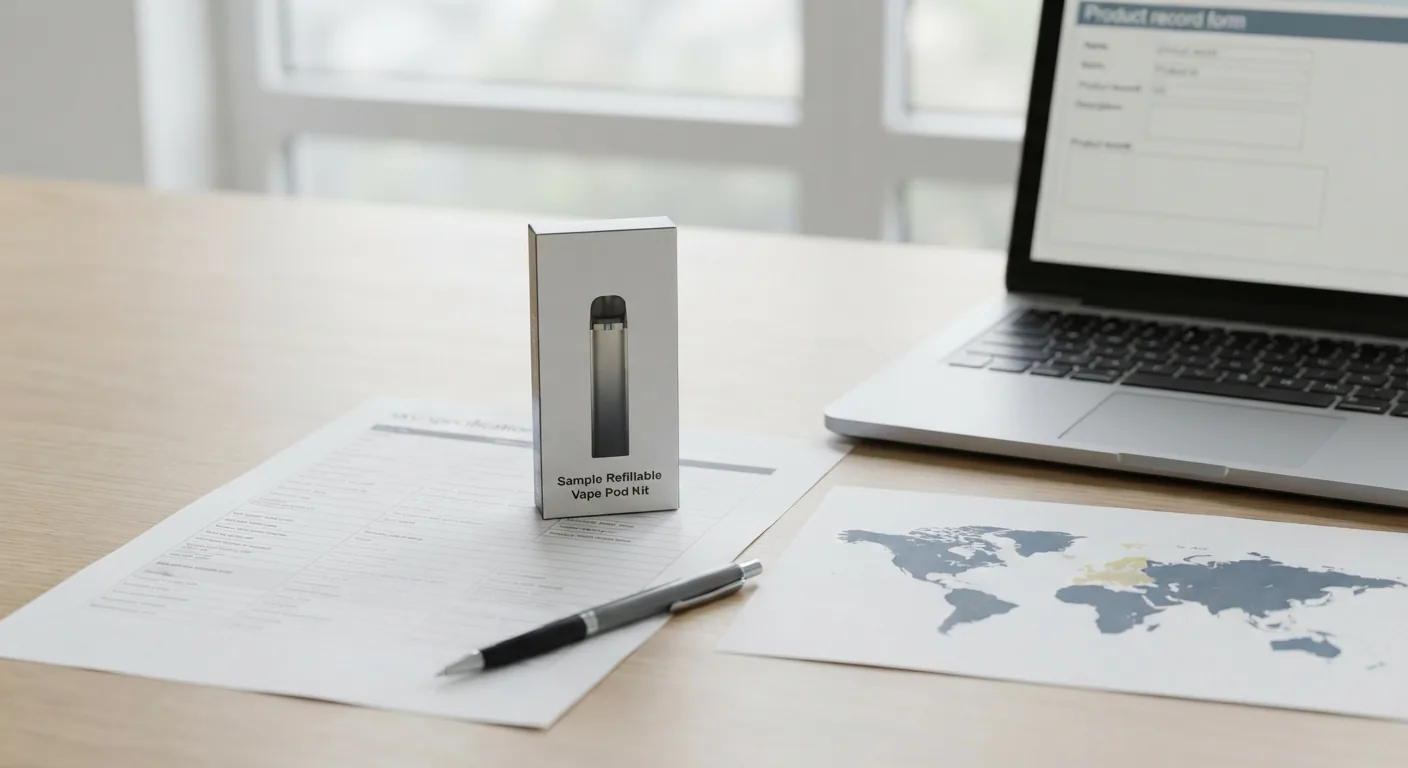
Freeze the market before structural design: Great Britain, Northern Ireland, or an EU member-state workflow. Bind the pack to one SKU. MHRA requires notification before market placement and a fresh notification for each substantial modification.
Confirm the market, SKU code, and notification reference, and confirm whether the product is a single unit or a combination kit, since kits are tested and notified as a unit.
Step 2 (Owner: Regulatory): Confirm the Legal Product Class Before Touching the Dieline
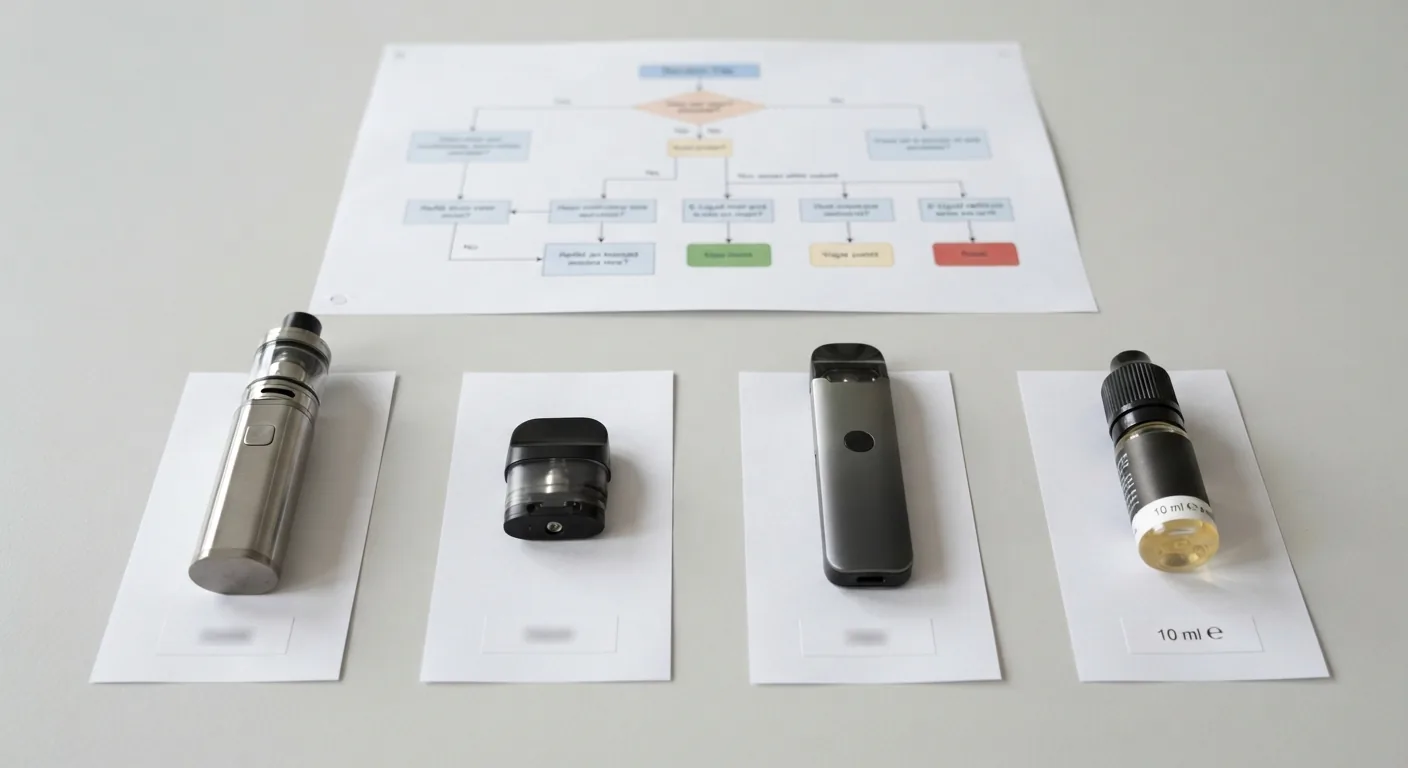
Classify the product first: refillable tank, closed pod or cartridge, disposable device, kit, or 10 ml refill bottle. Verify the volume and nicotine strength stay inside TRPR regulation 36, the UK rule on strength and child-resistant design.
We keep a one-page decision tree pinned in the prepress room.
Step 3 (Owner: Structural): Define the Pack Architecture
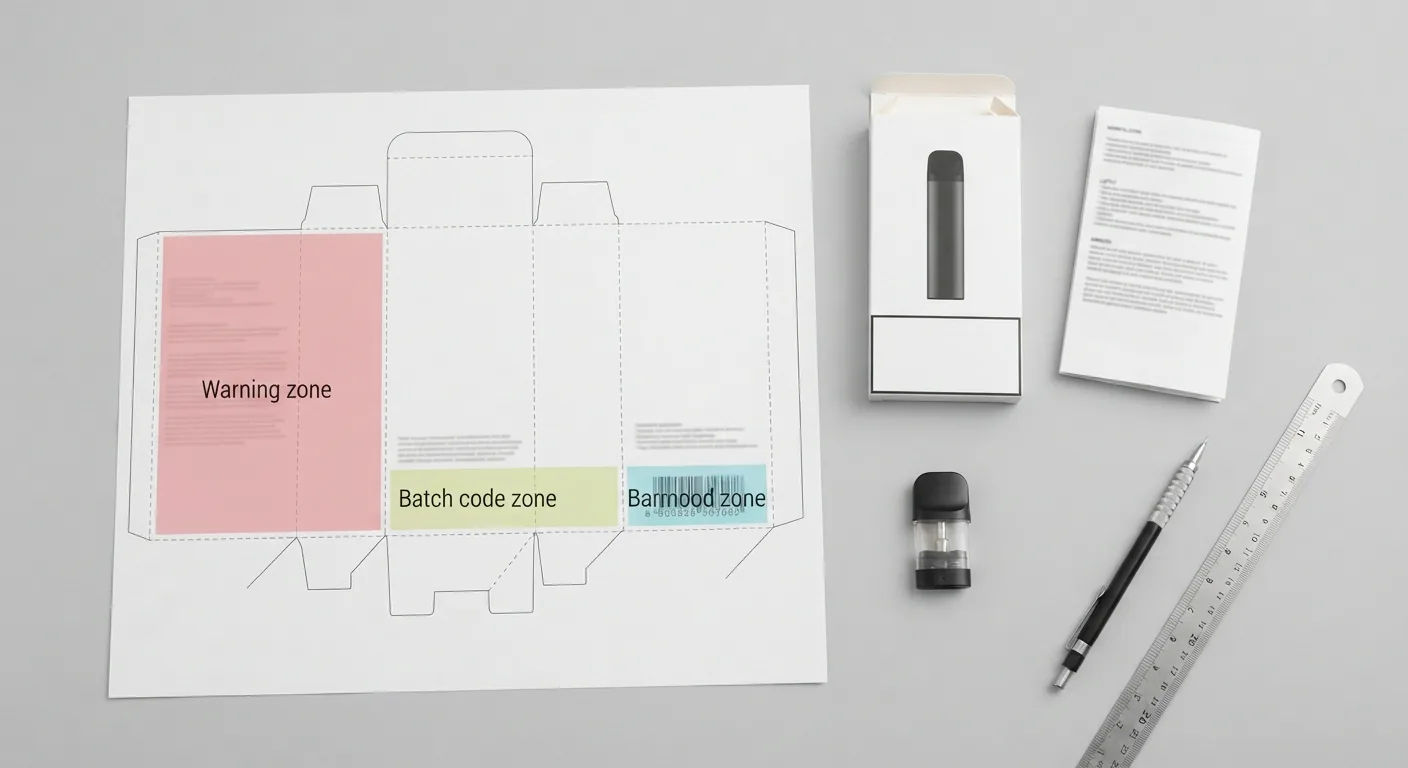
Separate every component: unit pack, outside container pack, bottle label, insert, leaflet. Reserve three fixed zones in the drawing, the warning panel, variable batch coding, and the retail barcode, and do not fit them at prepress sign-off.
On a 2 ml pod carton the 30% warning dominates the printable area, so this work belongs in structural design from day one.
Step 4 (Owner: Prepress): Build the Mandatory-Copy Layer Before Brand Graphics
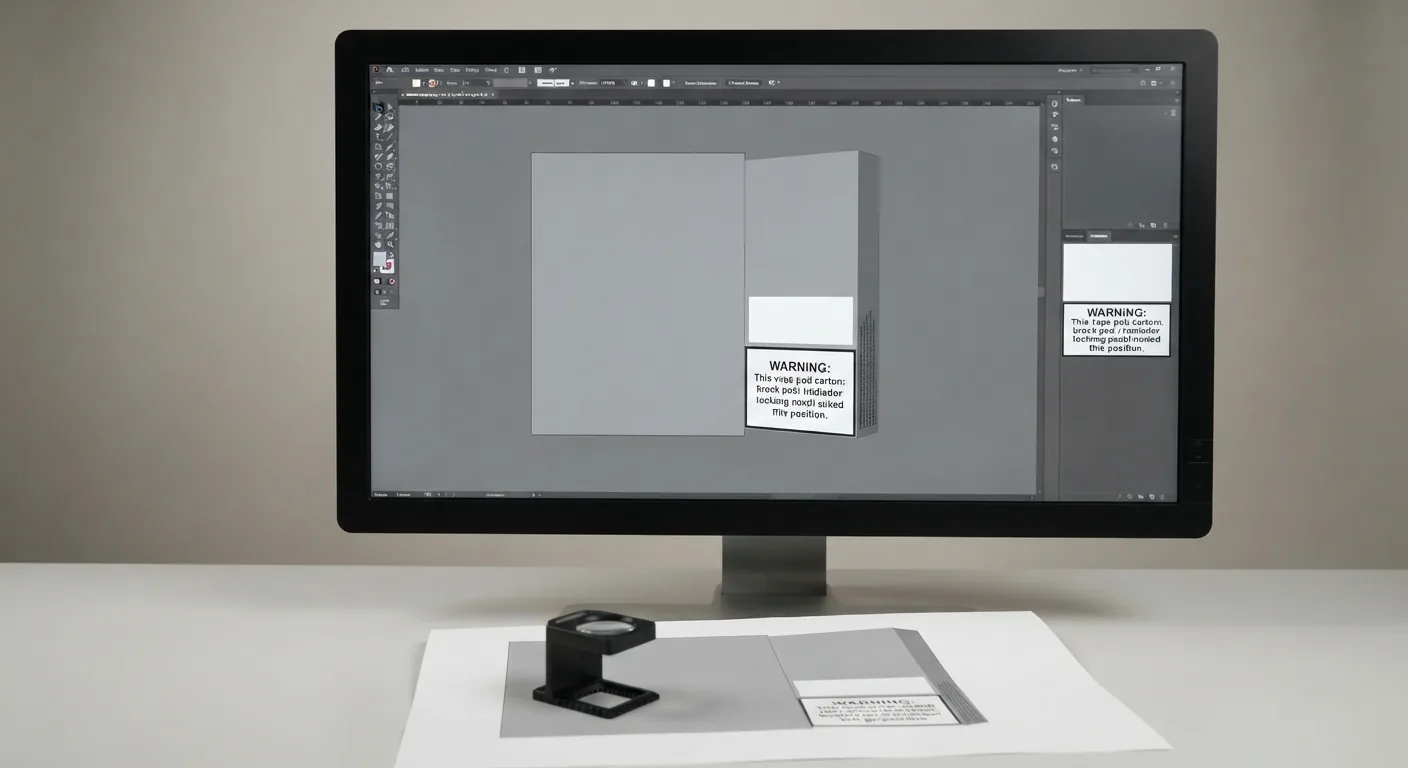
Lock the regulatory text block first, then design around it. Regulation 37 sets the ingredient list, nicotine content, delivery per dose, batch number, keep-out-of-reach statement, and leaflet references, so build that block first.
Red-flag check: the capacity copy on the carton must match the notified device or refill volume, and the strength statement must match the notified mg/ml figure. A mismatch here is a notification problem, not a print problem.
Step 5 (Owner: Packaging + QA): Engineer the Leaflet, not Just the Carton
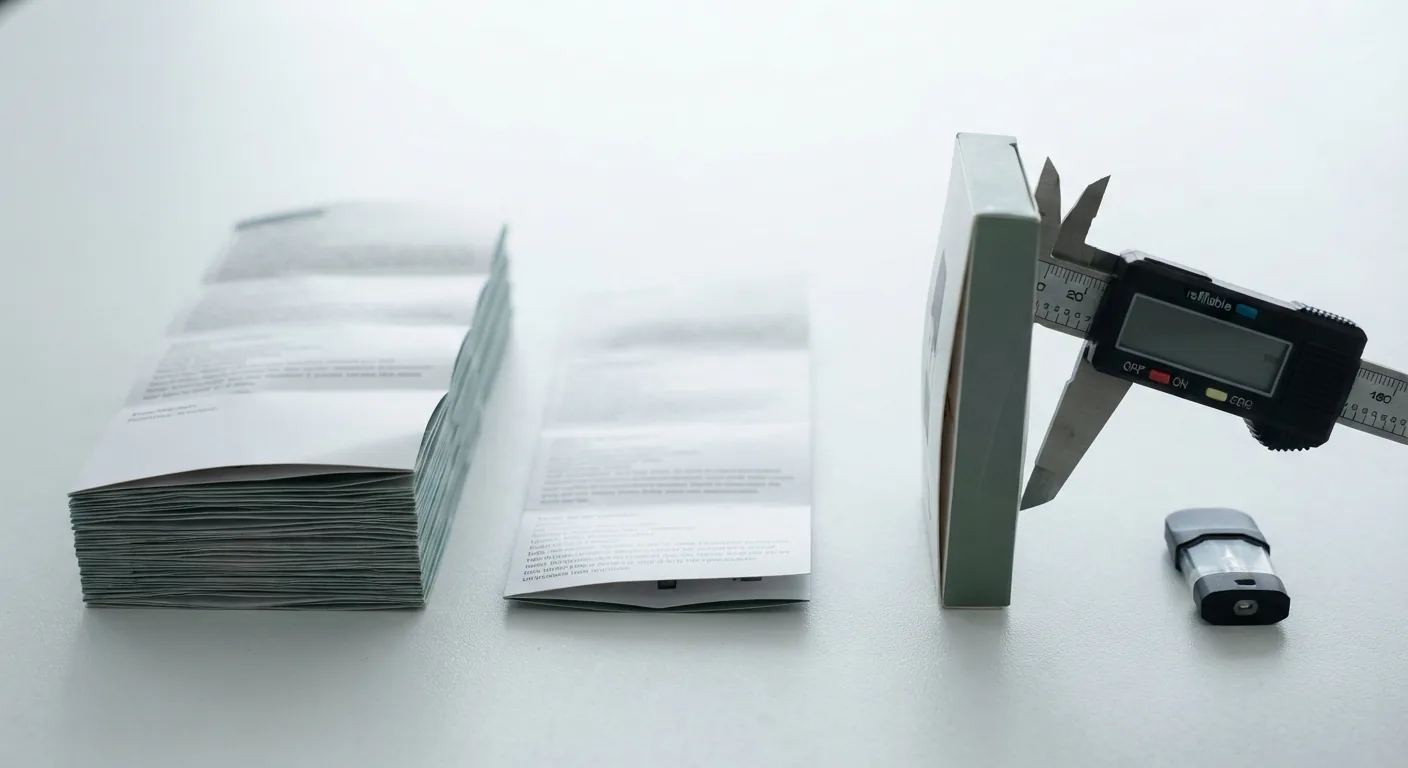
Run the mini process: text collection, language lock, unfolded size, fold map, insertion test, crush check. Regulation 37 makes the leaflet a legal duty, not an afterthought.
⚙️ Expert Note: “A 6-panel fold on a slim carton bowed the front panel 1.5 mm and jammed the automated inserter. We dropped to a 4-panel fold and added 1 mm depth.”
— Bailey Zhang, Product Manager
Leaflet and insert fit is a joint packaging-and-QA task, so we scope the fold map and insertion test through our packaging services team.
Step 6 (Owner: Engineering + Regulatory): Specify Child Resistance and Refill Safety Together
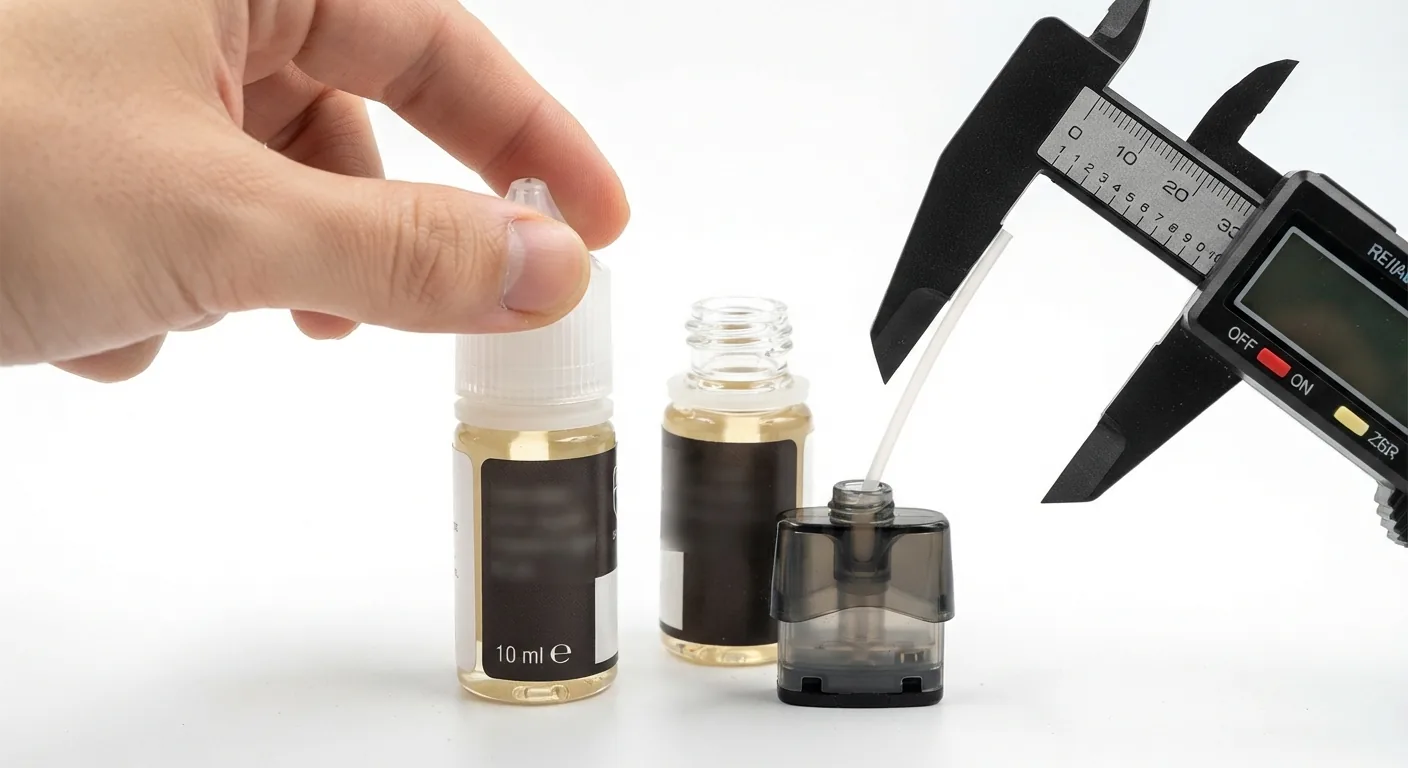
Regulation 36 requires child-resistant and tamper-evident design, breakage and leakage protection, and leak-free refilling. Instructions must state which device the refill is compatible with.
Decision (EU) 2016/586 defines two refill routes, nozzle or docking. For nozzle refills the nozzle must be at least 9 mm long, and flow control must release no more than 20 drops per minute under test.
The locking system is its own engineering problem, covered in child-resistant packaging.
Step 7 (Owner: Regulatory + QA): Pull the Notification Specimen Set Before Artwork Release

Run one joint review: packaging, regulatory, and QA read the notified description, pack specimen, EC-ID or internal notification reference, capacity statement, nicotine statement, and refill-mechanism description together.
Great Britain follows the common notification format set in Implementing Decision 2015/2183, matched to the MHRA submission from Step 1.
Step 8 (Owner: Structural + Compliance): Reserve the Duty-Stamp Zone for 1 October 2026
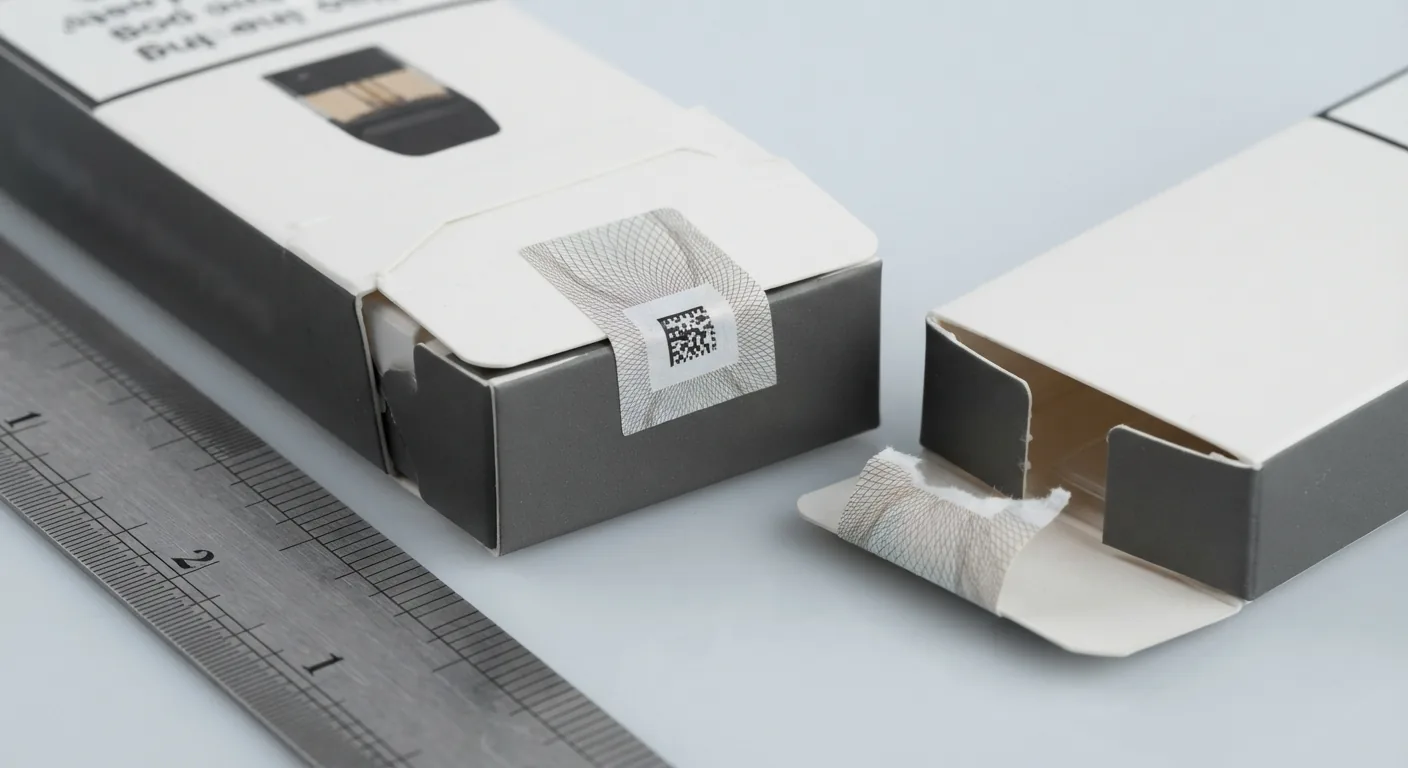
Duty applies from 1 October 2026. The stamp sits on the outermost retail packaging, and opening the pack damages the stamp or the pack. HMRC specifies an 18 mm by 42 mm stamp.
By 1 April 2027 every vape product outside duty suspension must carry one. Draw this zone now so it does not collide with opening directions.
Key Benefits: Why 2ml Tank Limit Packaging Pays Off?
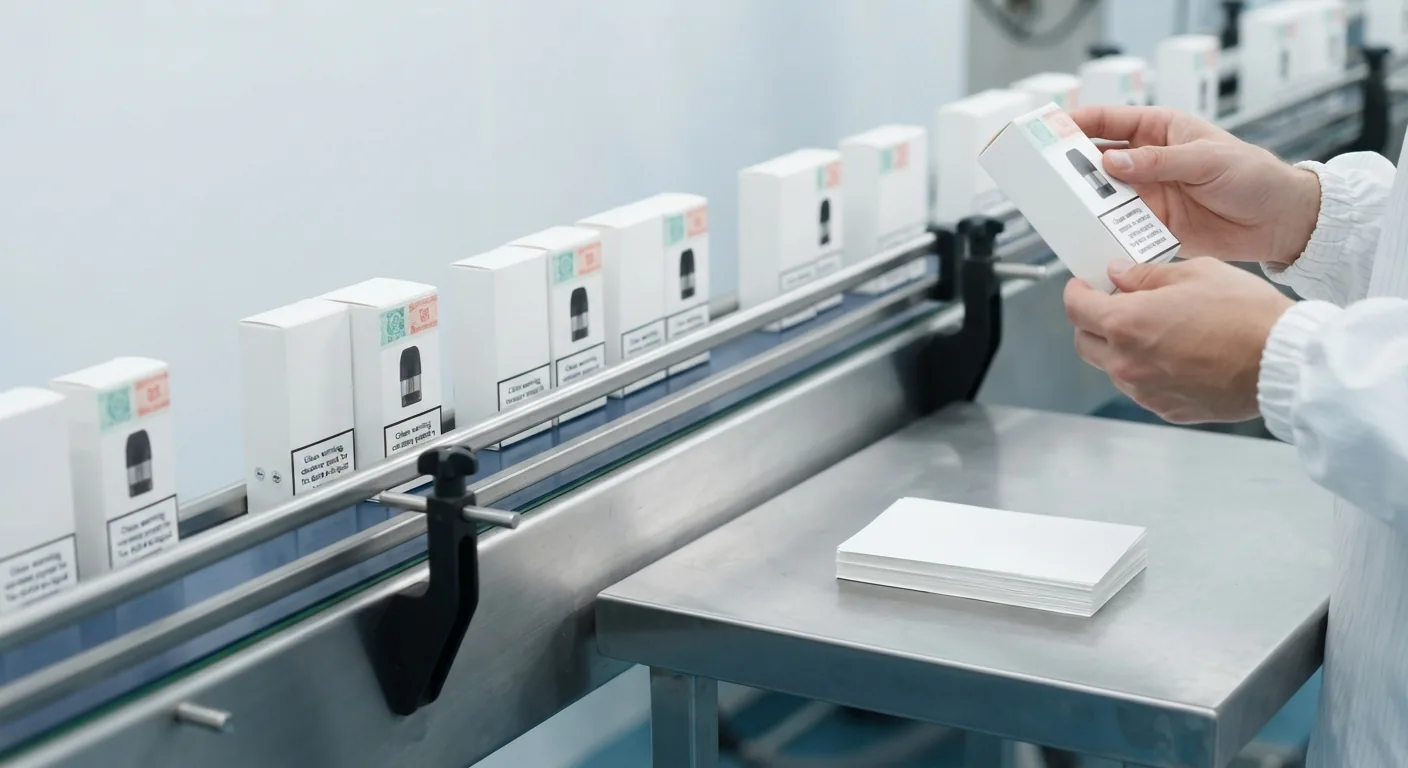
Treating the pack as one regulatory system, not a surface finish, is what turns these checks into savings.
1. Fewer Artwork Resets and Reprints
We reserve warning zones, leaflet volume, and batch-code quiet space before design approval. That removes the front-panel overruns and reprints that appear when the warning is fitted late, and it shortens each approval cycle.
2. Cleaner Regulatory Alignment
The notified product description, capacity claim, and retail pack match one approved record, so mismatches stop at proof instead of surfacing at the printer. MHRA requires a fresh notification for substantial modifications, and the proof check catches stale capacity copy before it ships.
3. Lower Structural Risk
Regulation 36 joins child resistance, tamper evidence, breakage and leakage protection, and leak-free refilling into one product-and-pack system. Treating them together catches the refill-safety issues that separate checks miss, and it prevents late-stage redesign.
💡 Key Insight: “Every 2 ml carton goes through a warning-area overflow check, with the bold block measured strictly against the 30% rule. Across 20 proofs reviewed, I rejected 8.”
— Peter H., Product Development & Manufacturing
A standardized compliance brief lets procurement compare suppliers on warning-area reservation, leaflet testing, variable-data planning, and stamp accommodation, instead of price alone.
Challenges and Limitations
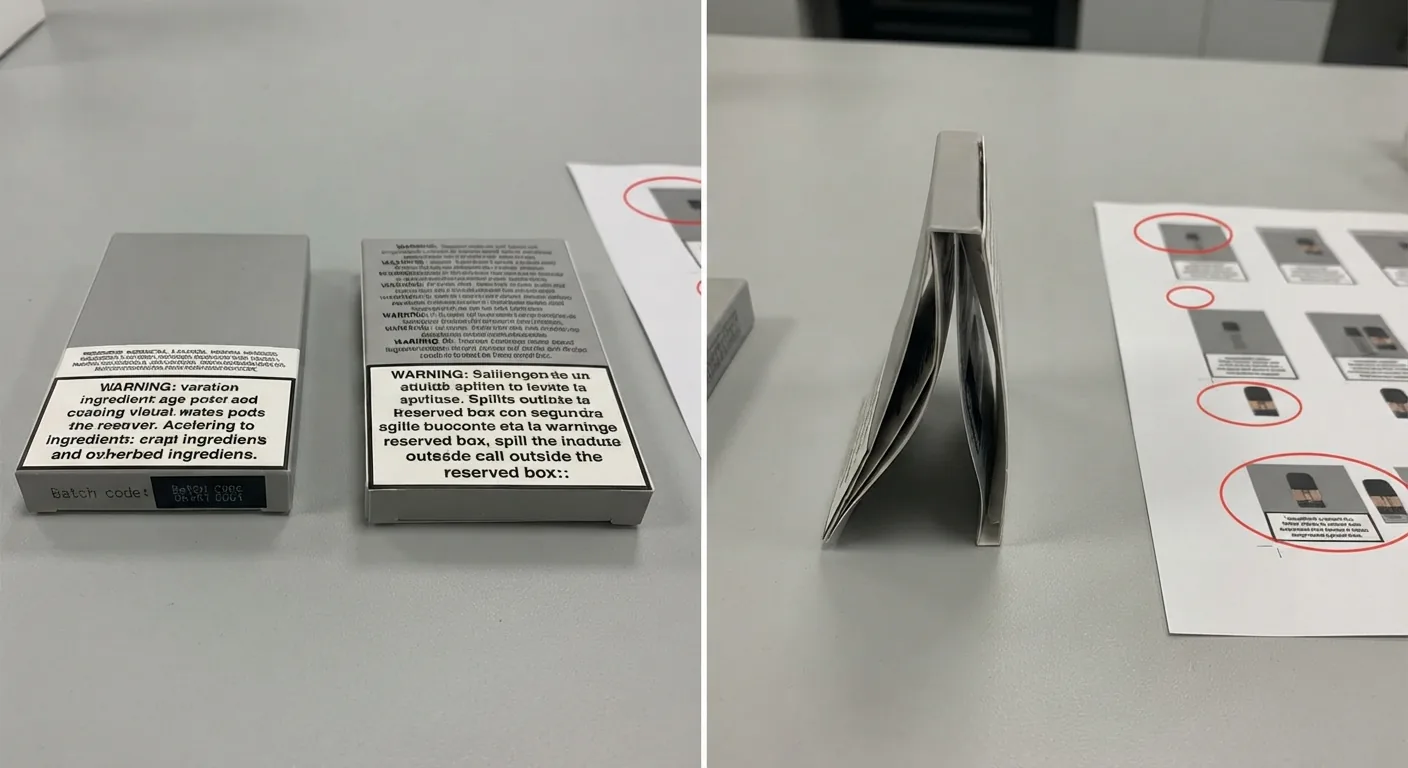
Legal zoning leaves little margin. The 30% warning fills the front and back, the leaflet must still fit inside the unit packet, and four failures repeat across jobs.
1) Failure Clusters
Warning-zone squeeze. The warning is fixed law, and on a 2 ml carton it leaves little room for ingredients, nicotine content, batch number, and keep-out-of-reach text. In our reviews those items collide or fall below a readable size, so reserve the panel before adding any graphics.
Leaflet bowing. The leaflet is a legal duty. A thick fold can bow or crush the carton and jam the automated inserter.
🧪 From the Bench: “On the packing line, I pull 10 cartons per shift to hand-test leaflet insertion, rejecting any bowing over 1 mm. Last month, a 6-panel fold failed 3 out of 10 times.”
— Catherine, Product Manager
Multi-language overflow. EU packs add language variants, and warnings spill outside the reserved area. Lock the language count before artwork approval.
Capacity mismatch. Capacity copy must match the notified device. A stale ml claim is a notification issue, not a print issue.
2) Presentation Limits
Free design space is not free speech. Product names and packaging cannot use misleading health, lifestyle, or environmental cues, and the MHRA and Trading Standards can treat those cues as a breach under their presentation guidance.
📅 Date note: From 1 October 2026 the stamp must sit on outer retail packaging and break on opening; by 1 April 2027 every product outside duty suspension needs one. This can conflict with opening directions and tamper evidence, so plan for it in the dieline.
3) Anonymized Teardown
In a recent file review, the most common reprint cause was batch numbers and keep-out-of-reach text crossing into the reserved warning block. That is a zoning failure, not a print failure. Reserve the warning panel first, then treat any overlap as a stop signal before plates are made.
This is not legal advice, and there are no universal pass rates, lead times, or guaranteed outcomes.
Conclusion
2ml tank limit packaging is not a compliant box but a linked system: legal product limits, mandatory warnings, leaflet engineering, refill safety, notification alignment, and now UK duty-stamp placement.
Treating the pack as a regulatory system is what keeps reprints and capacity-copy errors out of the run.
Before production, run this executive checklist:
- Market locked (GB, NI, or EU member state)
- Product class confirmed
- Warning area reserved (front and back, 30% each)
- Leaflet tested (fold map and insertion)
- Child-resistant and tamper-evident path verified
- Batch-data quiet zone left open
- Notification specimen pulled and matched
- UK duty-stamp space confirmed where relevant
Send your dieline, target market, product spec, and current notification artwork to our team for a structural and compliance review, and we will map the pack against these checkpoints before you commit to print. Contact LeelinePackage to start.
Disclaimer: This article relies on regulations, published guidance, and internal review, and we receive no payment from any brand or testing body named here. It complements, and does not replace, destination-market legal review.
People Also Ask About 2ml Tank Limit Packaging
1. What is the 2 ml tank limit?
The 2 ml limit caps the capacity of refillable tanks, pods, cartridges, and disposable e-cigarettes sold in the UK or EU. It applies to the device or refill container itself, not the outer carton, which still carries the required warnings and copy.
2. Is 2 ml tank limit packaging a legal requirement in the UK and EU?
Yes. In the UK the Tobacco and Related Products Regulations 2016 enforce the Article 20 limits, and EU member states apply the same caps through the Tobacco Products Directive. Selling an over-limit device or refill is non-compliant.
3. What nicotine strength and refill size are allowed in the UK?
Nicotine strength is capped at 20 mg/ml, and a dedicated refill container is capped at 10 ml. A refillable tank, disposable device, pod, or cartridge is capped at 2 ml.
4. What must be printed on 2 ml vape packaging?
The carton must carry ingredients in descending order, nicotine content and delivery per dose, batch number, and a keep-out-of-reach warning, plus the health warning on the front and back covering 30% of each surface. A leaflet covers use, warnings, and producer details.
5. Are child-resistant features required on 2 ml vape packaging?
Yes. TRPR regulation 36 requires child-resistant, tamper-evident design, breakage and leakage protection, and leak-free refilling. The lock must stay usable for adults while resisting a young child.
6. When do UK vape duty stamps apply?
Vaping duty applies from 1 October 2026, and the stamp sits on the outermost retail packaging. By 1 April 2027 every vaping product outside duty suspension must carry a stamp, in the HMRC 18 mm by 42 mm format.