

Single-use plastics face global bans. Green products dominate the market. So you need a reliable reusable bag solution. Tyvek bags have become popular. They are lightweight and tear-resistant. Plus, they work for various needs.
As a professional custom paper bags manufacturer, we know businesses move away from disposable plastics. They seek strong, sustainable alternatives. Tyvek bags stand out as a smart choice. Their unique synthetic construction balances durability with a featherlight feel.
This guide covers everything about what are tyvek bags. You’ll learn their origin, main features, and benefits. We’ll show you their wide range of uses. You’ll see why Tyvek ranks among the top options for modern wholesale and retail needs.
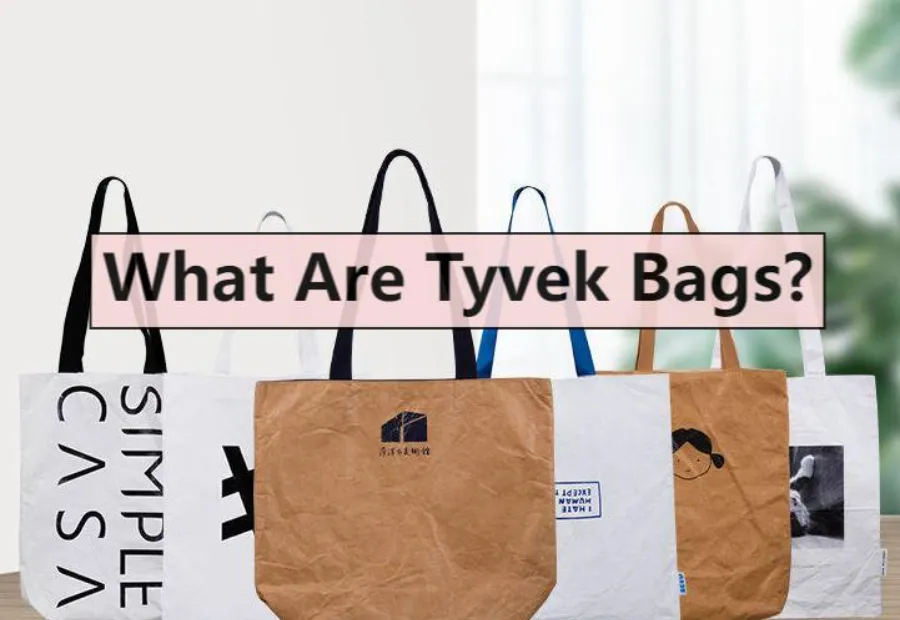
What Are Tyvek Bags?
Tyvek bags are reusable bags made from DuPont™ Tyvek®. This is a special type of polyethylene fiber. You get strong bags that feel super light. This material works great for industries that need protective barriers. It blocks particles, moisture, punctures, and chemicals.
Plus, it breathes and produces very little lint.
Key Tyvek Bag Grades You Can Choose
- 1422A: Need sterile protection? This grade handles heat sterilization. It releases few particles. We make it in ISO 7 cleanrooms.
- 1421B: Best for flexible uses. You don’t need any special treatment. Perfect for PureClean™ sterilization bags.
- 1073B: Want top safety and cleanliness? Pharma and food companies use this grade often. It meets strict GMP and ISO rules.
Material Properties of Tyvek Relevant to Bags
Wondering what makes Tyvek bags different? The material sets them apart for demanding B2B uses. These bags use 100% high-density polyethylene (HDPE) fibers. The fibers are flash-spun and bonded. This creates up to 10x the tensile strength of paper. Your bags resist tearing and punctures.
They hold up even when wet or roughly handled. Cotton and polypropylene don’t match Tyvek’s long-term toughness. Plus, Tyvek stays flexible down to –73°C.
Lightweight, Flexible & Eco-Friendly
Tyvek bags weigh up to 43% less than cotton bags. You cut both shipping and material costs. Weights start as low as 1.25 oz/yd². Pack them, fold them, store them—all easy. The surfaces are crisp and great for printing your branding. These bags are 100% recyclable as HDPE #2.
No plasticizers. No hazardous chemicals. This supports your eco-commitments.
Water, Chemical & Print Resistant
Tyvek bags are waterproof but also breathable. They block moisture, mold, and microbes. Air or steam? That passes through. This works well in many environments. The material resists chemicals strongly. UV won’t degrade it. Processing for bulk bag manufacturing is simple.
Advantages of Tyvek Bags Over Traditional Materials
| Property | Tyvek | Cotton | Nylon | Leather |
|---|---|---|---|---|
| Durability | High tear/abrasion resistance; autoclave-compatible | Moderate; prone to fraying | High; but heavier | High; but cracks over time |
| Weight | Ultralight (1.25 oz/yd²) | Heavy | Moderate | Very heavy |
| Water Resistance | Resistant yet breathable | Absorbs water | Good; not breathable | Poor; needs treatment |
| Printability | Excellent for graphics | Fair; fades | Good | Limited |
| Eco-friendliness | Recyclable HDPE | Biodegradable but pesticide-heavy | Petroleum-based; less recyclable | Animal-derived; tanning pollution |
| Cost | Moderate | Low-moderate | Moderate-high | High |
| Aesthetics | Sleek, modern, customizable | Natural, textured | Shiny, synthetic | Luxurious, aged look |
What Are Tyvek Bags?Application Scenarios of It
Tyvek bags work well across many industries. Their unique material makes them special. Looking up “What Are Tyvek Bags” for reliable, green packaging? Here’s how they add value in key areas:
Pharmaceutical, Medical, and Biohazard Use
Tyvek bags work for sterile barrier packaging, desiccant pouches, and lab culture bags. They handle gamma irradiation and ethylene oxide sterilization. Plus, they keep high microbial barrier strength. Medical teams trust them for single-use device packaging.
Forensic teams like NSW Police in Australia use them to keep evidence safe from biohazards.
Branding, Retail, and Lifestyle
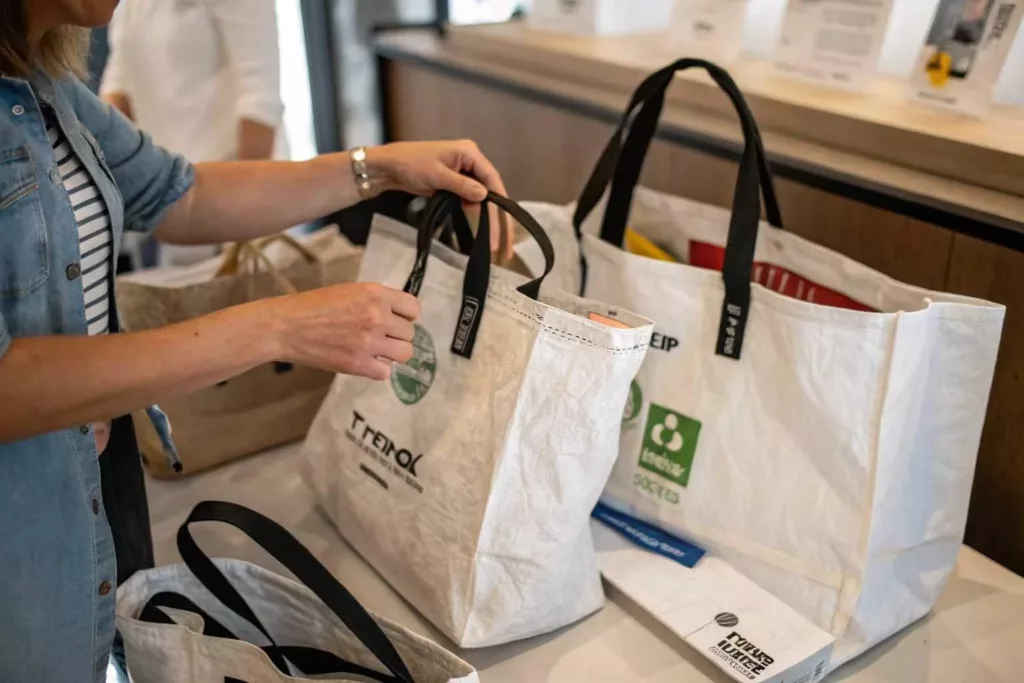
Tyvek bags make great custom promotional items at trade shows and fashion events. Beauty brands use them too. You can customize size, handles, thickness, and finishes. For ultralight needs, they become backpacks, tote bags, and protective sleeves. You get durability without the weight.
Industrial, Logistics, and Shipping
Package fine powders like food, chemicals, cement, or fertilizer? Tyvek bags let air through. This stops product settling and bursting. Automotive companies rely on them to protect and ship sensitive parts in returnable packaging.
Major postal services—USPS and FedEx—choose Tyvek envelopes for secure, water-resistant delivery of documents and parcels.
Customization and Design Options for Tyvek Bags
Tyvek bags give you tons of ways to customize and match your brand. MOQs start at 1,000 pieces per design. Need a smaller test run? You can order 500 pieces for trial projects or niche lines.
Printing & Branding Features
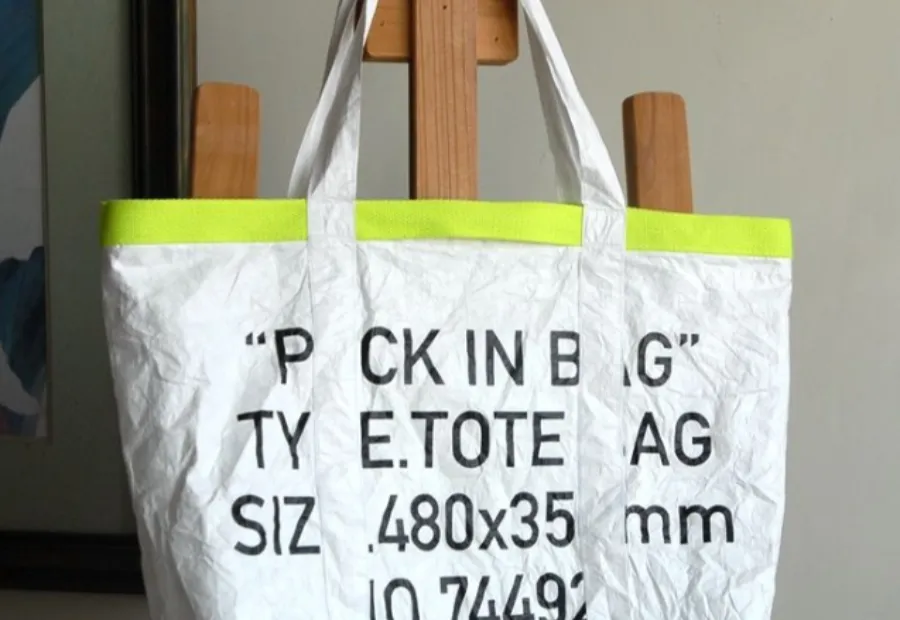
Show off your high-resolution logos with screen printing, digital, UV, or heat transfer. You get crisp, full-color CMYK prints on Tyvek’s smooth surface. No pre-treatment needed. This makes printing faster than on cotton or paper. Skip laser printing—it can damage the material.
Construction & Design Choices
Pick your bag construction method: stitching, heat sealing, gluing, or folding. Choose from tote bags, zipper pouches, backpacks, or custom shapes. Material finishes vary from stiff to soft and flexible. Different thicknesses let you balance use and cost.
Standard white bags cost the least. Black, brown, or custom colors are premium options.
Add hardware like zippers, snaps, velcro, or webbing handles. Extras like insulated linings or woven labels boost function and branding. Larger orders? Volume discounts help your budget go further.
Experts Advice: LeelinePackagefor custom Tyvek bags due to its competitive pricing, low MOQs, and fast 4-6 week delivery, enabling affordable high-quality customization for businesses of all sizes.
Their expertise in durable, eco-friendly Tyvek materials and precise craftsmanship ensures reliable, brand-elevating products at lower costs than competitors.
Eve Jia, Professional Packaging Supplier
Summary
Tyvek bags solve a real problem for businesses looking to move away from single-use plastics. You get a sustainable option that still performs well.
DuPont makes these bags using HDPE fiber technology. This gives you strong tear resistance and waterproof protection. They also resist chemicals. Plus, they weigh up to 43% less than cotton bags.
Some Tyvek grades meet strict pharmaceutical and food-safety rules. They’re fully recyclable as HDPE #2. So you handle both your business needs and environmental goals.
Managing sterile medical supplies? Protecting delicate products during shipping? Building a greener brand? Tyvek bags give you strength, flexibility, and sustainability in one package.
Need custom Tyvek bags or packaging for your business? Contact us or info@leelinepackage.com. We’ll help you find the right solution for your brand.
Related Resources:
- What Is Display Packaging? A Complete Guide
- What Is Blister Card Packaging: A Comprehensive Guide
- Top 10 Bag Manufacturers In Chennai You Should Know
People Also Ask About What Are Tyvek Bags?
1. What is Tyvek made of?
Tyvek is made from flash‑spun continuous fibers of high‑density polyethylene that are laid in random patterns and heat‑bonded into a strong sheet. Tyvek is made from just one polymer (HDPE) and has no plasticizers.
2. Why are Tyvek bags so durable?
Tyvek’s tightly woven HDPE fibers provide high strength. This makes it tough against tears, punctures, and wear, much more than regular paper. This structure lets Tyvek bags withstand repeated folding, crumpling, and daily use without easily ripping.
3. Are Tyvek bags waterproof?
Tyvek is very water-resistant. Its dense fibers block liquid water and many contaminants, keeping contents dry. Its microporous structure lets water vapor and air pass through. This makes the material breathable, unlike plastic film, which is fully waterproof.