

Vape pod tray packaging is the inner insert that immobilizes pods, isolates leaks, prevents scuffs, and keeps pack-out consistent. Many buyers confuse it with the outer drawer box, but a tray is the part that touches the pod directly.
We compared eight tray structures on fit security, oil resistance, child-resistance compatibility, landed cost, sustainability, and transit performance. The data comes from CAD prototyping, warehouse quality logs, and an on-floor interview with our packaging engineer.
This guide covers the insert only, not the outer shell. For the boxes that ship around these trays, start from our custom vape packaging hub.
8 Vape Pod Tray Packaging Structures to Prevent Transit Damage
We test every tray on cushioning, tolerance, and assembly speed. Our engineers compared eight popular materials, and the notes below show which format each one fits.
1. PET / PETG Vacuum-Formed Blister Trays
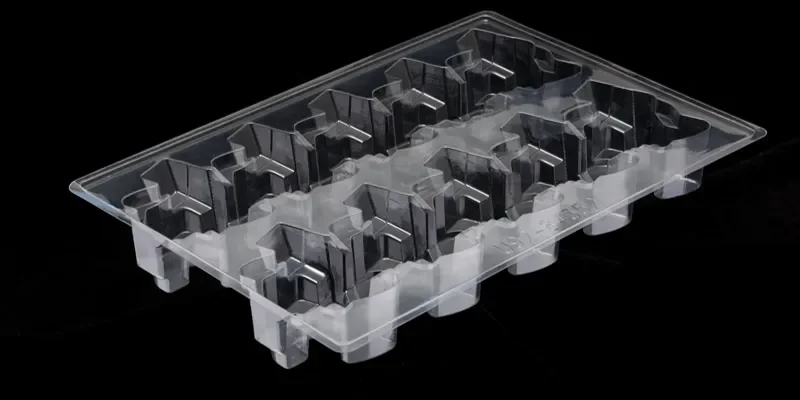
If pod tins rattle or metallic finishes scuff, skip generic PVC. Vacuum-formed PET and PETG trays hold pods tight in CAD-matched negative cavities, usually at 0.35 mm to 0.60 mm sheet thickness.
PETG beats basic PET and PVC on deep draws, with cleaner corners and better oil resistance. PVC costs less but carries chlorine lifecycle concerns.
PET and PETG run clearer and support recyclability claims. The main risk is scratch: rigid PET marks metallic pods unless the cavity is smoothed or flocked. You pay a little more per tray, but automation uptime and fewer rejects usually erase the gap.
🛡️ Our Verdict: Use PETG for deep 1.0 mL cartridges or high-gloss metal pods. Pair it with a blister card packaging guide when the tray sits inside a carded format.
⚡ Power Move: Request smoothed or flocked PETG cavities before you sample metallic pods.
💬 Expert Take: "Deep draws are where a resin choice shows. If a clear PET cavity scratches a metallic pod, the tray is the problem, not the pod, so smooth or flock it before you sample."
— Tim Chen, Packaging Professional
2. Biodegradable Molded Paper Pulp Trays
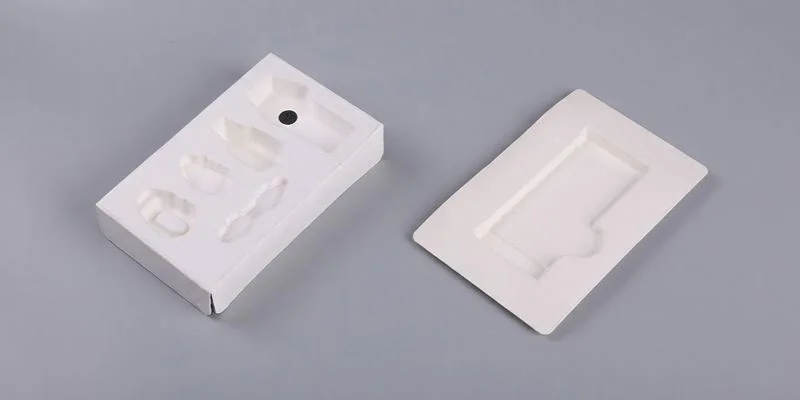
If plastic-free compliance blocks retail access, molded pulp wins. We tested these trays for pod cartridges, and they carry strong brand alignment under EU single-use plastics rules.
Inspect four specs before sampling. Wall thickness: 1.2 to 2.0 mm. Draft angles: 3 to 5 degrees. Cavity edges stay blunt on compact pod formats, and dry-press pulp produces cleaner geometry.
Protective performance trails PETG. Pulp absorbs shock but sheds lint near mouthpieces, so use a bio-based barrier coating for oil resistance. Tooling costs less than thermoformed plastic.
Our warehouse log showed 14% more dust rejection versus PVC trays. We moved one brand from PVC to dry-press pulp without losing fit, so bare cost drops at volume.
LeelinePackage’s Verdict: Choose dry-press pulp with a bio-based barrier, and reject unlaminated pulp near mouthpieces. Our plastic-free packaging alternatives guide compares the substrate routes.
For the fiber itself, see bamboo fiber versus wood pulp.
3. High-Density EVA Foam Trays
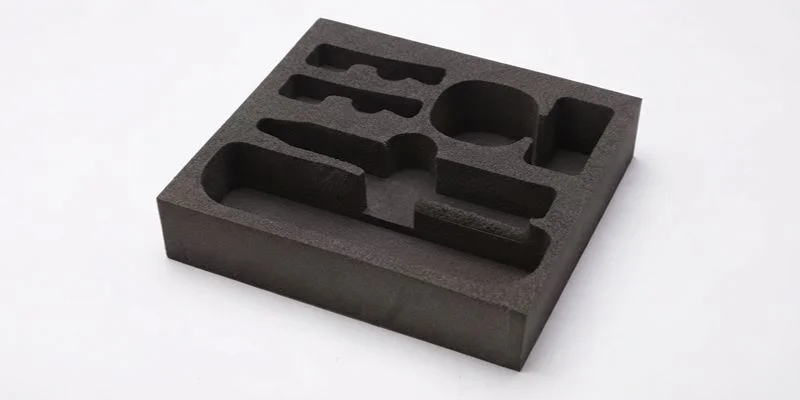
For premium starter kits mixing pods, chargers, and USB cables, EVA is the protection-first pick. We cut plain and presentation-grade ethylene-vinyl-acetate foam trays for a 2-pod export set.
We then drop-tested the set at 1.2 m against ISTA 2A procedures.
Die-cut cavities at ±0.5 mm tolerance stopped rattle. Tongue-and-groove separators kept metal finishes apart, and the drop tests showed no scuffs.
Plain EVA absorbs impact but soaked e-liquid in our 48-hour wicking test. Presentation-grade EVA has a denser skin that wipes clean, but it costs about 25% more.
Recycling is weak, since most curbside programs reject foam.
Tooling is cheap, often under $800 for die-cut inserts. Assembly runs slower than vacuum trays, because workers place each piece by hand, which suits gift or export kits, not low-cost bulk SKUs.
🛡️ Our Verdict: Use presentation-grade EVA only for premium launch kits, and pair it with a box liner for extra protection.
4. Custom Cardboard Cutout Inserts
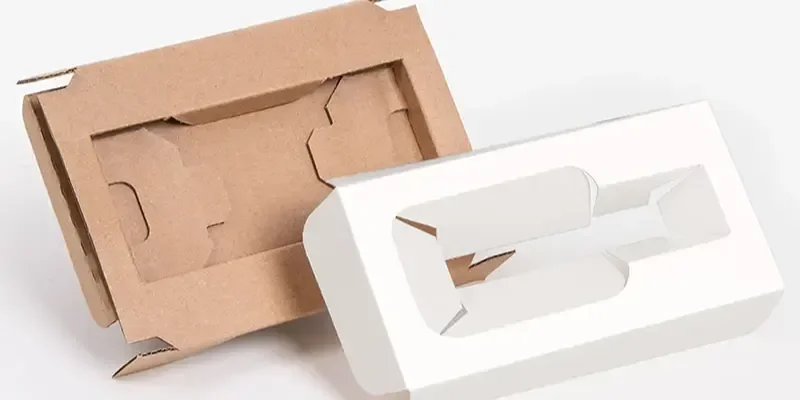
Cardboard cutouts suit light pods or secondary stabilization, when molded-pulp tooling costs too much and plastic feels off-brand. We cut layered 1.5 mm SBS inserts with slot-locking tabs and no mold.
⚡ Power Move: Match insert height to carton depth plus 0.5 mm to stop pod bounce.
Cardboard is weaker than thermoformed trays or foam and resists oil poorly. Board caliper and knife accuracy decide fit, and a dull knife leaves fuzzy edges that catch pod threads.
Read our types of folding cartons and corrugated versus cardboard guides before you reinforce the tray.
🔥 Hot Take: For heavy abuse, add a corrugated pad or a stronger outer box.
🧠 Expert Take: "Recyclability is the quiet advantage here. A one-material paper tray drops straight into curbside bins, and at 500 units it runs about 30% under molded pulp."
— Hughes Zhu, Packaging Technology Professional
5. Silicone Gasket-Sealed Trays
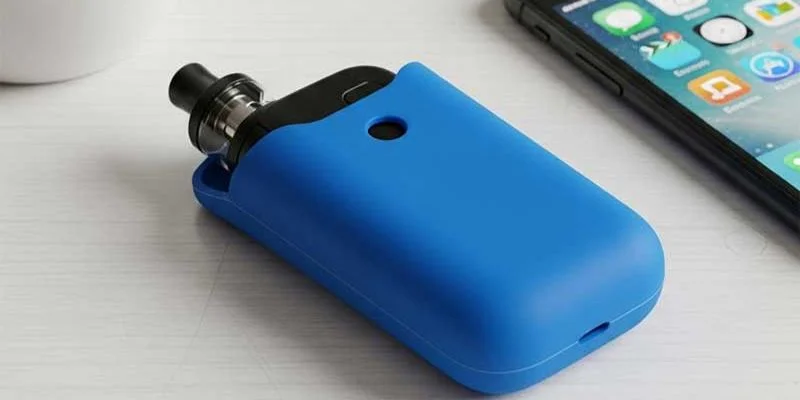
When oil or smell migrates past PET, pulp, or EVA, add a gasket. We tested a PETG tray with a 1.8 mm 40A platinum-cured silicone rim, and it held 0.5 mL of e-liquid back from the fold line in a 48-hour tilt test.
Fit drives sealing. Place the gasket on the tray lip, not the drawer wall, and add 0.3 mm of compression.
If the gasket lifts the tray 1.8 mm, the outer child-resistant lock binds, so check CPSC poison-prevention packaging clearance. We shaved 1.2 mm off one rim to fix this.
Alcohol wipes clear light residue, but skip peroxide or heat above 60°C. Cheap silicone absorbs smell compounds over time.
Unit cost climbs $0.12 to $0.25 per tray plus hand assembly. Two-shot overmolding adds tooling lead time, and die-cut gaskets slow packing lines, so reserve this for premium carts or leak-prone disposables.
🛡️ LeelinePackage’s Verdict: Spec platinum-cured silicone, validate compression with the outer lock, and reject trays where gasket height changes pack-out force.
6. Velvet-Coated EVA Inserts
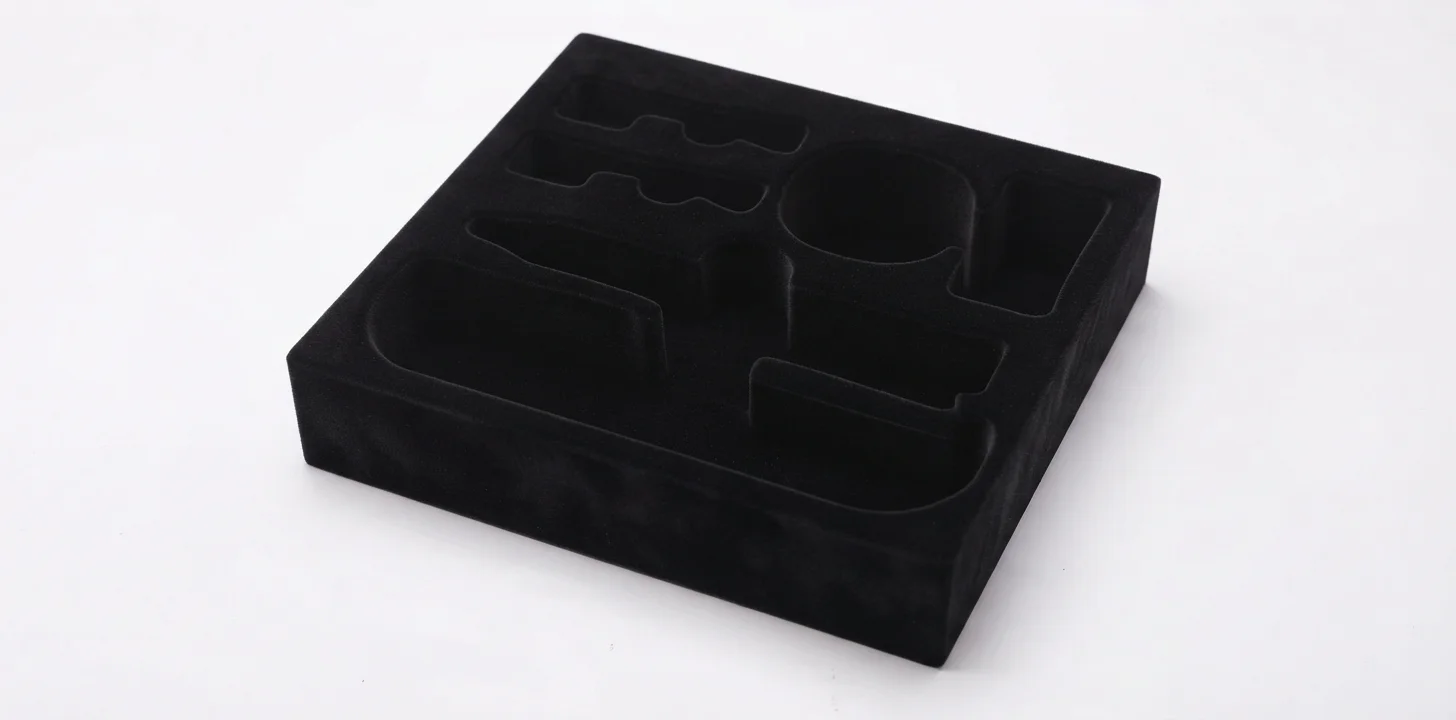
Metallic pods survive transit but still pick up micro-scratches from plain foam friction on the shelf. Velvet-coated EVA fixes that cosmetic failure. We cut flocked EVA inserts for a 2-pod holiday gift set, and the plush cavity stopped scuffs on chrome and gradient finishes.
Touch matters too. Buyers feel the velvet before the pod, which lifts perceived value in premium kits, gift boxes, and influencer mailers.
Flocked surfaces trap dust and show oil pickup fast. In a 3-week shelf test, we pulled dusty trays, and oily pod exteriors left permanent stains on light velvet.
Cleaning is hard, and flocking is a secondary adhesion process, so this format costs about 25% more than smooth EVA. Recycling stays weak, since most curbside programs reject EVA foam.
🛡️ Our Verdict: Use velvet-coated EVA only with clean, sealed pods and rigid outer boxes, and keep tray contact dry. Pair it with a custom rigid box or a custom gift box.
7. E-Liquid Barrier-Coated Paper Trays
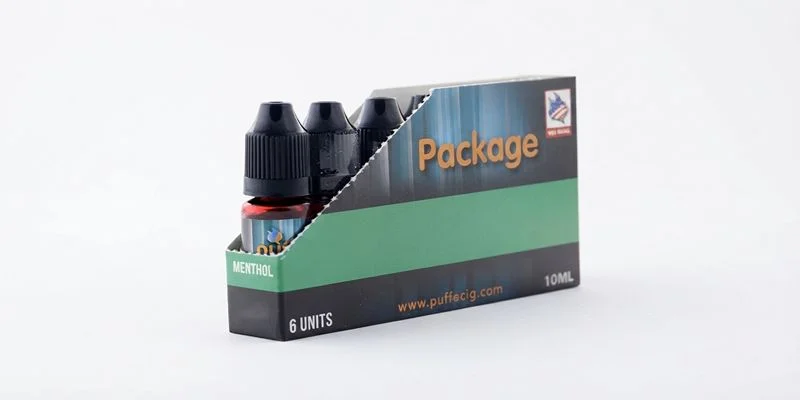
Many brands want paper-led design but fear leakage. Uncoated board soaks e-liquid in hours, and thermoformed plastic kills the eco story, so a barrier coating is the middle path.
We tested 1.5 mm SBS trays with a 4 gsm water-based acrylic coating. In a 48-hour tilt test, oil stayed on the surface, while untreated board wicked through in 9 hours. The coating also cut odor pickup.
Protection still lags PETG, so avoid it for heavy 2 mL carts or rough couriers. Tooling runs about $400 for die-cut, and coating adds $0.04 per tray. Custom print is easy.
Check your end-of-life claim first. PE or wax coatings make trays non-recyclable, while water-based acrylic or PLA often composts. Verify the claim with your supplier and the FTC Green Guides.
🛡️ Our Verdict: Use water-based barrier coatings for small pods, sample kits, or retail shelves, and skip PE if you claim curbside recyclability. For the substrate, read our greaseproof paper guide.
8. EPE Pearl Cotton Trays
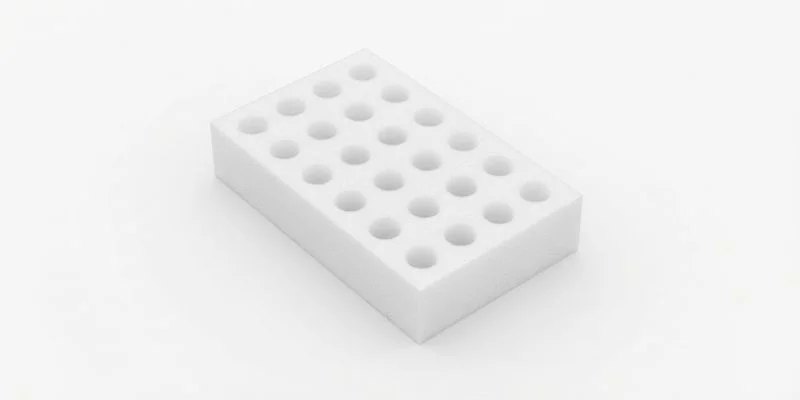
EPE pearl cotton wins when freight abuse, low cost, and light weight matter more than shelf looks. It fits master packs, export cartons, budget bundles, and B2B shipments.
We spec 30 kg/m³ for light pods and 40 kg/m³ for heavy disposables. Higher density absorbs vibration better but adds little weight. We cut die-cut cavities at ±1 mm, while thermoformed PETG holds ±0.3 mm, so EPE pods shift more.
Oil resistance is poor, since e-liquid soaks into open-cell foam. Use a sealed pod or add a box liner.
For master cartons, check our corrugated material types guide and custom shipping box options.
Its plain pink or white foam looks cheap, and many recyclers reject unmarked foam. Cost runs about 50% cheaper than PETG, with steel-rule die tooling under $200. On a 10,000-pod export run, damage claims dropped from 3% to 1%.
Our Verdict: Use EPE for bulk damage prevention, not retail brand theater.
How to Select and Prototype Vape Pod Trays? 8-Tray Comparison and Workflow
Evaluating tray structures means balancing cushioning, precision tolerances, and assembly speed. Below is a practical comparison and a prototype workflow for choosing the right insert for your SKU.
1. Tray Selection at a Glance
| Tray type | Protection level | Oil resistance | Anti-rattle fit precision | Eco profile | Tooling complexity | Unit-cost direction | MOQ suitability | Child-resistance compatibility | Best-fit scenario |
|---|---|---|---|---|---|---|---|---|---|
| PET/PETG vacuum | High | Good | 0.3 mm | Recyclable | Med | Mid | 1k+ | High if CR lock matched | Premium 1.0 mL |
| Molded pulp | Med-low | Barrier | 0.6 mm | Compostable | Med | Low-mid | 500+ | Med; avoid slack | Eco retail |
| EVA foam | High | Poor | 0.5 mm | Not curbside | Low | Mid-high | 500+ | Med | Gift/export |
| Cardboard cutout | Low-med | Poor | 1 mm | Paper | Low | Low | 500+ | Low-med | Light pods, samples |
| Silicone gasket | High | Excellent | 0.3 mm + compression | Low-mid | Med-high | High | 2k+ | High if gasket height controlled | Leak-prone carts |
| Velvet EVA | High scratch | Stains | 0.5 mm | Not curbside | Low | High +25% | 500+ | Med | Gift sets, mailers |
| Barrier paper | Med | Good coat | 0.5 mm | Recyclable/compostable | Low | Low | 500+ | Med | Small pods, retail |
| EPE pearl cotton | High freight | Poor | 1 mm | Not curbside | Very low | Very low | 1k+ | Low-med | Master packs, budget |
2. Five Scenario Picks
- Premium launch: Velvet EVA plus a rigid box, with a silicone gasket.
- High-volume FMCG: PETG tray, 0.35 to 0.60 mm sheet.
- Eco brief: Dry-press pulp, bio barrier, 3 to 5 degree draft.
- Leak-prone: Silicone-gasket PETG, validate compression.
- Budget transit: EPE pearl cotton, 30 to 40 kg/m³.
3. CAD-to-Prototype Workflow
- Receive pod dimensions and calculate the tolerance stack.
- Draft a CAD cavity matched precisely to the pod contour.
- Define retention force, finger access notches, and outer interface dimensions.
- Produce a white sample or soft tool for initial validation.
- Run shake and drop tests, revising cavity geometry until zero rattle is reached.
- Approve the prototype sample and lock the final production tooling.
Lead packaging engineer Ms. Chen adjusts cavity depth whenever gaskets lift trays.
Tray geometry must also match the outer lock, or a 16 CFR § 1700.20 test fails. For the lock itself, see our child-resistant vape packaging page.
4. Transit Data We Collected
Warehouse logs: PVC passed 98% of drops and pulp passed 94%. Damage rates ran 1.8% for PVC and 2.6% for pulp. PVC cracked in cold shock, while pulp compressed and shed fibers near mouthpieces.
For full specs, see our vape cartridge packaging and vape pen mod packaging pages.
For sealed formats, see disposable vape packaging.
Send pod dimensions, annual volume, compliance market, and preferred material through our contact page, and we will align the insert with a rigid box or a folding carton.
Disclaimer: We base this guide on first-hand factory audits, our own test data, and supplier documents, and we receive no payment from any material supplier to favor a resin or a structure.
People Also Ask About Vape Pod Tray Packaging
1. How thick should a thermoformed pod tray be?
Use 0.35 mm to 0.60 mm PETG sheet. Thinner PET frequently cracks during cold-shock testing. CAD-matched negative cavities hold pods to a precise ±0.3 mm tolerance and cut pack-out rejects.
2. Can molded pulp handle oil or distillate exposure?
Unlaminated pulp fails. Our 48-hour tilt test showed oil wicked through in 9 hours, so request a bio-based barrier coating or reject unlaminated trays for liquid pods.
3. What documents should I request for a child-resistant program under 16 CFR § 1700.20?
Ask for a lab test report, a certificate of compliance, and tray-to-lock drawings that reference 16 CFR § 1700.20. Our engineer checks gasket compression, because a tray that lifts the outer lock fails the protocol.
4. What MOQ and sample timeline should I expect for custom tray tooling?
Expect white dummy samples in 3 to 5 days and printed production samples in 7 to 10 days. MOQ starts at 500 units, and off-season orders can drop to 300. Tooling is quoted upfront.