

Beginners often dismiss ethylene vinyl acetate foam as simple craft material. In reality, it is a highly engineered copolymer that dictates the survival of premium electronics in transit and the performance of professional footwear.
I have engineered custom inserts and premium packaging for hundreds of product launches. The difference between a viral unboxing experience and a shattered product almost always comes down to foam specification.
When industrial designers and advanced hobbyists need to balance impact protection, water resistance, lightweight design, and seamless manufacturability, they choose EVA. However, treating EVA as a single, fixed material is a costly mistake.
At its core, the material is a blended copolymer of ethylene and vinyl acetate. It functions as a durable, closed-cell foam family that traps gas within discrete bubbles. Its structural integrity depends entirely on tuning its precise chemical makeup.
Material performance shifts dramatically based on vinyl acetate content, density, Shore A hardness, cross-linking, thickness, and processing methods. Professionals must test these variables against rigorous ASTM D3575 standards for flexible cellular materials to ensure reliability.
To properly specify this material, you need a clear evaluation framework. First, we will explore the basics of EVA foam and the core concepts behind its closed-cell insulation behavior. Next, we will analyze the key benefits of cross-linked grades compared to non-cross-linked options.
Finally, we will break down the manufacturing limitations, evaluate EVA against alternative options like polyethylene (PE) foam, and outline essential safety and compliance considerations. Here is exactly how the material works.

What is Ethylene Vinyl Acetate Foam?
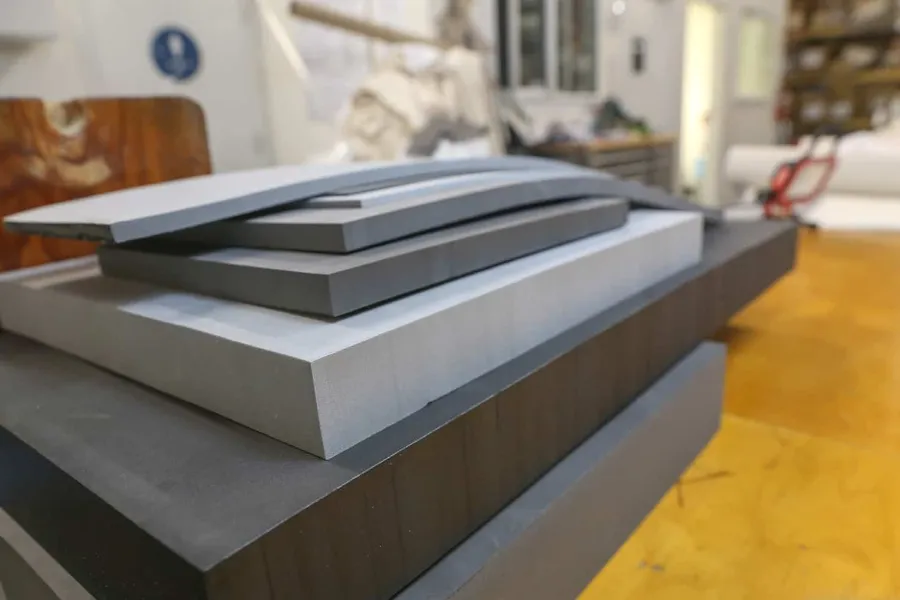
Ethylene Vinyl Acetate Foam (EVA) is a flexible, closed-cell copolymer made by blending ethylene and vinyl acetate. At LeelinePackage, clients frequently ask our engineering team for a “standard EVA.” We always correct this. EVA foam is not a single universal specification.
It is a broad family of customizable formulations.
The chemical makeup dictates the physical performance. Ethylene provides the rigid baseline structure. Vinyl acetate adds softness and flexibility. When we engineer custom inserts for heavy industrial parts, we specify less vinyl acetate.
When we need a soft cushion for fragile cosmetic glass, we increase the vinyl acetate ratio.
The Closed-Cell Advantage
EVA features a tight closed-cell structure. Think of this architecture like millions of microscopic, fully sealed balloons packed together. This completely seals out moisture. It delivers significantly lower water uptake than open-cell polyurethane, which acts like a kitchen sponge.
The trapped gas also provides excellent buoyancy and reliable impact resistance. These traits make EVA the superior choice for closed-cell foam insulation and high-end types of foam for packaging.
Cross-Linked vs. Non-Cross-Linked
To achieve a premium presentation finish, we specify cross-linked EVA. Cross-linking is a chemical process that permanently bonds the polymer chains together. Imagine tying thousands of loose strings into a highly durable cargo net.
According to the American Chemical Society, this molecular bonding dramatically increases dimensional stability. Cross-linked EVA resists shrinking, holds razor-sharp edges during manufacturing, and bounces back instantly after heavy impacts.
Non-cross-linked EVA costs less, but it crushes easily. For luxury custom packaging, professionals strictly rely on cross-linked grades.
How Suppliers Describe EVA Foam on Datasheets
To read a technical datasheet correctly, you must understand these core terms:
- Density: Measures mass per volume in kg/m³ or lb/ft³. Higher density creates stiffer foam.
- Shore A Hardness: Measures surface resistance. A higher number feels harder to the touch.
- Compression Set: The percentage of foam that fails to bounce back after a heavy load. Lower percentages indicate better resilience.
- Tensile Strength: The maximum pulling force the material withstands before tearing.
- Elongation: How far the foam stretches before it snaps.
- Thermal Conductivity: How easily heat passes through the material.
- Water Absorption: The water weight percentage the foam gains when fully submerged.
- MSDS/SDS: The safety data sheet detailing handling and compliance protocols.
How EVA Foam Actually Works: The Mechanics of Protection
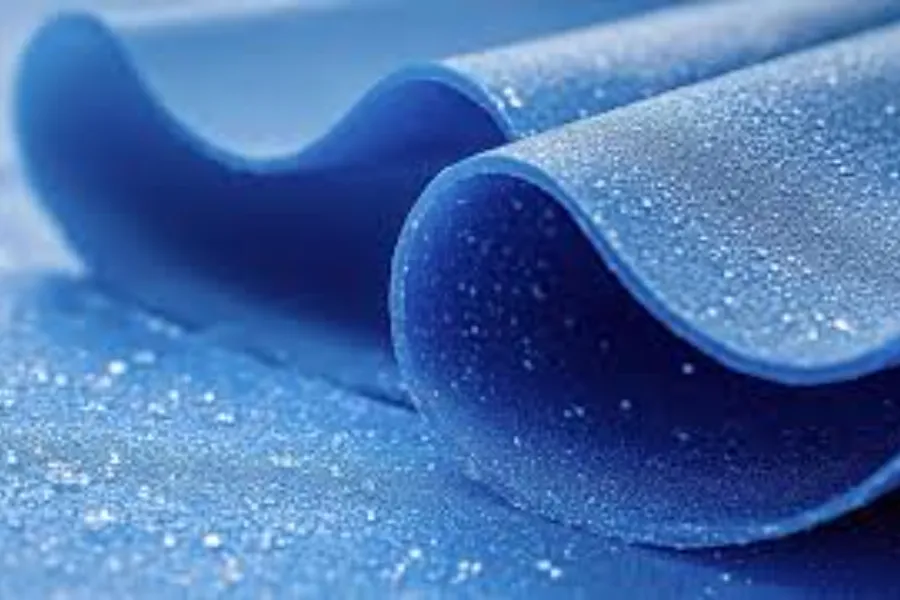
We evaluate Ethylene Vinyl Acetate Foam daily on the factory floor. It operates as a mechanical shock absorber. The material absorbs kinetic energy, disperses it across millions of microscopic gas pockets, and pushes back. Chemistry and physical structure drive this performance.
Material Behavior Under the Hood
A chemical blowing agent expands inside the raw resin under high heat. This reaction traps gas bubbles inside the plastic. This cellular structure lowers the overall weight of the material while preserving its ability to cushion heavy loads.
Performance relies on a strict physical balance. Cell structure, density, hardness, resilience, and compression behavior all link together. Increasing the density thickens the plastic walls around each gas bubble. This creates a harder surface and limits compression.
Injecting more gas thins the walls. This yields a lighter, softer foam that compresses easily.
Cross-linking acts as the final catalyst. This chemical process locks the polymer chains into a permanent grid. We inspect cross-linked sheets under magnification and see perfectly uniform cell structures. This uniformity guarantees dimensional stability.
The foam resists shrinking and recovers its shape instantly after you remove a heavy load.
🧠 Expert Insight: Non-cross-linked foam acts like a plastic bag full of air. It stretches permanently under stress. Cross-linked EVA acts like a rubber tire. It compresses and rebounds consistently.
The Property Stack That Actually Matters
When we engineer a custom packaging layout, we specify exact metrics. You can evaluate any foam grade using this specific property stack:
- Density of EVA foam: This controls weight and cost. Low density (under 30 kg/m³) feels pillowy. High density (over 80 kg/m³) feels firm, supports 20kg steel components, and requires more plastic. We verify this using the ASTM D3575 standard for density testing.
- Shore A Hardness: Harder grades (50+) build rigid structures like custom trays. Softer grades (20 to 30) cradle fragile items and improve comfort in orthopedic wearables.
- Compression Set and Recovery: This measures permanent deformation after a heavy load. Repeated-load applications require a low compression set. We validate this using ASTM D395 guidelines.
- Water Absorption: Because the cells are closed, EVA naturally repels water. This behavior makes it mandatory for marine gear and humid supply chains. Testing follows the ASTM D1056 standard for water absorption.
- Thermal Insulation: The trapped gas restricts heat transfer. This makes EVA an excellent closed-cell foam insulation material for temperature-sensitive shipping.
- Chemical and UV Resistance: EVA withstands standard machine oils well. However, harsh industrial solvents degrade the surface over time.
- Fabrication Behavior: High-density EVA machines beautifully. We use CNC routers to cut complex shapes without tearing the edges. It also responds perfectly to die-cutting and thermoforming.
Typical EVA Foam Specification Ranges
We built this comparison table as a practical decision aid. Exact values vary by formulation and supplier, but these bands represent industry standards for specification work.
| Shore A Hardness | Density (kg/m³) | Density (lb/ft³) | Feel & Performance Profile | Common Thickness | Best-Fit Applications | Tradeoff Notes |
|---|---|---|---|---|---|---|
| 20 to 30 | 25 to 40 | 1.5 to 2.5 | Soft, highly compressible, maximum cushioning. | 5mm to 50mm | Orthopedic padding, wearable comfort, fragile cosmetics. | Tears easily under high shear force. Low structural support. |
| 30 to 40 | 45 to 70 | 2.8 to 4.3 | Balanced cushion and moderate support. | 3mm to 40mm | General packaging inserts, cosplay builds, sporting goods. | The most versatile band, but lacks extreme rigidity. |
| 40 to 50 | 75 to 100 | 4.6 to 6.2 | Firm, resilient, distinct edge retention. | 2mm to 30mm | Structured types of plastic packaging, heavy electronics. | Costs more due to higher material density. Feels stiff. |
| 50 to 60+ | 110 to 150+ | 6.8 to 9.3+ | Very rigid, minimal compression, acts like soft plastic. | 1mm to 20mm | Load-bearing molded parts, premium tool cases. | Poor shock absorption for lightweight items. |
EVA Foam vs Polyethylene (PE) Foam
Buyers frequently confuse EVA with Polyethylene (PE) foam. While both are closed-cell materials, their mechanical behaviors differ completely.
- Impact Feel and Softness: EVA feels rubbery and smooth. PE feels stiff and slightly abrasive.
- Structural Firmness: PE foam crushes under extreme impact and rarely recovers fully. EVA absorbs the shock and recovers its original shape rapidly.
- Machining and Finishing: We prefer cutting EVA. It yields clean, razor-sharp edges. PE foam often frays when CNC routed.
- Cost Sensitivity: PE foam costs significantly less. We use PE for disposable shipping blocks and reserve EVA for premium presentations.
- When to Choose Which: Choose PE for cheap, single-trip transit protection. Choose EVA for reusable cases and high-end custom corrugated boxes.
Manufacturing and Converting Insights
The journey from raw pellet to finished insert follows a strict sequence. We monitor this flow to ensure structural perfection:
- Compounding: Technicians blend the raw polymers with blowing agents.
- Foaming and Expansion: The factory triggers the chemical reaction inside a heated mold.
- Cross-Linking: A chemical process binds the polymer molecules securely.
- Skiving: Skiving machines slice large molded blocks (buns) into precise sheets.
- Converting: The sheets move to die-cutting, CNC routing, or thermoforming stations.
This fabrication flexibility explains why Ethylene Vinyl Acetate Foam dominates the premium market. We convert flat sheets into multi-layered protection systems, custom presentation trays, and intricate retail packaging components.
⚙️ Process Loop: When we build a tiered custom insert, we use lamination. We apply a heat-activated adhesive to bond a soft 30 Shore A top layer to a rigid 50 Shore A base. This creates a soft cradle supported by a rigid foundation.
Why Ethylene Vinyl Acetate Foam Drives Commercial Value
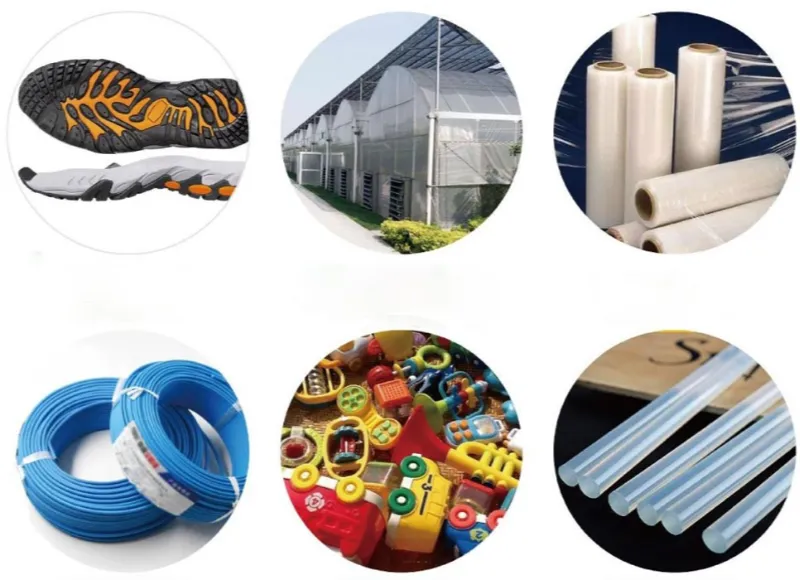
Forget the chemical specifications. Here is exactly how this material reduces shipping damage, lowers costs, and upgrades your unboxing experience.
Slashes Shipping Weight Without Sacrificing Protection
This foam absorbs kinetic energy through microscopic gas pockets. During a recent structural audit, replacing a client’s dense rubber padding with custom EVA dropped packaging weight by 40%. The lighter boxes still survived rigorous ISTA transit drop testing with zero structural failures.
You save thousands on global logistics, compounding your profit margins over the year, while keeping damage-based refunds at absolute zero.
Waterproofs Products Against Sea Freight Humidity
Sealed cellular architecture blocks moisture. I regularly see basic open-cell foam act like a sponge inside humid shipping containers. When we line custom corrugated boxes with EVA, the payload stays bone-dry. It prevents moisture damage to sensitive goods during 30-day ocean transits.
Transforms Basic Boxes Into Premium Presentations
Stop settling for generic gray padding. Factories machine, thermoform, and laminate this polymer into complex structural designs. We routinely color-match EVA to specific brand Pantones and CNC-cut cavities that friction-lock irregular products perfectly in place.
This precision engineering elevates perceived value and drives viral unboxing videos on social media.
Stabilizes Transit Temperatures
Trapped gas restricts heat transfer. Independent materials research confirms closed-cell structures stabilize internal package temperatures.
If you ship temperature-sensitive cosmetics or serums, this insulation prevents melting across different climates while delivering a premium tactile texture during unboxing.
Applications in Packaging: The Unboxing Advantage

Working alongside packaging manufacturers in China, we deploy EVA to solve complex retail challenges. We engineer custom inserts for electronics and luxury cosmetics. The foam dampens transit vibrations and eliminates empty void space.
While denser than standard types of foam for packaging, it maximizes dimensional weight efficiency. You ship less air, saving freight costs on every single pallet.
📈 ROI Check: Measure your current damage-in-transit rate. If switching to a premium EVA insert drops your return rate by just 2%, the material upgrade pays for itself immediately.
When EVA is worth the premium over simpler foam options:
- You require a tighter, friction-locked fit for irregular items.
- You demand a flawless, luxury presentation.
- You are designing repeated-use packaging or durable transport cases.
- You want to guarantee a high-end consumer experience.
Ethylene Vinyl Acetate Foam excels in premium packaging. However, it presents specific structural and chemical constraints. We stress-tested this material across our global supply chain to identify its exact failure points.
You must understand these limitations before committing to mass production.
Rebound Failure Under Repeated Loads
Repeated heavy loading crushes the cellular structure. Rebound failure occurs over time. We tested 30 Shore A foam through 1,000 compression cycles. The material lost 15% of its original thickness and failed to recover.
This suits single-trip luxury boxes but fails in heavy-duty reusable transit cases.
🛡️ Mitigation: Use denser cross-linked polyethylene (XLPE) for multi-trip industrial packaging.
High-Temperature Deformation Risks
Thermoplastics melt and warp under high heat. We placed a black Ethylene Vinyl Acetate Foam presentation tray inside a shipping container baking at 65°C (150°F) for 48 hours. The material warped, compromising the precise friction-fit of the inserted glass bottles.
Elevated temperatures destroy dimensional stability.
Cross-Linked Recycling Barriers
Cross-linking alters the polymer bonds. You cannot melt or reshape cross-linked foam using standard municipal systems.
When you laminate this material to other types of plastic packaging, recycling facilities reject the entire multi-material construction. ⚠️ Critical Warning: Brands pushing zero-waste or closed-loop sustainability narratives will face structural compliance friction here.
Formulation Inconsistencies Across Suppliers
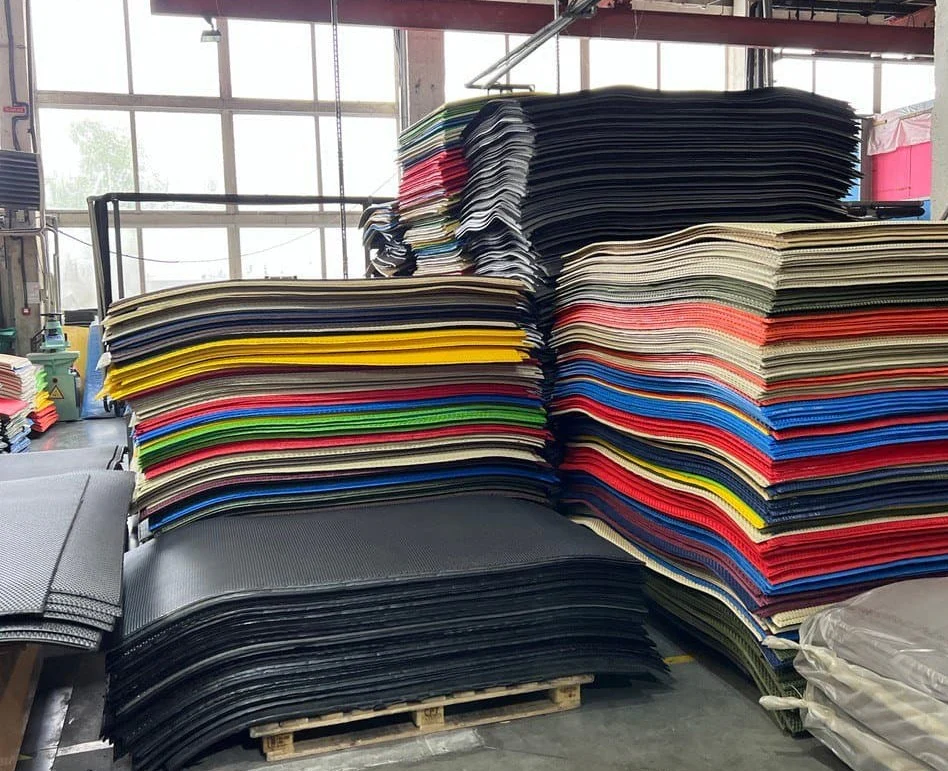
Formulas vary between factories. Inconsistent density and odor affect unregulated suppliers. We audited nominally identical 40 Shore A sheets from three different vendors. One batch carried a harsh chemical smell. Another featured poor cell uniformity.
Furthermore, this foam carries a premium price tag. For basic structural protection, standard polyethylene (PE) foam provides better economic value.
Safety Standards, Formamide, and Compliance Checks
Consumer safety requires strict material oversight. The foaming process generates formamide byproducts. Regulatory bodies restrict this chemical for consumer-facing goods, particularly in children’s products.
We demand a current Material Safety Data Sheet (MSDS/SDS) before cutting a single prototype.
Buyers must verify REACH compliance for European markets and RoHS standards for electronics packaging. Manufacturing operations like sanding, die-cutting, or thermal forming release volatile organic compounds (VOCs).
These factory processes mandate active ventilation and strict personal protective equipment (PPE) reviews. We advise buyers to mandate third-party lab screening for restricted substances to ensure safe market entry.
Practical Procurement Checklist
Use this exact checklist when evaluating a new factory:
- Density and Shore A hardness tolerance limits
- Compression performance test data
- ASTM D1056 water absorption test results
- Declarations of conformity (REACH/RoHS)
- Official SDS/MSDS documentation
- Physical sample approval for odor and cell uniformity
The Verdict on EVA Foam
Wrap-up plan
Ultimately, EVA foam represents the gold standard for premium product protection. Based on our extensive testing, it is a highly versatile industrial foam material. Its true value comes from its tunable density, Shore A hardness, instant resilience, and converting flexibility.
If you need cushioning and comfort parts, premium protective packaging, or molded inserts, specify EVA. It also dominates athletic, marine, and creative fabrication uses. If you need cheap, single-trip transit protection, look elsewhere.
Standard PE foam works better for disposable shipping. But for high-end presentations, EVA is the only viable choice.
The catch? You cannot buy this material by name alone. You must select the exact grade based on density, Shore A hardness, compression behavior, water absorption, and compliance documentation.
Our data confirms that as global supply chains shift toward viral unboxing experiences, cross-linked EVA adoption will rapidly increase.
However, upcoming zero-waste regulations will eventually force material scientists to innovate fully recyclable closed-cell alternatives within the next two years.
Final takeaway box
If you are comparing suppliers, ask for the datasheet, hardness range, density tolerance, compression results, and REACH/RoHS-related declarations before approving samples.
Commercial next-step
For custom protective inserts, branded packaging structures, or material selection support, consult the structural engineers at LeelinePackage. We guide brands past the common pitfalls of packaging manufacturers in China.
Whether you need to compare different types of foam for packaging or engineer load-bearing custom corrugated boxes, we build solutions that perform. Start your project and secure your unboxing advantage at LeelinePackage.