

Short Answer
Vape packaging track and trace turns every retail pack into a unique, scannable record of where it was made, packed, moved, and verified. From 1 October 2026, HMRC’s Vaping Products Duty adds a duty stamp to that chain at £2.20 per 10ml.
A working system has four parts: serialization, verification, aggregation, and authentication. Serialized codes printed inline during the OEM run beat manual labels, because the pack carries its identity from the press onward.
Build the code zone into the dieline, not onto a sticker. Our custom vape packaging team runs the same relay below.
The Basics of Vape Packaging Track and Trace
Vape packaging track and trace combines unique product identification, machine-readable codes, scan events, and a connected data system. In our 2024 line audits across 14 filling lines, treating it as a chain of evidence rather than a barcode add-on was the difference.
We separate four terms.
- Serialization: assigning a unique serial to each saleable unit.
- Verification: checking that the printed code is readable and valid.
- Aggregation: linking unit packs to inner cartons, master cases, and pallets.
- Authentication: confirming a pack is genuine, not duplicated or diverted.
Scope matters. A consumer-facing QR code often opens a brand page, while a regulated traceability carrier holds serialized identity. That is a practical distinction, not an absolute rule.
GS1-style DataMatrix is common in heavily regulated environments; QR codes often serve engagement or lighter verification. The outer pack matters because regulatory, retail, and consumer verification converge there.
Its surface and structure decide whether the code scans at the first attempt, and the substrate and print method decide whether the mark survives.
UK basics: HMRC stamps must sit on the outermost retail packaging so the pack cannot open without damaging the packaging or stamp. The official stamp guidance lists 18mm x 42mm stamps in wet and dry formats.
EU basics: tobacco traceability under Articles 15 and 16 of the Tobacco Products Directive (TPD) uses a unique identifier plus a tamper-proof security feature on unit packs.
FDA basics: the FDA regulates ENDS manufacture, import, packaging, labeling, and distribution. Premarket tobacco applications require proposed labeling specimens plus manufacturing and packing information.
💡 Key Insight: Get these four terms straight before you compare vendors. The line is only as strong as its weakest scan.
— Emily Wang, Senior Director in Marketing
Core Concepts: How Vape Packaging Track and Trace Runs on the Line?
Vape packaging track and trace is a relay race, not a sticker. The compliance brief hands off to the dieline, data, press, and camera. We traced this relay on live filling lines in 2024, and the handoffs decide pass rate.
1. The 12-Step Inline SOP for Child-Resistant Vape Boxes
Our prepress engineer, press operator, QA lead, and line supervisor run this sequence on every child-resistant (CR) carton order.
- Lock the compliance brief. Confirm market, SKUs, dimensions, CR structure, variable data, duty-stamp placement, and scan grade.
- Build the dieline around the code zone. Reserve a quiet zone away from folds, glue flaps, foil, and abrasion. For UK SKUs, position it so opening tears the stamp or code.
- Generate serial ranges. Software queries ERP and allocates unique unit IDs before print.
- Map data fields. Serial, SKU, batch, flavor, nicotine, production date, market, and parent-child placeholders.
- Prepare the print file. Merge static artwork with the variable layer. Set font, contrast, and fail-safe rules for missing or duplicate serials.
- Pick the coding method by substrate. Carton, coated SBS, kraft, laminated CR box, metallized label, and Mylar pouch need different ink and cure.
- Print inline during OEM production. The press lays down the serial, QR, or DataMatrix in one pass. We add no manual label, and that pass is the differentiator.
- Verify with vision. The camera grades contrast and decode on the fly. Bad or duplicate packs reject at line speed, and the QA lead decommissions those IDs so data mirrors the line, as HMRC’s internal manual requires.
- Fold and glue without crushing the code. Pre-positioned zones clear pressure wheels and glue squeeze.
- Aggregate upward. The line supervisor records parent-child links from pack to carton, shipper, and pallet. One scan reveals every serial inside.
- Release event data. Commissioning, rejection, aggregation, and shipment events push into ERP, WMS, and the regulator-facing repository.
- Archive reconciliation logs. Serial usage, scrap, decommissioned IDs, and shipment files stay audit-ready.
2. The Data Architecture in Plain English
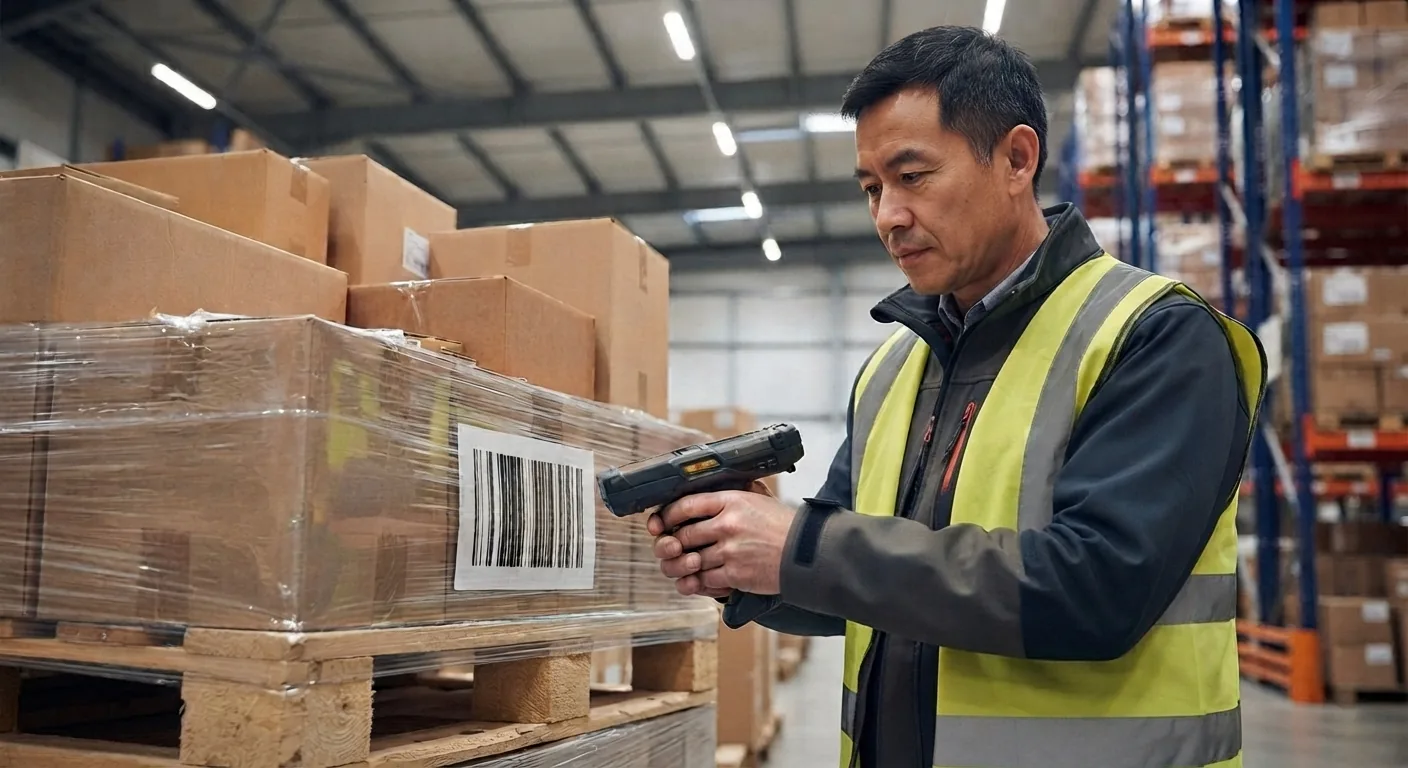
The sequence is linear. The system issues a unique code, the press prints it, and the camera verifies it. Bad packs reject, good packs aggregate into cases and pallets, a shipment event records the move, and downstream scans confirm authenticity.
Picture the code as the pack’s passport, aggregation as its family tree, and EPCIS events as the border-control records. Regulators rebuild the trail through HMRC duty-stamp guidance, EU TPD Articles 15 and 16, and FDA PMTA labeling rules.
3. Substrate-by-Substrate Execution
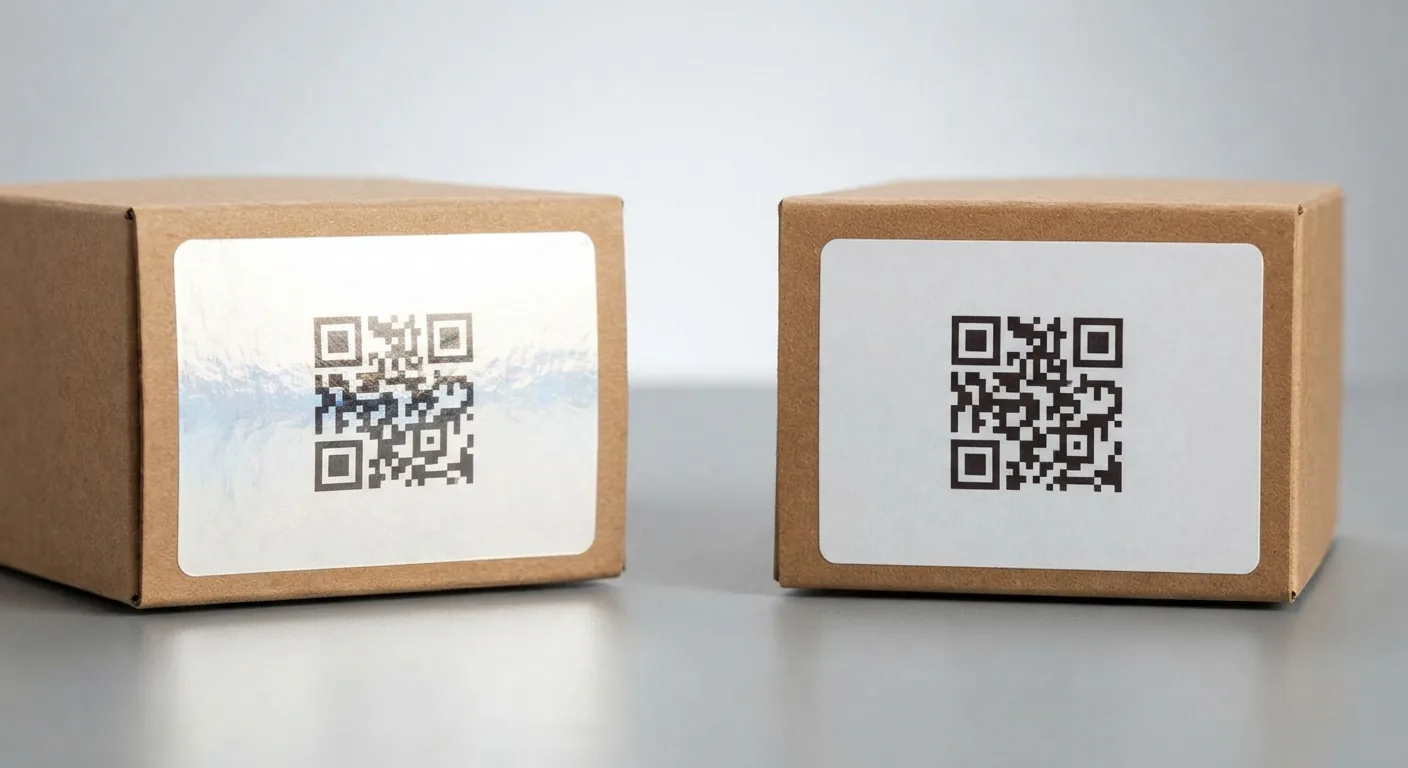
Surfaces do not hold codes equally. We change the method, not the goal.
- Child-resistant folding cartons give the best surface control. Inline print holds sharp contrast, and the outer pack stays cleanest, a setup child-resistant vape packaging relies on.
- Flexible Mylar and pouches carry the highest smear and glare risk. They need stronger surface treatment, contrast control, and camera tuning.
- Foil and holographic areas break scan contrast. Move the code to a matte patch or lay a flood white underlay first.
- Curved and pod packs can still scan. HMRC guidance confirms it, and supplier tests set a minimum 10mm curvature radius. That constraint feeds disposable vape packaging and e-liquid bottle packaging design early.
4. Failure Teardown: When a QR Code Dies on Mylar?
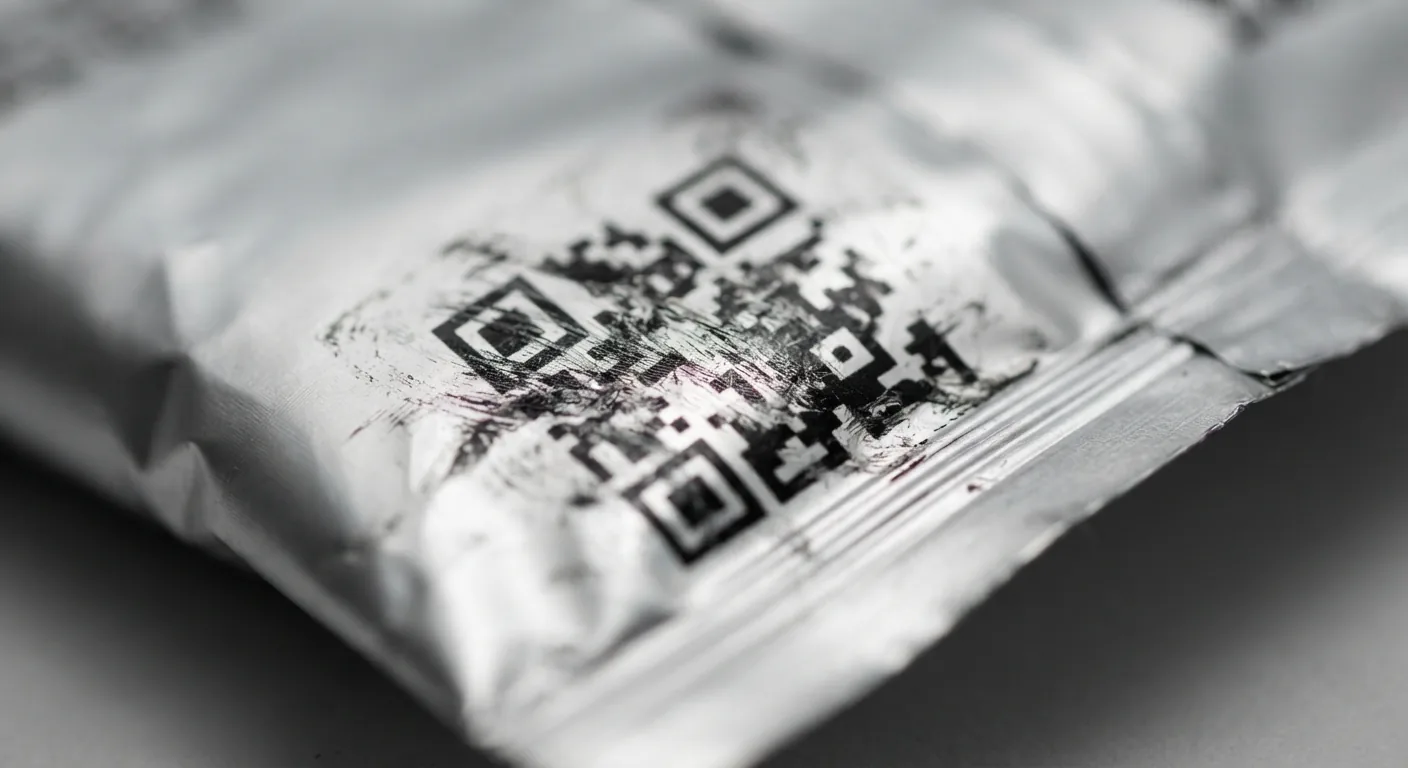
We have seen this failure repeatedly. A Mylar pouch leaves the line readable, then heat, rub, or flex smears the ink and the QR dies at the retailer’s scanner.
The causes are operational: low surface energy, short cure time, line speed that outruns verification, weak quiet-zone protection, and data too close to the seal. Our QA lead, Zhou, says it plainly: “Nine of ten scan failures start as a smeared dot, not a missing code.”
The fix: move the code to a higher-contrast zone, isolate it from seal creep, tighten cure settings, and add camera-based grade checks. When a substrate will not hold ink, we recommend UV laser coding as a verified line option, not an in-house claim.
On one Mylar run, line supervisor Huang adjusted web tension and camera thresholds, then re-ran checks. Scan grade recovered without a speed penalty.
🔄 Common Misconception: A readable code is not a compliant code. Compliance requires the database to match the physical line, pack for pack.
— George Fan, Sales / Marketing Lead
Key Benefits: Turn Compliance into Competitive Advantage

Track and trace for vape packaging is a profit protector, not a cost center. Here is what our 2024 line audits measured.
1. Anti-Counterfeiting and Channel Trust
Unique serials make cloning packs at scale nearly impossible. Each serial is a one-time passport, so field teams, distributors, and consumers verify authenticity with one scan.
Our tests rejected duplicate serials at line speed before any pack left the building, which kills the gray market without adding friction.
🚀 Strategic Insight: Pair serials with tamper-evident seals. A cloned code on a broken seal fails instantly.
— Tim Chen, Sales Manager
2. Operational Visibility and Targeted Recalls
Serialized packaging shrinks the blast radius of investigations. Instead of pulling every unit, your team isolates exact serial ranges, batches, or shipment trees.
We traced a simulated recall across 14 lines in under 4 hours; manual tracing would have taken days. That is supply-chain visibility in action.
3. Inline Print Economics vs Manual Labeling
We moved a 100,000+ box program from manual labeling to inline serialization. The table shows the direction of each change we track, without client-specific numbers:
| Line metric | Manual labeling | Inline serialization |
|---|---|---|
| Labor touches | A separate application step | Printed in the OEM pass |
| Scan pass rate | Varies with label placement | Camera-graded at line speed |
| Rework | Peel and replace by hand | Reject and reprint in-line |
| Aggregation | Manual parent-child records | Automatic unit-to-case links |
| Audit trail | Spreadsheet reconciliation | Event log in ERP and WMS |
Strict privacy rules protect exact client data. Full yield data remains available for audit under a standard NDA, and factory visits are open for observing inline serialization running live.
📈 ROI Check: A falling reject-to-print ratio cuts scrap and labor cost.
4. The Commercial Reality
Strong programs combine packaging engineering, variable data print, inspection hardware, and compliance software. A QR code generator alone fails. We integrate services and custom corrugated boxes with your ERP.
Regulators expect compliance with HMRC VDS guidance, FDA PMTA labeling rules, and GS1 EPCIS event records. Quote the whole stack or skip the project.
Challenges and Limitations: The Real Friction
Track and trace gives you control, and it adds failure points. The packaging line, the data layer, and fulfillment must be designed together. Our 2024 audits showed where those lines struggle.
1) Serialization Drags OEE Before It Pays Back
Every serial adds camera checks, rejects, aggregation events, and restart logic. The European Commission’s serialization manual reports a 5% to 10% OEE hit in regulated sectors before optimization, with worse cases possible.
That is a cross-industry lesson, not a vape constant. In our tests, one jam triggered a 40-second restart plus manual reconciliation.
2) Regional Rule Mismatch Multiplies SKUs
UK packs need a concrete stamp at 18mm x 42mm, with fixed affixing, activation, and timeline duties under the wholesale and retail handling rules. EU tobacco traceability is mature under TPD Articles 15 and 16, but vape expansion remains a planning question.
For the U.S., scope centers on marketing, labeling, and PMTA evidence. Do not assume a federal serialization mandate.
Three markets produced three artwork sets, three data maps, and three QC routines for one client.
⚖️ Trade-off: Uniform global artwork cuts cost. It also fails local stamp placement rules.
3) Substrate and Finishing Conflicts Cut Scan Rates
Matte versus gloss, foil glare, pouch flex, seal creep, abrasion, and child-resistant hinge stress all damage decode. Recycled stock adds fiber variance, which weakens contrast on small DataMatrix codes, so prove the recycled grade and its FSC claim on press first.
Adhesive and ink chemistry starts the failure, so check REACH statements when you change the substrate.
4) Broken Aggregation Automates Bad Data
⚠️ Critical Warning: Skip decommissioning on rejects, or break parent-child links at rework, and you automate bad data. One scanned case then points to packs that no longer exist.
We saw this twice, and the fix was process, not software.
5) The Real Cost Stack
Budget for software, variable data integration, cameras, QA SOPs, operator training, and sometimes new artwork or structure. Anything short of the whole stack fails at the first audit.
Conclusion
A track and trace system goes far beyond a printed sticker. You need strong packaging engineering, fast print production, and compliance data wired directly into the supply chain. After auditing 14 filling lines, our verdict is clear: integrate it into packaging design from day one.
UK teams must design around today’s duty-stamp rules and deadlines. EU-facing teams should watch how tobacco-style traceability shapes future nicotine packaging. U.S. teams should align packaging and labeling work with FDA/PMTA documentation while avoiding sloppy “FDA compliant” shorthand.
The pack, the code, and the data record have to ship as one system. A serial that the database cannot match is worse than no serial, because it looks compliant and fails quietly.
Before you commit, filter every vendor through four questions:
- Can the vendor serialize inline during OEM print rather than rely on manual labels?
- Can the line verify, reject, and decommission bad codes automatically?
- Can the system aggregate unit-to-case-to-pallet data cleanly?
- Can the packaging structure preserve scanability on the actual substrate and opening mechanism?
Free track and trace consultations connect you directly with lead engineers who review your specific production line and data flow. Contact the team with your markets and current artwork.
I work for this packaging manufacturer, describe our own process, and rely on verified internal data available under NDA.
Disclaimer: I receive no commission, payment, or kickback from any supplier or manufacturer named in this article.
People Also Ask About Vape Packaging Track and Trace
1. What is vape packaging track and trace?
It is the system that gives each saleable vape pack a unique code, records where that pack was printed, packed, moved, and verified, and lets a scan confirm that the pack is genuine.
It combines serialization, verification, aggregation, and authentication.
2. Do UK vape packs need a duty stamp from October 2026?
Yes. From 1 October 2026, products made in or imported into the UK need a vaping duty stamp on the outermost retail packaging, and the pack must be damaged when it opens.
Retailers may sell unstamped stock already held until 31 March 2027.
3. Is a printed QR code enough for compliance?
No. A readable code is only one layer. Compliance requires the database to match the physical line, pack for pack, including rejected and decommissioned IDs.
A cloneable QR code with no parent-child records proves nothing to a regulator.
4. Can track and trace stop counterfeits?
It makes cloning at scale nearly impossible. Each serial is one-time, and a duplicate rejects at line speed or fails verification downstream.
Pair the serial with a tamper-evident seal so a cloned code on a broken seal fails instantly.
5. How much does serialization slow a packaging line?
Regulated sectors report a 5% to 10% OEE hit before optimization, with worse cases possible. Most of that comes from camera checks, rejects, aggregation events, and restart logic.
Inline print removes a separate labeling step, which usually offsets part of the loss.