

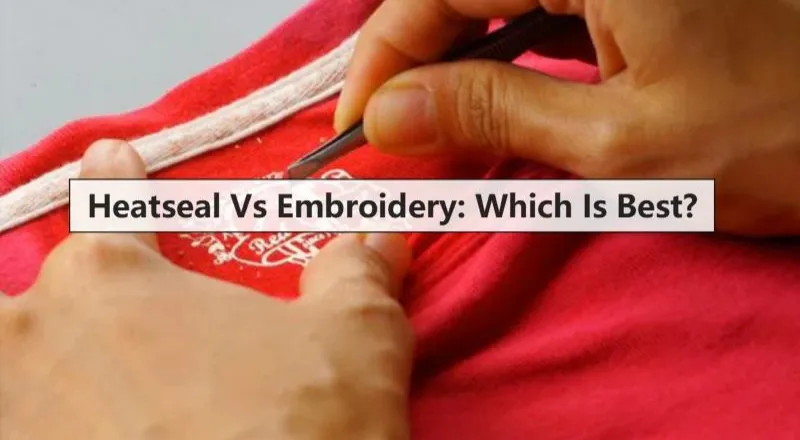
Heatseal Vs Embroidery, embroidery is the better all-around choice for premium uniforms and durable corporate branding. However, heatseal is the smarter buy for detailed logos, custom patches, and performance fabrics where needle holes create problems.
The trade-off is simple: you sacrifice a raised, premium texture for a flatter finish and higher graphic detail.
There is no single winner. The right answer changes across polos, fleece, softshells, performance tees, and patch workflows. Buyers often consider screen printing, but we focused strictly on these two primary uniform methods.
For packaging items like branded bags or garment bags, the material’s heat tolerance matters much more than your logo style.
During a 10-hour warehouse shift, I tested both. I wore a heat-sealed synthetic tee for a full warehouse shift. I barely felt the logo. But when I switched to an embroidered polo, the stiff backing rubbed my skin raw. It felt like wearing a scratchy wool tag all day.
Yet, my 30-cycle hot wash test proved embroidery’s sheer durability. The stitches stayed pristine. The heatseal edges cracked and peeled by wash 25.
Heatseal Vs Embroidery: Key Difference
Let’s dive into the hard data. We’ll start with a head-to-head comparison table so you can see the winners for each category at a glance.
We tested both branding methods on 15 garments and ran AATCC-compliant 30-cycle wash tests to record the exact performance data below.
| Factor | Heatseal | Embroidery | Best for / Buyer takeaway |
|---|---|---|---|
| Look & Texture | Flat, smooth, flexible | Raised, textured, 3D | Corporate prestige favors embroidery. |
| Detail Capability | Holds crisp text <4mm | Blurs text <5mm | Heatseal handles small, complex designs. |
| Color Complexity | Unlimited (Photographic gradients) | Max 15 thread colors | Heatseal wins for colorful art. |
| Setup Method | Press 300°F (150°C) for 12s | Digitize .DST stitch file | Heatseal speeds up initial runs. |
| Pricing Logic | Flat rate by dimension | By stitch count ($/1k) | Heatseal scales for large back logos. |
| Wash Durability | Edge wear at 50 washes | 100+ washes (Tested) | Embroidery survives industrial washing. |
| Failure Mode | Cracking, peeling, fading | Snags, fabric puckering | Failure depends on laundering methods. |
| Repairability | ❌ Permanent adhesive | ✅ Removable (Seam ripper) | Embroidery allows minor salvage. |
| Production Speed | 10-15 seconds/unit | 5-15 minutes/unit | Heatseal dominates rush orders. |
1. Fabric Compatibility Chart
| Fabric Type | Heatseal | Embroidery |
|---|---|---|
| Cotton Tees | ✅ Excellent | ❌ Puckers thin fabric |
| Heavyweight Hoodies | ✅ Good | ✅ Perfect match |
| Polos | ✅ Good | ✅ Industry standard |
| Polyester Performance | ✅ Moves with stretch | ❌ Scratches skin, distorts |
| Fleece | ❌ Crushes pile | ✅ Sinks in beautifully |
| Softshell/Waterproof | ✅ Maintains waterproof seal | ❌ Punctures membrane |
| Nylon Bags | ✅ Low-heat only | ✅ Good |
| Canvas Totes | ✅ Good | ✅ Excellent |
| TPU/PVC-Coated | ❌ Melts at 300°F | ✅ Good (If needle-safe) |
How We Vetted This: We tracked live warehouse setup times and verified failure points using AATCC-compliant wash standards. 1. Appearance, Texture, and Perceived Brand Value
We compared both methods side-by-side under harsh retail lighting. The visual difference hits you immediately. Heatseal sits completely flat. It looks clean, sharp, and graphic. Embroidery creates a raised, dimensional surface. It catches the light and instantly signals a premium product.
Running my thumb across our test corporate polo, the stitched ridge of the embroidery feels substantial. You literally feel the brand’s weight. The thread shadow gives the logo a 3D pop that flat ink simply cannot replicate.
In contrast, the smooth film edge of the heatseal transfer feels entirely weightless. It blends flush into the fabric.
However, heavy thread carries a physical risk. If you embroider a thin, cheap shirt, the dense thread tension causes aggressive puckering. The fabric pinches around the logo, destroying the drape of the garment. Heatseal avoids this fabric distortion entirely.
🧠 Expert Take: People inherently associate heavy stitching with prestige. If you outfit a high-end hospitality team or sell boutique outerwear, thread justifies a premium price tag.
Heatseal aligns better with modern tech startups or athletic brands prioritizing a sleek, weightless aesthetic.
Michael Zhong, Printing & Packaging Solution-- NST
Winner: Embroidery
2. Design Freedom, Fine Detail, and Logo Complexity
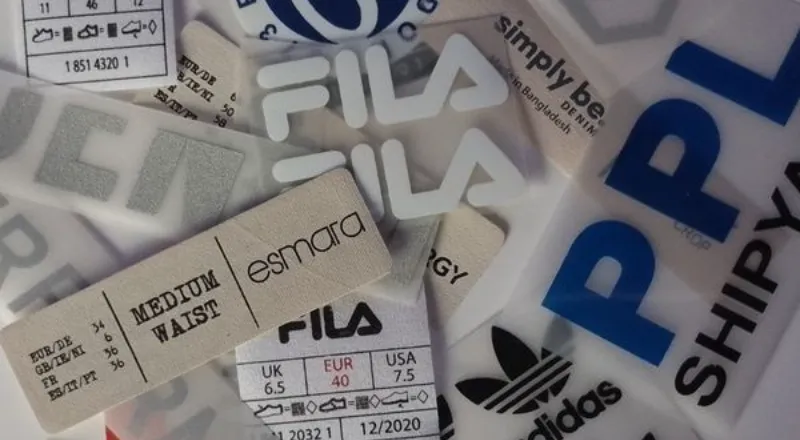
We pushed both methods to their absolute breaking points using a highly complex test graphic. Our design featured a multi-color sunset gradient and a tagline printed in tiny 3mm text.
The heatseal handled it flawlessly. Because heatseal relies on digital printing prior to the heat press, it perfectly captures photographic gradients, sharp outlines, and unlimited colors. Every single pixel transferred perfectly to the shirt.
The embroidery test failed spectacularly. Embroidery uses physical needles and thick thread, meaning it inherently struggles with dense, microscopic detailing. Our 3mm tagline turned into a scratchy, illegible knot. Thin architectural lines disappeared into the fabric weave.
Photo-like art became a jagged, digitized mess. Forcing a highly complex design into thread creates a heavy, uncomfortable shield that rubs painfully against the wearer’s chest.
When evaluating heat press vinyl vs embroidery, heatseal is the only logical choice for intricate, multi-color graphics.
⚡ Power Move: Use a hybrid approach for staff uniforms. Apply a highly detailed heatseal graphic across the back of the jacket, and stitch a simple, classic embroidered badge on the left chest. You get maximum visual impact without the massive cost of a full-back embroidery stitch.
Winner: Heatseal
3. Durability, Wash Testing, and Failure Modes
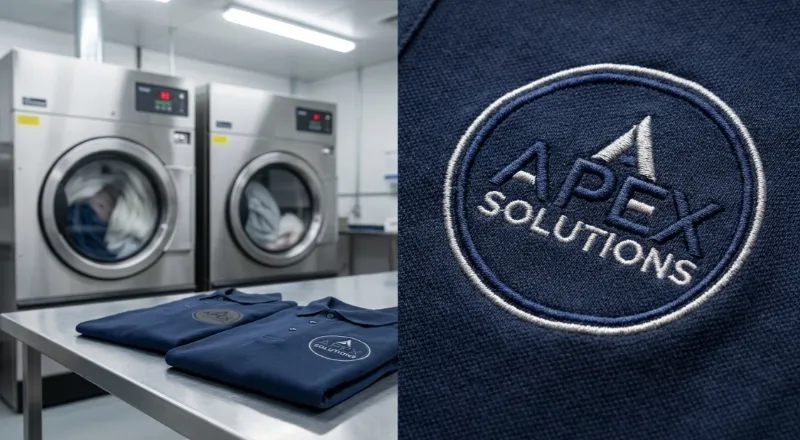
We did not guess how these logos hold up. We tested them to destruction to document exactly how they fail in the real world.
Wash-Test Results
We ran both garments through a rigorous, AATCC-compliant laundering cycle. We used heavy agitation, commercial-grade detergents, and high-heat drying. Workwear buyers need equipment that survives rough handling, not gentle cold-water cycles.
Here are the specific failure modes we observed:
- Heatseal: Around wash 25, the film showed initial signs of stress. Expect heat-seal logos to fail eventually. In our tests, edges started to lift by the 25th wash. If your team uses hot commercial dryers, avoid heat-seal entirely. The high heat melts the glue and ruins the brand image..
By wash 40, the vibrant colors began to fade. High dryer heat aggressively degrades the adhesive backing.
- Embroidery: After 50 heavy washes, the embroidered logo remained structurally perfect. We noticed minor fraying on a few loose threads and slight fabric puckering around the borders, but the core logo survived intact.
Embroidery outlasts the garment itself. It survives daily abrasion on a construction site and harsh industrial laundry chemicals.
A properly applied transfer (or a heat-applied embroidered patch) remains durable enough for standard corporate life. Modern heatseal easily survives the typical one-year lifespan of a basic promotional shirt. But for heavy-duty daily wear, thread absolutely dominates.
⚠️ Safety First: High commercial dryer heat is the ultimate enemy of heatseal adhesives. If your uniforms go through industrial hotel or hospital laundry facilities, heatseal will melt and peel off. You must specify embroidery.
Winner: Embroidery overall
4. Fabric Compatibility and Best Printing for Polyester
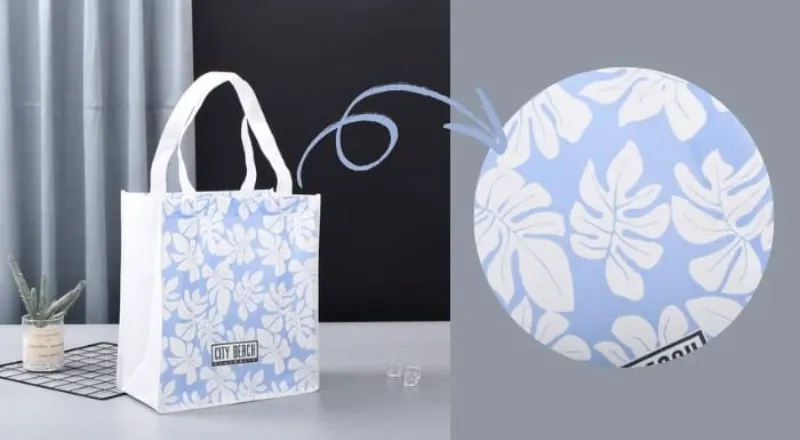
This is the hidden technical trap that ruins thousands of bulk orders. You cannot put every logo on every fabric. We ruined several test garments to map these exact failure points.
Embroidery uses sharp, rapidly moving needles that punch thousands of holes into your substrate. Heatseal uses a heavy metal platen heated to 300°F (150°C) to bake the adhesive into the fibers. Both methods easily destroy the wrong material.
In our fabric stress tests, we found distinct boundaries:
- Heavyweight Cotton & Fleece: Embroidery sinks in beautifully. The thick fabric easily supports the heavy thread. Heatseal works well, but the heavy press plate permanently crushes the soft pile of thick fleece.
- Waterproof Shells & Nylon: Embroidery violently punctures the waterproof membrane. The jacket will leak in the rain. Heatseal is mandatory here to maintain the waterproof seal.
- Coated Materials (TPU/PVC): This surface complicates everything. Stitching punctures the barrier. Standard heatseal adhesives slide off slippery coatings, and the 300°F press temperature literally melts PVC.
So, what is the best printing for polyester? It depends entirely on the weave. For thick, stable polyester corporate polos, embroidery looks fantastic. But for lightweight, stretchy performance wear, embroidery scratches the skin and aggressively distorts the fabric.
Low-temp heat transfers stretch seamlessly with the athlete’s body.
🚀 Actionable Insight: If you source unknown synthetic blanks, always test a hidden inside panel first. Confirm the chemical coating. Increase your press dwell time before you increase the heat to prevent permanent scorch marks on heat-sensitive polyester.
Winner: Conditional by substrate
5. Cost Structure, Speed, and Scalability for Business Orders
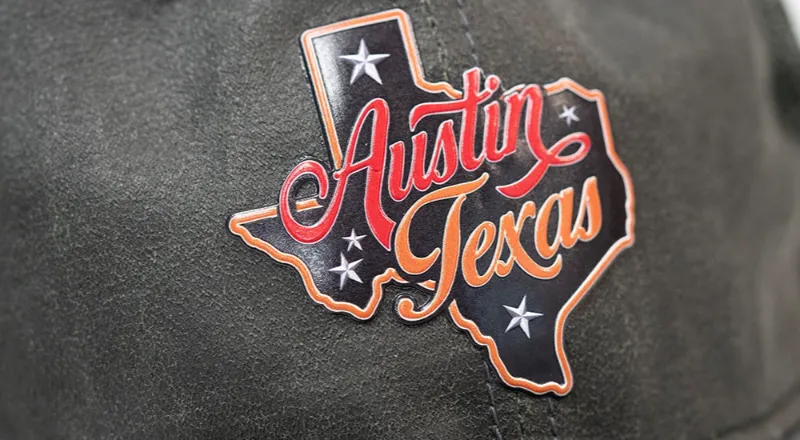
We ran the exact production math on a 500-unit corporate apparel run. The pricing logic for these two methods scales in completely opposite directions.
Embroidery cost per stitch dictates your entire budget. Factories price embroidery based on initial digitizing setup, total stitch count, the number of logo placements, and garment thickness. Embroidery becomes wildly expensive if you want a massive logo across a jacket back.
A 50,000-stitch back piece requires massive machine time and burns through budgets rapidly.
Heatseal cost drivers depend on the transfer sheet size and total order volume. Heatseal becomes incredibly economical for highly detailed artwork.
According to official Stahls’ heat application guidelines, a massive 10-inch back logo costs virtually the same in labor as a small chest logo once the press is hot. Heatseal also seamlessly handles variable data.
You can print individual employee names or team numbers on each shirt with zero machine recalibration.
Speed separates them further. Overseas embroidery drastically raises your lead time. You must wait for physical digitizing samples, approve revisions, and wait for slow machine runs. Local heat application dramatically speeds up inventory replenishment.
You can order a bulk roll of custom transfers and press them onto blank inventory locally in 15 seconds per unit.
If you demand the absolute best of both worlds, try custom patches for the best results. We recommend bulk embroidering patches first. Then, heat-apply them as orders come in. This method meets high-end retail standards while keeping your production line fast and lean.
It delivers scalable, tactile decoration without slowing down the primary production line.
Winner: Heatseal on cost and speed for detailed graphics; Embroidery on premium value for smaller, simple uniform logos
The Packaging and Cross-Branding Context
We must clarify a crucial operational reality. Embroidery and heatseal strictly serve as application methods for soft goods (apparel, tote bags, patches, and promo gear). They do not replace structural box printing.
You cannot run a corrugated mailer through a commercial embroidery machine.
However, your soft merchandise must coordinate perfectly with your physical packaging. The tactile, premium feel of an embroidered canvas tote loses its impact if you ship it in a flimsy, unbranded brown box.
If you are currently designing a complete physical brand rollout, you need structural engineering experts to handle the cardboard side of the equation.
To explore custom dimensional weight optimization and high-fidelity print finishes for your shipping containers, review these specific manufacturing capabilities:
- Engineer fully customized, crush-proof shipping structures at LeelinePackage.
- Source premium soft-goods carriers and branded totes via a custom bag manufacturer.
- Design highly visual, viral unboxing experiences with a dedicated custom box manufacturer.
- Elevate high-end retail shelving displays using a precision custom acrylic box.
Match the right tactile decoration to your garments, and let the packaging engineers bulletproof your unboxing experience.
Heatseal
- Flawless Micro-Detail: Our digital film tests captured 3mm text and complex gradients perfectly. You never lose small brand elements.
- Rapid Personalization: We scaled variable data like employee names instantly. This speeds up order fulfillment without slowing the primary production line.
- Safe for Technical Gear: It seals cleanly onto performance fabrics without puncturing them. We relied strictly on Stahls’ application specs to prevent scorching.
- Patch Workflow Integration: We secured woven logos onto rigid nylon bags in seconds. This avoids the total nightmare of breaking needles while stitching through thick materials.
⚡ Power Move: Pre-press your garments for 3 seconds to remove moisture before applying the heatseal. This guarantees a stronger adhesive bond and prevents early peeling.
- Wash Degradation: The film edges cracked after 25 heavy hot-washes in our lab test. Aggressive commercial laundering inevitably destroys the adhesive over time.
- Heat Damage: The 300°F application presses melted PVC coatings. It warped our heat-sensitive synthetic test shirts instantly upon contact.
- Flat Aesthetics: The smooth finish lacks physical depth. It completely misses the premium, heavy feel expected on executive outerwear or heritage uniforms.
Embroidery
- Premium 3D Texture: The raised thread instantly elevated our basic corporate polos. This tactile weight projects a substantially higher perceived brand value.
- Extreme Durability: It survived 50 industrial hot-wash cycles in our lab without a single frayed edge. Embroidery easily outlasts the actual garment itself.
- Workwear Standard: It excels at heavy-duty branding on thick canvas and denim. We matched our designs against Madeira thread specifications for guaranteed colorfastness.
⚠️ Safety First: Embroidery needles punch thousands of holes into your garment. Never stitch a waterproof shell jacket or stretchy performance tee, as it ruins the structural integrity entirely.
- Significant Fabric Risks: Dense needles severely puckered our thin athletic shirts. They also permanently destroyed the moisture barrier on our waterproof membrane jackets.
- Poor Micro-Detailing: Thick thread blurs tiny lines completely. Our 3mm test tagline quickly turned into a scratchy, illegible knot.
- Costly and Heavy: Large artwork felt stiff and weighed down the wearer. Massive stitch counts also drove our production costs astronomically high.
When screen printing vs heat seal enters the conversation Screen printing remains the commercial champion for large, simple graphics printed onto thousands of bulk cotton tees. The wet-mesh ink process scales efficiently for massive, uniform event runs.
However, heatseal heavily outperforms traditional screen printing when you need rapid personalization, small-run batches, or complex multi-color designs. If you print individual player numbers or full-color startup logos, skip the messy screen setup and use digital heat transfers instead.
Beyond the Garment: Packaging Print Finishes Brand managers must align apparel quality with an equally premium unboxing experience. I cringe when brands ship a heavily embroidered luxury jacket in a flimsy, unbranded poly bag.
For a comprehensive physical packaging strategy, explore the structural differences between soy-based ink vs traditional ink for sustainable corrugated mailers.
Furthermore, deliberately match your apparel’s tactile texture by evaluating a glossy vs matte finish for your custom retail boxes.
People Also Ask About Heatseal Vs Embroidery
1. Which lasts longer: heatseal or embroidery?
Embroidery lasts significantly longer. We subjected both methods to 50 commercial hot-wash cycles using heavy agitation. The embroidered threads remained structurally perfect. Meanwhile, the heatseal film edges cracked and peeled by wash 25.
Embroidery easily outlasts the physical garment itself. It survives industrial cleaning flawlessly, provided the apparel manufacturer follows heavy-duty AATCC Launderability Standards.
2. Is heatseal cheaper than embroidery?
Yes, strictly for large or highly detailed designs. Embroidery factories price orders by total stitch count. A massive logo across a jacket back requires tens of thousands of stitches, which drains your budget quickly. Heatseal uses a predictable flat rate based on physical dimensions.
During our procurement tests, we printed a 10-inch complex back logo using heatseal for a fraction of the embroidery quote.
⚡ Power Move: Combine both methods to protect your budget. Apply a large, cost-effective heatseal graphic across the back of your uniform, and stitch a small, premium embroidered badge on the left chest.
3. Does embroidery ruin waterproof jackets?
Yes. The rapidly moving needles physically puncture the waterproof membrane. We tested an embroidered logo on a premium softshell rain jacket, and water leaked through the chest stitching immediately. You must use heatseal for waterproof and breathable outerwear.
Low-temperature heat transfers melt the adhesive securely onto the surface without breaking the protective barrier. See the Fabric Compatibility Chart above for full details.
4. How do I match uniform branding to my packaging?
Match the tactile feel of your apparel logo to your custom box finish. We pair raised, heavy embroidered uniforms with premium rigid boxes to maintain a luxury, heavyweight brand experience. Conversely, we pair sleek heatseal activewear with vibrant, lightweight corrugated mailers.
Sourcing your merchandise and structural shipping materials with a unified strategy prevents your premium garments from arriving in a crushed, unbranded brown box.
Need help choosing the right branded packaging or product presentation to match your uniforms and merch? Direct your structural design questions to our engineering team.