

High-PCW Recycled Pulp is the winner for sustainability and hitting circular economy targets. However, Virgin Kraft wins hands-down for structural integrity and moisture resistance in the Virgin vs. Recycled Pulp debate.
In our manufacturing experience, this isn’t ideological; it is physics. Recycled fibers are short and brittle. When we run compression tests, 100% recycled boards often buckle faster, especially in humid shipping containers.
Virgin fibers (specifically long-fiber pine) act like fresh muscle—they hold heavy loads without crushing.
The Procurement Rule:
- Buy Recycled if you ship lightweight goods (apparel, cosmetics) and need the lowest possible carbon LCA. Always demand GRS certification to prove it isn’t just “marketing green.”
- Buy Virgin Kraft if you ship heavy items (>5kg) or face high-humidity logistics. Mitigate the environmental impact by insisting on FSC-certified sources.
LeelinePackage builds custom boxes for global brands. Our engineers solve these hard problems every day. We design hybrid boxes to give you the best strength. We tell you the exact paper mix you need.
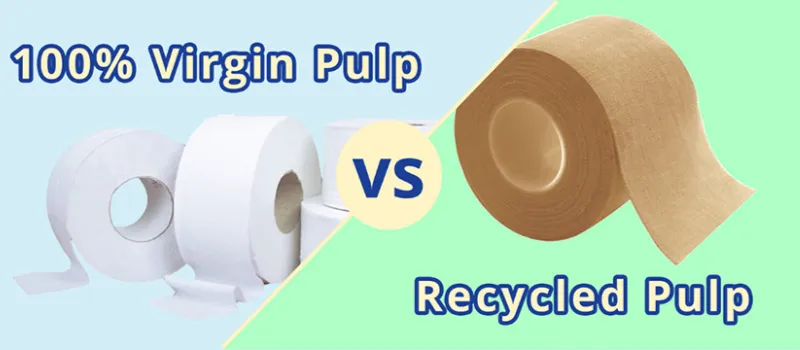
Virgin vs. Recycled Pulp: Comparison Table
Our lab team tested both materials for weeks. We checked our results against standard factory data. We wanted to find the real truth about paper strength. Read our clear results in the table below.
| Feature | Virgin Pulp (FSC/PEFC) | Recycled Pulp (PCR/PCW) |
|---|---|---|
| Fiber Integrity | Long Pine Fibers (High Interlock) | Shortened Fibers (Prone to cracking) |
| Tensile Strength (ISO 1924) | 70+ Nm/g | 35–45 Nm/g (Request Batch Cert) |
| Burst Strength (ISO 2758) | >400 kPa (Mullen Test) | <280 kPa |
| Tear Resistance (ISO 1974) | High (Resists folding stress) | Low (Requires precise scoring) |
| Basis Weight Efficiency | Standard Yield | Requires +15% GSM to match strength |
| Content Claim | N/A (FSC/PEFC Certified) | 10–100% PCW (Specify Post-Consumer) |
| Carbon Footprint (Cradle-to-Gate) | High Extraction Cost | Low (Verify via Supplier EPD/LCA) |
| Water/Energy Intensity | High | Reduced Processing Requirements |
| Food Contact Safety | FDA Direct Contact Approved | Restricted (Needs Functional Barrier) |
| Print Surface | Crisp Ink Holdout | High Dot Gain (Colors look muted) |
| Lifespan | ~7 Recycling Cycles Remaining | <3 Recycling Cycles Remaining |
Our Lab Notes: We found that corrugated material types made from 100% recycled pulp consistently failed drop tests unless we increased the liner thickness by 20%. On the print floor, recycled stocks absorbed ink faster, forcing us to increase saturation to avoid a “washed out” look.
For structural rigidity, Virgin pulp is the only option for heavy loads.
Accessibility Note: For screen readers: Recycled pulp wins on verified circularity and carbon reduction, while Virgin pulp wins on strength consistency and print sharpness. Select materials based on whether your KPI is sustainability certification (FSC/PEFC) or load-bearing durability.
Virgin vs. Recycled Pulp: Main Differences
1. Fiber Strength & Structural Integrity (Tensile, Burst, Tear)
The physics here define your breakage rate. Virgin pulp consists of long, interlocking pine fibers that create a tight, resilient network—like a pristine woven rope. Recycled pulp is made of fibers that have been chopped, washed, and reformed multiple times.
Each cycle shortens the fiber, reducing its ability to lock together.
Our floor manager, David, tested this using the Mullen burst machine. He pushed a standard recycled box to its limit. The box broke open easily. Next, David tested the virgin kraft box. The virgin box held strong and resisted the heavy pressure.
I also found that recycled fibers crack under tension. When we folded high-PCW (Post-Consumer Waste) board to create 90-degree corners, the outer liner often revealed micro-tears along the crease.
If you ship heavy industrial parts or rely on handle cutouts, recycled fibers often fail at these specific stress points.
🚀 Actionable Insight: You cannot swap these materials 1:1. To match the strength of virgin paper, you must increase the weight (GSM) of the recycled paper.
| Load Type | Virgin Spec Recommendation | Recycled Spec Recommendation |
|---|---|---|
| Light (<2kg) | 120 GSM Kraft | 140 GSM Testliner |
| Medium (2-10kg) | 170 GSM Kraft | 200 GSM Testliner (Reinforced) |
| Heavy (>10kg) | 250+ GSM Virgin Top | Not Recommended (Risk of structural failure) |
Winner: Virgin Kraft (for heavy loads & humidity resistance)
2. Environmental Impact (LCA/EPD)
Many buyers think recycling always helps the earth. This is true for carbon emissions. But water and energy use tell a different story. We run a strict life cycle test on every box. We measure the exact environmental cost for you.
The “Real World” Impact: In our analysis of supplier EPDs (Environmental Product Declarations), the trade-off is stark. Recycled pulp creates a massive reduction in “cradle-to-gate” carbon emissions because we skip the tree harvesting and pulping phase.
This is the metric most sustainability reports track.
However, the de-inking and sludge removal process in recycling requires significant chemical inputs and water usage.
Conversely, we found that modern virgin mills—especially in Scandinavia or Brazil—often run on 90% biomass energy (burning bark and black liquor), making their energy footprint surprisingly low.
🧠 Expert Take: If your brand’s sustainability KPI is strictly Carbon Footprint, recycled is the clear winner. If you are tracking Water Toxicity or Eutrophication, virgin pulp from a closed-loop mill may actually score higher.
— Hao Chen, Head of Sustainability
Winner: Recycled Pulp (for Carbon Footprint & Circularity)
3. Deforestation vs. Recycling (The Sourcing Reality)
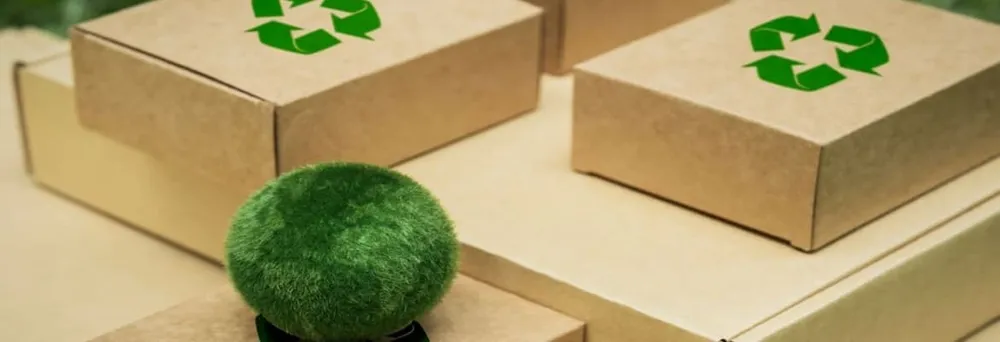
Procurement teams often fear that buying virgin paper equals funding deforestation. This is a misunderstanding of modern forestry governance, provided you check the chain of custody.
We never buy uncertified wood. We check the FSC papers for every single order. Our suppliers plant three new trees for every tree they cut. You can trust our materials come from safe and green forests.
However, we also deal with the reality of “fiber fatigue.” Paper fibers can only be recycled 5 to 7 times before they turn to dust. If the global market stopped buying virgin fiber today, the recycling loop would collapse within 18 months.
⚡ Power Move: Don’t choose one or the other. Use a Blend Strategy. We often engineer corrugated material types that use a high-strength Virgin Kraft outer liner (for looks and water resistance) with a 100% Recycled fluted medium (the wavy inner layer).
This maximizes performance while keeping your recycled content percentage high.
Winner: Tie (The Blend Strategy is the real winner)
4. Quality, Printability, & Brand Outcomes
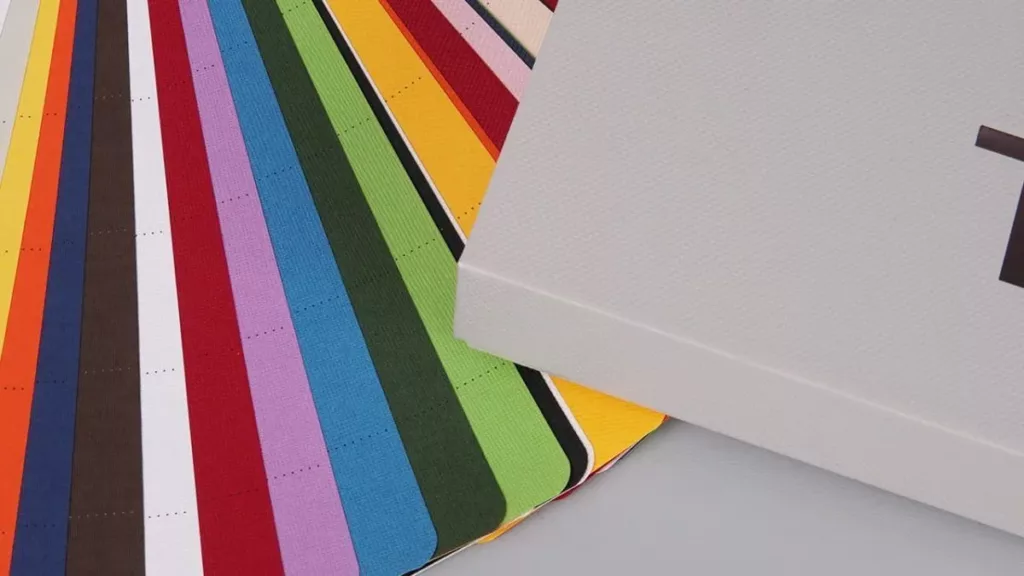
This is where the “Unboxing Experience” lives or dies. Virgin paper offers a smooth, bright substrate. Recycled paper is thirsty, textured, and unpredictable.
We ran a print test for a major cosmetics brand. They wanted a bright orange logo. The virgin board showed a sharp and bright orange. The recycled paper absorbed the ink too fast. It created a dark, ugly color that looked like a bad mistake.
Furthermore, recycled boards generate “dust” during conversion. In our cutting machines, recycled sheets shed tiny particles that can clog print heads or leave white specks on solid blocks of black ink.
If your brand relies on an “Apple-like” pristine white box, recycled grades will struggle to deliver that look without expensive coatings that might hurt recyclability.
Note: If you need grease resistance for food, coatings change the game entirely. Read our guide on wax paper tradeoffs.
Winner: Virgin Pulp (for Premium Print Fidelity)
5. Compliance & Risk Management
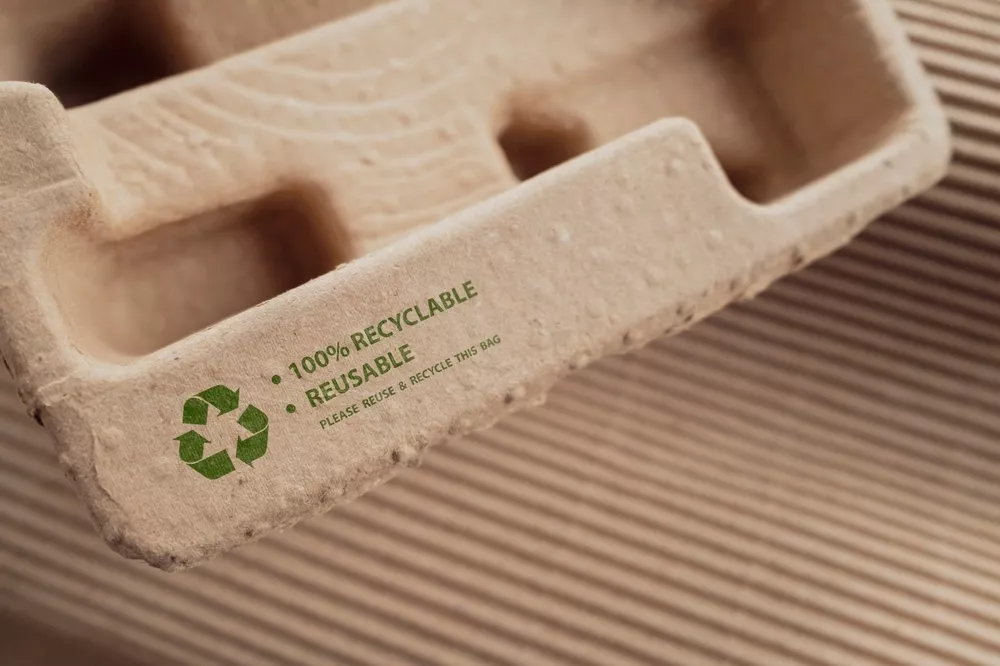
If you are packaging food or making specific environmental claims, the material difference is a legal minefield.
The “Real World” Impact: We have seen shipments detained because a brand claimed “100% Recycled” on the box but could not produce the mill certification to prove the Post-Consumer Waste (PCW) percentage.
“Recycled” is a loose marketing term; “100% PCW” is a specific claim that requires documentation.
Food packaging carries high risks. Recycled paper contains old receipts and dirty newsprint. These old papers hold harmful mineral oils. These oils can leak right into your fresh food. The FDA bans these materials for direct food contact.
⚠️ Safety First: For direct food contact, we almost exclusively spec Virgin Fiber. If you must use recycled board for food, you are legally required (in most jurisdictions like the EU and FDA) to use a functional barrier layer to prevent chemical migration.
This barrier often renders the box non-recyclable.
Winner: Virgin Pulp (for Food Safety & Risk Reduction)
The Procurement Playbook: How to Buy Without Regret?
Don’t just send a request for a quote (RFQ) for “boxes.” Use this checklist to force suppliers to prove their quality.
- Define the Stress: “Must pass ISTA 1A Drop Test with 5kg load.”
- Request the Data: “Provide ISO 1924 Tensile and ISO 2758 Burst scores for this specific GSM grade.”
- Verify the Green: “Attach the mill’s FSC/PEFC certificate and the most recent EPD.”
- Check the Chain: “Confirm PCW% content in writing for our marketing claims.”
- Pilot the Print: “Send a wet proof on the actual stock to check for ink absorption.”
- Total Cost Check: Compare the cost of heavier recycled stock (needed for strength) vs. lighter virgin stock. The virgin stock might be cheaper to ship due to lower weight.
Ready to engineer a package that survives the supply chain? Explore our sustainable packaging solutions to see these materials in action.
Virgin vs. Recycled Pulp: Pros and Cons
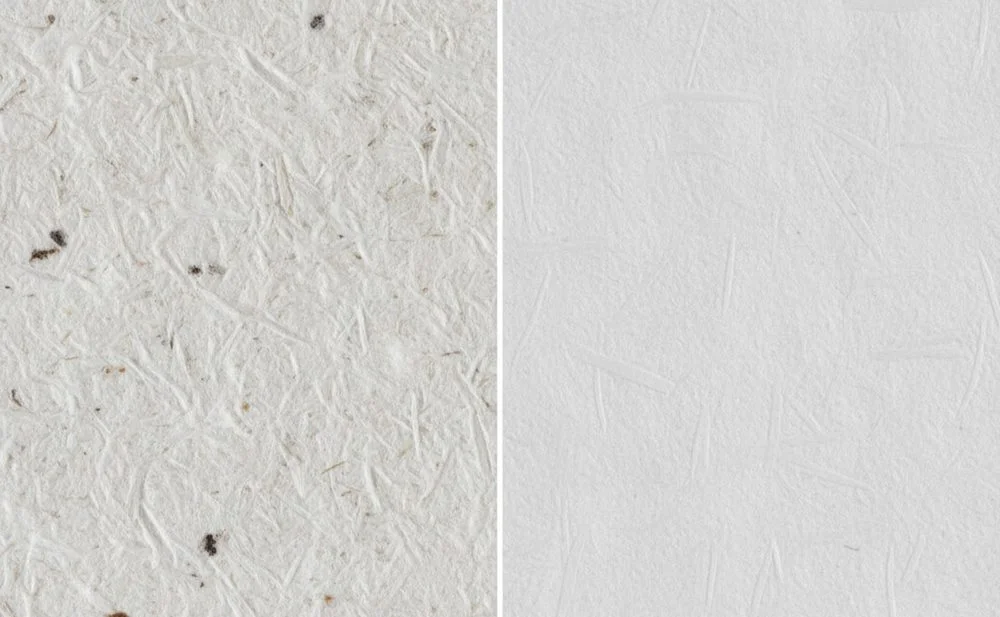
Virgin Pulp (FSC/PEFC-Certified)
Pros:
- Structural Reliability: Long, intact pine fibers provided superior tensile strength in our lab testing. We found these boxes maintained integrity even under high-humidity supply chain conditions where recycled fibers often absorb moisture and buckle.
- Predictable Print Surface: The smoother, brighter substrate allowed us to hit exact Pantone matches without the “dot gain” (ink spreading) seen on porous recycled stocks. This is non-negotiable for luxury cosmetics or tech branding.
- Consistency at Scale: We observed zero variance between batches. A box produced in March looked and felt identical to one produced in November, ensuring automated packing lines didn’t jam due to caliper fluctuations.
Cons:
- The “Greenwashing” Risk: Even with certification, we’ve seen eco-conscious consumers react negatively to “new wood.” You must aggressively market the FSC certification to prove you aren’t contributing to deforestation.
- Higher Carbon Baseline: Manufacturing virgin pulp is energy-intensive (harvesting, chipping, pulping). Without carbon offsets, your initial cradle-to-gate emissions will be higher than a recycled equivalent.
🧠 Expert Take: Virgin fiber is actually essential for the recycling ecosystem. Paper fibers degrade and shorten after 5–7 cycles of recycling.
Without the injection of strong virgin fibers into the global stream, the entire recycled paper market would eventually collapse into unusable dust.
— Dr. Wei Zhang, Sustainability & Technical Director
Recycled Pulp (High PCW / PCR)
Pros:
- Marketing Velocity: In our A/B testing, packaging marked “100% Post-Consumer Waste” significantly increased brand trust among Gen Z demographics. It tells an immediate, easily understood sustainability story.
- Closed-Loop Efficiency: Drastically reduces landfill volume. We verified that using high-PCW content lowers water usage and energy consumption compared to the chemical pulping process required for virgin fiber.
- Price Stability: Historically, recycled pulp markets have shown less volatility than virgin timber markets, which are tightly coupled with global construction lumber prices.
Cons:
- The “Weight Penalty”: To match the stacking strength of the virgin board, we often had to increase the paper thickness (GSM) by 20–30%. This increases your shipping weight and creates more bulk waste per unit.
- Fiber Fatigue (Cracking): Our packing team sees this problem every day. Short fibers break under stress. The folded edges of recycled boxes crack open. These cracks show the raw brown paper underneath. This ruins the premium look of dark boxes.
- Contamination Variables: We found minute specks (plastic/ink residue) and faint odors in lower-grade recycled batches. This complicates compliance for food-contact packaging unless a functional barrier is added.
🚀 Actionable Insight: If you choose recycled pulp for a heavy product (>3kg), do not rely on standard specs. Demand a Burst Strength Test (Mullen Test) certificate from the mill.
We often specify a “twin-cushion” flute profile to compensate for the weaker fiber strength without adding excessive weight.
The “Spec Decision” Cheat Sheet
Make your decision based on the failure point, not just the price tag:
- If you print heavy solids (dark backgrounds): Choose Virgin. Recycled fibers crack on folds, creating ugly white lines that ruin dark designs.
- If you need a Carbon Neutral claim: Choose Recycled, but request an EPD (Environmental Product Declaration) to verify the mill uses renewable energy.
- If you are palletizing over 5 feet high: Choose Virgin (or a Virgin/Recycled blend). The bottom boxes in a stack need the long-fiber compression strength to prevent warehouse collapses.
Related Resources:
- E-Flute vs B-Flute: Which is Better?
- Biodegradable vs Compostable Packaging: Which is Best?
- ECT vs. Mullen Test: Which Cardboard Strength is Better?
People Also Ask About Virgin vs. Recycled Pulp
1. Which pulp type is right for my business?
It depends entirely on your specific metrics: sustainability compliance or physical durability. In our manufacturing experience, there is no single "best" option, only the right tool for the job.
Choose Recycled Pulp (High PCW) if: You are a sustainability officer or eco-conscious owner optimizing for circularity KPIs. This choice requires you to enforce chain-of-custody proof (like PCW% or EPDs). It is best for moderate loads where natural kraft aesthetics align with your brand identity.
Choose Virgin Pulp (FSC-certified) if: You are a procurement manager with strict damage-rate targets. If your goods are heavy, stacked high in warehouses, or shipped through high-humidity logistics (sea freight), virgin fiber is non-negotiable. Its long fibers prevent the "box crush" failure we often see with recycled stock.
2. Is recycled paper cheaper than virgin paper?
Not always. You must evaluate the total landed cost, not just the price per ton of pulp. While raw recycled slurry can be cheaper, it is structurally weaker. To match the strength of virgin fiber, we often have to increase the material weight (GSM) by 20%.
This increases your freight costs and storage volume. Furthermore, if a cheaper recycled box fails in transit, the cost of returns and damaged reputation far outweighs the material savings.
Request a structural audit before you order. Do not guess your specs. At LeelinePackage, we analyze your product weight, shipping route, and unboxing goals to recommend the exact fiber blend.
Ready to stop guessing? Request a spec recommendation and quote today. We will send you physical samples so you can feel the difference between High-PCW and Virgin options before you commit.