

Corporate sustainability mandates often fail because bio-based materials behave differently than petroleum standards. In recent Sustainable Packaging Manufacturing trials at LeelinePackage. I found that compostable films are drastically less forgiving.
Seal bars require tighter thermal windows to prevent warp, and recycled boards generate excess dust that clogs sensors.
You cannot simply swap materials. You need a rigorous process to transition without blowing up scrap rates or lead times.
This guide outlines the execution roadmap we use for custom box manufacturer, covering the entire scope from material selection and converting to global logistics.
We will examine critical phases including supplier qualification, ASTM D6400 compliance, and pilot validation. You will leave with a line-change checklist and a clear path to stable, scalable production.
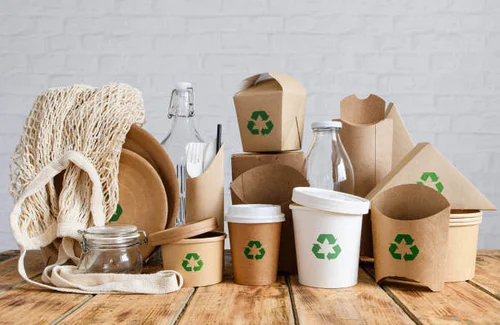
Project Prerequisites: Audit & Planning
Time: 2–12 Weeks | Difficulty: Intermediate
Treat this as an engineering change order, not a marketing refresh. In my experience, sustainable transitions fail when teams launch trials without baseline data or let Marketing run the project without Operations.
Here is what you need to prepare:
- The Room: Include Operations/Plant Lead, Packaging Engineers, QA, and Compliance.
- Baseline Data: Collect BOMs broken down by component (substrates, inks, adhesives, labels). You need exact weights, scrap rates, OEE constraints, and freight DIMs.
- LCA Tools: Define your functional unit (e.g., “1,000 units delivered intact”). Use openLCA or SimaPro to model carbon impact accurately.
- Compliance Standards: Bookmark the specific regulations you must meet:
- Compostability: ASTM D6400
- Management: ISO 14001
- Sourcing: FSC Chain-of-Custody
- Safety: Cradle to Cradle
- Safety Protocols: If food-contact, confirm migration testing requirements. For grease barriers, demand PFAS-free lab screening and SDS availability for new solvents.
⚡ Power Move: Establish “Kill Criteria” before ordering samples. Define pass/fail gates for cost (e.g., max +15%), performance (ISTA drop tests), and infrastructure reality.
If a material increases scrap or isn’t recyclable in your target region, kill it immediately to prevent greenwashing.
Step 1: Audit Your Current Packaging Baseline
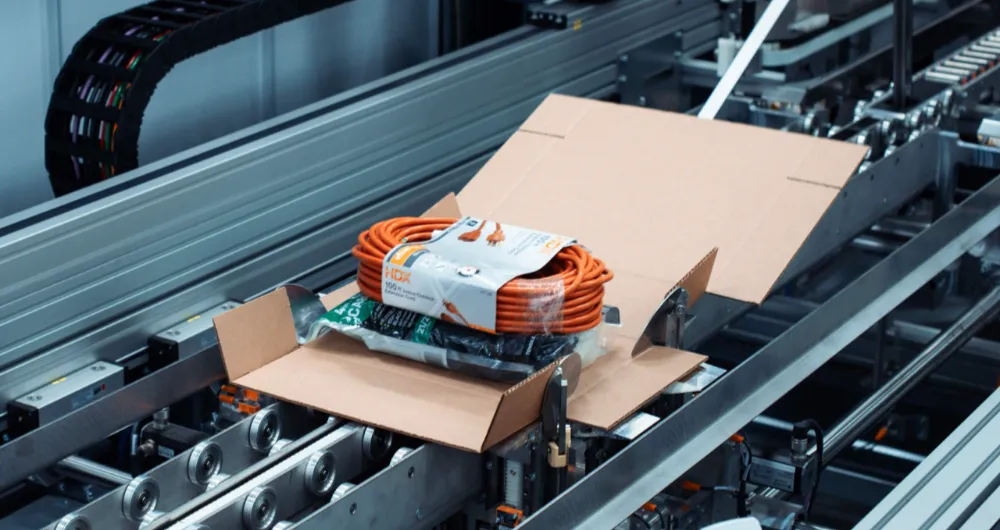
- Map your inventory. Categorize every item into Primary (product contact), Secondary (grouping), or Transit (shipping).
- Build a one-page SKU baseline. Record material grammage, converting methods (gluing, die-cutting), and print finishes. Note: Finishes like high-gloss UV often block recyclability.
- Capture machine reality. Log current line speeds, seal temperatures, and dwell times. In my floor audits, I look for piles of scrap at the winder—this usually indicates unlogged downtime or operators guessing at settings.
- Audit storage conditions. Check warehouse humidity levels. I have found that paperboard often warps in high moisture, causing jam-ups that operators incorrectly blame on machine timing.
- Assign disposal paths. Define Recycle, Compost, or Landfill outcomes for each target market based on local infrastructure.
- Standardize visual controls. Tag floor samples with text and icons (Hold, Rework, Release). ⚠️ Warning: Never rely on color-coding alone; it causes critical errors for colorblind staff.
⚠️ Experience Warning: Ignore the PDF Spec Sheet. I frequently find the material running on the machine differs from the official file because procurement swapped suppliers mid-year without updating the documentation. Always weigh and measure the physical samples yourself.
Step 2: Define Metrics and Operational Constraints
Generic mandates like “100% Plastic-Free” often create “meeting-room failures”—concepts that look good on slides but leak, warp, or crush in transit. You must define success with physics, not just optics.
- Select 3–5 North-Star Metrics. Focus on operational KPIs rather than marketing fluff. Track GHG per functional unit (CO2e per shipped item), Recycled Content % (Post-Consumer Waste), and Recyclability within your specific target regions.
- Note: Always include Damage Rate. In our tests, a 1% increase in product breakage negates the carbon savings of a 20% lighter box.
- Run a Screening LCA. Compare current specs against candidates using the EPA LCA Guidelines. You must explicitly define assumptions:
- Energy Grid: Are you manufacturing in a coal-heavy or hydro-heavy region?
- Transport: Air freighting “eco-friendly” heavy glass often emits more than trucking lightweight plastic.
- Set “Must Not Worsen” Constraints. Prevent operational drag by setting hard floors. The new solution cannot degrade:
- Barrier Performance: Seal integrity must match current shelf-life needs.
- Line Speed: Cap acceptable slowdowns (e.g., max 10% delta).
- Total Cost of Ownership (TCO): Include freight and waste disposal, not just unit price.
🧠 Author’s Verdict: I never approve a “sustainable” material change without a Line Speed stress test. If a new bio-film requires slowing the heat-sealer down by 50%, the manufacturing energy cost per unit spikes, often canceling out the material benefit.
Step 3: Convert Marketing Claims into Technical Specs

In manufacturing, the most expensive mistake isn’t a printing error. It is a customs rejection. You must translate external marketing wishes into internal engineering restrictions to ensure your shipment clears the border.
1. Map claims to target markets. Regulations differ by region. A “Compostable” logo valid in California may be illegal in France without domestic registration. List every country where the package will be sold to identify conflicts.
2. Convert claims into engineering specs. Never use vague terms like “Biodegradable” on a Bill of Materials. Specify the exact test standard required by the FTC Green Guides.
- Compostability: Require ASTM D6400 (US) or EN 13432 (EU).
- Safety: Mandate heavy metals testing for all inks.
3. Build a “Documentation Pack” per SKU. Collect these documents before approving artwork:
- Chain-of-Custody: FSC certificates to prove material origin.
- Lab Reports: Migration testing if packaging touches food.
- Certification Marks: Proof of license for logos like BPI.
4. Attach a compliance checklist to the RFQ. Force the supplier to sign off on these specific standards before paying the deposit.
⚠️ Experience Warning: The “Sticker” Penalty I have seen shipments held indefinitely because a claim lacked a dated lab report. It is cheaper to fix the design now than to pay a warehouse team to manually sticker-over 50,000 units at the border.
Step 4: Build a Validated Material Decision Matrix
Do not select materials based on digital renderings alone. In my experience, operators immediately notice tactile flaws that photos hide. Bio-films often run stiffer and noisier on the unwind, while recycled boards generate sensor-clogging dust.
Construct your matrix using this hierarchy to balance sustainability with runnability:
- Fiber (FSC/Recycled): Best for cartons and rigid mailers. ⚠️ Warning: Ensure coatings (laminates) do not block recyclability.
- Molded Pulp: Ideal for internal trays. Validate strength under high humidity; I found pulp often softens significantly in damp warehouses.
- Compostable Biopolymers (PLA/PHA): Best for clear bags. Note that the heat-seal window is often 10°C narrower than standard plastic.
- Drop-in Bio-Resins (Bio-PE): Use only if compatibility with existing recycling streams is the priority.
Verify the specifications. Shortlist 2–3 candidates per format. Request a Certificate of Analysis (COA) and consult the ASTM Standard Guides for testing protocols.
Define by grade, not color. Never order “green film.” Specify “PLA film, 40 micron, industrial compostable.” Vague descriptions allow vendors to swap in cheaper, non-compliant blends that look identical but fail on the line.
⚠️ Experience Warning: The Dust Factor During a transition to 100% recycled corrugated board, we faced constant downtime because the material generated excessive paper dust. We had to increase die-cleaning frequency from weekly to daily. Factor this maintenance into your labor costs.
5. Engineer the Structural Dieline

You cannot manufacture your way out of a bad structure. Circularity must be designed in, not inspected in.
Follow this sequence to ensure structural integrity and circularity:
- Right-size the footprint. Reduce the box dimensions to “hug” the product. Removing just 2cm of air gap eliminates the need for void fill and increases pallet density.
- Prioritize mono-materials. Select single-substrate structures (100% corrugated) to streamline recycling. Avoid bonding plastic windows to paper cartons unless critical for preservation.
- Engineer structural inserts. Replace plastic trays with custom paper-based or molded pulp supports. I recommend using custom structural work to create folds that lock irregular items in place without adhesive.
- Add alphanumeric assembly cues. Do not rely on color coding (e.g., “Fold the green flap”). Instead, print instructions directly on hidden flaps: “Insert Tab A into Slot 1.” This ensures accurate manual packing regardless of lighting or color vision.
- Print disposal instructions. Label the bottom flap with clear recycling steps (e.g., “Flatten to Recycle”) to prevent the box from ending up in a landfill.
⚡ Speed Verification: The “Spring-Back” Test In our tests, cardboard with high recycled content is stiffer and has higher “memory” than virgin fiber.
- The Test: Fold the box and release the flaps.
- The Failure: If the flaps spring open more than 15 degrees, the glue lines will fail during high-speed packing.
- The Fix: Program deeper scores or perforations into the dieline to break the fiber memory.
Step 6: Vet Suppliers with a Transparency Scorecard
Weight data transparency as heavily as unit cost on your supplier scorecard. In my experience, receiving vague PDFs or mismatched addresses typically indicates a broker masking as a manufacturer.
Require this auditable evidence package:
- FSC Chain of Custody (CoC): Verifies fiber traceability. You cannot legally use FSC logos without this specific certificate.
- ISO 14001: Confirms an active Environmental Management System (EMS).
- Cradle to Cradle Certified: Validates material health and circularity.
- Compostability Marks: Demand the specific standard (e.g., ASTM D6400).
Verify factory floor controls:
Paperwork isn’t enough. During site visits, I inspect these four physical areas:
- Incoming Material: Check that raw roll lot numbers match delivery notes.
- Segregation: Ensure certified stock is physically separated from non-certified materials.
- Change Control: Verify ink/coating changes are logged to prevent contamination.
- Waste Handling: Confirm regrind and offcuts are tracked, not randomly dumped.
Approve the supplier only after both documentation and physical audit checks pass.
⚠️ Experience Warning: The “Scope” Trap I often see valid ISO certificates that cover “Sales Office Management” but exclude the “Manufacturing Floor.” Always read the Certification Scope fine print. If it omits the production line, it is useless for compliance.
Step 7: Execute the Pilot Run and Validate Process Windows
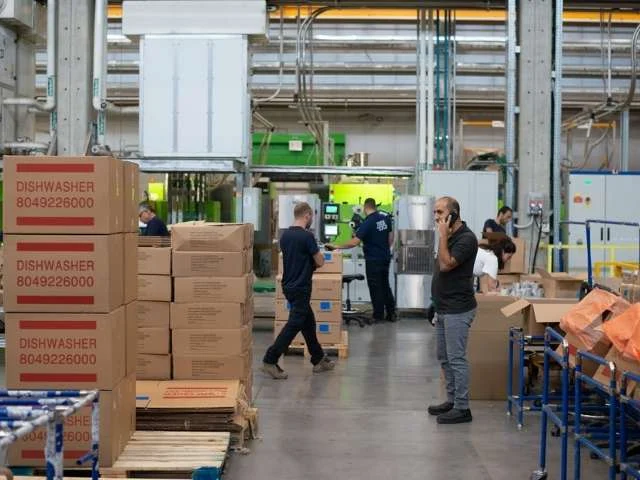
Switching to biopolymers offers zero forgiveness. In my floor runs, I often see clear films turn “milky” or curl at the forming shoulder simply because factory humidity spiked by 10%. You must capture these sensory shifts in a controlled pilot.
1. Isolate the blast radius Select one SKU family on one line. Define baselines for temperature, dwell time, and pressure. Biopolymers require a tighter thermal window; I found that standard settings often melt the web entirely.
2. Condition the material Bring rolls onto the floor 24 hours before the run. Cold bio-films in a warm factory warp immediately and jam the forming tube.
3. Run stepwise speed ramps Start at 50% speed. Ramp up in 10% increments and log specific defects:
- Glassy seals? Lower the heat.
- Pinholes? Increase dwell time.
- Tearing? Check unwind tension.
4. Validate with exact metrics Update work instructions with photos. Don’t say “Check seal quality.” Write “Reject if seal width < 5mm.” Perform Burst Tests and consult ISTA testing protocols for compression standards immediately.
⚡ Speed Verification: The Outsourcing Pivot If your machinery cannot maintain the tight thermal window required for compostable films, outsource the converting step. I often have a specialist partner form the pouches, then bring them in-house just for filling.
This bypasses the forming bottleneck while you wait to upgrade your sealing jaws.
Step 8: Standardize Quality Control (QC) Protocols
Sustainable materials often suffer from “quiet failure”—packs look perfect on the line but delaminate in humid shipping containers weeks later. In my experience, visual checks are not enough. You must implement a three-layer defense system to catch these invisible defects.
- Incoming QC: Verify the Certificate of Analysis (COA) against your spec sheet immediately. I always test moisture content on fiber rolls; if the material arrives too dry, it will crack during folding.
- In-Process QC: Run hourly Seal Strength and Print Rub tests. Ensure water-based inks are fully cured before stacking to prevent “ghosting” (ink transfer).
- Final Release: Execute a strict sampling plan. For compostable claims, ensure batch documentation explicitly references ASTM D6400 standards. For shipping durability, consult ISTA testing protocols.
Define Acceptance Criteria Move beyond “good enough.” Set numeric thresholds for Peel Strength (e.g., >15N/15mm) and Compression Limits. Build a Visual Defect Catalog with text descriptions and photos of acceptable variations versus hard rejects.
Ensure the final QC plan is signed off by QA and tied directly to the PO.
⚠️ Experience Warning: The Lab Lag Bio-materials change over time. I once approved a production run that passed initial lab tests but failed a shelf-life screen 30 days later due to plasticizer migration.
Always keep “retain samples” in a controlled environment to mirror your customer’s warehouse conditions.
Variation—not price—is the biggest risk in Sustainable Packaging Manufacturing. I have seen production lines grind to a halt because a “recycled” board batch arrived 10% softer than the previous lot, causing massive print shifts and jamming automated feeders.
To prevent inconsistent lots and sudden MOQ jumps, you must transition from concept to contract immediately:
- Lock CTQ Specs: Do not list generic “Recycled Cardboard.” Specify Material Grade, Grammage (GSM), and Caliper Tolerances (e.g., ±0.05mm). Explicitly list Approved Alternates so procurement can pivot without stalling production.
- Secure Procurement: Dual-source critical substrates or pre-qualify a backup factory. Sustainable mills often have erratic lead times; I found that holding Safety Stock for certified materials is mandatory to bridge gaps. Include Right-to-Audit clauses to prevent material substitution.
- Optimize Logistics: Don’t ship air. Use Flat-Pack Optimization to cut freight costs. Design Pallet Patterns that align box flutes vertically to prevent crush damage.
- Verify Supply Plans: Ensure your Forecast, Reorder Points, and Lead Times align with the reality of the new material’s availability.
For accurate reporting, calculate logistics emissions using the Smart Freight Centre’s GLEC Framework.
⚠️ Experience Warning: The “Warpage” Effect Storage kills sustainable materials faster than virgin stock. In our warehouse tests, high-recycled-content boards absorbed moisture rapidly, leading to warpage that rendered the packaging unusable on the line.
Always specify humidity-controlled storage or moisture-barrier pallet wrapping.
Step 9: Operationalize Sustainability on the Shop Floor
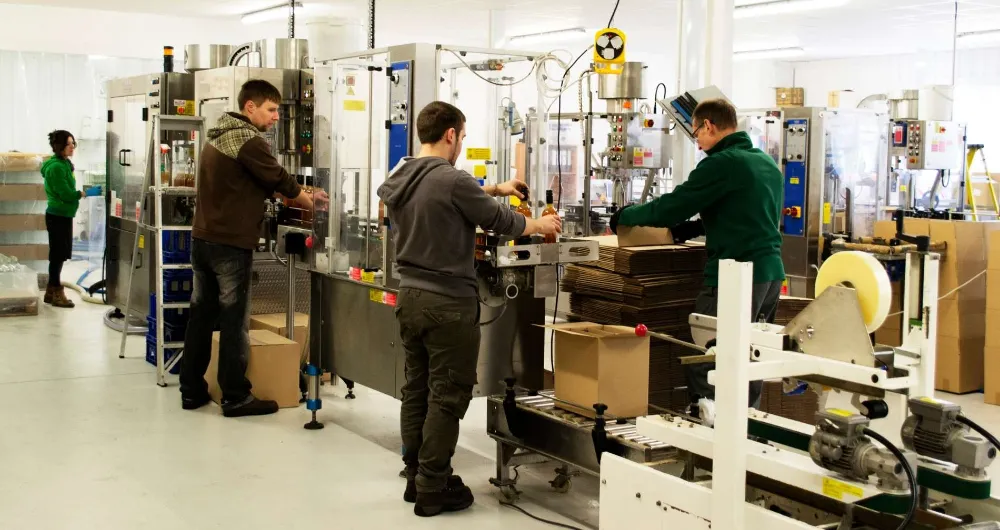
Sustainability evaporates if you ignore the machine mechanics. In my experience, running “eco-friendly” water-based inks often requires increasing dryer temperatures, which spikes energy consumption and negates the material’s carbon benefit.
1. Define Your Carbon Boundary Use the GHG Protocol Corporate Standard to separate what you control (Scope 1 & 2) from upstream material production (Scope 3). Focus your initial efforts strictly on variables inside your factory walls.
2. Conduct a ‘Sensory Check’ Walk the floor during a changeover to identify high-leverage energy leaks:
- Compressed Air: Listen for hissing in pneumatic folding arms. I found that fixing just five leaks in a corrugated line saved 15% of the compressor load.
- Thermal Efficiency: Clean heat exchangers on dryers and ovens. Water-based coatings require more energy to cure, so thermal transfer must be optimized.
3. Close the Internal Scrap Loop Sustainable boards often generate more trim waste due to fiber stiffness.
- Reclaim Offcuts: Shred unprinted corrugated trim and bale it directly for the pulper.
- Reuse Setup Waste: Use start-up sheets (makeready) as dunnage or pallet sheets for internal transport.
4. Verify with Post-Pilot LCA Update your Life Cycle Assessment (LCA) data. If your scrap rate increases by 2% or line speed drops by 10% due to the new material, your “green” packaging may have a higher carbon footprint than the plastic it replaced.
🧠 Author’s Verdict: The “Hidden” Water Cost Be vigilant with Washdown Water. Switching to water-based flexo inks often triples the water volume needed to clean plates between jobs. I recommend installing a simple filtration unit to recycle wash water, or your effluent costs will explode.
Troubleshooting Common Failure Points
Sustainable packaging manufacturing transitions often fail when teams treat new materials like drop-in replacements. In my fieldwork, I found that bio-based substrates are far less forgiving than petroleum plastics. Use this guide to save your pilot run.
1. High Scrap Rates (Sealing Issues)
- Diagnosis: The thermal processing window is too narrow.
- Fix: Bio-polymers need precise heat. Slow line speed by 15% to increase dwell time, then re-map thermal settings.
📝 Editor’s Verdict: I often see operators crank up the heat to fix weak seals. With bio-films, this melts the web instantly. Lower the speed instead.
2. Retailers Reject Claims
- Diagnosis: Vague labeling (e.g., “Biodegradable”) violates compliance.
- Fix: Align text with ASTM D6400 or EN 13432 standards. Keep test reports accessible.
⚠️ Warning: Never use “Biodegradable” without a timeline. It invites lawsuits in the EU and California.
3. Boxes Crushing in Storage
- Diagnosis: Humidity weakens recycled fibers.
- Fix: Upgrade the structure (e.g., B-flute to C-flute) or add a moisture-resistant coating.
💡 Diagnostic: Check your bottom pallet. A recycled board acts like a sponge; if the bottom layer buckles, your stacking pattern or humidity control is failing.
4. Ink Rub-Off
- Diagnosis: Porous recycled paper absorbs ink too quickly.
- Fix: Switch to UV-cured inks or apply a sealing primer.
- Prevent: Mandate rub-testing on every incoming batch.
5. Supply Bottlenecks
- Diagnosis: Single-sourcing limited certified materials.
- Fix: Qualify a secondary mill immediately.
🛡️ Prevention: Hold 30% more safety stock. Certified mills often have 12-week lead times.
6. PFAS Compliance Flags
- Diagnosis: Undocumented chemistry in grease barriers.
- Fix: Require Total Fluorine screening from suppliers.
⚠️ Warning: If you detect chemical migration in food-contact packaging, stop the line. Isolate the batch and trigger a QA review immediately.
Escalation Protocol
If safety risks (chemical migration, seal breaches) appear, halt production. Do not resume until a certified third-party lab validates the fix.
People Also Ask About Sustainable Packaging Manufacturing
Is sustainable packaging always more expensive than plastic?
Yes, typically. we found that 100% recycled corrugated board often costs 10–15% more than virgin fiber due to processing demands. Bio-polymers (like PLA) can run 30–50% higher than standard PE.
However, I often offset these material hikes by engineering the box to be smaller and lighter, which cuts shipping costs significantly.
What is the difference between “Biodegradable” and “Compostable”?
“Biodegradable” is a vague marketing term, while “Compostable” is a legal technical standard. Everything eventually biodegrades, but compostable materials break down under specific conditions within a set timeframe (usually 90–180 days).
My Experience: I have seen customs officials in California reject shipments labeled “Biodegradable” because they lacked the specific ASTM D6400 certification required to prove compostability.
Will changing to eco-friendly materials affect my shelf life?
It can if you do not test for barrier properties. Bio-films generally have higher oxygen and moisture transmission rates than traditional plastics. In one pilot for a coffee client, we found that standard compostable pouches reduced freshness by 20% compared to foil-lined bags.
We solved this by adding a high-barrier metallized bio-layer. You must validate shelf life before full production.
What are the MOQs for custom sustainable packaging?
Minimum Order Quantities (MOQs) depend on the manufacturing process. For custom printed boxes, we can often start as low as 500 units.
However, for specialized items like molded pulp inserts, the tooling cost (often $1,500+) usually dictates a higher MOQ of 5,000+ units to make the unit economics work.
Conclusion
Transitioning to sustainable packaging is an engineering discipline, not a marketing campaign. Success means achieving a lower environmental impact while maintaining stable throughput, quality, and legal compliance.
Based on our review of hundreds of production runs at LeelinePackage, the safest path is controlled change management. Do not change everything at once.
Your Next Action Checklist:
- Pick one SKU family (low risk, high volume).
- Build a baseline and run a screening LCA to prove the carbon benefit.
- Shortlist 2–3 material systems that fit your current machinery.
- Run a gated pilot to validate seal integrity and crush resistance.
Ready to engineer a package that protects your product and the planet? Contact us now!