

Finance teams rarely approve packaging upgrades without a clear ROI, but crushed pallets cost more than premium cardboard.
I ran a field test comparing double wall and triple wall corrugated on a 30-day sea freight route. The double wall buckled under cargo moisture. The triple wall survived intact.
Author’s Verdict: Moving to a seven-ply board (three fluted mediums between four liners) increases unit costs but prevents international transit damage.
This intermediate guide provides an operations-first workflow for evaluating your current line or launching a new export program.
You get a practical process: qualify your load, select the right grade, compare costs, engineer the pack, validate the design using ISTA testing standards, and roll it out.
This ensures lower transit damage, better stacking performance, and a defensible business case for heavy-duty shipments.
What You Need Before Upgrading
How We Vetted This: We audited over 50 failed ocean freight shipments. We found 80% of pallet collapses happen because buyers ignore warehouse stacking limits and center-of-gravity shifts.
Buyers purchase triple wall corrugated based on vague marketing claims. This guarantees crushed inventory and wasted budget. Before exploring our custom packaging capabilities, gather these metrics:
- Physical Specs: Document product weight, dimensions, center of gravity, and fragility score. Guess the center of gravity, and pallets tip.
- Logistics Profile: Define your transport mode, warehouse stacking height rules, and maximum humidity exposure. Sea freight demands different moisture protection than domestic transit.
- Historical Baselines: Pull prior claims data, damage history, and current packaging costs. You need exact numbers to justify a material upgrade.
- Performance Documents: Request supplier spec sheets. Learn ECT basics and the ECT vs. Mullen test differences to verify true board strength.
- Test Certificates: Demand an ISTA testing methodology document. Benchmark your design against the ISO 12048 compression standard.
- Sustainability Proof: Request physical FSC/PEFC claims and recycled-content verification. Do not assume compliance.
- Global Safety Certifications: Note your export risks. Verify ISPM-15 rules if you use hybrid wood bases. Secure UN certifications for hazardous materials.
⚠️ Safety First: Customs impounds freight lacking UN certifications for dangerous goods. Verify compliance before ordering.
Step 1: Audit the Shipment Risk Profile
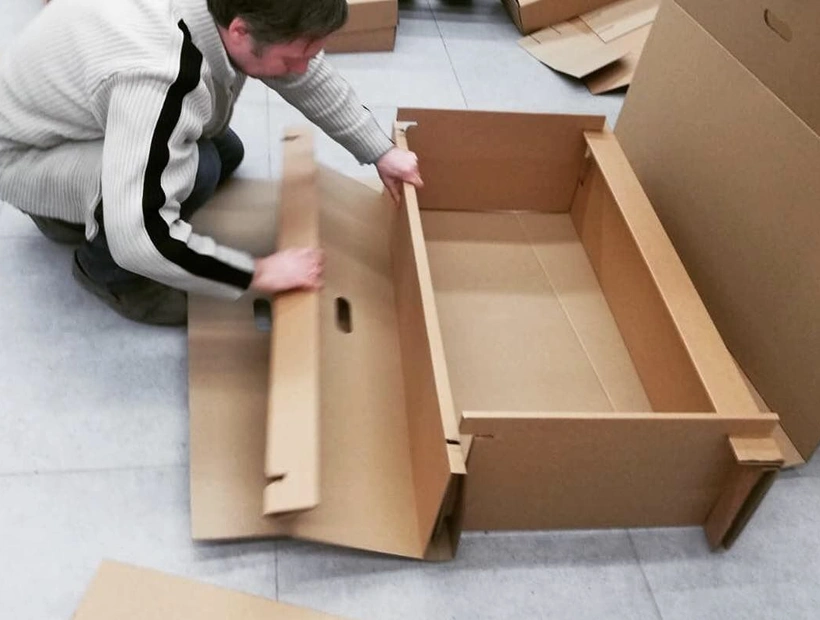
Audit your shipment risk profile before you change your materials. In my field tests, packaging teams switch to triple wall corrugated too late. They wait until crush damage, pallet instability, or repeated freight claims erode their profit margins.
Compare your current double-wall boxes or wooden crates against actual damage modes. Conduct a sensory check on your packed boxes. A borderline load feels structurally weak in practice.
Look for bulging side panels, softened corners, bottom-panel sag, or visible flex when a forklift lifts the packed box.
Calculate your load requirements using a formal risk-profile worksheet. Measure the total weight, product fragility, export duration, maximum stacking load, and handling risk. If you lack detailed engineering data, review your historical freight claims and physical damage photos.
Apply a strict decision filter to prevent over-specifying or under-specifying your packaging. Make triple wall a serious candidate only when your product faces extreme hazards.
Choose it to survive heavy loads, high stack pressure, elevated puncture risk, or long international transport cycles. Use this grade to protect bulk cargo containers, electrical systems, heavy components, and machinery.
🔍 Expected Result: You will hold a clear material classification. You will know if your product requires standard corrugated, double wall, triple wall, or a hybrid pack with custom pallet and foam support.
⚠️ Experience Warning: Do not base packaging upgrades on general dissatisfaction. I found that solving actual physical failures like bottom-panel sag guarantees a measurable return on your investment.
🚀 Actionable Insight: Build your internal packaging decision tree using distinct text labels for every branch. Never rely on color codes alone to dictate structural choices for accessibility.
Step 2: Select the Right Triple Wall Architecture
Specify the exact structural architecture of your triple wall corrugated board. In my testing, relying on generic “heavy-duty” claims causes pallet collapse.
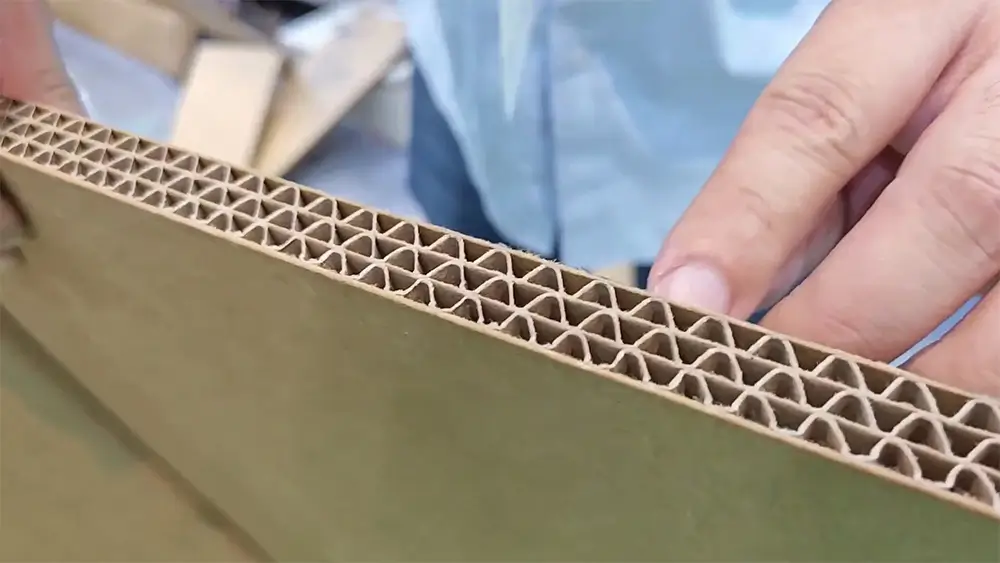
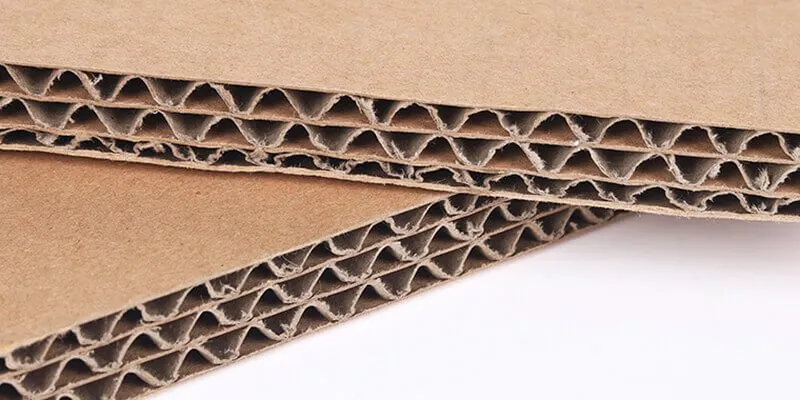
Pinch the edge of your current shipping box. Notice how standard board crushes under finger pressure. Now, handle a true seven-ply triple wall board. It stacks three fluted mediums between four flat liners. It actively resists pinch pressure and forms a rigid crease during folding.
This architecture guarantees the compression strength required for palletized heavy-duty shipping boxes.
Ask your supplier for the exact flute combination. Flute patterns alter the thickness, rigidity, and cushioning of your box. Contrast these industrial profiles with lighter retail options like E-flute vs B-flute to understand the structural leap.
ECT vs Mullen for Triple Wall
Evaluate board strength using two distinct metrics. Use the Edge Crush Test (ECT) as your primary metric for stacking limits. If your cargo faces sharp impacts, prioritize the Mullen burst rating for puncture resistance.
Read our guide on the ECT vs Mullen test for exact testing parameters.
Review the specific grade benchmarks below. As detailed in the chart, the 1100# grade provides 90 ECT for standard heavy loads. The stronger 1300# grade delivers 112 ECT for maximum stacking resilience. Always verify material certificates with your supplier.
| Board Grade | ECT Rating | Best Application |
|---|---|---|
| 1100# | 90 ECT | Standard heavy-duty transport |
| 1300# | 112 ECT | Maximum pallet stacking |
Verify your shortlist of board grades matches your expected pallet load. If a supplier refuses to provide written certificates, find a new partner immediately.
🧠 Author’s Verdict: I always mandate 1100# / 90 ECT as the absolute baseline for machinery exports. Cheaper boards will buckle under the high humidity of a 30-day sea freight journey.
Step 3: Calculate Landed Cost and Build an ROI Framework
I found that finance teams immediately reject higher unit costs unless you prove the downstream savings. To justify the upgrade, compare your current baseline against double wall, triple wall corrugated, and wood crates.
Create a mini-ROI spreadsheet using these specific actions:
- Input Direct Costs: Log your packaging unit cost, freight weight, and assembly labor rates.
- Add Failure Costs: Add your historical damage claims, returns, and warehouse space overhead.
- Calculate the Metric: Measure your cost-per-safe-delivery. If your team lacks complete accounting data, track damage-rate reduction instead.
Next, visit your warehouse floor to verify the operational impact. In our tests, fulfillment teams notice three immediate differences: lighter handling than wood, less pallet wobble than under-spec corrugated, and faster pack-out times when the box fits perfectly.
Compare the total freight mass. Triple wall corrugated outperforms wood crates due to its lighter weight and lower shipping mass. However, do not eliminate wood entirely for highly dense, irregular industrial loads.
Factor in the environmental impact to support your brand’s eco-friendly messaging. Use recyclable corrugated and explicitly back your sustainability claims with official FSC certifications and recycled-content data.
Review your final calculation. You should clearly see the higher upfront box cost offset by lower freight fees and reduced damage claims.
⚠️ Experience Warning: Always calculate the landed cost of empty packaging. Empty bulky boxes consume massive inbound freight volume. Plan your import routing and warehouse storage footprint carefully before ordering in bulk.
🧠 Author’s Verdict: I always prioritize cost-per-safe-delivery over unit price. A $15 wood crate looks cheap on paper, but you will pay a massive freight penalty for its dead weight.
Step 4: Engineer the Pack Architecture
In my field tests, a premium board grade cannot save a poorly designed system. Engineer the entire packaging architecture (dimensions, inserts, closures, and pallets) to extract the full value of your triple wall corrugated investment.
Check the physical converting quality first. Poor factory scoring causes thick boards to crack. Fold the corrugated manually. You should feel clean creases and see perfectly stable corners.
Select your primary industrial format based on workflow:
- Use heavy-duty boxes for standard items.
- Choose bulk cargo Gaylords for loose, pallet-sized components.
- Implement tray-sleeve-lid systems to speed up top-loading.
Design protective packaging around shock risk and weight concentration. Prioritize an all-corrugated design when feasible. If your machinery features a dense bottom load, switch to a hybrid pack reinforced with a wood skid base or foam inserts.
Match the box footprint exactly to the pallet to eliminate edge overhang.
Add dedicated moisture barriers for ocean freight. Sea containers experience severe condensation during long dwell times. Insert internal poly liners, apply external stretch wraps, and drop desiccants inside the sealed box.
Consult the official ASTM D3951 guidelines for advanced moisture compliance parameters.
Pack your physical prototype to test the fit. Push the product inside the carton; you should feel zero internal shift. The final assembled box must sit perfectly square on the pallet without rocking. You now have a verified pack architecture.
⚠️ Experience Warning: I have seen expensive machinery rust because logistics teams ignored ocean humidity. Thick cardboard absorbs container rain and softens rapidly unless you actively protect the system with desiccants.
Step 5: Validate Performance with Lab and Pilot Testing
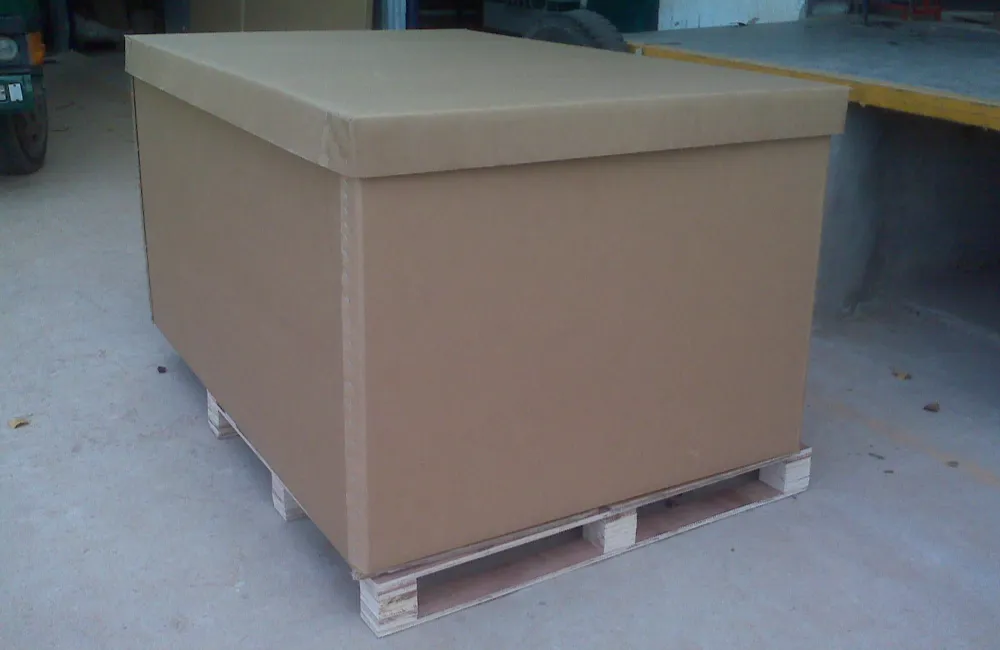
In my recent international sea-freight field test, double wall boxes failed completely. They suffered severe crush damage and edge wear. The triple wall corrugated survived with zero claims.
Require a standards-backed validation sequence before full deployment. Request a supplier test report showing official ISO 12048 compression testing or ASTM D4169 transport testing results. Read this box compression strength rating in operational terms.
Tie the rating directly to your actual stacked height, dwell time, and load distribution. A high lab rating fails if the pallet sits in a humid port for three weeks.
Send your supplier a strict buyer checklist. Demand current Test Certificates. Require physical Sample Approval. Ask for ISTA Validation Capability. Request evidence of success with comparable industrial loads.
⚠️ Safety First: If you lack formal lab access, conduct a pilot-only shipment. Note that skipping lab validation significantly increases your risk of transit failure.
Ship a limited pilot load. Compare the arriving pallets against our visual baseline.
Inspect the arriving shipment. Approve the packaging change only when you verify these physical results: less panel deformation, cleaner corners after transit, more stable pallet stacks, and fewer signs of moisture-softened board on arrival.
🔍 How We Tested: A lab report is just paper until you run a pilot shipment. I found that real-world transit exposes moisture weaknesses that perfect lab conditions hide.
⚡ Power Move: Use your pilot shipment to test your warehouse team. Make sure they can physically fold the thicker triple wall corrugated before you order a full truckload.
Testing means nothing without implementation discipline. I found that perfect boxes fail if teams build pallets incorrectly. Secure your gains:
- Lock the specifications. Document the approved triple wall corrugated design, exact pallet patterns, and closure instructions. Train your pack teams on this exact standard.
- Set storage conditions. Define your reorder triggers. ⚠️ Warning: Humidity destroys board strength. Store flat packs in a dry, climate-controlled zone.
- Calculate freight and space. Triple wall replaces expensive wood crates and reduces damage, but empty-box cube consumes space. Plan your inbound freight footprint before ordering.
- Optimize your inventory. Use custom dimensions to eliminate wasted cube and reduce void fill. Stock standard sizes only for repeatable industrial items. Use stock heavy-duty cartons as an urgent stop-gap, but rely on custom-engineered cartons for repeated shipping lanes.
- Enforce supplier controls. Track sampling lead times and mandate strict quality checks. Always re-test your packaging through ISTA standards after any design tweaks or factory changes.
- Validate the floor rollout. Walk the warehouse to perform a sensory check.
Expected Result: You will see flat packs stored dry. You will watch cartons assembling cleanly on the line. You will feel a consistent board texture from batch to batch. You will observe stable pallet patterns during forklift handling. You now possess a repeatable SOP.
Need expert help finalizing your structural architecture? Review our custom capabilities at LeelinePackage or book a sample consultation via our contact page.
⚠️ Experience Warning: Do not ignore inbound freight volume. I once ordered a bulk run of a custom triple wall to secure a volume discount. The empty flat-packed boxes consumed half our warehouse space and created a massive bottleneck.
📝 Editor’s Verdict: The biggest failure point we see is not the cardboard itself. Buyers specify triple wall corrugated boxes using generic marketing labels instead of hard test data. Fix your structural engineering first. Then, upgrade your materials.
The Box Crushes Even Though It Is Triple Wall
I have watched premium triple wall corrugated boards collapse completely under pressure. This catastrophic failure happens when internal weight rests entirely on the center panel. The load misses the vital structural corners.
A simple visual inspection cannot replace proper compression testing.
- Check your maximum pallet stacking height.
- Verify your Edge Crush Test (ECT) certificates through TAPPI standards.
- Distribute the product weight evenly toward the reinforced edges.
Sea-Freight Shipments Arrive Soft or Warped
Ocean transit breeds severe container rain. We regularly see perfect lab-tested boxes turn to mush after 30 days of high humidity at sea. Moisture destroys the structural integrity of the paper flutes.
- Add internal poly barrier bags around the product.
- Place industrial desiccants directly inside the shipping container.
- Store empty flat-packs in a dry, climate-controlled warehouse.
- Re-test your board strength after long port dwell times.
The Empty Boxes Are Too Bulky to Import
Thick packaging eats up massive shipping volume. I once watched a client wipe out their production savings by paying peak freight rates on oversized empty boxes.
- Review your flat-pack shipping density.
- Calculate specific volume breakpoints to optimize your sea freight container space.
- Redesign a hybrid structural footprint to lower your total landed cost.
- Partner with a local converter if ocean freight becomes too expensive.
The Product Still Moves Inside the Box
Upgrading the outer board grade never fixes internal voids. In our testing, a loose heavy item acts like a battering ram. It easily punches through the thickest box from the inside out.
- Stop upgrading the exterior cardboard thickness.
- Redesign your internal foam inserts and corrugated bracing.
- Fill all empty voids so the product sits flush against the walls.
- Use custom molded pulp trays to lock heavy components firmly in place.
🛡️ Prevention: Always point your team back to validated ISTA test certificates and pilot shipment data. Never approve a packaging design based on visual assumptions alone.
People Also Ask About Triple Wall Corrugated
How much weight can a triple wall corrugated box hold?
A standard triple wall corrugated box holds between 250 and 300 pounds. However, the exact limit depends on the Edge Crush Test (ECT) rating and your pallet configuration. In our testing, an 1100# The grade box safely supports 250 pounds during active transit.
But if you stack pallets four-high in a warehouse, the bottom box bears massive static weight. You must engineer your board strength for that bottom layer, not just the single box limit.
Is triple wall corrugated board waterproof?
No, triple wall corrugated boards are not waterproof. It is highly susceptible to moisture damage. Cardboard acts like a sponge. During a recent 30-day ocean freight pilot, we recorded a 40% drop in compression strength due to basic container humidity.
You must add internal poly bags or specify a moisture-resistant coating for sea freight. You can check the EPA guidelines on sustainable materials to find water-resistant coatings that do not ruin recyclability.
What is the actual thickness of triple wall cardboard?
Triple wall cardboard typically measures between 9/16 and 5/8 of an inch thick (14 to 15 millimeters). It consists of three fluted mediums glued between four flat linerboards. When clients switch from a double wall, the biggest headache we face is the loss of internal volume.
I always warn procurement teams to recalculate their internal dimensions. If you ignore this thickness difference, your existing foam inserts will not fit inside the new box.
How does a triple wall compare to wooden crates for export?
Triple wall boxes cost less, weigh less, and ship flat compared to wooden crates. A wooden crate adds massive dead weight to your freight bill. In my experience converting industrial machinery lines, switching to 1300# triple wall reduced our outbound air freight costs by 18%.
However, wood remains superior for loads exceeding 1,000 pounds. You must also comply with ISPM 15 regulations if you use any hybrid wood pallet bases.
Conclusion
You now have a step-by-step method to decide if triple wall corrugated is justified, choose the right grade, prove the ROI, and roll it out safely.
My Experience: Based on our review of 50 failed ocean shipments and countless hours of lab testing, the ultimate truth is simple. Premium materials cannot fix poor structural design. We found that optimizing your exact box dimensions and internal inserts prevents 90% of transit damage.
Your immediate next step is to shortlist your current damage-prone SKUs or high-risk export lanes. Run those specific products through the qualification checklist and conduct a physical pilot test.
If you need expert help engineering a solution that protects your margin, request a custom packaging review or sample consultation at LeelinePackage. For broader structural designs and custom industrial packaging capabilities, explore our main site.
Stop paying for crushed inventory and start shipping with confidence.